

At the Four Seasons Hotel Toronto in Yorkville, Café Boulud occupies a distinct position in the city's French dining tier: less formal than the Daniel Boulud flagship universe, but more considered than a standard hotel brasserie. The kitchen pulls from Lyon-rooted French technique while weaving in Canadian ingredients from Prince Edward Island, British Columbia, and Baffin Island, with a wine list that balances traditional French appellations against Ontario producers.
Pearl is the En Primeur Club membership app — saves, bookings, and concierge access live there. Same editors, same standards.
- Address
- 60 Yorkville Ave, Toronto, ON M4W 0A4, Canada
- Phone
- +1 416-963-6000
- Website
- fourseasons.com
- Directions
- Get directions
 Saves & bookings on Pearl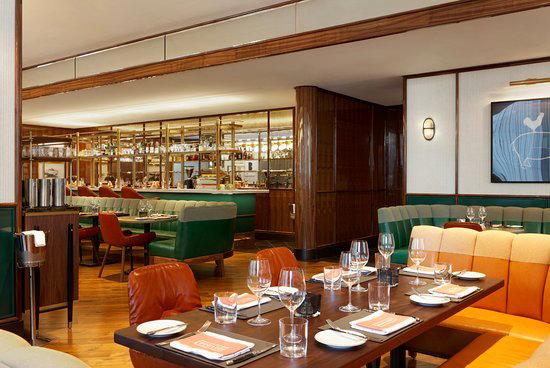
Yorkville's French Table: Context and Setting
The block of Yorkville Avenue that runs past the Four Seasons Hotel Toronto is one of the more loaded stretches of real estate in Canadian dining. Within a short radius, you can find Alo (Contemporary) operating at the summit of the contemporary tier, and Japanese-focused counters like Sushi Masaki Saito and Aburi Hana drawing allocations that rival anything in North America. Café Boulud occupies a different register in this neighbourhood: not a tasting-menu destination built around scarcity, but a French brasserie with serious roots that sits comfortably between a hotel restaurant and a standalone culinary statement.
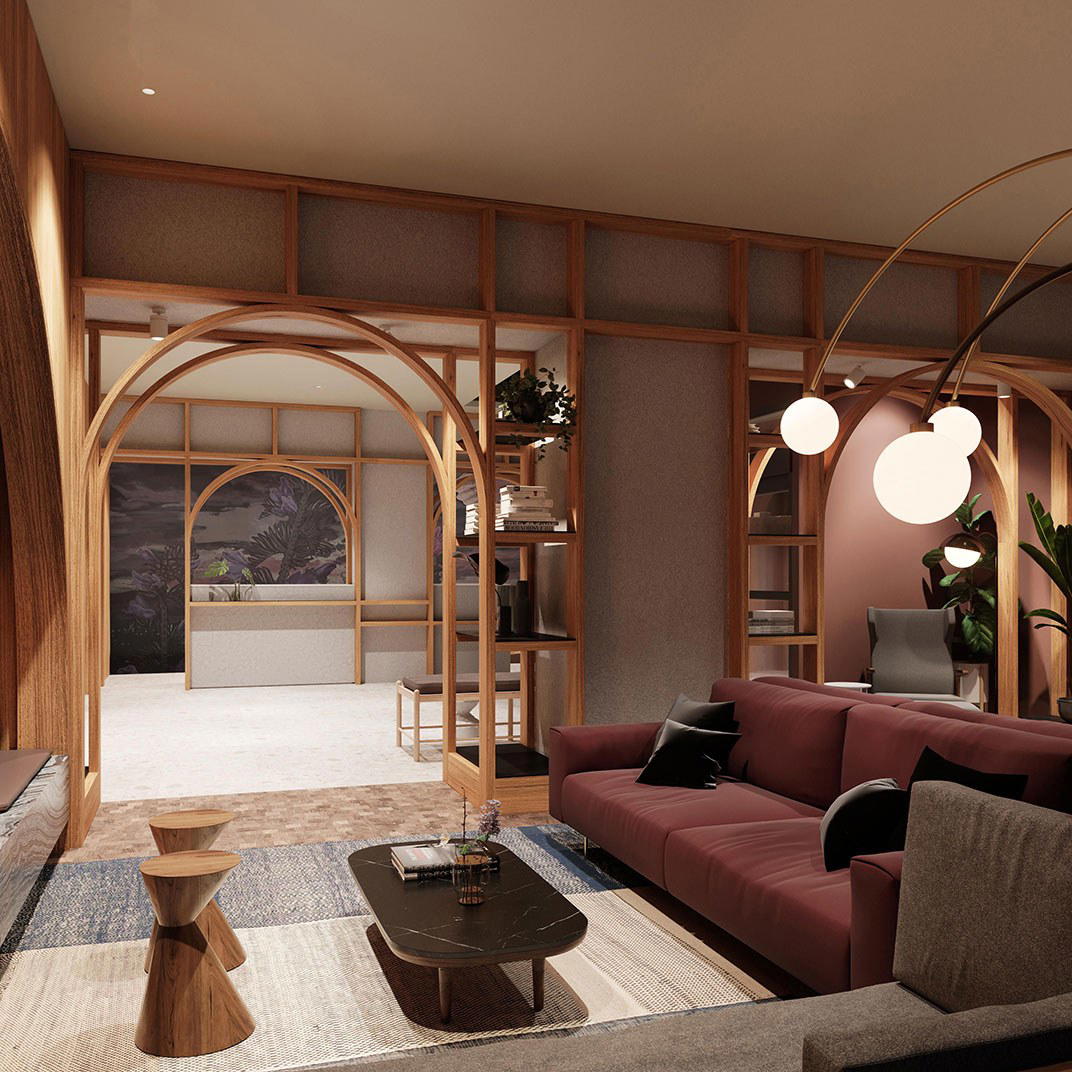
Café Boulud Toronto is a French brasserie in Yorkville at the Four Seasons Hotel Toronto. At dinner, candlelight falls across gray velvet banquettes and modern rolling chairs in a low, warm glow. There is nothing aggressively designed about the space; it reads as French-inflected without being stagey, and the counter bar along one side functions as an entry point for guests who want a drink and a quick bite rather than a full sitting. For a hotel dining room, that flexibility is relatively unusual, most properties of this tier push toward a single mode of hospitality, either bar-forward or dining-room-forward. Here, both coexist without friction.
Sourcing as Structure: Canadian Ingredients in a French Frame
Conversation around ethical sourcing in Canadian restaurant kitchens has matured considerably over the past decade. What once required explicit signalling, a list of farms printed in the menu, a paragraph in the press materials, has increasingly become structural: the sourcing decisions shape the dish rather than decorate it. Café Boulud Toronto works inside that shift. The menu's French technique functions as a framework into which Canadian ingredients are inserted with enough specificity that they read as the actual subject of the dish rather than a branding layer.
Prince Edward Island côte de boeuf, British Columbia black cod, and Baffin Island lobster each represent distinct Canadian supply chains, and the kitchen's decision to name the origin rather than genericise it signals an accountability to provenance that aligns with where the better end of the Canadian dining scene has been moving. This mirrors approaches seen at restaurants like Tanière³ in Québec City or AnnaLena in Vancouver, where named sourcing is built into the menu's architecture rather than appended to it. At Café Boulud, the French bistro format provides continuity while the Canadian supply chain provides the substance.
The rotisserie anchors the kitchen's approach to waste reduction and whole-animal thinking. A gleaming rotisserie handles Gigueres Farm chicken as well as duck for two, served with Ontario plum, spinach, turnip, duck confit salad, and peppered duck jus. The rotisserie duck format is inherently efficient: the whole bird, cooked slowly over consistent heat, produces multiple components in a single process. The confit salad included in the service is drawn from the same bird, a quiet demonstration of use-everything thinking inside a format that most diners will simply read as generous. The sourcing detail here, Gigueres Farm named rather than obscured, fits the same pattern as the broader ingredient philosophy.
The Wine Program and Ontario's Place in It
French-inflected restaurant wine lists in North America have typically defaulted to a European spine with token domestic additions. The wine program at Café Boulud Toronto runs a more considered balance. Traditional French appellations form the foundation, that's expected and appropriate given the kitchen's orientation, but Ontario producers sit alongside them as a genuine presence rather than a concession to local politics. This matters more than it might appear. Ontario's wine industry, particularly in Niagara, has spent the last fifteen years moving from a novelty tier to a serious appellations conversation, and a restaurant with the profile of Café Boulud including local producers signals a credibility that reinforces rather than dilutes the list's authority.
The cocktail program runs on a similar logic: contemporary handcrafted drinks alongside traditional formats, varied enough to handle the range of guests moving between the bar counter and the dining room across a full evening.
Placing Café Boulud in Toronto's French Dining Tier
Toronto's French dining options in 2024 distribute across a fairly wide range. At the highest price points, the omakase and contemporary tasting-menu format dominates the conversation, the city's food press tends to focus on venues like Alo or ambitious Italian-leaning rooms such as DaNico and Don Alfonso 1890. The French brasserie format occupies a different segment: it is built around repetition and comfort rather than novelty, and its success depends on execution consistency over time rather than on seasonal reinvention.
Café Boulud's position inside the Four Seasons Hotel Toronto is both a strength and a constraint in this context. The hotel provides physical infrastructure, a captive audience of well-travelled guests, and a service culture that reinforces the dining experience. It also means the restaurant competes against a wider comparable set that includes hotel dining rooms across the luxury tier. Against that set, its French-Canadian sourcing approach and the coherence of its kitchen identity, connected to Daniel Boulud's wider network while operating through Chef Nick Pena Alvarez locally, gives it a more defined editorial character than most hotel restaurants manage.
Planning a Visit
Reservations are recommended. The dress code is smart casual. The counter bar operates as a lower-commitment entry point for solo diners or those wanting a drink-led visit rather than a full dinner sitting.
What Should I Eat at Café Boulud Toronto?
The rotisserie program is the clearest expression of the kitchen's identity. The rotisserie duck for two, incorporating Ontario plum, spinach, turnip, duck confit salad, and peppered duck jus, draws from the same whole-bird philosophy that defines the dish's approach to sourcing and technique. The poulet à la broche, rotisserie chicken from Gigueres Farm served tableside in copper tableware, demonstrates the same principle in a more accessible format. For protein sourced from Canada's coasts, the British Columbia black cod and Baffin Island lobster represent the kitchen's named-origin approach at its most geographically specific. The dessert section closes with grapefruit sesame halva and a warm basket of madeleines, the latter a Lyon-rooted reference that grounds the menu's French identity at both ends of the meal.
At a Glance
Comparable venues nearby, for context on price, style, and recognition.
| Venue | Cuisine | Price | Notes |
|---|---|---|---|
| Café Boulud TorontoThis venue — the venue you are viewing | Yorkville, French Brasserie | $$$$ | Not listed |
| Delysées Luxury Desserts Yorkville | Yorkville, Modern French Pastry | $$$$ | Not listed |
| Louix Louis | Not listed | $$$$ | Financial District, French-American Contemporary Fine Dining |
| Sorrel Restaurant and Bar | Not listed | $$$ | Annex, Modern French-Mediterranean Bistro |
| Maison Selby | Not listed | $$$ | St James Town, French Bistro with Modern Accent |
| The Rushton | Not listed | $$$ | Humewood, French Bistro with Mediterranean Influences |
Recognition history
Dated appearances from independent guides and award organizations, with the underlying list record or original source where available.
Forbes Recommended
Forbes
Wine Spectator Best of Award of Excellence
Wine Spectator
Forbes Recommended
Forbes
Continue exploring
More in Toronto
Restaurants in Toronto
Browse all →
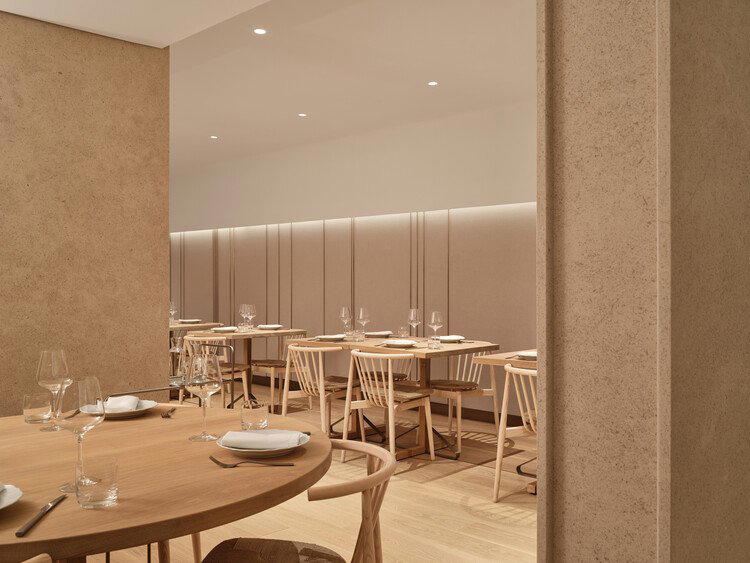
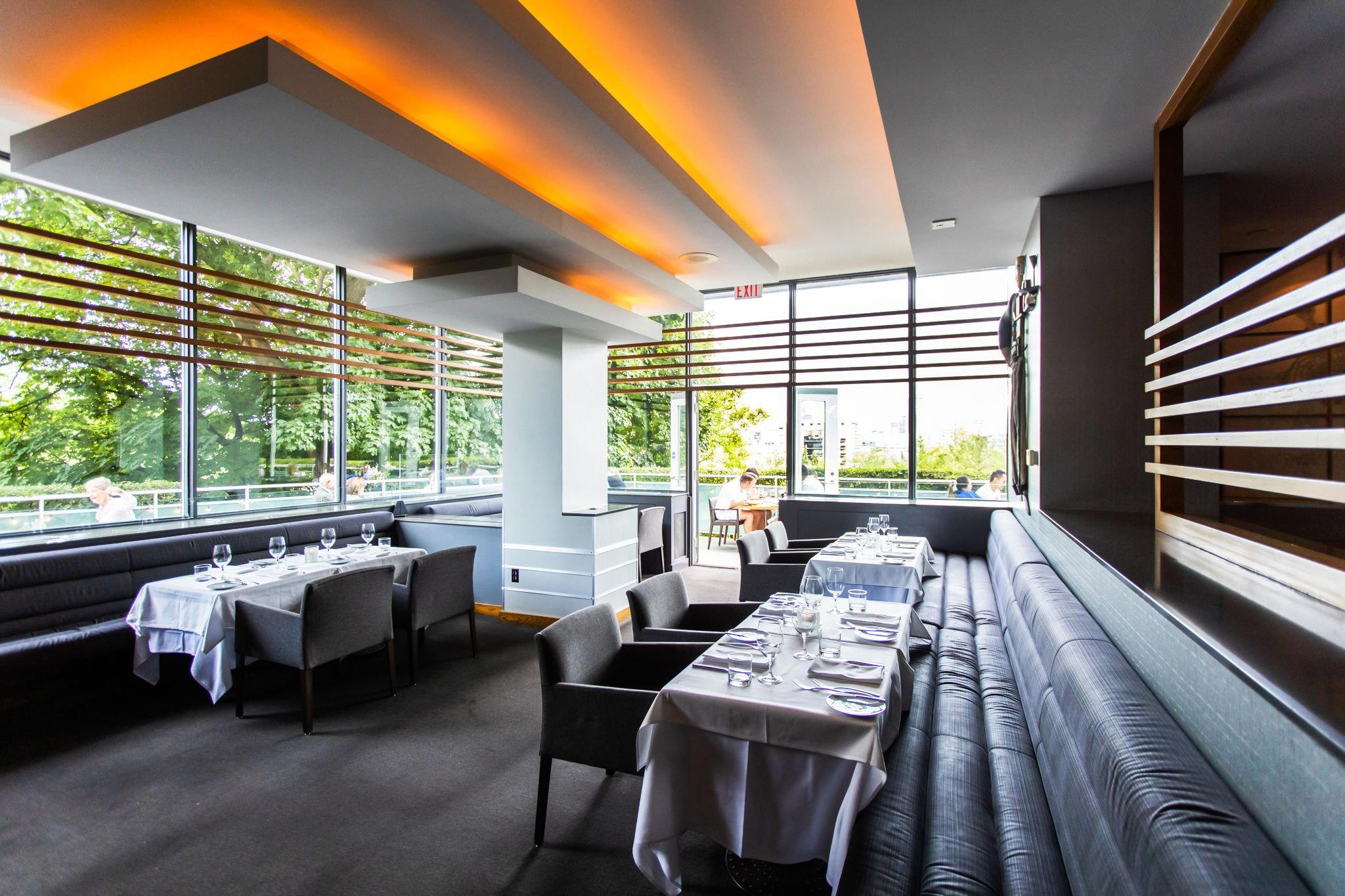
Bars in Toronto
Browse all →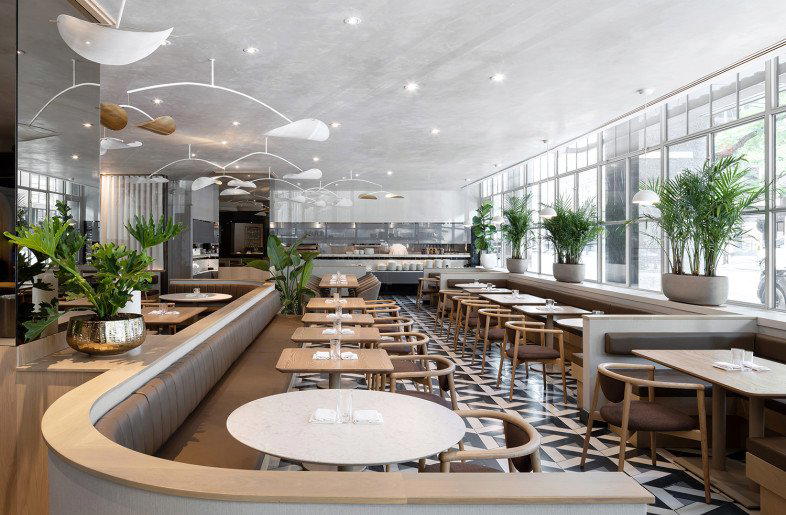
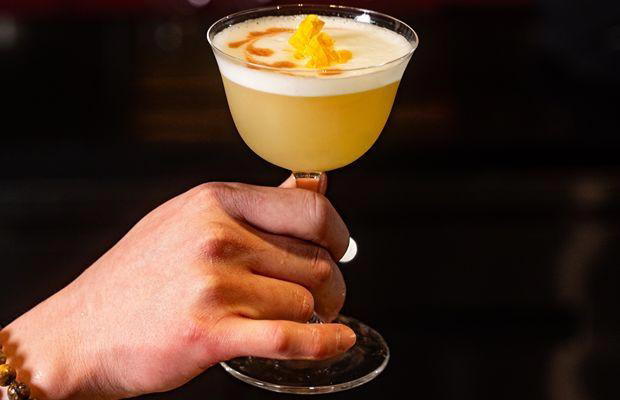
Hotels in Toronto
Browse all →

At a Glance
- Elegant
- Sophisticated
- Classic
- Date Night
- Special Occasion
- Business Dinner
- Brunch
- Hotel Restaurant
- Private Dining
- Open Kitchen
- Extensive Wine List
- Sommelier Led
- Local Sourcing
Current opening hours
- Monday
- 7–11 AM, 11:45 AM–2:30 PM, 5:30–10 PM
- Tuesday
- 7–11 AM, 11:45 AM–2:30 PM, 5:30–10 PM
- Wednesday
- 7–11 AM, 11:45 AM–2:30 PM, 5:30–10 PM
- Thursday
- 7–11 AM, 11:45 AM–2:30 PM, 5:30–10 PM
- Friday
- 7–11 AM, 11:45 AM–2:30 PM, 5:30–10 PM
- Saturday
- 7–11 AM, 11:30 AM–2:30 PM, 5:30–10 PM
- Sunday
- 7 AM–2:30 PM
Hours can change for holidays and private events. Last verified .
Luxurious brasserie atmosphere with Hermes wallpaper, walnut paneling, leather banquettes, oxblood chairs, soft lighting, and contemporary street art evoking Parisian brasseries.