Our verdict
On Avenue Parmentier in the 11th arrondissement, Cadence occupies a corner of Paris where neighbourhood bistro culture and serious wine curation converge. The address places it firmly in the east-side dining corridor that has drawn a younger, more technically minded generation of restaurateurs.

Pearl is the En Primeur Club membership app, where members save venues, book tables and use the concierge.

The menu
What to order
- Beef croquettes
- Scotch egg
- Cuttlefish with nduja
The 11th Arrondissement and What It Says About Modern Paris Dining
Avenue Parmentier runs through one of the more instructive stretches of the 11th arrondissement, a neighbourhood that spent the better part of two decades accumulating the kind of serious independent restaurants that used to cluster exclusively around the Seine's more prestigious banks. The drift eastward is documented and deliberate: lower rents, a denser residential population, and a dining public less attached to white-tablecloth formality have made the 11th a proving ground for a different kind of ambition. Where the 8th arrondissement houses rooms like Le Cinq at the Four Seasons George V and Alléno Paris au Pavillon Ledoyen, addresses defined by institutional grandeur and four-figure spend, the 11th operates at a different register entirely, one where the cooking and the cellar have to carry their own weight without the scaffolding of a palace hotel behind them.
Cadence sits at 117 Avenue Parmentier inside that context. The address alone signals something about the competitive set: this is not a room that positions itself against L'Ambroisie on the Place des Vosges or Arpège in the 7th. It is working within a different tradition, one where the measure of quality is the quality of the plate and the glass, not the postcode.
A Wine-Forward Room in a City That Takes Lists Seriously
Paris has never been short of restaurants with serious cellars, but the approach to wine curation has shifted considerably in the last decade. The classic French palace model, deep verticals of Bordeaux first growths, Burgundy grand crus catalogued across hundreds of pages, has given way, in many of the city's most interesting independent rooms, to a different philosophy: lists built around producer relationships, natural and low-intervention wines sitting alongside conventional appellations, and a sommelier role that functions more as guide than gatekeeper.
The editorial angle at a room like Cadence is the wine list, and in the 11th arrondissement that framing carries specific weight. The neighbourhood's independent restaurant culture has been hospitable to exactly this kind of curation: shorter lists with higher editorial intention, producers from appellations that rarely appear on palace hotel menus, and a willingness to recommend bottles that require some explanation. France's regional depth makes this approach particularly rewarding, the gap between a well-sourced Loire or Jura producer and a generic Bordeaux négociant label is enormous, and a room that knows how to close that gap for its guests is doing something genuinely useful. For comparison, the kind of cellar depth you find at destination restaurants like Mirazur in Menton or Flocons de Sel in Megève reflects years of institutional accumulation; the independent Paris room is working with different resources and, often, to more interesting effect.
France's own regional restaurant tradition offers a long context for wine-integrated dining. Houses like Troisgros in Ouches, Bras in Laguiole, and Auberge de l'Ill in Illhaeusern have built cellars over generations, with wine selection treated as an extension of the cooking rather than a revenue centre. The independent Paris room doesn't have that runway, but the best of them compensate with specificity, knowing exactly why a particular producer is on the list, and being able to articulate it at the table.
The Neighbourhood Approach to the Plate
Independent rooms in the 11th tend to run tighter menus than their palace-adjacent counterparts, fewer covers, shorter choice, higher rotation. This is partly economic and partly philosophical: it reflects a cooking culture that values ingredient timing over exhaustive choice. The approach echoes what you find at certain French regional addresses, like Auberge du Vieux Puits in Fontjoncouse or La Table du Castellet, where geography and seasonality do a significant share of the creative work.
Contemporary French restaurants in Paris sit in a broad category. Kei, with its French-Japanese synthesis, operates in one distinct register; the classic bourgeois houses like Paul Bocuse's L'Auberge du Pont de Collonges and Les Prés d'Eugénie in another. The independent 11th arrondissement room occupies a third lane: less historically coded, more responsive to the current market, and operating closer to the guest in both price and atmosphere.
For an international frame of reference, the format has analogues in cities like New York, where Le Bernardin demonstrates one version of French-inflected precision at high formality, or San Francisco, where Lazy Bear represents the communal-tasting-menu end of the spectrum. The Paris independent room sits between those poles, typically more formal than the communal format and less institutionalised than the grand French address.
For a broader map of where Cadence fits in the city's dining hierarchy, our full Paris restaurants guide covers the range of price points, neighbourhoods, and styles currently operating. Georges Blanc in Vonnas offers one endpoint of the French restaurant tradition; Cadence represents a more contemporary urban iteration of it.
Planning Your Visit
Cadence is located at 117 Avenue Parmentier, 75011 Paris. The address is served by Parmentier station on Métro Line 3, placing it within easy reach of the Marais and Oberkampf. As a neighbourhood independent rather than a major institutional room, table availability can shift quickly; contacting the venue directly for current reservation windows and any menu format changes is advisable before visiting. Dress: Smart casual is the standard register for this tier of 11th arrondissement dining. Budget: Timing: Evenings are the primary service window for this type of room; lunch availability varies and should be confirmed in advance.
Frequently asked questions
What do people recommend at Cadence?
Specific dish recommendations require current menu data that changes seasonally. Given Cadence's address in the 11th arrondissement, a neighbourhood associated with wine-forward independent restaurants, the drinking component of the meal is likely as worth your attention as any single plate.
Do I need a reservation for Cadence?
For independent rooms at this tier in Paris, a reservation is sensible. The 11th arrondissement dining scene has grown in recognition over the last decade, and smaller independent rooms fill quickly, particularly on Thursday through Saturday evenings. Booking directly with the venue is the most reliable approach; walk-in availability is not guaranteed.
What is Cadence leading at?
The editorial framing for Cadence centres on wine curation, a strength associated with the independent 11th arrondissement dining culture in which it operates. Whether that translates to a specialist natural wine list, a deep regional French cellar, or a sommelier-led pairing format is best confirmed with the venue.
Can Cadence handle vegetarian requests?
Dietary accommodation at independent Paris restaurants varies by kitchen and menu format. For a room that may run a set or tasting structure, advance notice of dietary requirements is standard practice. Contact Cadence directly before your reservation to confirm what the current menu format allows.
Is Cadence worth visiting specifically for the wine programme?
In the context of the 11th arrondissement's independent dining scene, wine-forward rooms have been a consistent draw for a technically minded Paris dining public. If the cellar curation is the primary motivation, arriving with an appetite for the full drinks programme, rather than treating wine as a secondary consideration, reflects how the leading rooms in this neighbourhood are designed to be used. Verify the current list's orientation directly with the venue, as independent cellars in this tier shift more frequently than palace hotel programmes.
Booking and Cost Snapshot
Comparable venues nearby, for context on price, style, and recognition.
| Venue | Cuisine | Price | Notes |
|---|---|---|---|
| CadenceThis venue (the venue you are viewing) | Modern Neo-Bistro with Small Plates | $30–50 | Not listed |
| Le Square Trousseau | Classic French Bistro | $50–100 | Bastille, Classic French Bistro |
| A La Frégate | Classic French Seafood Bistro | $50–100 | Bercy/Nation, Classic French Seafood Bistro |
| Astair | Contemporary French Brasserie | $50–100 | 2nd Arrondissement, Contemporary French Brasserie |
| Cloche Paris | Modern French Brasserie with Wagyu Focus | $50–100 | Les Halles (1st arrondissement), Modern French Brasserie with Wagyu Focus |
| L'Auberge du Roi Gradlon | Breton French Bistro | $30–50 | Gobelins, Breton French Bistro |
Continue exploring
More in Paris
Restaurants in Paris
All restaurants in Paris →
Bars in Paris
All bars in Paris →
Details
- Lively
- Cozy
- Trendy
- Modern
- Date Night
- Casual Hangout
- Late Night
- Live Music
- Open Kitchen
- Natural Wine
- Natural Wine
- Local Sourcing
- Small Plates
- A La Carte
- Natural Wine
- Vegetarian Friendly
- Vegan Options
Current opening hours
- Monday
- Closed
- Tuesday
- 12–3 PM, 7 PM–12 AM
- Wednesday
- 12–3 PM, 7 PM–12 AM
- Thursday
- 12–3 PM, 7 PM–12 AM
- Friday
- 12–3 PM, 7 PM–1 AM
- Saturday
- 7 PM–1 AM
- Sunday
- Closed
Hours can change for holidays and private events. Hours as of .
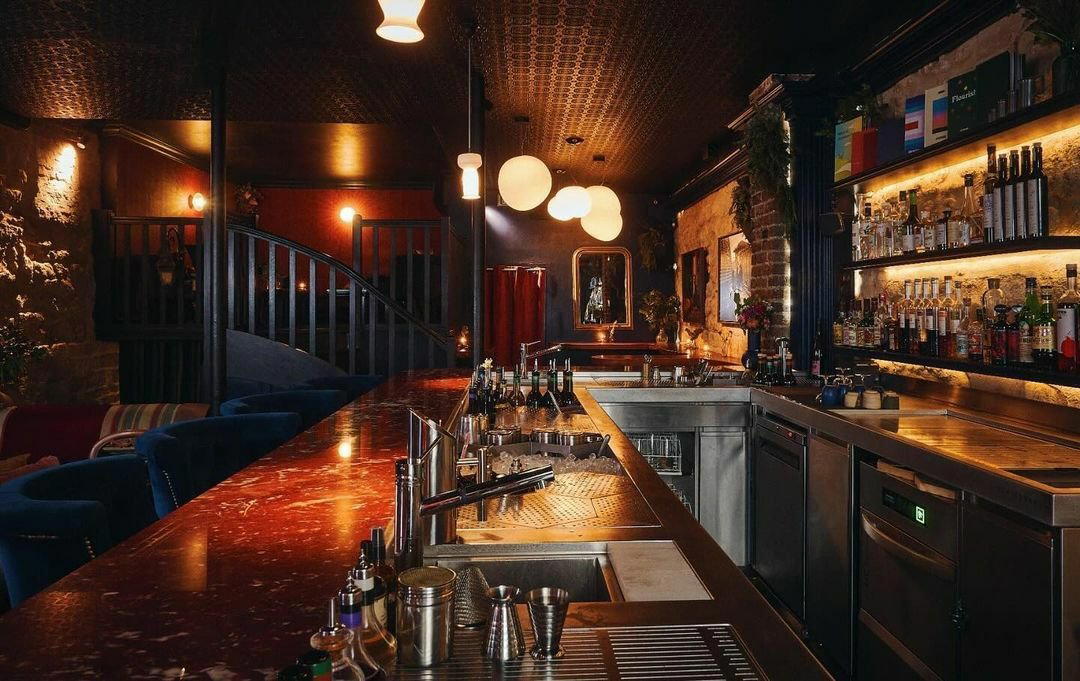
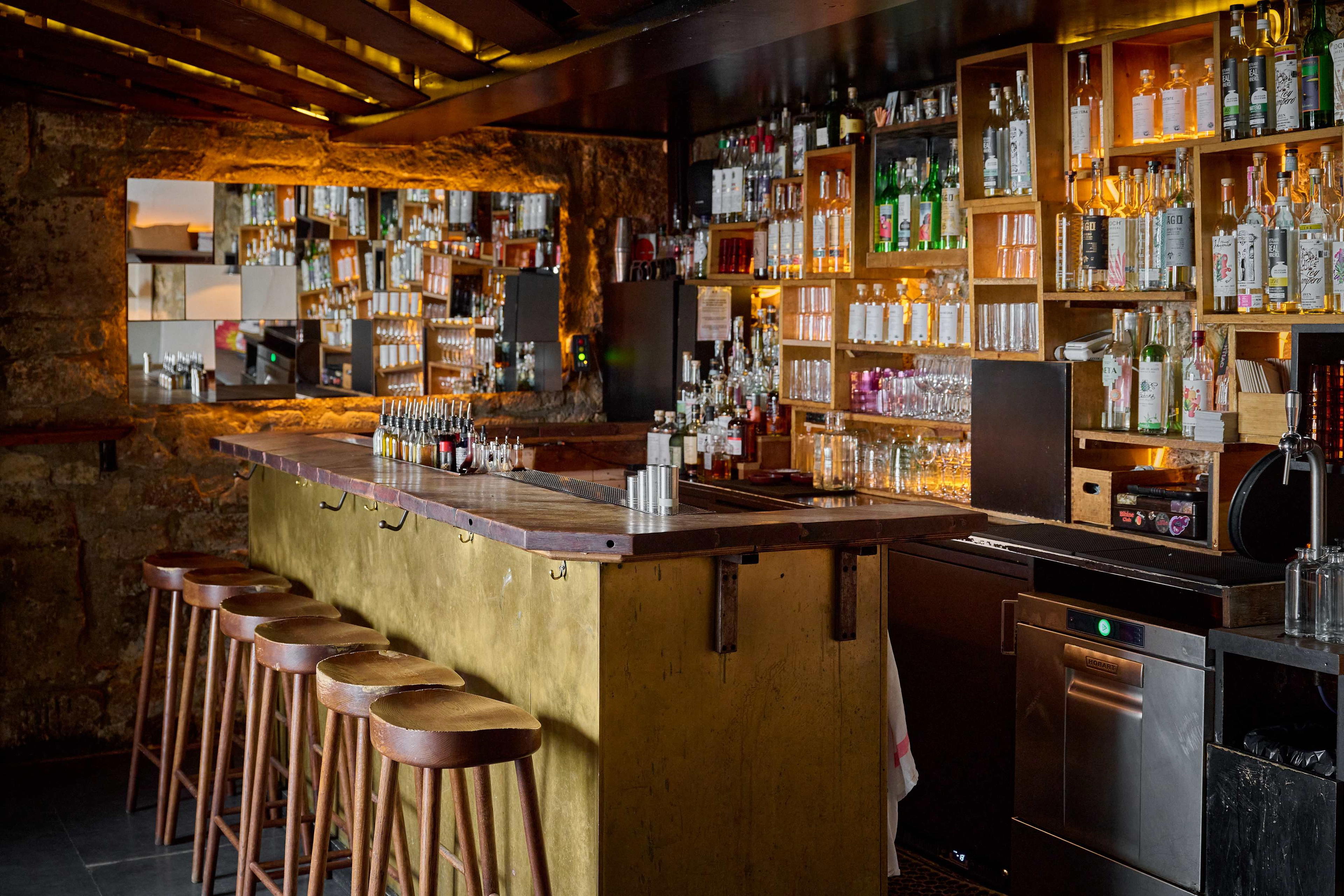
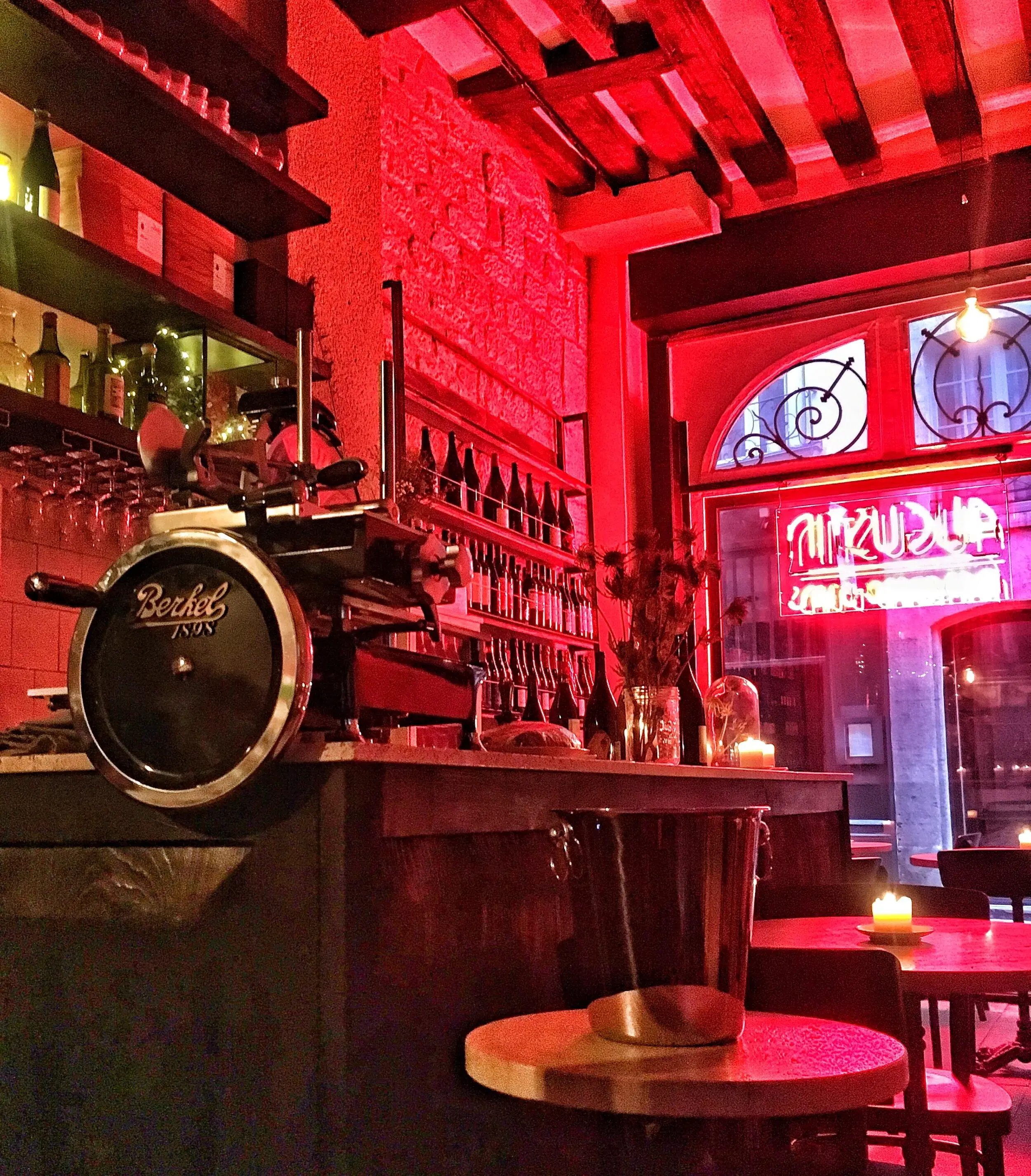
Cozy interior with blond wood tables, corrugated sheet metal, hanging vinyls, and a warm, lively atmosphere enhanced by loud music.