Le Square Trousseau occupies a corner of the 12th arrondissement where the Aligre market quarter meets the quieter residential streets east of Bastille. The room itself is the draw: zinc bar, mosaic floor, pressed-tin ceiling, and a terrace that opens onto the square in warmer months. It reads as a working Parisian brasserie of the pre-war pattern, without the renovation that has softened so many of its peers.
Pearl is the En Primeur Club membership app — saves, bookings, and concierge access live there. Same editors, same standards.
- Address
- 1 Rue Antoine Vollon, 75012 Paris, France
- Phone
- +33 1 43 43 06 00
- Website
- squaretrousseau.com
- Directions
- Get directions
 Saves & bookings on Pearl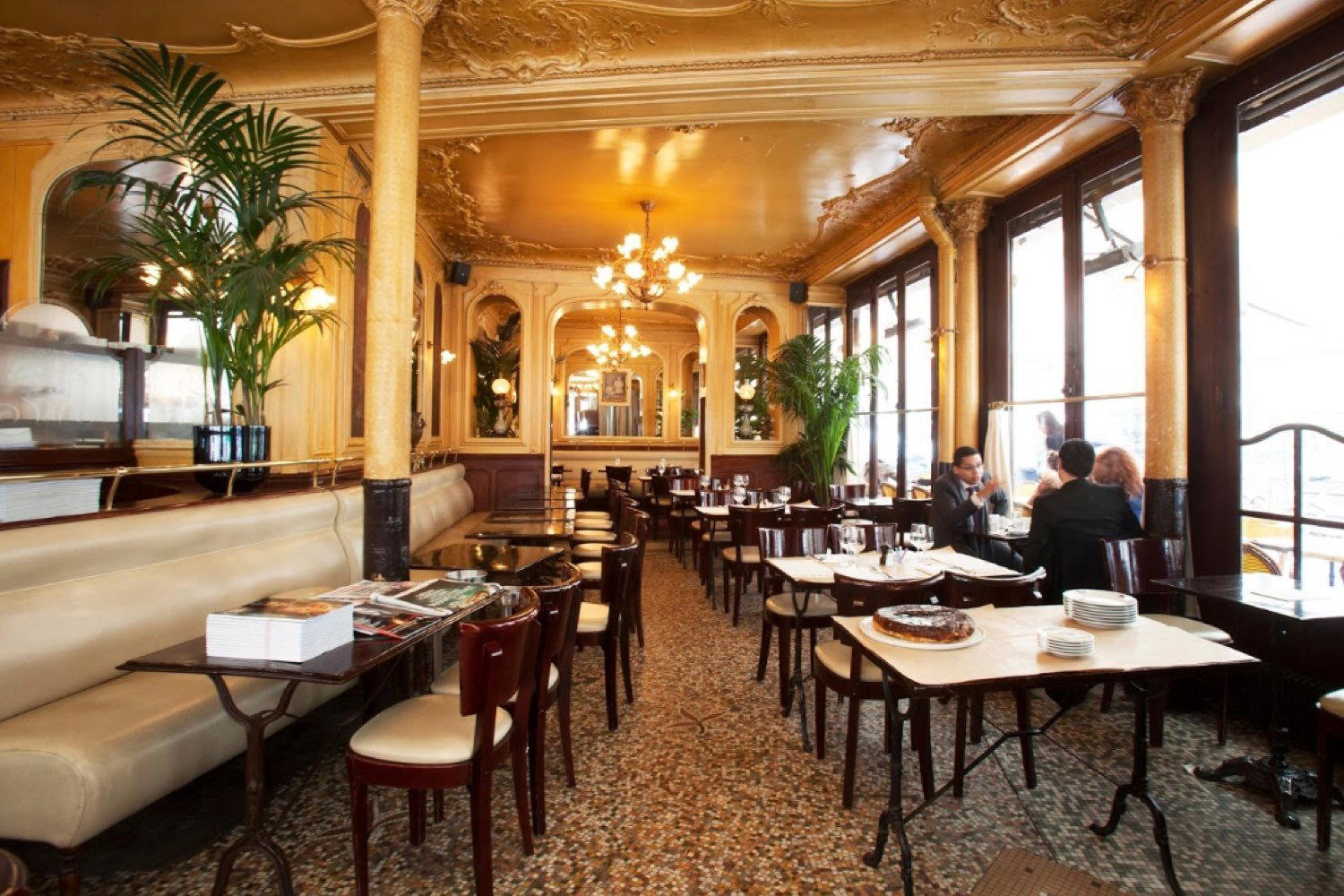
A Brasserie That Has Remained Itself
The 12th arrondissement does not organise its restaurant scene around tourist circuits. Rue Antoine Vollon sits close enough to Bastille to catch foot traffic from the neighbourhood's wine bars and natural-wine shops, but the square itself operates on a different rhythm: morning market regulars, midday workers from nearby offices, evening locals who have been booking the same table for years. Le Square Trousseau is a Classic French Bistro in Paris's 12th arrondissement, at 1 Rue Antoine Vollon, with reservations recommended and an approximate price of $50 per person. It belongs to that geography in a specific way. It is the kind of address that Parisians name when asked for a brasserie that has not been redesigned since the 1980s, and they name it without irony.
The room does most of the talking before the food arrives. A zinc-topped bar anchors the street side. The floor is tiled in the geometric mosaic pattern common to brasseries built in the early twentieth century. The ceiling is pressed tin, the kind of architectural detail that gets stripped out during renovation cycles and replaced with something more neutral. Here it remains, and the cumulative effect is a space that operates as a genuine period interior rather than a curated one. The difference is palpable: the patina on the woodwork is real, the noise levels are brasserie-appropriate rather than acoustically managed, and the light shifts through the day in the way that interiors with large original windows tend to do. In warmer months, the terrace expands the room outward onto the square, and the dynamic shifts again, with the plane trees providing the only canopy.
Where the 12th Positions Itself in Paris Dining
Paris dining at the summit tier has been well-documented: addresses like Alléno Paris au Pavillon Ledoyen, Arpège, Le Cinq at the Four Seasons George V, and L'Ambroisie occupy a small, heavily awarded tier where the competitive set is global and prices reflect that position. Kei works within a similar bracket through a French-Japanese register. The brasserie tradition operates entirely differently: the dining room is the format, and longevity combined with consistent execution is the credential that matters.
In the 12th, the competition for this type of brasserie dining is thinner than in the more photographed arrondissements. Oberkampf and Canal Saint-Martin have absorbed a portion of the city's interest in this register, and the Left Bank has its own long-established addresses. The Aligre quarter, with its covered market and wine merchants on Rue de Prague, has a distinct food culture that skews toward the everyday rather than the occasion-driven, and a brasserie like Le Square Trousseau fits that context precisely. It does not position against the starred addresses; it operates in a different category entirely, one where the measure is whether the steak-frites arrives correctly timed and the wine list makes sense against the bill.
The Classic French Brasserie Format: What It Means in Practice
The French brasserie as a format has deep roots in the Alsatian tradition of large, high-volume rooms serving beer alongside food, a model that migrated to Paris in waves through the nineteenth and early twentieth centuries. The canonical brasserie features a counter for standing drinks, banquette seating, a menu built around dishes that can be executed consistently across long service hours, and a wine and beer list designed to turn over quickly at moderate margins. Across France, addresses that hold this format with discipline over decades have become a specific kind of institution: see Paul Bocuse's Auberge du Pont de Collonges or the multi-generational tenacity of Auberge de l'Ill for what that kind of sustained institutional commitment looks like at the haute end. The brasserie equivalent is less dramatic and harder to preserve: the enemies are rising rents, changing staff economics, and the gravitational pull toward simplification that affects kitchens under financial pressure.
What separates a brasserie that has remained coherent from one that has quietly declined is rarely a single decision. It is the accumulation of small consistencies: the sauces, the sourcing of proteins, the condition of the room. Addresses like Bras in Laguiole or Les Prés d'Eugénie in Eugénie-les-Bains hold their identity through decades of deliberate attention to format discipline; the brasserie equivalent requires a different set of decisions but the same underlying logic. Le Square Trousseau, from what its address and persistent local reputation indicate, belongs to a small set of Paris brasseries where that coherence has held.
The Aligre Quarter as Context
The Marché d'Aligre, which operates mornings across the street from the square in a covered hall and an open-air flea market, creates a specific kind of neighbourhood energy. Producers, secondhand dealers, and neighbourhood regulars coexist in a format that has not gentrified at the same pace as the Marais or the upper Canal Saint-Martin blocks. This matters for understanding who eats at Le Square Trousseau and when. Morning coffee traffic from market vendors, a midday lunch crowd drawn from the local residential population, and evening bookings from both locals and visitors who have come specifically for the brasserie experience create a service rhythm that differs from destination dining in the 1st or 8th. The dynamic is closer to what you find at similarly positioned addresses in Lyon or the wine-culture restaurants of Vonnas or Fontjoncouse: a room that reads as community infrastructure first, destination second.
For visitors approaching from outside the arrondissement, the Bastille métro station places the square within ten minutes on foot, cutting east through the Place de la Bastille and south along Rue de Lyon before turning toward the Aligre streets. The neighbourhood rewards time outside the restaurant: the Viaduc des Arts on Avenue Daumesnil is ten minutes east, the new Coulée Verte park above it provides a quieter alternative to the Luxembourg or Tuileries, and the wine merchants clustered near the Aligre market are worth an hour before or after a meal.
For a broader orientation to eating in Paris, the EP Club Paris restaurants guide places the city's dining across all price tiers and neighbourhoods, including comparisons with the kind of precision French cooking available at Flocons de Sel in Megève, Mirazur in Menton, and Troisgros in Ouches, all within the broader context of French dining tradition. The contrast with a neighbourhood brasserie like Le Square Trousseau is instructive: both ends of the spectrum serve as evidence of the same underlying French confidence in the dining room as a social institution.
Cuisine and Credentials
Comparable venues nearby, for context on price, style, and recognition.
| Venue | Cuisine | Price | Notes |
|---|---|---|---|
| Le Square TrousseauThis venue — the venue you are viewing | Classic French Bistro | $$$ | Not listed |
| Bistrot Des Tournelles | Classic French Bistro | $$$ | Le Marais |
| Oh Vin Dieu | Traditional French Bistro | $$$ | 8th Arr. |
| Le Vieux Crapaud | Classic French Bistro | $$$ | Passy |
| Le Café des Ternes | Traditional French Brasserie | $$$ | Ternes |
| Mayo Restaurant | French Bistro | $$$ | Ternes |
Continue exploring
More in Paris
Restaurants in Paris
Browse all →
Bars in Paris
Browse all →
Hotels in Paris
Browse all →



At a Glance
- Classic
- Cozy
- Elegant
- Intimate
- Date Night
- Brunch
- Casual Hangout
- Terrace
- Historic Building
- Private Dining
- Garden
- Street Scene
Current opening hours
- Monday
- 8:30 AM–1 AM
- Tuesday
- 8:30 AM–1 AM
- Wednesday
- 8:30 AM–1 AM
- Thursday
- 8:30 AM–1 AM
- Friday
- 8:30 AM–1 AM
- Saturday
- 8:30 AM–1 AM
- Sunday
- 8:30 AM–1 AM
Hours can change for holidays and private events. Last verified .
Old-world charm with classic moldings, marble mosaic floors, wooden tables, and warm lighting from chandeliers, creating a refined yet cozy Parisian bistro atmosphere.