Деда Хинкали на Финлядском
On Finlyandsky Prospekt in Saint Petersburg's Vyborgskaya district, Деда Хинкали на Финлядском anchors the city's Georgian dumpling scene with a format built around the khinkali itself. The restaurant speaks to a broader pattern across Russian cities: Georgian comfort cooking finding serious, dedicated houses rather than appearing as a side note on pan-Caucasian menus. A practical, no-ceremony address for those who know what they came for.
Pearl is the En Primeur Club membership app — saves, bookings, and concierge access live there. Same editors, same standards.
- Address
- Finlyandskiy Prospekt, 1, St Petersburg, Russia, 194044
- Phone
- +78126430848
- Website
- white-group.ru
- Directions
- Get directions
 Saves & bookings on Pearl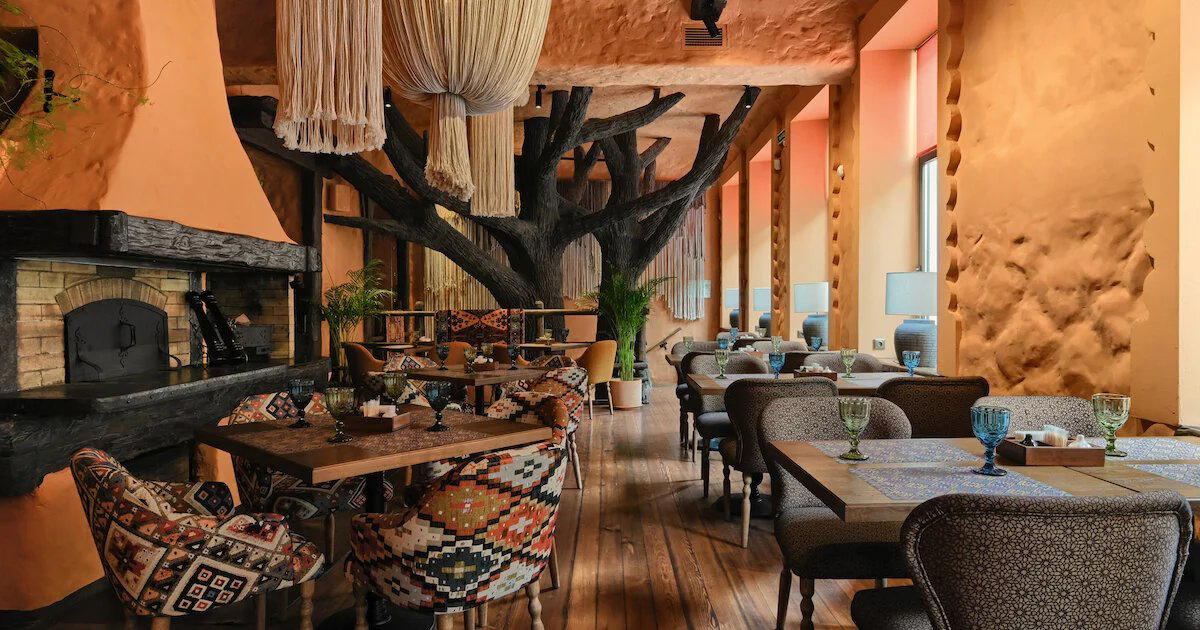
Steam, Dough, and the Weight of Georgian Tradition on Finlyandsky Prospekt
Approach Finlyandsky Prospekt from the metro and you are already in a different register from central Saint Petersburg's canal-facing dining rooms. The Vyborgskaya side of the city moves at a residential pace: wider avenues, fewer tourists, and a dining culture that tracks local habit more than international appetite. It is in this context that Деда Хинкали на Финлядском occupies its address at Finlyandskiy Prospekt 1, a location that signals intent before you reach the door. This is not a restaurant designed to intercept visitors on their way to the Hermitage. It is built for people who already know what khinkali means.
How the Georgian Dumpling House Has Evolved in Russian Cities
Georgian cuisine in Saint Petersburg was long folded into broader Caucasian menus, but dedicated Georgian houses now treat the cuisine on its own terms, with specific regional logic rather than geographic generalism.
This shift is visible across Russian cities, where Georgian cooking is increasingly treated as a distinct culinary tradition worth dedicated space.
Деда Хинкали на Финлядском fits that trajectory. The name itself makes the editorial position clear: grandfather's khinkali, at this address, full stop. The narrowing of scope to a single dish family is itself a statement.
The Khinkali as a Culinary Argument
Khinkali is a dish with a firm internal logic. The dumpling's pleated knot, the broth sealed inside the dough, the protocol of eating from the bottom while holding the topknot, the discard of that topknot as a count of consumption: these are not arbitrary customs but the accumulated results of a cooking tradition calibrated for mountain conditions, communal eating, and maximum yield from minimum ingredients. When a restaurant names itself after this dish and this dish alone, it is committing to that logic in full.
Across Russia, the Georgian dumpling house has emerged as a format with enough critical mass to sustain dedicated operations. Unlike the pan-Asian dumpling restaurant, the khinkali-specialist model makes an argument about depth over breadth. The dough hydration, the meat-to-broth ratio, the fold count on the pleat: these details separate a production line from a kitchen that has genuinely apprenticed itself to the dish. Saint Petersburg diners comparing notes across the city's Georgian options will find that this specificity of focus is a differentiating signal.
Vyborgskaya and the Geography of Neighbourhood Dining
Saint Petersburg's dining map does not distribute evenly. Nevsky Prospekt and the central embankments concentrate the hotel restaurants, the grand-format operations, and the addresses that appear in international coverage. Places like 1913, Astoria Cafe, and Bellevue operate in that central register, priced and positioned for the city's premium tier and its international visitors. Further out, the neighbourhood restaurant operates on different terms: lower visibility, local regulars, and a format calibrated for return visits rather than occasion dining.
The Vyborgskaya district sits on the Vyborg side of the Neva, connected to the centre but operating with its own residential tempo. Finlyandsky Prospekt itself carries historical weight as the avenue leading toward Finland Station, the arrival point of Lenin in 1917, and the neighbourhood's character reflects decades of working-class and intellectual Saint Petersburg rather than tourist-circuit Saint Petersburg. A Georgian khinkali house at this address is not making a bid for the expense-account market. It is making a case for itself as a local institution, the kind of place that earns regularity through consistency rather than occasion through spectacle.
This is the register in which Blok and Lev I Ptichka also operate in different parts of the city: neighbourhood anchors that serve a local function first and a destination function second, if at all. Among Saint Petersburg's broader dining options, this category of address often generates particularly durable reputations.
How It Fits the Wider Russian Georgian Dining Scene
The dedicated Georgian restaurant has become a reliable format across Russian cities at every scale. In Omsk, Grisha holds a neighbourhood anchor position not unlike this one; in Krasnodar, Alanskaya Kukhnya operates in the Ossetian-Georgian cooking space; in Tomsk, Kukhterin demonstrates the durability of Russian regional cooking with serious local investment. What connects these addresses is the shift away from novelty positioning and toward institutional authority: restaurants that derive credibility from accumulated local trust rather than from media attention or award recognition.
Деда Хинкали на Финлядском operates in that mode. The grandfather framing in the name is not accidental: it invokes continuity, transmission, and the kind of recipe authority that cannot be manufactured. That framing sets the expectation of a kitchen that has arrived at its version of the dish through repetition rather than experimentation. This is the opposite of the BeefZavod model, which makes an argument through scale and production logic; it is closer to the logic of the neighbourhood specialist who earns trust by doing one thing consistently well over time.
Planning a Visit
The restaurant sits at Finlyandskiy Prospekt 1, in Saint Petersburg's Vyborgskaya district, most practically reached via Ploshchad Lenina metro station on Line 1. The address places it outside the main tourist radius, which means arrivals tend to be purposeful rather than incidental. Reservations are recommended, and the restaurant is open daily from 12 PM to 11 PM. Expect casual dining and a price point around $20 per person. For a broader sweep of what Saint Petersburg's dining scene offers across formats and neighbourhoods, the EP Club Saint Petersburg guide covers the full range.
Credentials Lens
Comparable venues nearby, for context on price, style, and recognition.
| Venue | Cuisine | Price | Notes |
|---|---|---|---|
| Деда Хинкали на ФинлядскомThis venue — the venue you are viewing | Traditional Georgian Khinkali House | $$ | Not listed |
| Pyshechnaya | Russian Pyshechnaya (Donut Cafe) | $ | Nevskiy |
| Royal Beach | Modern European Fine Dining | $$$ | Krestovsky Island |
| Кореана Light | Korean Street Food | $$ | Admiralteysky District |
| 1913 | Classic Russian | $$ | City Center |
| Birch | Modern Fusion Tasting Menu | $$$ | Tsentralny District |
Continue exploring
More in Saint Petersburg
Restaurants in Saint Petersburg
Browse all →
Bars in Saint Petersburg
Browse all →
Hotels in Saint Petersburg
Browse all →

At a Glance
- Cozy
- Rustic
- Lively
- Family
- Group Dining
- Casual Hangout
- Celebration
- Live Music
- Extensive Wine List
Current opening hours
- Monday
- 12–11 PM
- Tuesday
- 12–11 PM
- Wednesday
- 12–11 PM
- Thursday
- 12–11 PM
- Friday
- 12–11 PM
- Saturday
- 12–11 PM
- Sunday
- 12–11 PM
Hours can change for holidays and private events. Last verified .
Cozy home-like setting with warm lighting, aromatic spices, and occasional live music on weekends.