

Ca Sento brings Spanish cuisine to a quietly residential block in Kobe's Chuo Ward, working across just 12 seats and a format that has earned Tabelog recognition every year since 2017 — including Gold in 2019 and repeated Silver designations. Chef Shinya Fukumoto runs the kitchen through a course-only format at JPY 30,000–39,999, with a wine and sake list curated by an in-house sommelier.
 Discover on Pearl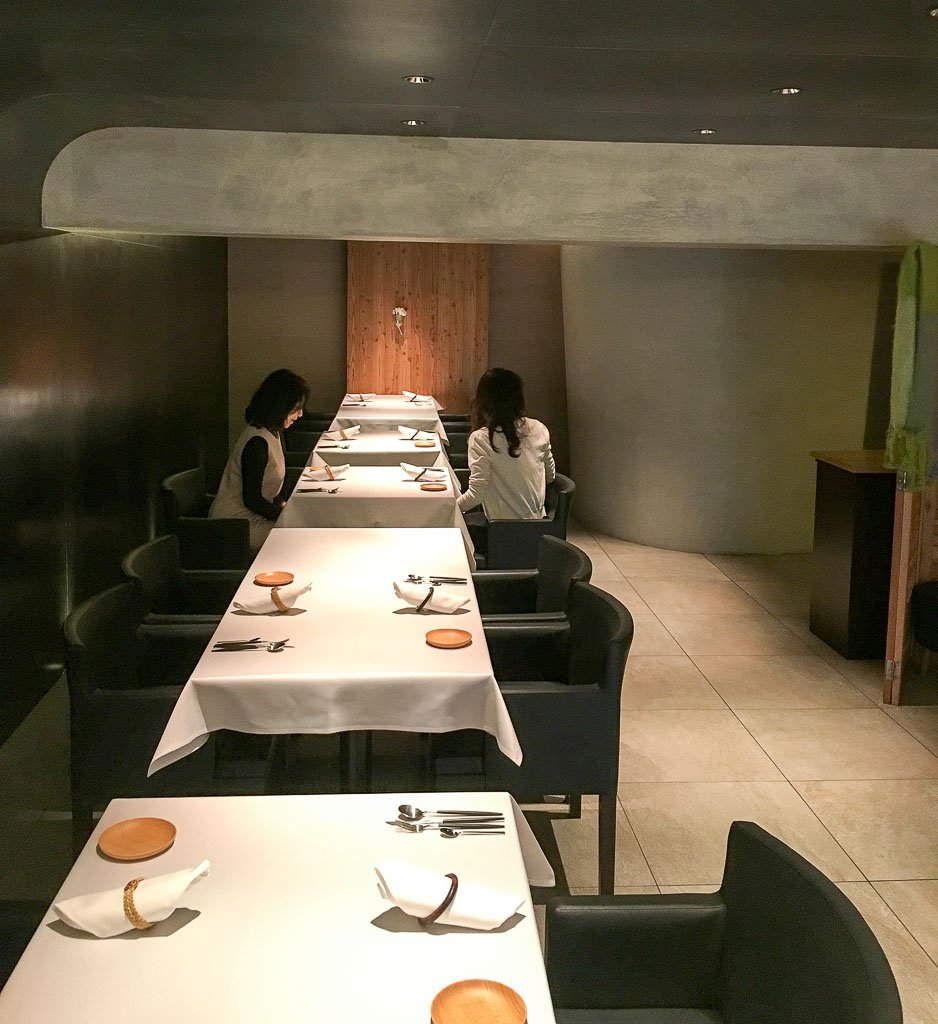
A Quiet Street, a Spanish Kitchen, and a Decade of Recognition
The residential stretch of Nakayamatedori in Kobe's Chuo Ward does not announce itself as a dining destination. The neighbourhood sits uphill from the commercial intensity of Sannomiya, somewhere between the city's Kitano foreigner district and the quieter streets that lead toward Oji Park. That calm is the context in which Ca Sento operates: a 12-seat room categorised on Tabelog as both Innovative and Spanish, doing dinner service Wednesday through Sunday from 18:00, with no affiliated parking and a reservation-only policy that requires phone confirmation even after an online booking is placed.
Spain-inflected cooking has a specific precedent in Japan. Restaurants like ZURRIOLA in Tokyo and Arco by Paco Pérez in Gdańsk represent the international range of Spanish technique in fine dining settings; Ca Sento belongs to that same conversation but operates from within Kobe's own gastronomic logic, a city where cosmopolitan food history — shaped by the port's 19th-century openness to foreign influence — has long made Western-derived cooking feel native rather than imported. That context matters when reading the restaurant's award trajectory.
The shortlist, unlocked.
Hard-to-book tables, cellar releases, and concierge-planned trips.
Get Exclusive Access →What the Tabelog Record Actually Says
Ca Sento's Tabelog award history runs from 2017 to 2026 without a single gap. The progression , Bronze in 2017, Silver from 2018 through 2023 (with one Bronze year in 2024), Gold in 2019, Silver again in 2025, Bronze in 2026 , produces a picture of a restaurant that has sat inside Japan's top-reviewed tier for nearly a decade. The 2025 Silver came with a score of 4.36 and a ranking of #144 among all restaurants in Japan on the Opinionated About Dining list. In 2024, that same list placed Ca Sento at #115; in 2023, at #102. The 2025 Tabelog Innovative/Creative Cuisine "Tabelog 100" selection adds another layer: among creative-cuisine restaurants operating anywhere in Japan, Ca Sento is one of 100 named by the platform's reviewer community.
That trajectory is worth reading carefully. A restaurant that holds Gold in 2019 and then moves through Silver years before returning to Bronze is not in decline , Tabelog scoring reflects aggregate review activity, and a 4.29 in 2026 from 181 Google reviews at 4.4 indicates a consistent peer of restaurants competing at the upper end of Japan's innovative-cuisine category. The peer set at this level includes Kansai restaurants like HAJIME in Osaka, which operates at a comparable tier of sustained national recognition.
The Spanish Course Format in a Japanese Context
Spain's contribution to global fine dining over the past three decades has been specific: the disaggregation of traditional meal structure into smaller, more numerous units, each carrying its own technical argument. What began in Catalonia and the Basque Country as avant-garde experimentation has since spread into a broader set of assumptions about how a high-end meal should be paced and composed. In Japan, that inheritance has been filtered through the country's own course-meal discipline , the kaiseki principle that every element should arrive at the right moment, in the right quantity, with material quality given priority over spectacle.
Ca Sento sits at that intersection. The "Innovative" category tag that appears alongside "Spanish" on Tabelog is not a marketing qualifier; it describes the actual classification used by Japan's most active food-review community to distinguish restaurants that don't fit cleanly into a single national tradition. At 12 seats across four tables of four, the room operates at a scale more associated with Kyoto kaiseki houses than with Spanish restaurants in Spain, where even serious tasting-menu operations tend to run larger services. Kobe's closest registered comparisons in Kaiseki and beef cuisine , Uemura and Setsugekka , operate in the same city but from different culinary traditions. Ca Sento's format is closer to the former's intimacy than the latter's directness.
Ordering Logic and the Course Structure
There is no à la carte option at Ca Sento, which resolves the ordering question before it arises. The kitchen sets the sequence; guests communicate preferences and allergies in advance, not on the day. The reservation policy is explicit: dietary exclusions and dislikes must be submitted before arrival, and reservations with extensive restrictions may not be accepted. That policy is consistent with how serious course-format restaurants manage kitchen logistics , it is also how Spanish tasting menus have historically operated, from the multi-day booking processes of high-end Basque country restaurants down to the smaller urban formats that followed their example.
The drink program runs in two directions simultaneously. The wine list is treated with evident seriousness , a sommelier is on the floor , but the sake selection is equally deliberate, an unusual pairing in a Spanish-framed kitchen and one that positions Ca Sento inside a specific subset of Kansai fine dining where local fermented beverages are taken as seriously as imported ones. For a room this small, the coexistence of both programs signals a kitchen that does not treat its Spanish identity as a directive to ignore the surrounding food culture.
Pricing sits at JPY 30,000–39,999 for both lunch and dinner, with a 10% service charge applied across both services. Review-based spending data on Tabelog records some guests reaching the JPY 40,000–49,999 bracket, which likely reflects wine pairing additions. Lunch service runs Wednesday through Friday only (12:00 to 15:00 with a 14:30 last order); dinner runs Wednesday through Sunday from 18:00, with last order at 21:00. The dress code prohibits shorts and sandals for men and requests restraint with perfume. Credit cards are accepted across major networks; electronic money and QR code payments are not.
Ca Sento Within Kobe's Broader Dining Scene
Kobe has historically been underread as a serious dining city relative to Osaka and Kyoto, partly because its gastronomic identity is harder to summarise. It does not have one dominant cuisine in the way Kyoto does, and its Wagyu reputation , Kobe beef is one of the country's most referenced regional food products , tends to overshadow everything else. But the city's foreign-influenced cooking history, the density of serious restaurants in the Chuo Ward area, and the presence of multiple Tabelog-recognised operations across different culinary styles tell a different story. Ca Sento sits alongside Sushi Ueda, Kitanozaka Kinoshita, and fuxing in a cluster of restaurants that give Kobe a genuine claim to serious-dining status across multiple categories.
In the context of Japan's innovative-cuisine restaurants specifically, Ca Sento occupies the same national tier as recognised operations in other cities: Gion Sasaki in Kyoto, Goh in Fukuoka, 1000 in Yokohama, and Harutaka in Tokyo each carry analogous records of sustained national recognition in their respective categories. Placing Ca Sento in that group is not overstating the case; the OAD rankings from 2023 to 2025 do exactly that, placing the restaurant consistently inside Japan's top 150.
Outside Kansai, akordu in Nara is one of the few other Japan-based operations working in a broadly Spanish-influenced creative format, making the two restaurants useful points of comparison for anyone trying to map the range of Western-inflected innovative cooking across the region.
Getting There and Planning Ahead
Ca Sento is approximately seven minutes on foot from Kencho-mae station on the Kobe Municipal Subway Seishin-Yamate Line, and around ten minutes from Motomachi Station across rail lines. From Sannomiya , Kobe's central interchange , a taxi takes roughly ten minutes. There is no affiliated parking, so drivers need to plan accordingly. Reservations are required; online bookings are not confirmed until the restaurant follows up by phone, so the process requires more lead time than a standard online reservation system. Advance notice of dietary requirements is mandatory and cannot be amended on the day of the visit.
For visitors building a broader Kobe trip, the full Kobe restaurants guide maps the city's dining options across categories. The Kobe hotels guide, bars guide, wineries guide, and experiences guide cover the rest of the city's offer in comparable depth.
The shortlist, unlocked.
Hard-to-book tables, cellar releases, and concierge-planned trips.
Get Exclusive Access →Frequently Asked Questions
Comparison Snapshot
Comparable venues for orientation, based on our database fields.
| Venue | Cuisine | Price | Awards | Notes |
|---|---|---|---|---|
| Ca Sento | Spanish | {"Year":"2026","Award Source":"Tabelog",… | This venue | |
| Kitanozaka Kinoshita | Italian | Italian | ||
| Setsugekka | Beef Dishes | Beef Dishes | ||
| Sushi Ueda | Sushi | Sushi | ||
| Uemura | Kaiseki | Kaiseki | ||
| fuxing |
Need a table?
Our members enjoy priority alerts and concierge-led booking support for the world's most difficult tables.
Get Exclusive AccessThe shortlist, unlocked.
Hard-to-book tables, cellar releases, and concierge-planned trips.
Get Exclusive Access →