今大魯肉飯

仁大魯肉飯 occupies a quiet stretch of Daren Street in Sanchong District, New Taipei City, representing the kind of neighbourhood braised-pork rice institution that anchors Taiwanese food culture at street level. With no formal awards record and limited online presence, it operates outside the prestige circuit entirely, drawing a local clientele for whom lu rou fan is daily sustenance rather than destination dining.
Pearl is the En Primeur Club membership app — saves, bookings, and concierge access live there. Same editors, same standards.
- Address
- No. 40號, Daren St, Sanchong District, New Taipei City, Taiwan 241
- Phone
- +886229836726
- Website
- m.facebook.com
- Directions
- Get directions
 Saves & bookings on Pearl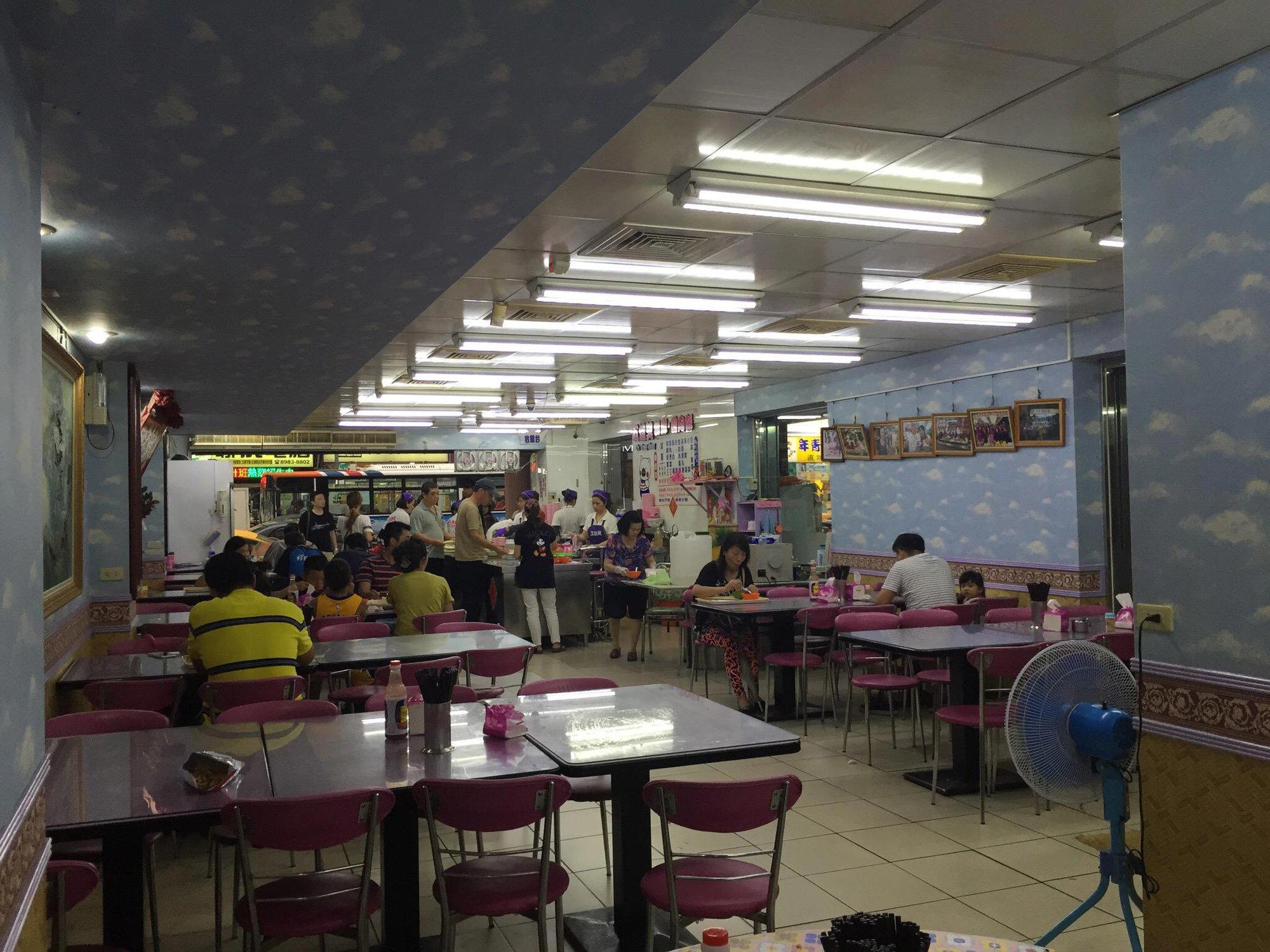
Sanchong's Street-Level Food Culture and Where Lu Rou Fan Fits
New Taipei City's Sanchong District sits directly across the Danshui River from Taipei proper, connected by bridge but operating on its own culinary register. Where central Taipei has absorbed the prestige economy of tasting menus and Michelin recognition (venues like logy in Taipei represent that end of the spectrum), Sanchong has retained the denser, more utilitarian food culture of a working-class satellite district. The restaurants that define its character are not destination projects. They are places where the same families eat the same dishes week after week, and the cooking earns loyalty through consistency rather than novelty.
Lu rou fan, braised pork rice, is the dish that most clearly embodies that logic. The formula is deceptively constrained: fatty pork, typically shoulder or belly, slow-braised with soy sauce, rice wine, and five-spice until the collagen breaks down and the fat becomes translucent and yielding, then ladled over plain steamed rice. The dish has roots across the Taiwanese-Fujianese culinary tradition, though Taiwanese preparations tend toward a sweeter, more soy-forward profile than their mainland cousins. At its leading, the braising liquid carries enough depth that a single spoonful over plain rice constitutes a complete flavour experience. This is cooking that resists elaboration by design.
仁大魯肉飯 on Daren Street
仁大魯肉飯 operates from No. 40號, Daren St, a residential-commercial strip typical of Sanchong's inner blocks. The address itself signals the format: this is neighbourhood infrastructure, not a curated dining room. Taiwanese street-level lu rou fan shops of this type typically occupy narrow storefronts with shared seating, open kitchens, and menus written on wall boards or laminated sheets. The experience is transactional in pace but communal in atmosphere, the kind of place where you order at the counter, eat efficiently, and leave room for the next person during the lunch rush.
No awards record, chef attribution, or formal price data is available for 仁大魯肉飯 in public databases, which is itself an accurate description of how this category of restaurant operates in Taiwan. The absence of a Michelin bib, a press profile, or a booking system reflects its everyday, neighborhood role. For context, the Taiwanese restaurants currently drawing international critical attention, such as JL Studio in Taichung or GEN in Kaohsiung, occupy a structurally different tier: long tasting menus, significant price points, and international press cycles. 仁大魯肉飯 competes in none of that. Its comparable set is the other braised-pork rice shops within walking distance in Sanchong, judged by the same regulars on the same criteria every day.
Within Sanchong itself, this restaurant shares the district's dining fabric with establishments like 先覺菜滷庫 and 廚鄉海鮮餐廳, each operating in its own format but all part of the same neighbourhood-serving ecosystem. For a broader picture of what Sanchong's dining scene covers, the full Sanchong District restaurants guide maps the range.
The Cultural Weight of a Bowl of Braised Pork Rice
Understanding 仁大魯肉飯 requires placing lu rou fan inside its cultural context rather than evaluating it against fine-dining criteria. The dish is among the more widely eaten in Taiwan, present at every price point from roadside stalls to the side dishes at upscale Taiwanese-contemporary restaurants. At Golden Formosa Taiwanese Cuisine 金蓬萊遵古台菜餐廳 in 士林, an establishment with a documented lineage in classical Taiwanese cooking, lu rou fan appears as part of a broader heritage menu. The dish's presence at both ends of the formal-informal spectrum illustrates its centrality: it is not street food that aspires upward, nor fine dining that condescends downward. It simply occupies its own continuous register across Taiwanese food culture.
Sanchong, as a district with a historically dense population of working families and a strong tradition of everyday eating houses, represents the dish in its most unreconstructed form. There is no pressure here to modernise the recipe, introduce alternative proteins, or plate it for a camera. The braising pot runs continuously during service hours. The rice is kept warm. The pickled vegetables or braised egg that accompany it are sourced from the same suppliers they have always been. This kind of inertia is a virtue in the context of Taiwanese comfort food, not a limitation.
Across Taiwan, the same logic applies to similar specialists. Chenggong Douhua in Chenggong and Ah Zhen Rou Bao in Lukang each operate in their own single-dish or narrow-menu tradition, sustained by local demand rather than tourist or critical attention. The structural similarities across these venues, street addresses, no reservations, walk-in only, oral menus or board menus, cash-preferred, point to a durable format that Taiwanese food culture has never felt the need to replace.
仁大魯肉飯 is located at Daren Street in Sanchong District, New Taipei City, accessible from central Taipei via the MRT Sanchong or Xinzhuang lines and a short walk or taxi ride. Walk-ins are the norm here. Taiwanese lu rou fan shops of this type generally operate across lunch and into the early evening, with midday representing the busiest window and the highest likelihood of the braising liquid being at full depth. Arriving slightly off the lunch peak, before noon or after 1:30pm, typically allows more relaxed seating. For those building a broader Taiwan itinerary, A Xia in Tainan and GARDENh in Yonghe District represent different points on the regional dining spectrum worth considering alongside a Sanchong stop.
Cost Snapshot
Comparable venues nearby, for context on price, style, and recognition.
| Venue | Cuisine | Price | Notes |
|---|---|---|---|
| 今大魯肉飯This venue — the venue you are viewing | Not listed | $$ | Not listed |
| 店小二魯肉飯 | Not listed | $ | Sanchong District, Taiwanese Braised Small Intestine |
| å èè ¿åº« | Sanchong District, chinese | $ | Not listed |
| Hómee (好饗廚房) | 大園區, Taiwanese Home-Style | $$ | Not listed |
| 甕窯雞 Ong Yau Ji(蘭陽礁溪總店) | Not listed | $$ | 礁溪鄉, Traditional Taiwanese Kiln-Roasted Chicken |
| 明福台菜 | Heng'an, Taiwanese Homestyle | Not listed | Not listed |
Recognition history
Dated appearances from independent guides and award organizations, with the underlying list record or original source where available.
Michelin Plate
Michelin
Continue exploring
More in Sanchong District
Restaurants in Sanchong District
Browse all →
Bars in Sanchong District
Browse all →
Hotels in Sanchong District
Browse all →
Wineries in Sanchong District
Browse all →
At a Glance
- Cozy
- Casual
- Family
- Casual Hangout
Current opening hours
- Monday
- 11 AM–9:30 PM
- Tuesday
- 11 AM–9:30 PM
- Wednesday
- Closed
- Thursday
- 11 AM–9:30 PM
- Friday
- 11 AM–9:30 PM
- Saturday
- 11 AM–9:30 PM
- Sunday
- 11 AM–9:30 PM
Hours can change for holidays and private events. Last verified .
Casual and welcoming with bright lighting and a no-frills local eatery atmosphere.