Our verdict
On Via Melchiorre Gioia in Milan's Porta Nuova district, Byblos occupies a dining tier where atmosphere and format carry as much weight as the plate. The address places it within reach of the city's broader fine-dining corridor, where venues like Seta and Andrea Aprea set the competitive register. Sparse confirmed data means specifics should be verified directly before visiting.
The menu
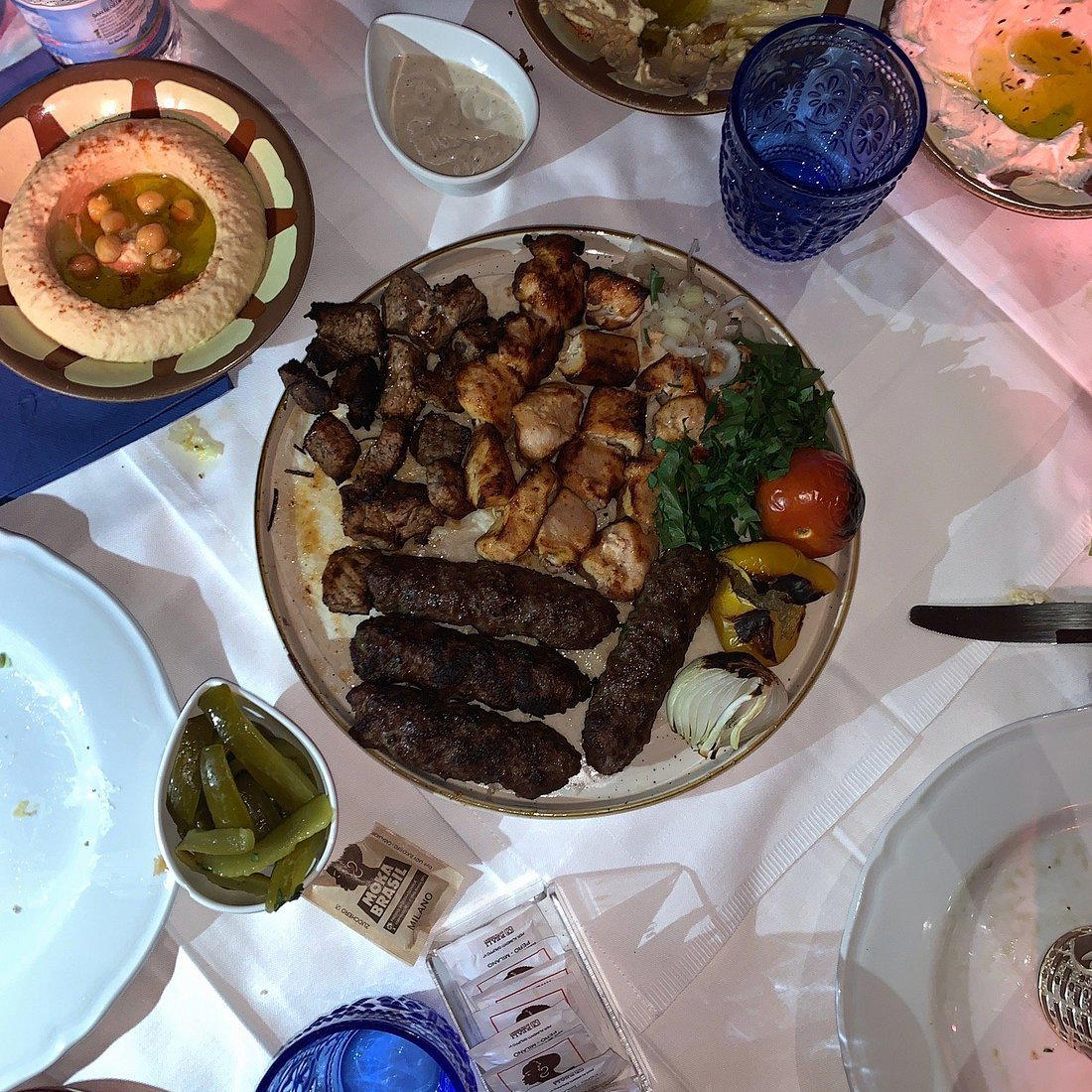
What to order
- Shish Tawook
- Hummus
- Lamb shanks
Via Melchiorre Gioia and the Porta Nuova Dining Shift
Milan's Porta Nuova quarter has spent the better part of a decade repositioning itself. Once defined by construction hoardings and the slow emergence of glass towers, the neighbourhood around Via Melchiorre Gioia now anchors a distinct dining and hospitality corridor, one that sits at an angle to the older, more tourist-dense circuit around the Duomo and Brera. Restaurants in this zone tend to draw a clientele that is professionally local rather than visitor-led, and the atmosphere they generate reflects that: quieter, more considered, less theatrical than the historic centre. Byblos, at number 69 on Via Melchiorre Gioia, is positioned inside that shift.
The address itself signals something. Gioia is a long, wide artery that connects the central train infrastructure of Stazione Centrale to the newer commercial geometry of the Porta Nuova towers. Dining along this spine tends to attract business-adjacent traffic during the week and a more neighbourhood-oriented crowd on weekends, a pattern common across Milan's outer fine-dining belt. For context, Seta and Andrea Aprea define the upper register of Milan's modern Italian dining scene, and Byblos operates in geographic proximity to that competitive set, though its precise positioning within the tier requires direct verification.
What the Porta Nuova Atmosphere Delivers
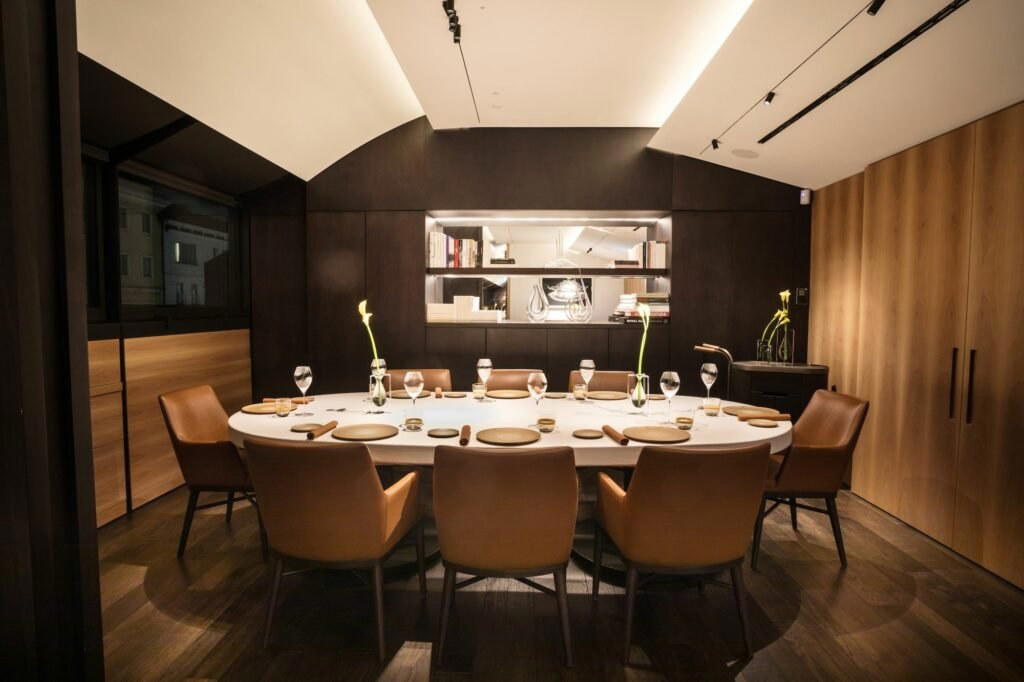
The sensory character of dining in this part of Milan differs from what visitors expect when they think of Italian restaurant atmosphere. There is no centuries-old courtyard, no frescoed ceiling borrowed from a palazzo. The architecture here is post-2010, functional in its bones even when softened by interior design. What that context produces, at its better addresses, is a kind of deliberate atmosphere: spaces where lighting, acoustics, and material choices carry the weight that history provides elsewhere. Whether Byblos achieves that calibration sits outside confirmed data, but the neighbourhood context frames the expectation correctly.
In cities like Milan, where Cracco in Galleria occupies a baroque arcade and Enrico Bartolini sits inside a museum building, the venues that operate in newer commercial districts often compensate through format discipline: tighter menus, stronger wine programs, or a more precise service rhythm. That compensation tends to produce a different kind of dining experience rather than an inferior one.
Milan's Broader Fine-Dining Register
Understanding where any Milan address sits requires a map of the city's dining tiers. At the reference level, Italy offers some of its most recognised tables: Osteria Francescana in Modena, Piazza Duomo in Alba, and Le Calandre in Rubano anchor the national conversation about what Italian fine dining can achieve. Enoteca Pinchiorri in Florence and Uliassi in Senigallia represent the regional depth that makes Italy's dining geography genuinely complex. Atelier Moessmer Norbert Niederkofler in Brunico, Reale in Castel di Sangro, and Dal Pescatore in Runate each define a different regional register.
Within Milan specifically, the city supports a concentration of serious tables that is unusual even by Italian standards. Verso Capitaneo represents the creative tier. Contraste operates in the progressive Italian space. The cumulative effect is a city where mid-to-upper dining requires genuine differentiation to hold attention, and where format, service, and atmosphere carry almost as much editorial weight as the food itself. For a complete orientation, see our full Milan restaurants guide.
The Sensory Register of Italian Urban Dining
One of the defining characteristics of Milan's better restaurants is how deliberately they manage the sensory environment. This is a city that takes design seriously at every level, and that ethos extends into dining rooms. Acoustics are treated rather than incidental. Lighting is typically low and warm, calibrated to make the room feel intimate without becoming dim enough to obscure the plate. Service rhythm in Milan's serious tables tends toward the formal without rigidity, a balance that separates it from both the casual warmth of Neapolitan trattorie and the studied distance of some northern European fine dining.
For comparison, venues like Quattro Passi in Marina del Cantone deliver the sensory envelope of the Amalfi coast alongside their menus, and Casa Perbellini 12 Apostoli in Verona wraps its cooking in a historic Veronese setting. Milan's version of that envelope is more urban and deliberately constructed, reflecting a city that builds its atmosphere rather than inheriting it. Internationally, the discipline of atmosphere management at serious tables can be compared to venues like Le Bernardin in New York City or Lazy Bear in San Francisco, both of which treat the physical environment as integral to the overall experience rather than supplementary to it.
Planning a Visit: What to Verify Directly
The venue data available for Byblos at this stage does not include confirmed hours, pricing, booking method, or cuisine type. Given that the restaurant operates at a Milan address associated with the city's newer commercial and hospitality corridor, practical details are best confirmed directly with the venue before travel. This applies particularly to reservation windows, since Porta Nuova dining addresses tend to book with meaningful lead time during the working week and across Milan's fashion and design calendar events, when the city's dining capacity compresses sharply. The Salone del Mobile period in April and the fashion weeks in February and September are the intervals where booking ahead becomes non-negotiable across virtually all of Milan's serious dining addresses.
Visitors arriving from Stazione Centrale will find Via Melchiorre Gioia walkable from the station, making Byblos accessible without requiring a taxi or tram. The broader Porta Nuova district supports hotel options at multiple price points, and the concentration of business hotels near the towers means transport logistics are generally direct for visitors staying in that zone.
Frequently asked questions
Where do I go for Byblos?
Byblos is located at Via Melchiorre Gioia, 69, 20124 Milano MI, Italy, Milan.
How does Byblos fit into Milan's Porta Nuova dining scene compared to other restaurants on Via Melchiorre Gioia?
Via Melchiorre Gioia runs through the heart of Porta Nuova, a district that has attracted a concentration of contemporary restaurant openings tied to the neighbourhood's commercial redevelopment. Byblos at number 69 is positioned within walking distance of the quarter's main corporate and residential footfall, which typically shapes both the format and the pacing of service in restaurants along this corridor.
What do people recommend at Byblos?
Confirmed dish-level detail for Byblos at Via Melchiorre Gioia 69 is not something the venue has made publicly available in structured form. The Porta Nuova quarter around this address skews toward contemporary Italian and international cooking, so arriving with broad rather than dish-specific expectations is sensible. Check the venue directly before visiting for current menu priorities.
Do I need a reservation for Byblos?
Byblos sits in Milan's Porta Nuova district, a neighbourhood that has drawn consistent demand as the quarter has matured around the Varesine development. Restaurants in this corridor tend to fill Thursday through Saturday without much notice. Contact the venue at Via Melchiorre Gioia 69 directly to confirm booking availability and lead times before planning a visit.
What is Byblos known for?
Byblos occupies a notable address in Milan's Porta Nuova quarter, a district that has repositioned itself over the past decade from a construction zone into one of the city's more commercially active dining corridors. The venue's specific culinary identity, chef, and signature format have not been formally documented in published sources at this stage, making a direct inquiry to the restaurant the most reliable way to understand what distinguishes it within Milan's current dining register.
Awards and Standing
A quick peer list to put this venue’s basics in context.
| Venue | Cuisine | Price | Awards | Notes |
|---|---|---|---|---|
| ByblosThis venue (the venue you are viewing) | Lebanese | Not listed | Not listed | Not listed |
| Enrico Bartolini | Modern Italian Fine Dining | $300–500 | 3 Michelin Stars · World's 50 Best #85 | Creative |
| Cracco in Galleria | Modern Italian Fine Dining | $150–200 | 1 Michelin Star · World's 50 Best #33 | Modern Cuisine |
| Andrea Aprea | Modern Italian Fine Dining | $200–300 | 2 Michelin Stars · La Liste Top Restaurants | Modern Italian, Italian Contemporary |
| Seta | Modern Italian Fine Dining | $150–200 | 2 Michelin Stars · La Liste Top Restaurants | Modern Italian |
| Contraste | Modern Italian Fine Dining | $150–200 | 1 Michelin Star · La Liste Top Restaurants | Progressive Italian, Modern Cuisine |