Brine
Brine occupies a Chelsea address at 106 8th Ave that positions it squarely within one of Manhattan's most actively evolving dining corridors. The venue draws attention in a neighborhood where the competition for reservation slots runs high and the expectations for format and execution are set by a demanding local peer group. For those planning a visit, the booking logistics and neighborhood context deserve as much attention as the menu itself.
Pearl is the En Primeur Club membership app — saves, bookings, and concierge access live there. Same editors, same standards.
- Address
- 106 8th Ave, New York, NY 10011
- Phone
- +16465591660
- Website
- brinechicken.com
- Directions
- Get directions
 Saves & bookings on Pearl
Chelsea's Reservation Calculus
Manhattan dining has always sorted itself by borough and by block, and the stretch of 8th Avenue through Chelsea is no exception. The neighborhood spent a decade shedding its association with casual pre-theater eating and has emerged as a corridor where mid-format and serious dining sit closer together than in most parts of the city. Brine is a restaurant at 106 8th Ave in New York City’s Chelsea neighborhood, serving Fire-Grilled Brined Chicken at an approachable price point.
The neighborhood draws both locals from the High Line-adjacent residential blocks and visitors using it as a base for West Side exploration, which means demand on desirable slots is rarely predictable. Booking several weeks ahead is standard practice for dinner in this price and format range across the area, regardless of specific venue.
Where Brine Sits in the New York Seafood Conversation
New York's seafood-forward dining has long been anchored at the leading by counters and formal rooms that treat fish and shellfish as the primary culinary argument. Le Bernardin has held that position for decades, operating at the $$$$ tier with a French technique framework that sets the reference point for the city's most formal seafood programs. Further along the spectrum, Masa approaches Japanese seafood at an omakase format that operates on its own booking logic entirely. Brine's address and positioning place it in a different bracket, one where the format is more accessible but the neighborhood expectations remain high.
Across American cities, the seafood-forward mid-format restaurant has become a distinct and competitive category. Providence in Los Angeles and Addison in San Diego illustrate how coastal-influenced programs can build sustained reputations without operating at the omakase or grand-hotel scale. In New York, the density of options means a venue in Chelsea needs a clear point of difference to hold attention across multiple seasons.
The Booking Experience: What to Know Before You Go
Chelsea operates on the same competitive reservation dynamics as the rest of Manhattan's serious dining tier. Walk-in availability exists at some venues in the neighborhood during off-peak hours, typically early in the week or at early-service slots on weeknights, but for weekend dinner or prime Friday slots, advance booking is the baseline expectation.
Venues at this address range and format in New York typically open reservations two to four weeks in advance on standard booking platforms, with some holding back a percentage of tables for same-week release. The practical implication: checking availability weekly in the run-up to a planned visit is often more productive than a single attempt made months out. This pattern holds across comparable venues in the city, from Atomix on the Korean tasting-menu side to Eleven Madison Park at the long-form tasting format end.
For visitors building a wider New York itinerary around serious dining, the city's planning logic is usefully compared to other American destinations. The French Laundry in Napa, Smyth in Chicago, and Single Thread Farm in Healdsburg each operate with their own booking windows and formats, but Manhattan's density means the gap between a reservation secured and a reservation missed can close faster than in smaller markets. Consulting our full New York City restaurants guide before locking a trip calendar is time well spent.
The Neighborhood Frame
8th Avenue in Chelsea reads differently depending on the block. The section around 106 is within easy reach of the High Line's southern end, the galleries of West 22nd and 23rd Streets, and the residential density that pushes dinner demand into a fairly compact evening window. Pre-theater traffic from the nearby Joyce Theater adds a layer of early-slot competition on performance nights. The practical upshot is that 6:30pm and 9pm bookings tend to have more availability than the 7:30-8:30pm band that dominates demand in most Manhattan neighborhoods.
The area's evolution from a historically industrial and nightlife-oriented zone into a mixed dining and gallery corridor parallels what happened in the Meatpacking District to the south and the Hudson Yards development to the north, though Chelsea has retained more of its neighborhood-scale texture. That texture makes it a more comfortable dining neighborhood than some of the more aggressively redeveloped West Side blocks, and it supports the kind of repeat-visitor dynamic that sustains serious restaurants over multiple years.
For context on how farm-to-table and produce-led programs have shaped comparable neighborhoods elsewhere, Blue Hill at Stone Barns in Tarrytown and Lazy Bear in San Francisco illustrate the format discipline that has become a reference point for serious mid-scale American dining. In New York itself, the conversation around ingredient sourcing and seasonal adjustment has moved from a differentiating factor to a baseline expectation at venues operating in Chelsea's current competitive band.
Broader American Dining Context
Brine sits within a broader national conversation about what serious American dining looks like outside the tasting-menu format. Emeril's in New Orleans, Frasca Food & Wine in Boulder, and The Inn at Little Washington each represent venues that built sustained reputations through format consistency and clear culinary identity rather than award cycles alone. In European terms, the kind of terroir-led discipline seen at Atelier Moessmer Norbert Niederkofler in Brunico or the family-rooted continuity at Dal Pescatore in Runate reflects a long-game approach that New York's more competitive environment makes harder to sustain but no less admired when achieved.
For Per Se at the summit of the city's formal French tier, the booking logic, price point, and format expectations are well-documented and relatively fixed. Brine operates in a different register, where the format remains open to the kind of flexibility that makes it accessible to a wider range of dining occasions without sacrificing the neighborhood's expectation of seriousness.
Planning Your Visit
106 8th Ave sits in Chelsea, accessible from the 14th Street A/C/E stop or the 23rd Street C/E stop, both within a short walk. The block is direct on foot from the High Line's 14th Street entrance. Evening arrivals by subway are the practical standard for this neighborhood; parking is limited and street options on 8th Avenue are constrained during peak hours.
Brine is open daily from 11:30 AM to 10 PM and is casual, with walk-ins welcome. This applies as a general discipline for any serious dining reservation in Manhattan, where policies shift with format changes and seasonal adjustments.
Price and Recognition
Comparable venues nearby, for context on price, style, and recognition.
| Venue | Cuisine | Price | Notes |
|---|---|---|---|
| BrineThis venue — the venue you are viewing | Not listed | $$ | Not listed |
| Cookshop | Chelsea-Hudson Yards, New American | $$ | Not listed |
| Eisenberg's Sandwich Shop | Not listed | $$ | Midtown South-Flatiron-Union Square, Classic New York Deli |
| Egg | Williamsburg, Egg-Centric American Cafe | $$ | Not listed |
| North Square | Not listed | $$ | Greenwich Village, Seasonal American Bistro |
| Talea Penn District | Not listed | $$ | Midtown South-Flatiron-Union Square, Brewpub with Pub Classics |
Continue exploring
More in New York City
Restaurants in New York City
Browse all →
Bars in New York City
Browse all →
Hotels in New York City
Browse all →




At a Glance
- Casual
- Modern
- Cozy
- Casual Hangout
- Beer Program
Current opening hours
- Monday
- 11:30 AM–10 PM
- Tuesday
- 11:30 AM–10 PM
- Wednesday
- 11:30 AM–10 PM
- Thursday
- 11:30 AM–10 PM
- Friday
- 11:30 AM–10 PM
- Saturday
- 11:30 AM–10 PM
- Sunday
- 11:30 AM–10 PM
Hours can change for holidays and private events. Last verified .
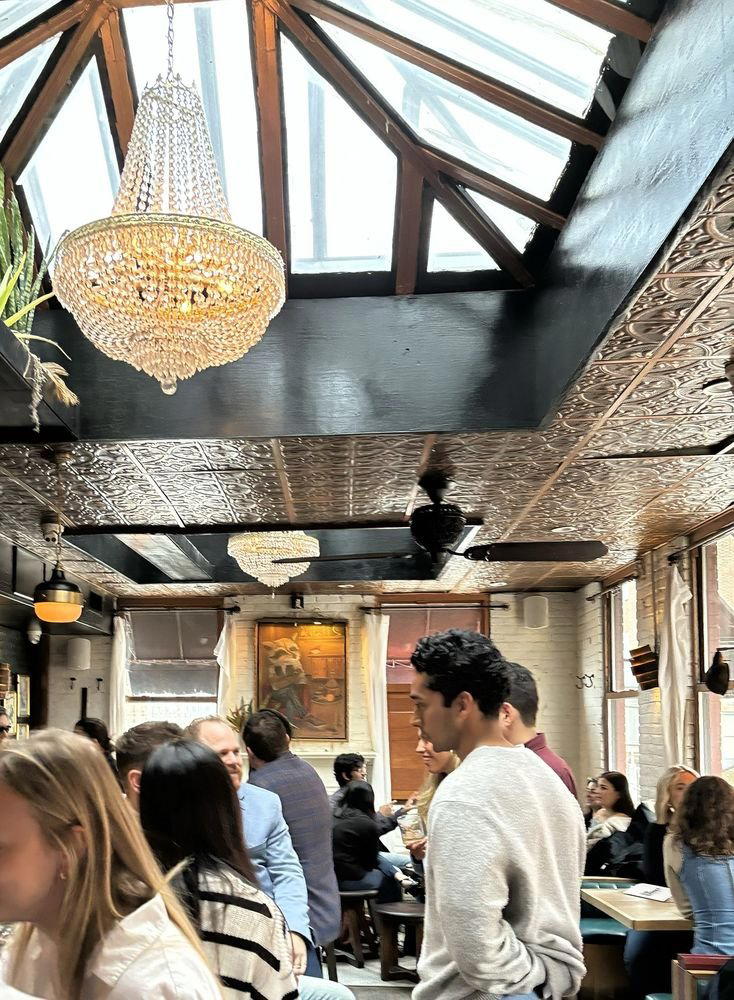
Casual and comfortable with a fine dining experience through subtle details in a self-serve setting.