Bread & Circus

Tabelog 100 #80
Our verdict
Bread & Circus belongs to the serious end of Japan’s bakery culture: small-format, takeaway-led, and judged by regulars as much as by awards. Its Tabelog Bread EAST 100 selection in 2022, earlier Hyakumeiten appearances, and low everyday price band make it a useful stop for travellers reading Yugawara through craft food rather than resort dining.

Pearl is the En Primeur Club membership app — saves, bookings, and concierge access live there. Same editors, same standards.
- Address
- Japan, 〒259-0303 Kanagawa, Ashigarashimo District, Yugawara, Doi, 4 Chome−2−16
- Phone
- +81 465-62-6789
- Hours
- Mon 11:30 AM–4:30 PMTue–Thu ClosedFri–Sun 11:30 AM–4:30 PM
- Website
- breadandcircusjapan.com
- Directions
- Get directions
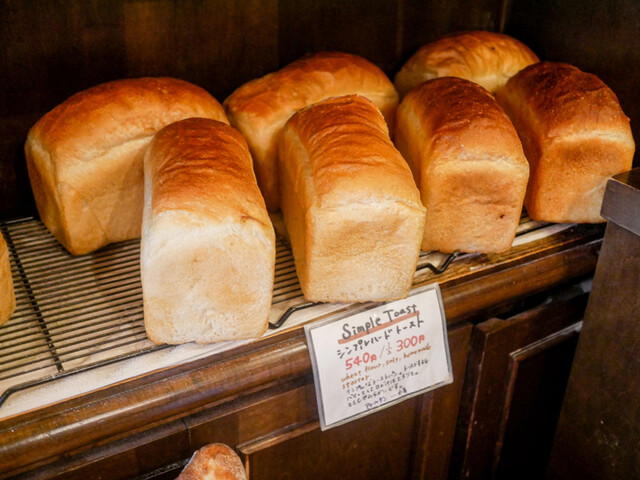
The menu
What to order
- Sourdough bread
- Natural yeast bread
Yugawara’s food rhythm is quieter than Tokyo’s, but expectations around bread are serious. Around the station and the onsen town’s residential streets, bakeries work as provisions: something to carry back to a ryokan room, take on a train, or build a modest lunch around between baths. Bread & Circus fits that culture as a serious neighborhood bakery rather than a destination dining room, with takeaway service centered on the counter, the day’s bake, and turnover.
That matters in Kanagawa, where coastal towns and hot-spring districts are often reduced to leisure shorthand. Yugawara is not only kaiseki dinners and inn breakfasts; small food shops carry much of its local texture. A bakery with Tabelog Bread EAST 100 recognition in 2022, plus Tabelog Bread 100 selections in 2017, 2018, 2019, and 2020, belongs to a more demanding category than a casual pastry stop. It has been judged alongside specialist bread shops across eastern Japan, where consistency matters because there is little service theater to hide behind.
A takeaway bakery in an onsen town changes the dining equation
Read Bread & Circus not as a restaurant substitute, but as another meal-planning tool. Yugawara’s formal dining clusters around inns, seasonal Japanese cooking, and reservation-led meals. A bread and Western-style sweets shop runs on a separate clock: faster, more portable, and dependent on what has come out of the oven before supply tightens. The format is takeaway specialty, so the question is not where to sit, but how it fits into a day of trains, baths, walking, and ryokan check-in windows.
Pricing lowers the threshold. With the listed average price in the JPY 999 range, this is not competing with the area’s higher-ticket meals. Nearby comparisons show the spread: Arai Shoten sits in a far more expensive dinner bracket, while Bread & Circus occupies the low-cost, high-frequency end of the local food map. That is why bakery culture in Japan deserves attention. A small purchase can carry the same local signal as a set-course meal when discipline and reputation are behind it.
Capacity sharpens the picture. Entry is limited to four people at a time, a practical constraint that shapes the experience. Small Japanese food businesses often use tight rooms and controlled flow not as luxury cues, but as operating necessities. For travellers, patience is part of the format, and the bakery is poorly suited to indecision at the counter when customers are waiting outside.
Ingredients, craft, and the discipline of repetition
Bakery sourcing is harder to summarize than sushi fish or wagyu lineage because many shops do not publish supplier lists. The better lens is craft dependence. Bread leaves fewer places to compensate than a plated tasting menu: flour quality, fermentation, bake timing, and storage show quickly. In Japan’s serious bakery scene, European technique, domestic preferences, and daily routines meet in compact retail format. The strongest bakeries sell flavor while managing texture, shelf life, and volume across a changing day.
Bread & Circus is categorized as bread and Western-style sweets, placing it in a hybrid Japanese bakery tradition rather than a narrowly French pâtisserie lane. Japan’s bakery culture has long absorbed European forms, then adapted them to local habits: smaller portions, giftable sweets, savory breads, and purchases designed for train rides or home tables rather than long café sessions. In Yugawara, that portability has clear value. Visitors move between station, hillside inns, coastal routes, and bath schedules; bakery purchases travel more easily than reservations.
The Tabelog Hyakumeiten selections are the clearest public trust signal. Tabelog’s Bread 100 lists are not Michelin-style inspections, but they are influential in Japan because they reflect dense user attention and category-specific comparison. A 3.72 Tabelog score in bread is not a throwaway number; bakery ratings tend to be compressed because expectations are local, repeat-driven, and price-sensitive. Recognition across multiple years suggests the shop held attention beyond one online spike.
There is useful restraint in not over-romanticizing the place. No chef mythology is needed. The argument rests on format, awards history, category, and town context: an affordable takeaway bakery in a hot-spring area where serious food does not always appear as a seated meal. That is the kind of address that makes a trip feel less programmed.
How to place it within an Ashigarashimo food day
Ashigarashimo-Gun rewards travellers who build days by texture rather than status. Tea houses, sweets counters, ryokan meals, casual noodles, and small bakeries all matter. For a broader read, start with our full Ashigarashimo-Gun restaurants guide, then map the bakery alongside older refreshment stops such as Amazake Chaya, tea and confectionery addresses including Cha no Chimoto and Chimoto Ekimae doori ten, and a different local register at Chinese Suiyo.
The wider planning frame matters too. Ashigarashimo is not a single-neighborhood dining crawl; it is a district of station towns, coastal movement, and onsen stays. Pair restaurant planning with our full Ashigarashimo-Gun hotels guide if the trip is built around a ryokan night, or with our full Ashigarashimo-Gun experiences guide if the day is structured around baths and walking routes. The area has thinner coverage for drinking and wine-focused travel, but our full Ashigarashimo-Gun bars guide and our full Ashigarashimo-Gun wineries guide help set expectations before arrival.
For readers extending the trip through Japan and beyond, the contrast is instructive: this low-cost bakery stop sits opposite destination meals such as -Grilled beef Sukiyaki- KAMAKURA TANUKIAN 鎌倉 たぬき庵 in Kamakura, city restaurants like. 鮪と炭火焼き うお炭 秋葉原店 in Tokyo, casual urban stops such as.cafe in Osaka and.know in Kumamoto, and regional specialists including (Shoku) Vietnam in Kawasaki and [Curry Senmon Ten] Maruyama Kyoju. in Sapporo. Overseas, the same principle holds at compact-format specialists such as Jōdo Saké Bar in Los Angeles and Onigiri Time in Pasadena: scale is not the point; repeatable craft is.
Frequently asked questions
What are Bread & Circus's hours?
Hours at Bread & Circus: Mon: 11:30 AM–4:30 PM; Tue: Closed; Wed: Closed; Thu: Closed; Fri: 11:30 AM–4:30 PM; Sat: 11:30 AM–4:30 PM; Sun: 11:30 AM–4:30 PM.
Is Bread & Circus expensive?
Pricing at Bread & Circus is listed as - JPY 999 - JPY 999.
What part of town is Bread & Circus in?
Bread & Circus is located in Ashigarashimo-Gunimo-Gun.
What's Bread & Circus best at?
Bread & Circus is strongest as a take-out bakery, backed by its Tabelog Bread EAST 100 selection in 2022. The format is simple: bread and Western-style sweets, served in Yugawara at 4 Chome-2-16, with short opening hours that reward an early arrival.
Is Bread & Circus good for vegetarians?
For vegetarians, the bread-and-sweets focus is the key point: the menu category is Bread and Western-style sweets, not a meat-led dining room. That makes it a practical stop in Ashigarashimo-Gun for plant-forward snacking, though the range will depend on the day’s bake.
Is Bread & Circus a family-friendly restaurant?
Yes. the public record explicitly lists it as family friendly, with children welcome, including babies, preschoolers, and school-age children. It is also take-out only, which suits a stop before or after time in Yugawara. Check the venue's official channels for the latest details.
Side-by-Side Snapshot
Nearby venues at a similar price tier for orientation.
| Venue | Cuisine | Price | Awards | Notes |
|---|---|---|---|---|
| Bread & CircusThis venue — the venue you are viewing | Japanese Bakery Café | Not listed | Tabelog 100 #80 | Not listed |
| Ito Ke no Tsubo | Japanese Sushi Omakase | Not listed | Tabelog 100 #24 | Manazuru |
| Sumibi Teppan Yaki Toki | Teppanyaki & Charcoal-Grilled Japanese | Not listed | Tabelog 100 #30 | / Ashigarashimo-gun |
| Chimoto Ekimae doori ten | Traditional Japanese wagashi & sweets shop | Not listed | Tabelog 100 #51 | Hakone Yumoto |
| Cha no Chimoto | Traditional Japanese Wagashi Café | $10–20 | Tabelog 100 #39 | Hakone Yumoto |
| Takeyabu Hakone ten | Traditional Soba & Japanese Cuisine | $20–30 | Tabelog 100 #34 | Motohakone |
Recognition history
Dated appearances from independent guides and award organizations, with the underlying list record or original source where available.
Tabelog 100 #80 · No. 80
Tabelog · Tabelog 100 - Bread - EAST - 2022
Continue exploring
More in Ashigarashimo-Gun
Restaurants in Ashigarashimo-Gun
Browse all →
Bars in Ashigarashimo-Gun
Browse all →



Details
- Cozy
- Rustic
- Casual Hangout
- Solo
- Family
- Standalone
- Organic
- A La Carte
- Vegetarian Friendly
Current opening hours
- Monday
- 11:30 AM–4:30 PM
- Tuesday
- Closed
- Wednesday
- Closed
- Thursday
- Closed
- Friday
- 11:30 AM–4:30 PM
- Saturday
- 11:30 AM–4:30 PM
- Sunday
- 11:30 AM–4:30 PM
Hours can change for holidays and private events. Last verified .
A simple, unpretentious bakery atmosphere centered on freshly made bread and a neighborhood feel.