
Tabelog 100 #89
Our verdict
Kamakura’s sweet-shop circuit rewards places that understand restraint, portability, and the temple-town rhythm of grazing between visits. arbre noir YAKUMI belongs to that tradition: a Japanese traditional sweets address in Yukinoshita with Tabelog 100 recognition for 2023, take-out service, and a low-spend format that suits a short stop rather than a long meal.

Pearl is the En Primeur Club membership app — saves, bookings, and concierge access live there. Same editors, same standards.
- Address
- 神奈川県鎌倉市雪ノ下1-8-39
- Phone
- +81467538210
- Hours
- Daily 10 AM–6 PM
- Website
- arbrenoir.com
- Directions
- Get directions
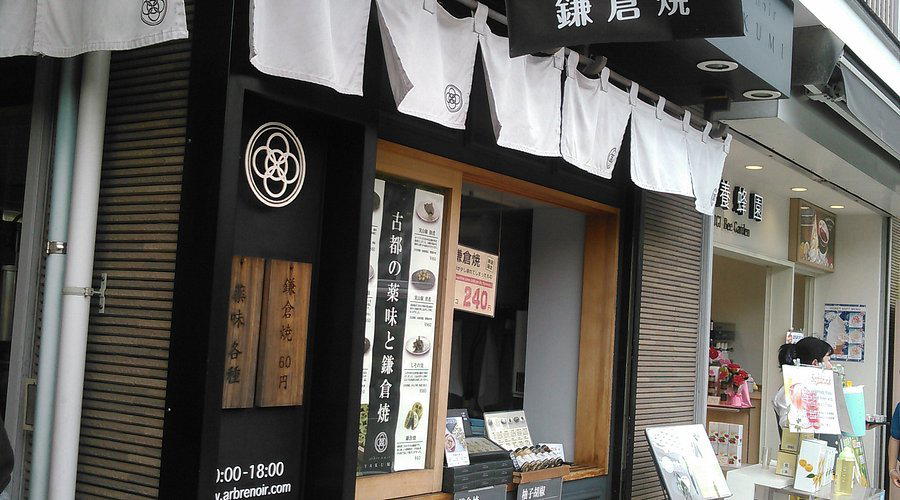
Yukinoshita has a particular food tempo: visitors move between station streets, shrine approaches, and side lanes with something small in hand rather than settling into formal lunch. Here, Japanese sweets are less a dessert course than a walking-scale craft, built around portion, season, wrapping, and the discipline of not overloading the palate before the next stop.
arbre noir YAKUMI fits that Kamakura pattern. Its category is Japanese traditional sweets, its service is take-out, and its 2023 selection for Tabelog 100 Japanese traditional sweets / Japanese sweets cafe EAST places it within a curated regional group, not the broad tourist-snack field. In Kamakura, where proximity to major sightseeing routes can make casual food look interchangeable, that recognition is a useful filter: it points to a shop working in a craft category where sourcing, texture, and shelf-life discipline matter more than dining-room theatre.
Wagashi in a temple-town economy of small stops
Kamakura is not Tokyo’s counter-dining machine. Its food culture is more fragmented: bakeries, cafés, curry shops, sweet counters, and casual specialists spread around station approaches and shrine-bound streets. A day is often assembled from small decisions. A bread stop at Bergfeld Kamakura honten, coffee at Cafe Vivement Dimanche, curry at Caraway, or a bakery run to CALVA serve different parts of the same local rhythm. Japanese sweets occupy the quieter lane: less about lingering, more about precision packed for movement.
The ingredient question is central. Wagashi depends on a short list of materials that quickly expose shortcuts: bean paste, sugar, rice, starch, nuts, citrus, tea, and seasonal aromatics. The craft is calibration. Sweetness has to travel without turning heavy; texture has to survive the gap between counter and consumption; packaging has to protect form without feeling overproduced. In a city where visitors carry food between shops and temple grounds, those choices are not decorative. They define whether a sweet makes sense in Kamakura at all.
That is why the low-spend category misleads. A sub-JPY 1,000 sweet-shop stop can involve more craft scrutiny than a pricier café plate because there is little room to hide. Nearby casual addresses make the comparison useful: Kamakura Chacha, Coquelicot Crepe Ten, Caraway, and Come va? SHOP Dankazura ten all work in accessible price bands, while OXYMORON komachi Komachi sits higher. The decision is not only cost. It is format. Sweets shops reward a different appetite, calibrated to a pause rather than a meal.
Recognition matters when the format is deliberately modest
Tabelog’s Hyakumeiten lists are especially relevant for categories tourists can misread at street level. The 2023 Japanese traditional sweets / Japanese sweets cafe EAST selection gives arbre noir YAKUMI a credential in a field where many shops look similar from the pavement. It does not turn the experience into luxury dining, and that is the point. The signal is that a modest take-out sweets format has been measured against specialist peers across eastern Japan.
For travelers, the implication is simple: treat this as part of a Kamakura food circuit, not the anchor meal of the day. Its value lies in scale. It suits the moment between coffee and the next temple, or after a casual lunch when a full café sitting would feel unnecessary. Families fit the format better than they would at a counter restaurant with a fixed course structure; children are welcome, and take-out reduces the pressure of long seated service.
The absence of private rooms and parking also tells you how to use it. This is not built for a chauffeured detour or celebratory group meal. It belongs to foot traffic, station-area planning, and the kind of Kamakura day where food decisions are made in sequence. For a broader route, pair it with the city overview in Our full Kamakura restaurants guide, then decide whether the day needs cafés, sweets, or a more substantial lunch. Visitors planning beyond food can also cross-check Our full Kamakura hotels guide, Our full Kamakura bars guide, Our full Kamakura wineries guide, and Our full Kamakura experiences guide for the rest of the itinerary.
How to place it within a wider Japan itinerary
For travelers using Kamakura as a day trip rather than a base, this kind of stop is a useful counterweight to reservation-led dining elsewhere in Japan. Tokyo and Osaka itineraries often become table-driven, built around fixed meal times. Kamakura rewards looser sequencing. A sweets purchase in Yukinoshita keeps the day flexible while still giving a clear read on local food culture.
That flexibility also makes the shop a useful editorial contrast within the wider EP Club Japan map. Compare casual regional specialists such as Cabbage Batake in Kamakura.cafe in Osaka.know in Kumamoto, (Shoku) Vietnam in Kawasaki, [Curry Senmon Ten] Maruyama Kyoju. in Sapporo, or [ki:] in Kyoto, and local eating often turns on narrow specialism rather than breadth. Even outside Japan, compact formats such as Jōdo Saké Bar in Los Angeles and Onigiri Time in Pasadena show the same lesson: a small format succeeds when it knows exactly what role it plays.
The sharper Kamakura move is to avoid over-scheduling it. arbre noir YAKUMI makes sense when the day is already in motion: a sweets stop with recognized specialist credentials, accessible pricing, and a take-out rhythm suited to Yukinoshita. It is not trying to compete with a long lunch, and should not be judged like one. Its place is in the small, exacting category of Japanese sweets that can carry a neighbourhood’s food identity in a few bites and a short pause.
For travelers continuing to Tokyo, the contrast is useful:. 鮪と炭火焼き うお炭 秋葉原店 in Tokyo belongs to a different urban dining register, built around a larger-city meal decision rather than Kamakura’s grazing logic. That difference is the reason to keep a sweets stop in the plan. It gives the city its own food grammar instead of turning it into a scenic add-on to Tokyo.
Frequently asked questions
Can I bring kids to arbre noir YAKUMI?
Yes. the public record lists children as welcome, and it is marked family friendly in Kamakura's Yukinoshita area. It is a take-out format, so it works well for a short stop with children. Check the venue's official channels for the latest details.
What is the atmosphere like at arbre noir YAKUMI?
Expect a take-out-focused Japanese traditional sweets cafe rather than a sit-down tea room. The Tabelog 100 selection for 2023 gives it stronger credentials than its modest format suggests, and the address places it a short walk from Kamakura Station.
How much does it cost to eat at arbre noir YAKUMI?
Pricing at arbre noir YAKUMI is listed as - JPY 999 - JPY 999.
How do I find arbre noir YAKUMI?
arbre noir YAKUMI is located in Kamakura.
Comparable Spots, Quickly
Comparable venues by cuisine and price in the same metro.
| Venue | Cuisine | Price | Awards | Notes |
|---|---|---|---|---|
| arbre noir YAKUMIThis venue — the venue you are viewing | Japanese sweets and condiments | $1–10 | Tabelog 100 #89 | Not listed |
| KIBIYA Bakery Honten | Japanese Bakery | $1–10 | Tabelog 100 #47 | Kamakura |
| mbs 46.7 | Artisanal Bread & Sandwich Bakery | $1–10 | Tabelog 100 #76 | Kamakura |
| Chikara Mochi Ya | Traditional Kamakura wagashi & mochi shop | $1–10 | Tabelog 100 #8 | Kamakura |
| OXYMORON komachi Komachi | Japanese-style spice curry & café | $10–20 | Tabelog 100 #25 | Kamakura |
| Cuillere | Japanese Curry | $10–20 | Tabelog 100 #9 | Kamakura |
Recognition history
Dated appearances from independent guides and award organizations, with the underlying list record or original source where available.
Tabelog 100 #89 · No. 89
Tabelog · Tabelog 100 - Japanese traditional sweets / Japanese sweets cafe - EAST - 2023











Details
- Cozy
- Quiet
- Classic
- Casual Hangout
- Family
- Solo
- Standalone
- Local Sourcing
- Street Scene
- A La Carte
- Counter Dining
Current opening hours
- Monday
- 10 AM–6 PM
- Tuesday
- 10 AM–6 PM
- Wednesday
- 10 AM–6 PM
- Thursday
- 10 AM–6 PM
- Friday
- 10 AM–6 PM
- Saturday
- 10 AM–6 PM
- Sunday
- 10 AM–6 PM
Hours can change for holidays and private events. Last verified .
Simple, casual, and low-key, with a modest shopfront atmosphere suited to quick takeaway or a short stop rather than a formal sit-down meal.