Brasserie Michel DEBUS
Our verdict
Brasserie Michel DEBUS runs as a traditional Alsatian brasserie in Schiltigheim, with flammekueches, beer service, and a lively, casual room.

Pearl is the En Primeur Club membership app, where members save venues, book tables and use the concierge.

The menu
What to order
- Flammekueches
- Wood-fired steaks
- Cordon Bleu à la Tome d'Alsace
A Brasserie in Schiltigheim's Culinary Orbit
Schiltigheim sits just north of Strasbourg's city limits, close enough to share the Alsatian kitchen's DNA yet operating at a register that is distinctly its own. The town's dining scene runs along a practical axis: neighbourhood brasseries that serve the local population rather than destination restaurants chasing out-of-town reviewers. Brasserie Michel DEBUS, at 85 Route de Bischwiller, occupies that practical axis. The address places it on one of the main arterial routes threading through the suburb, the kind of street where the room fills with a cross-section of the arrondissement rather than a curated clientele. In a region where brasserie culture carries genuine weight, that positioning is a statement in itself.
Alsace has one of France's most coherent regional food identities. The province's cooking is rooted in proximity: proximity to German technique, to Rhine valley produce, to the vine-covered hillsides that supply both wine and a particular agricultural rigour. Brasseries here have historically been the everyday expression of that identity, distinct from the white-tablecloth formality of houses like Auberge de l'Ill in Illhaeusern or the gastronomic ambition of Flocons de Sel in Megève. The brasserie format, at its most functional, is about regular trade: reliable plates, familiar faces, a menu that does not require translation or explanation.
Where the Food Comes From
The ingredient story in Alsatian brasserie cooking is bound to the surrounding region in ways that distinguish it from its Parisian counterpart. The Alsace plain produces cabbages for choucroute, pork from local farms, freshwater fish from Rhine-adjacent waterways, and cheeses like Munster that carry AOC protection and arrive at a table tasting of the specific pastures they came from. This geography of supply is not a marketing construct: it reflects decades of agricultural tradition that predates the current interest in provenance-led menus at restaurants like Bras in Laguiole or Mirazur in Menton.
A brasserie operating on Route de Bischwiller in Schiltigheim draws on the same regional supply infrastructure as higher-profile kitchens in the area, even if it deploys those ingredients without the choreography of a tasting menu. The proximity to Strasbourg's wholesale markets and the surrounding agricultural belt means that seasonal produce moves through local kitchens quickly. That is the practical reality of cooking in this part of France: the supply chain is short, and the cuisine reflects it.
For comparison with the Schiltigheim dining scene, the town also has modern cuisine options at different price points, including Côté Lac and L'Imaginaire, both of which operate in a more contemporary register. Guillaume Scheer - Les Plaisirs Gourmands occupies the town's upper price tier at €€€€. Brasserie Michel DEBUS sits in a different segment of that local map, oriented toward frequency of visit rather than occasion dining.
The Brasserie Format and What It Asks of a Kitchen
The French brasserie is a format with specific demands. It requires consistency across a broad menu, the ability to serve a full room at lunch and again at dinner, and a kitchen that can execute classical preparations without the luxury of advance reservation patterns. Houses like Troisgros - Le Bois sans Feuilles in Ouches or Paul Bocuse - L'Auberge du Pont de Collonges represent the haute end of French classical cooking. The brasserie sits at the other end of that same continuum: same techniques, fewer courses, faster service, a room designed for turnover. That is not a lesser version of French dining; it is a different function.
In Alsace specifically, the brasserie carries regional dishes that are technically demanding in their own right. A proper choucroute garnie, made with garlic-cured lard and multiple cuts of pork over slowly fermented cabbage, takes hours. Baeckeoffe, the slow-braised meat and potato casserole sealed in a luting pastry traditionally prepared by households that left it at the bakery to cook overnight, is an exercise in timing and fat rendering. These are not simple plates to execute at volume. The ingredient sourcing that underpins them, local pork, cabbage from the plain, white wine from nearby Alsatian vignerons, matters because it determines the flavour baseline the kitchen is working from.
Planning a Visit
Schiltigheim is directly accessible from central Strasbourg via tram line D, which makes Brasserie Michel DEBUS reachable without a car from the city centre in under fifteen minutes. The address on Route de Bischwiller places it in the northern part of the suburb. For visitors staying in Strasbourg and exploring the broader dining scene, the town represents a practical detour rather than a major journey. Other options in the immediate area worth considering include Gourmand and Les Complices, both operating locally. For a broader picture of what the suburb offers, the full Schiltigheim restaurants guide covers the full range of options across price tiers and formats.
As with most neighbourhood brasseries in Alsace, the kitchen is likely to follow traditional French service hours, with a midday service and an evening service, but direct confirmation with the venue is the only reliable approach. French brasseries at this scale do not typically require advance reservations for weekday lunches, though weekend evenings in a well-regarded local room can fill quickly.
Where Brasserie Michel DEBUS Fits in the Wider French Dining Picture
Against the backdrop of France's most decorated tables, the neighbourhood brasserie occupies a role that the country's food culture has always valued: democratic access to serious cooking. Alléno Paris au Pavillon Ledoyen, Les Prés d'Eugénie - Michel Guérard in Eugénie-les-Bains, Georges Blanc in Vonnas, and La Table du Castellet in Le Castellet all represent the formal, occasion-driven end of French dining. International comparisons with Le Bernardin in New York City or Lazy Bear in San Francisco illustrate how far the spectrum extends. Brasserie Michel DEBUS operates closer to the ground, in the part of French food culture where the measure of quality is whether the choucroute is made properly and whether the carafe wine is worth ordering. That is its frame of reference, and it is a legitimate one.
Frequently asked questions
Does Brasserie Michel DEBUS work for a family meal?
The brasserie format is historically one of the most family-accommodating in French dining: broad menus, flexible pacing, and a format that runs continuous service across lunch and dinner. Located at 85 Route de Bischwiller in Schiltigheim, the venue sits in a residential northern suburb of Strasbourg, where the clientele tends to skew local and multigenerational rather than destination-focused. That context makes it a practical rather than theatrical choice for a family gathering.
How would you describe the vibe at Brasserie Michel DEBUS?
Schiltigheim operates at a quieter register than central Strasbourg's tourist-heavy dining circuit, and a neighbourhood brasserie on the Route de Bischwiller reflects that. Expect the working rhythm of a room built around regulars: tables that turn at lunch, conversations that run long over dinner, and a pace set by the kitchen rather than a front-of-house performance. This is a brasserie in the original sense of the word, not a concept.
Is Brasserie Michel DEBUS accessible from central Strasbourg without a car?
Schiltigheim is directly served by Strasbourg's tram line D, which connects the suburb to the city centre without requiring a transfer. The venue's address at 85 Route de Bischwiller, 67300 Schiltigheim places it within the suburb's accessible zone. This makes it a practical option for visitors staying in central Strasbourg who want to eat outside the tourist circuit without committing to a taxi or rental car.
What do regulars order at Brasserie Michel DEBUS?
These are the dishes that define the regional kitchen and distinguish it from Parisian brasserie menus. For the current menu, contacting the venue directly is the reliable route.
What part of town is Brasserie Michel DEBUS in?
Brasserie Michel DEBUS is located at 85 Rte de Bischwiller, 67300 Schiltigheim, France, Schiltigheim.
Do I need a reservation for Brasserie Michel DEBUS?
For a neighbourhood brasserie in Schiltigheim, demand is typically local and steady rather than driven by destination traffic, which can mean walk-ins work at off-peak hours. Weekends and the Friday evening service are the safest moments to book ahead. The venue's address is 85 Route de Bischwiller, 67300 Schiltigheim.
What's the standout thing about Brasserie Michel DEBUS?
The clearest point of distinction is geographic positioning: Schiltigheim sits immediately north of Strasbourg's city boundary, meaning you get proximity to one of France's most serious regional food cultures without the price pressure and reservation competition of the city centre. A brasserie at this address is serving a local room, not a tourist one, and that tends to keep both the cooking and the pricing grounded in the neighbourhood rather than calibrated to the guidebook trade.
In Context: Similar Options
Comparable venues nearby, for context on price, style, and recognition.
| Venue | Cuisine | Price | Awards | Notes |
|---|---|---|---|---|
| Brasserie Michel DEBUSThis venue (the venue you are viewing) | Traditional Alsatian Brasserie | $30–50 | Not listed | Not listed |
| Les Complices | French Meat & Smokehouse Bistro | Not listed | Not listed | Schiltigheim |
| restaurant les 4 vents | Traditional French Brasserie | $20–30 | Not listed | Schiltigheim |
| L'Imaginaire | Contemporary French Gastronomic | $30–50 | Michelin Plate | Schiltigheim |
| Gourmand | Traditional French Bistro | $50–100 | Michelin Plate | Schiltigheim |
| Côté Lac | Modern French Gastronomic | $30–50 | Michelin Plate | Espace Européen de l'Entreprise |
Continue exploring
More in Schiltigheim
Restaurants in Schiltigheim
All restaurants in Schiltigheim →
Bars in Schiltigheim
Browse all →

Details
- Industrial
- Classic
- Lively
- Group Dining
- Casual Hangout
- Family
- Open Kitchen
- Beer Program
- Local Sourcing
- A La Carte
- Beer Program
Current opening hours
- Monday
- 11:45 AM–2 PM, 6:30–10 PM
- Tuesday
- 11:45 AM–2 PM, 6:30–10 PM
- Wednesday
- 11:45 AM–2 PM, 6:30–10 PM
- Thursday
- 11:45 AM–2 PM, 6:30–10 PM
- Friday
- 11:45 AM–2 PM, 6:30–10 PM
- Saturday
- 11:45 AM–2 PM, 6:30–10 PM
- Sunday
- 11:45 AM–2 PM, 6:30–10 PM
Hours can change for holidays and private events. Hours as of .
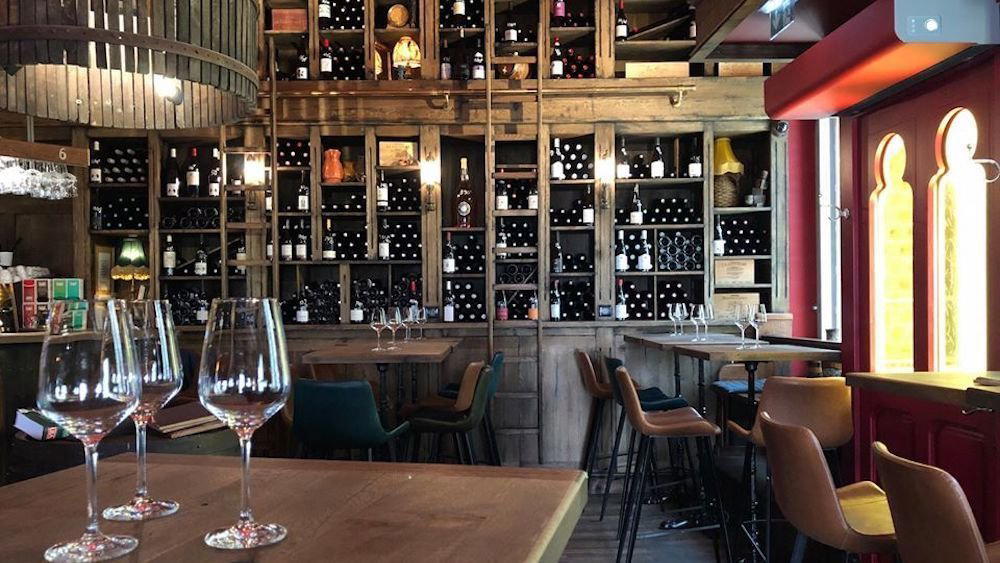
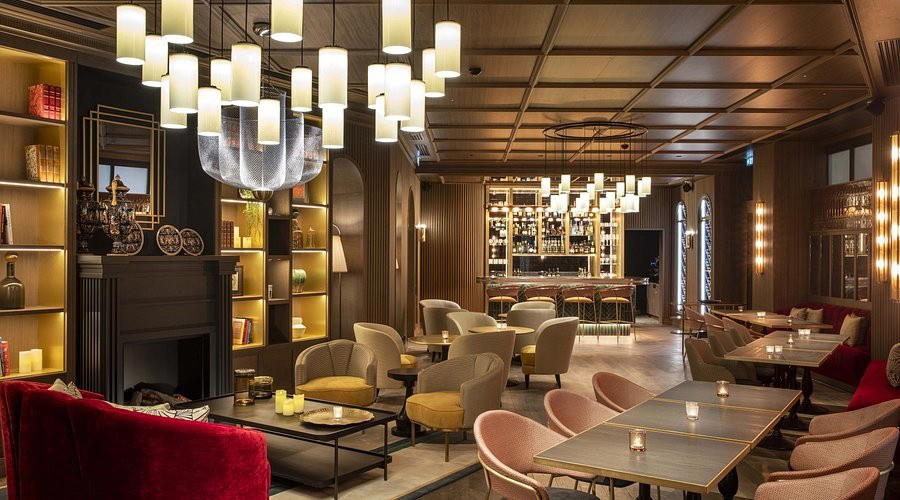
Industrial stone and copper decor with views of beer vats, creating a lively and convivial Bierstub atmosphere.