Our verdict
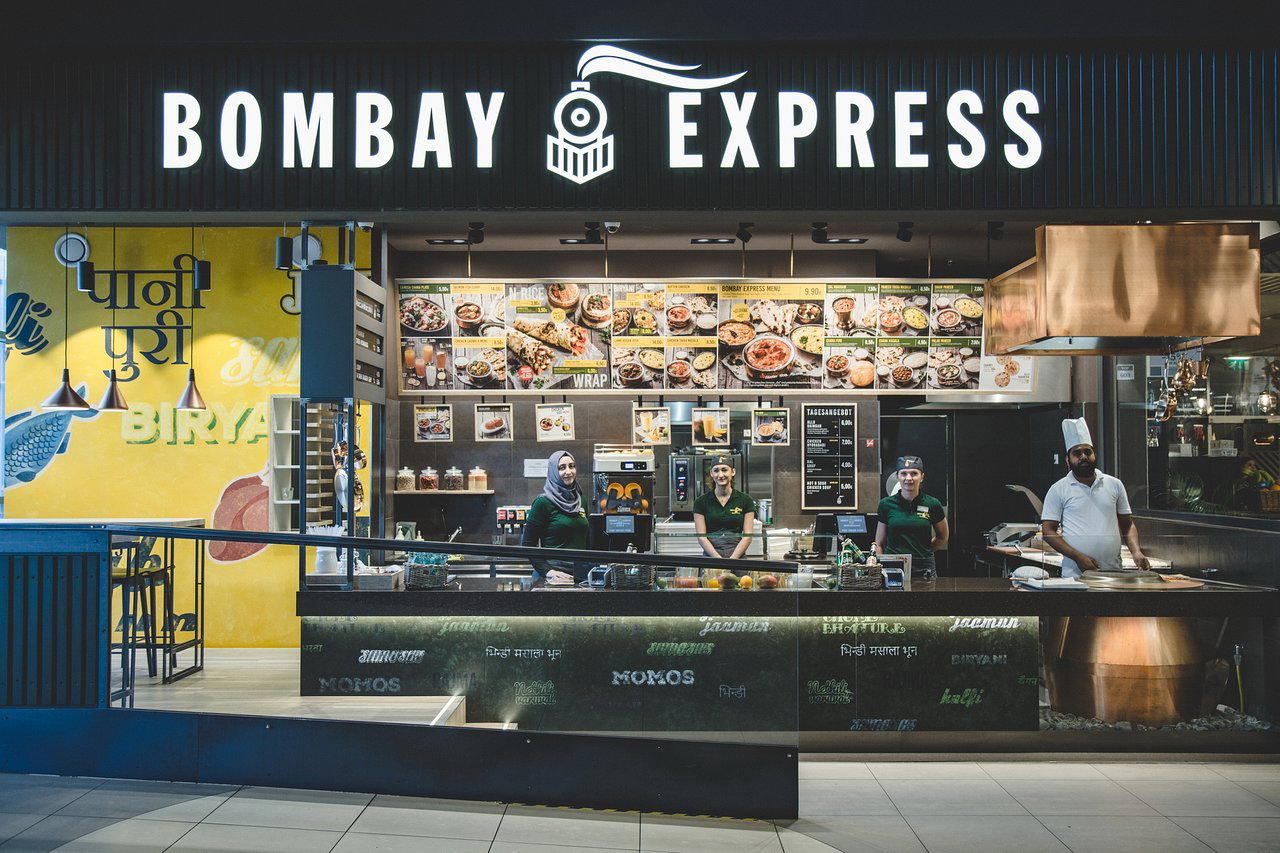
On Wagramer Strasse in Vienna's 22nd district, Bombay Express occupies a corner of the city where South Asian cooking has quietly built a loyal local following. The address draws repeat visitors rather than tourists, with the kind of regulars who arrive knowing what they want before they sit down. It represents a strand of Vienna's dining scene that operates well outside the Innere Stadt spotlight.

Pearl is the En Primeur Club membership app — saves, bookings, and concierge access live there. Same editors, same standards.
- Address
- Wagramer Str. 79, 1220 Wien, Austria
- Phone
- +436607815909
- Hours
- Daily 11 AM–9:30 PM
- Website
- bombayexpress.at
- Directions
- Get directions
The menu
What to order
- Chicken Tikka Masala
- Butter Chicken
- Palak Paneer
The 22nd District and the Geometry of Loyalty
Vienna's Indian restaurant scene is not concentrated in the first district alongside the Staatsoper and the tourist-facing Viennese classics. It spreads outward, into residential districts where the customer base is made up of neighbourhood regulars, the South Asian diaspora, and Viennese who have developed a working knowledge of subcontinental cooking over years of repeat visits. The 22nd district, Donaustadt, is one of those zones: a large, sprawling borough that functions less like a tourist itinerary entry and more like an actual city neighbourhood. Wagramer Strasse 79 puts Bombay Express squarely in that context.
This is not a venue that positions itself against the city's fine dining tier, where places like Steirereck im Stadtpark, Amador, and Konstantin Filippou compete on Michelin credibility and elaborate tasting formats. The competitive set here is different: it is measured in return visits, in whether the dal tastes right to someone who grew up eating it, and in whether a non-specialist Viennese audience keeps coming back once the novelty of trying something new has worn off.
What Keeps Regulars Returning
Across cities with established South Asian restaurant cultures, the markers of a genuinely local favourite diverge sharply from those of an international-tourist-facing Indian restaurant. The former tends to run on consistency rather than spectacle. Portion logic matters. The bread arrives hot. The heat level means something when you ask for it. The staff recognises faces. None of this is glamorous to describe, but it is precisely what builds the kind of clientele that does not need a promotional reason to return.
In Vienna's Indian dining context, this is a meaningful distinction. The city has enough South Asian restaurants that a customer base has had time to develop preferences and loyalties, to sort through the options and settle on a regular. Venues in outer districts like Donaustadt, away from the foot traffic of the 1st and 7th, survive primarily on that kind of earned loyalty rather than walk-in volume. The address on Wagramer Strasse reflects a restaurant that has positioned itself for the long game of neighbourhood dining rather than the shorter-arc business of tourist conversion.
For a counterpoint on what earned dining loyalty looks like at the top of the global scale, the contrast with places like Le Bernardin in New York City or Lazy Bear in San Francisco is instructive: even at those levels, regulars describe the pull as consistency and recognition, not novelty. The dynamic scales down but does not change in character.
South Asian Cooking in Vienna: The Broader Pattern
Indian and subcontinental cooking occupies a specific place in Vienna's restaurant culture that differs from London or Amsterdam, cities where decades of South Asian immigration have produced restaurant traditions with deep local roots and generational expertise. Vienna's South Asian dining scene is smaller and less differentiated by region, which means restaurants often cover broad ground rather than specialising in, say, Keralan seafood or Punjabi tandoor traditions exclusively.
What this produces, at its functional leading, is a competent breadth: a menu that can serve a table where one person wants a korma and another wants something closer to the hotter, drier dishes of North India. The risk is that breadth without depth produces mediocrity. The reward, when it works, is a kitchen that has learned to calibrate for a genuinely mixed audience, including customers who know the food well and will notice when something is off.
Austria's wider dining geography rewards this kind of context. Outside Vienna, serious destination restaurants like Döllerer in Golling an der Salzach, Obauer in Werfen, and Landhaus Bacher in Mautern an der Donau have built reputations over decades on the logic of consistency and regional authenticity. The same principle operates at a different register in a neighbourhood Indian restaurant in Donaustadt: the standard is not Michelin evaluation, but it is real.
The Unwritten Menu
In restaurants with established regulars, there is always a version of the menu that does not appear in print. It is the knowledge of which dishes a kitchen does at full strength, which combinations work, and when to visit. In Vienna's Indian restaurants, this kind of intelligence circulates through diaspora networks and among Viennese who have put in the time to develop a view.
Without verified dish-level data for Bombay Express, it would be irresponsible to name specific plates or describe preparation methods. What the address and context do suggest is that a restaurant operating in a residential outer district, away from tourist flow, has survived on exactly this kind of local knowledge transfer. The customer who has been coming for two years is the restaurant's most effective communication channel.
For readers planning a visit, the most reliable signal in this context is not a review from a passing critic but the behaviour of the local audience: full tables on a midweek evening, the same faces at the same tables, orders placed without consulting the menu. That pattern, wherever it appears in the world's restaurant cultures, from the izakayas of Osaka to the trattorias of Bologna, carries more weight than almost any formal credential.
Austria's restaurant scene beyond Vienna offers its own versions of this dynamic, from the alpine formality of Gourmetrestaurant Tannenhof in Sankt Anton am Arlberg to the creative regionalism of Kräuterreich by Vitus Winkler in Sankt Veit im Pongau, Stüva in Ischgl, Ois in Neufelden, Schwarzer Adler in Hall in Tirol, Restaurant 141 by Joachim Jaud in Mieming, and Taubenkobel in Schützen am Gebirge. The geography is different; the logic of earned loyalty is the same.
For the broader Vienna context and how Bombay Express sits within the city's full dining picture, see our full Vienna restaurants guide.
Know Before You Go
Address: Wagramer Str. 79, 1220 Wien, Austria
District: Donaustadt (22nd), outside the tourist centre
Phone: Not available
Website: Not available
Getting there: The 22nd district is accessible by U-Bahn (U1 line) and tram from the city centre; Wagramer Strasse is a major artery with good surface transport links
Frequently asked questions
Where is Bombay Express in Vienna?
Bombay Express is located at Wagramer Str. 79, 1220 Wien, Austria, Vienna.
Is Bombay Express a good option for Indian food in outer Vienna away from the first district?
Bombay Express on Wagramer Str. 79 is one of the few Indian dining options operating directly in the 1220 district, which is home to a large residential population but sits well outside Vienna's central restaurant corridor. For residents of Donaustadt or visitors staying near the UN Quarter or Donau City, it represents a local alternative to making the trip into the inner districts. The 22nd district's Indian restaurant offer is sparse by comparison to central European capitals with longer South Asian migration histories, which makes neighbourhood-level options here carry more practical weight.
What do people recommend at Bombay Express?
What the 22nd district crowd tends to favour at long-standing Indian restaurants in Vienna are the slower-cooked curries and bread-based accompaniments that hold up to repeat ordering. Asking staff about off-menu regulars is often the more reliable route than defaulting to the printed list.
Is Bombay Express reservation-only?
79 in Vienna's 1220 district. Neighbourhood Indian restaurants in Vienna at this address type typically operate on a walk-in basis, though calling ahead is advisable for larger groups, particularly on weekends.
What is Bombay Express known for?
Bombay Express is positioned as a neighbourhood fixture in Vienna's 22nd district, Donaustadt, an area where the Indian restaurant scene develops around residential loyalty rather than tourist traffic. Its address on Wagramer Strasse places it within a community that returns for consistency rather than occasion dining. In a city where South Asian cooking is less densely concentrated than in London or Amsterdam, venues like this function as the reliable constant for a local clientele.
Accolades, Compared
Comparable venues nearby, for context on price, style, and recognition.
| Venue | Cuisine | Price | Notes |
|---|---|---|---|
| Bombay ExpressThis venue — the venue you are viewing | North Indian Fast Food | $10–20 | Not listed |
| Hungry Guy | Middle Eastern Street Food Fusion | $10–20 | Stephansdom |
| Würstlstand | Traditional Viennese Sausage Stand | $10–20 | Alsergrund |
| Hermann's Würstelstand | Viennese Sausage Stand | $10–20 | Hofburg |
| Café Orient | Middle Eastern & Oriental | Not listed | Neubau |
| Ghörig | Vorarlberg Street Food | $10–20 | Josefstadt |