On Carrer de Tamarit in Eixample, Bodega 1900 occupies a register that sits between Barcelona's avant-garde tasting-menu circuit and the city's older vermouth-and-tapas tradition. The format is rooted in the Spanish taberna canon but executed with technical precision, placing it in a distinct tier from both the casual bar scene and the city's multi-Michelin creative restaurants.
- Address
- Carrer de Tamarit, 91, Eixample, 08015 Barcelona, Spain
- Phone
- +34 932 17 59 04
- Website
- bodegaromeria.com
- Directions
- Get directions
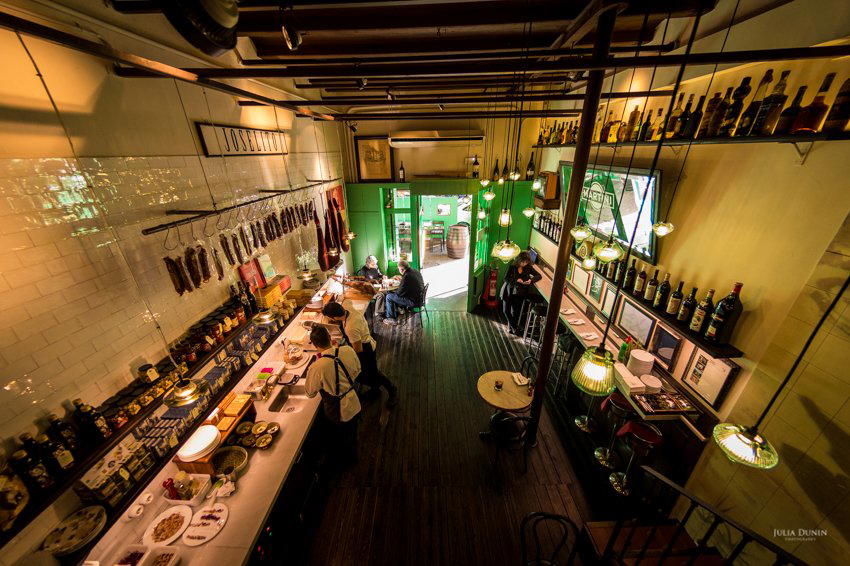
A Room That Argues Its Own Case
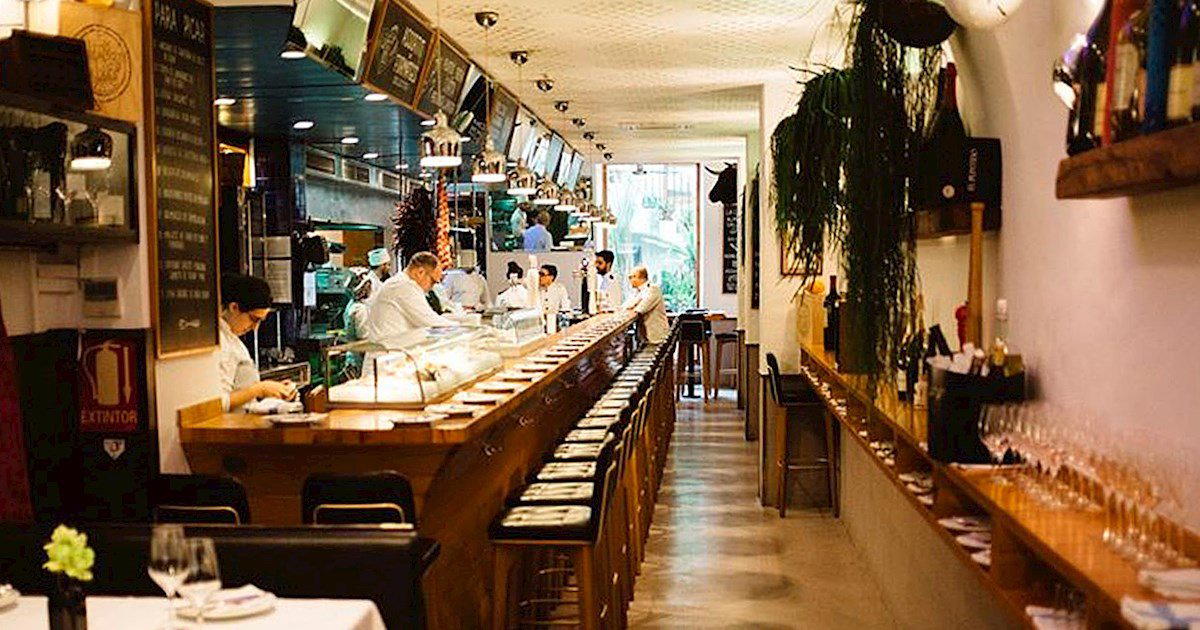
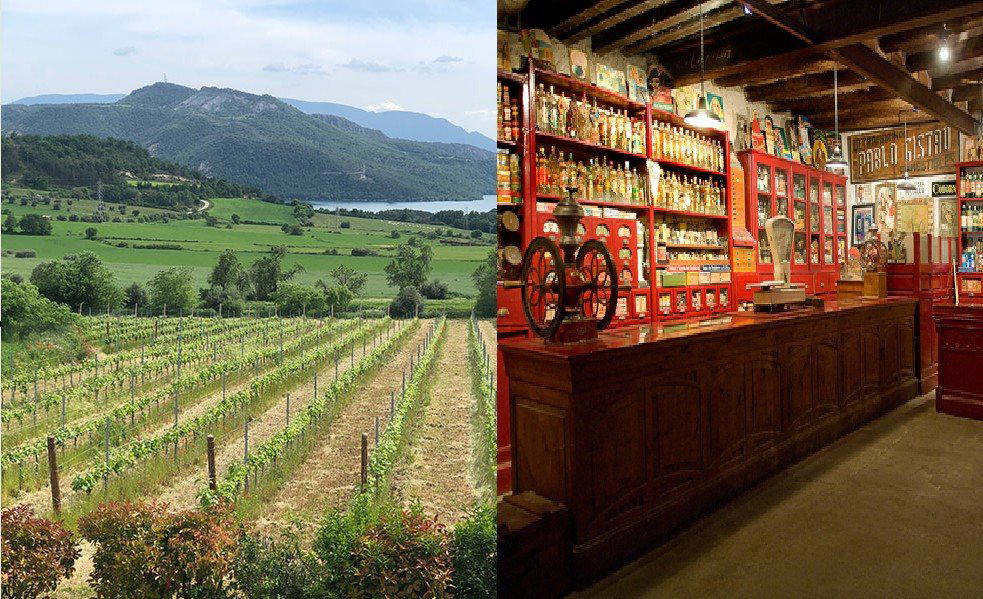
Carrer de Tamarit runs through the southern edge of Eixample, a neighbourhood whose grid-plan blocks have gradually absorbed a dense concentration of serious restaurants without ever quite losing the functional Barcelona street character that makes the area work. Bodega 1900 occupies a space on that street that reads, at first approach, as a direct early-twentieth-century Spanish taberna: tiled walls, dark wood shelving lined with bottles, the particular quality of light that comes through a narrow shopfront in the late afternoon. The physical container is the argument. Where many Barcelona restaurants signal ambition through open kitchens, tasting-counter formats, or the kind of spare Scandinavian minimalism that migrated into European fine dining during the 2010s, this room insists on a different register entirely.
The interior design references the old Spanish vermutería and bodega tradition, a format that shaped neighbourhood socialising across Catalonia and the wider peninsula for most of the twentieth century before being largely displaced by international bar culture. Reclaiming that aesthetic is not in itself unusual; many European cities have restaurants that perform a version of their own past. What distinguishes the execution here is the specificity of the references: the shelving arrangements, the tile choices, the particular warmth of the material palette. These are not approximate gestures toward an era but a considered reconstruction of a room type with its own logic about how people should sit, stand, and eat.
Where Bodega 1900 Sits in Barcelona's Dining Structure
Barcelona's restaurant tier above the casual neighbourhood level has bifurcated sharply over the past fifteen years. At one end, the city has produced particularly technically ambitious cooking in Europe. Disfrutar, Cocina Hermanos Torres, ABaC, Lasarte, and Enigma each operate in a format that requires significant advance planning, multi-course commitment, and prices that place them against international tasting-menu peers rather than local competition. At the other end, the city retains an enormous ecosystem of bars, bodegas, and market restaurants operating on volume and informality.
Bodega 1900 occupies neither position cleanly. The format draws on taberna tradition but the kitchen applies a level of technical attention that puts the food in a different category from what the room's aesthetic might suggest. This gap between the physical signal and the culinary output is a deliberate editorial position, one that places the restaurant in conversation with the broader Spanish movement of chefs who have chosen to work within popular and traditional formats rather than departing from them entirely. You can map similar decisions at work across Spain's dining scene, from El Celler de Can Roca in Girona to Ricard Camarena in València, where the relationship between tradition and technique is negotiated differently in each case but consistently taken seriously.
The Taberna Format as a Technical Container
The vermutería tradition that Bodega 1900 references was built around a specific rhythm: vermouth served before lunch, accompanied by small plates, eaten standing or at shared tables, in rooms designed for noise and proximity rather than contemplative dining. The format is sociable in a way that a structured tasting menu is not, and that sociability has its own demands on a kitchen. Dishes need to work at varying temperatures, hold up across the span of a long conversation, and read clearly without a service team explaining each component at the table.
This is a harder brief than it looks. Particularly technically demanding restaurants in Spain, from Mugaritz in Errenteria to Quique Dacosta in Dénia, operate in formats where the kitchen controls the pace entirely. Working within a more open, guest-directed format while maintaining consistent quality across a spread of small plates requires a different kind of discipline. The bodega format, at its most demanding, is a test of technique applied under informal conditions rather than ceremonial ones.
That discipline connects the restaurant to a wider Spanish conversation about what constitutes serious cooking. The Basque tradition that produced Arzak and Martin Berasategui always maintained a relationship between the pintxos bar and the fine-dining room. The Andalusian approach visible at Aponiente draws on a different set of popular references. In each case, the popular format acts as an anchor and a discipline rather than a limitation. The restaurant's positioning within the Catalan context follows a similar logic.
Eixample as a Restaurant Neighbourhood
The restaurant's address on Carrer de Tamarit is specific in ways that matter. The Eixample district covers a large area and contains restaurants across every tier and category, but the southern portion, closer to Sant Antoni and the old Esquerra de l'Eixample, has developed a denser concentration of serious eating over the past decade. The neighbourhood's market, Sant Antoni Mercat, underwent renovation and reopened in 2015, and the surrounding streets gradually attracted a cluster of food-serious operators who found the area's less tourist-heavy character useful. The restaurant fits that neighbourhood logic: visible from the street, accessible on foot from multiple parts of the city, and operating in a space that reads as part of the neighbourhood rather than set apart from it.
Spain's Wider Fine-Dining Context
The restaurant exists within a country that has produced more than its proportional share of internationally recognised cooking over the past thirty years. The restaurants that shaped that reputation, including Azurmendi in Larrabetzu, DiverXO in Madrid, and Atrio in Cáceres, each arrived at their current positions through a combination of technical ambition and a specific relationship to Spanish culinary identity. The taberna format that restaurant inhabits is part of that same identity question, approached from a different angle: not through the tasting menu or the laboratory kitchen, but through the room and the ritual that Spanish popular eating culture developed over a century and a half.
Internationally, the conversation about high-technique cooking applied to casual or popular formats has run through restaurants as different as Le Bernardin in New York City and Lazy Bear in San Francisco, each of which negotiates the distance between format and ambition differently. The Spanish version of that negotiation, as the restaurant demonstrates it, starts from a room that carries the argument before the kitchen has to.
Planning Your Visit
The restaurant sits at Carrer de Tamarit, 91, in Eixample, within comfortable walking distance of the Sant Antoni neighbourhood and accessible by metro from multiple points in the city. The taberna format means the experience works well across different group sizes and at different points in the day, with the pre-lunch vermouth slot being one specifically traditional entry point.
The Essentials
Comparable venues nearby, for context on price, style, and recognition.
| Venue | Cuisine | Price | Notes |
|---|---|---|---|
| Bodega 1900This venue — the venue you are viewing | Not listed | $$ | Not listed |
| Las Palmeras - Casino Seat | la Marina de Port, Traditional Spanish | $$ | Not listed |
| Els Pinxus | Not listed | $$ | Sant Gervasi - Galvany, Basque-Style Tapas and Pinxus |
| La Cuina del Ninot | Not listed | $$ | l'Antiga Esquerra de l'Eixample, Traditional Catalan Tapas & Market Cuisine |
| Bardot @bardotbarcelona | Not listed | $$ | l'Antiga Esquerra de l'Eixample, Sophisticated Catalan Tapas |
| Meson Jesus | Not listed | $$ | Barri Gotic, Traditional Spanish & Mediterranean |
Continue exploring
More in Barcelona
Restaurants in Barcelona
Browse all →
Bars in Barcelona
Browse all →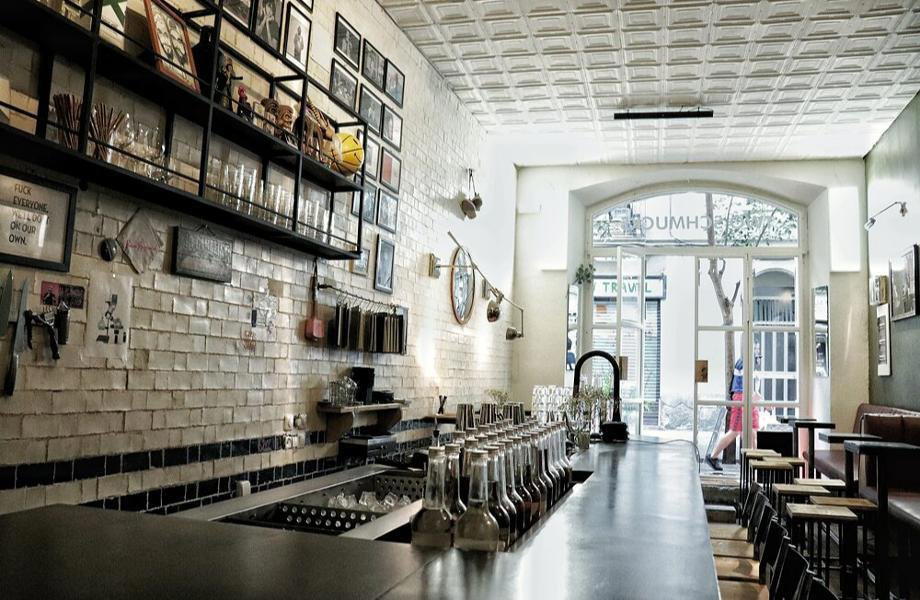
Hotels in Barcelona
Browse all →
At a Glance
- Classic
- Cozy
- Trendy
- Casual Hangout
- Date Night
- Open Kitchen
- Natural Wine
- Local Sourcing
Relaxed and pintoresque with a humble, bodega-like interior featuring hanging hams, open kitchen, and shabby outdoor area.