Bifteck Kawamura in Ginza occupies the premium tier of Tokyo's teppanyaki tradition, where the sequencing of the meal carries as much weight as the beef itself. Set in one of the city's most demanding dining districts, it draws a clientele accustomed to high-stakes counter experiences across sushi, kaiseki, and French formats. The progression from knife work to final cut is the defining logic of the evening.
 Discover on Pearl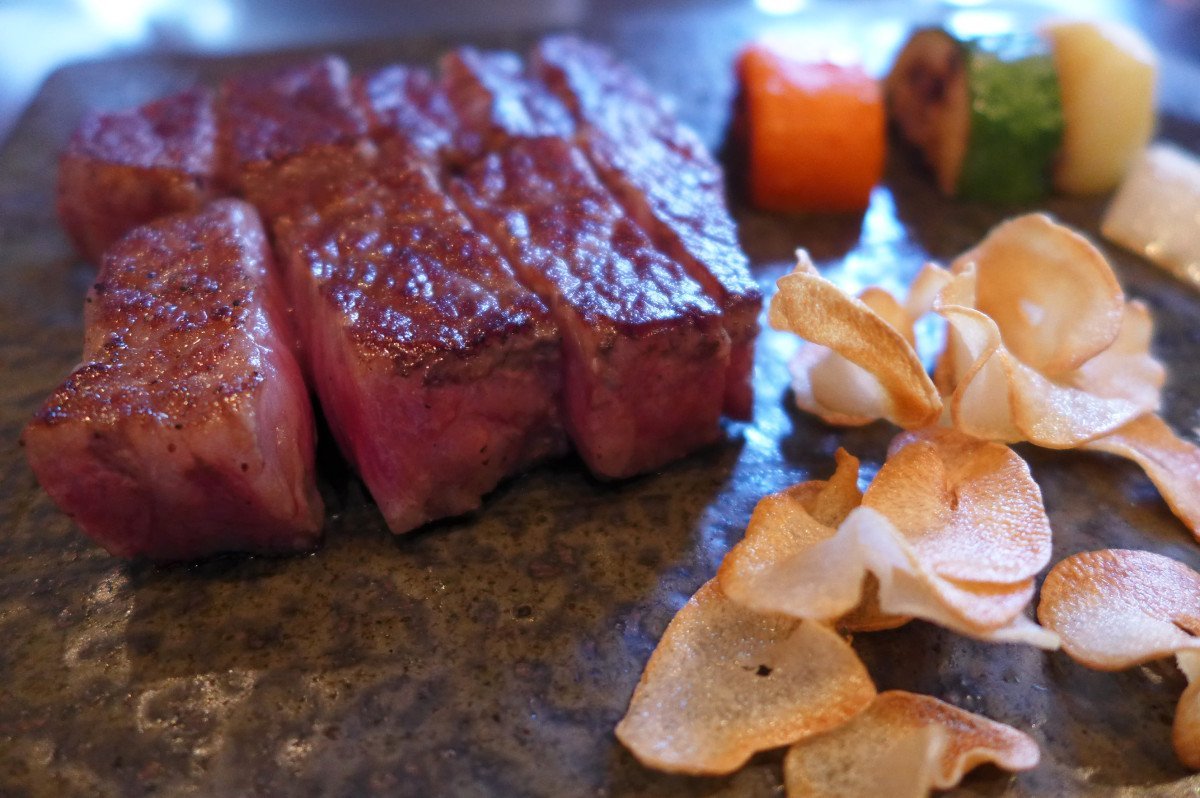
The Counter as Theater: Ginza's Teppanyaki Tradition
Ginza sets a specific standard for counter dining. The district houses some of Tokyo's most rigorously judged restaurants across every format, from sushi counters with decades of Michelin recognition to French rooms where the brigade outnumbers the guests. In that context, the teppanyaki counter occupies a particular position: it is the one format where the cook and the diner share a surface-level proximity, where the sequence of the meal is visible and audible in real time. The smoke, the sound of fat rendering, the precise timing of the sear — these are not incidental to the experience. They are the experience.
Bifteck Kawamura Ginza operates inside that tradition. Teppanyaki at this level is not the tableside spectacle of tourist-facing hotel restaurants; it is a disciplined progression through beef in its multiple expressions, structured more like an omakase than a steakhouse service. The format demands that guests commit to the full arc of the meal rather than selecting individual courses, and that commitment shapes the rhythm of the evening from the first moment you take your seat at the iron plate.
The shortlist, unlocked.
Hard-to-book tables, cellar releases, and concierge-planned trips.
Get Exclusive Access →The Architecture of the Meal
In premium Ginza teppanyaki, the narrative of the meal tends to move from restraint toward intensity. Lighter preparations, often involving more delicate proteins or vegetable components, arrive before the main beef sequence begins in earnest. This mirrors the logic of kaiseki, where the progression of flavors and textures is as deliberate as any kitchen decision made behind closed doors. At restaurants operating at this price tier and address, the sequencing is understood to carry editorial intent — the chef is making a compositional argument across eight to twelve courses, not simply grilling to order.
The Wagyu itself, which in Ginza's leading teppanyaki rooms typically means A5-grade beef from Kobe, Omi, or Kagoshima prefectures depending on the season and the procurement relationship, is almost always presented in multiple cuts across the progression. A thin slice to open the palate to the fat register, a thicker section mid-meal where the sear can be pushed further, and often a smaller, more concentrated final portion to close the beef sequence. The gradation is intentional. It is how you understand the animal rather than simply eating it.
This structure places Bifteck Kawamura Ginza in a specific competitive set. It is not pricing against entry-level teppanyaki or hotel steakhouses. It sits alongside the city's multi-course counter experiences at addresses like Harutaka, RyuGin, and Sézanne, where the expectation is that every element of the service has been considered. In that tier, the question a diner asks is not whether the beef will be good. The question is how the meal will be organized.
Ginza as Context
Understanding where Bifteck Kawamura Ginza sits requires understanding what Ginza now asks of its restaurants. The district has become a proving ground for international and domestic formats alike. French three-star rooms, multi-decade sushi counters, and contemporary kaiseki houses all compete for the same narrow band of clientele willing to commit three to four hours and a substantial per-person spend on a weeknight. The density of recognized restaurants in Ginza means that reputation is comparative , a room gains standing relative to what surrounds it, not in isolation.
For a teppanyaki address at this level, that competitive environment is an advantage as much as a pressure. Diners arriving in Ginza already understand counter formality. They have likely sat at omakase counters before, possibly at L'Effervescence or Crony, and they bring the behavioral grammar of serious counter dining with them. The result is a room where the silence between courses is read as attentiveness rather than awkwardness, and where the chef's pace sets the tempo for the table.
Ginza's counter culture also extends beyond Tokyo. The expectations formed here travel to experiences at HAJIME in Osaka, Gion Sasaki in Kyoto, and further to Goh in Fukuoka or akordu in Nara. Tokyo's premium counter training, in other words, shapes how diners read serious restaurants across the country.
Wagyu at the Premium Tier
Japan's domestic beef market has moved considerably over the past decade. The international profile of Wagyu has driven demand upward and made sourcing at the leading end increasingly competitive. Restaurants in Ginza operating at the premium teppanyaki level now differentiate not only through the grade of beef they serve but through their procurement specificity: which farm, which prefecture, which seasonal window. This is the same logic that distinguishes serious fish counters by their supplier relationships rather than simply by species.
For the diner, this means the story of the beef is now part of the meal's narrative. The progression from opening cuts to the main event is also a progression through information , about the animal's origin, the fat distribution, the preparation decision made at the grill. At a counter, that information is delivered directly and without mediation. This is one of the structural advantages of the teppanyaki format over a kitchen-separated steakhouse: nothing is hidden from the guest.
The comparison to other high-commitment dining formats in Japan is instructive. The structure of the Kawamura progression is not unlike what happens at counter formats in other cities where sequencing matters, such as Le Bernardin in New York City or Atomix, also in New York, where the architecture of the meal carries meaning independent of any single dish. The difference in Tokyo is that the primary ingredient is beef and the primary tool is an iron plate heated to a temperature that has been calibrated over years of repetition.
Planning Your Visit
Bifteck Kawamura operates multiple locations in Tokyo, with the Ginza address serving as the flagship in the city's most demanding dining district. Reservations are advised well in advance, given the counter format, which limits capacity by design. For a fuller map of Tokyo's counter dining options across formats, see our full Tokyo restaurants guide. Complement your visit with Tokyo hotel recommendations, Tokyo bar suggestions, and Tokyo experiences for a complete itinerary. For those exploring beyond the capital, 1000 in Yokohama and 6 in Okinawa represent the wider range of Japan's counter dining tradition. Wine pairings at this level of teppanyaki are typically structured around aged Burgundy or domestic sake; for further context on Japanese wine, consult our Tokyo wineries guide.
Know Before You Go
- Location: Ginza, Tokyo
- Format: Teppanyaki counter, multi-course progression
- Reservations: Advance booking strongly recommended; counter seats are limited by format
- Dress code: Smart casual at minimum; Ginza formality applies
- Meal duration: Allow two to three hours for a full progression
- Price tier: Premium; consistent with top-tier Ginza counter dining
- Further information: Contact the restaurant directly or consult our Tokyo dining guide for updated booking options
Frequently Asked Questions
- Would Bifteck Kawamura Ginza be comfortable for children?
- At Ginza prices and in a counter format built around adult dining rhythm, this is not the right address for young children.
- What is the atmosphere like at Bifteck Kawamura Ginza?
- Ginza's counter culture sets the tone: composed, attentive, and quiet in the way that serious Tokyo dining rooms tend to be. The teppanyaki format adds a layer of sensory engagement through sound and smoke, but the overall register is closer to an omakase room than a festive steakhouse. Awards recognition at this address level reinforces the expectation of formal, considered service.
- What do regulars order at Bifteck Kawamura Ginza?
- The progression is fixed rather than à la carte, which is standard at this level of Japanese teppanyaki. Regulars return for the Wagyu sequence specifically; the cut selection and sourcing change with procurement cycles, making repeat visits substantively different rather than repetitive. The format rewards familiarity.
- Do I need a reservation for Bifteck Kawamura Ginza?
- Yes, without exception. At Ginza price levels and with a counter capacity constrained by the teppanyaki format, walk-ins are not a realistic option. Book well in advance, particularly for weekend evenings, which are the most competitive across all of Ginza's recognized rooms.
- What has Bifteck Kawamura Ginza built its reputation on?
- The reputation rests on the structural seriousness of the Wagyu progression and the procurement standards applied to the beef sourcing. In a city where counter dining is judged by the coherence of the meal as a whole rather than individual standout dishes, Kawamura's architecture of service and the specificity of its beef selection place it in the upper tier of Tokyo teppanyaki.
- Is Bifteck Kawamura Ginza allergy-friendly?
- If dietary restrictions or allergies are relevant, contact the restaurant directly before booking. In Tokyo's counter dining culture, advance communication is both accepted and expected at this level; the kitchen will typically accommodate with notice, but the fixed-progression format means last-minute requests are harder to manage.
- How does Bifteck Kawamura Ginza differ from other Wagyu teppanyaki restaurants in Tokyo?
- The Kawamura approach emphasizes the deliberate progression of cuts across the meal rather than a single showpiece portion, placing it closer to the omakase model than a conventional steakhouse. In Ginza's context, where the competitive set includes multi-Michelin-starred counters across sushi and kaiseki formats, a teppanyaki room that applies the same sequencing logic signals a specific intent about how beef should be understood rather than simply consumed.
How It Stacks Up
A small comparison set for context, based on the venues we track.
| Venue | Cuisine | Price | Awards | Notes |
|---|---|---|---|---|
| Bifteck Kawamura Ginza | This venue | |||
| Harutaka | Sushi | ¥¥¥¥ | Michelin 3 Star | Sushi, ¥¥¥¥ |
| RyuGin | Kaiseki, Japanese | ¥¥¥¥ | Michelin 3 Star | Kaiseki, Japanese, ¥¥¥¥ |
| L'Effervescence | French | ¥¥¥¥ | Michelin 3 Star | French, ¥¥¥¥ |
| HOMMAGE | Innovtive French, French | ¥¥¥¥ | Michelin 2 Star | Innovtive French, French, ¥¥¥¥ |
| MAZ | Innovative | ¥¥¥¥ | Michelin 2 Star | Innovative, ¥¥¥¥ |
Need a table?
Our members enjoy priority alerts and concierge-led booking support for the world's most difficult tables.
Get Exclusive AccessThe shortlist, unlocked.
Hard-to-book tables, cellar releases, and concierge-planned trips.
Get Exclusive Access →