
Tabelog 100 #40
Our verdict
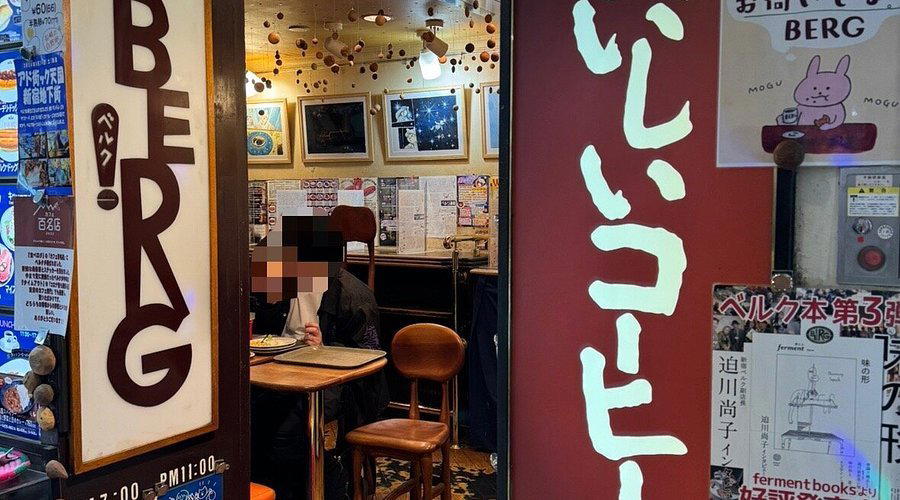
BERG is a Shinjuku station cafe, beer bar, and bread counter with Tabelog 100 Cafe EAST 2025 recognition and a compact 45-seat format split between standing counter and tables. Its appeal is less about ceremony than Tokyo’s commuter dining culture: breakfast, coffee, beer, wine, sake, bread, and snacks compressed into a station-level room built for repeat use.

Pearl is the En Primeur Club membership app, where members save venues, book tables and use the concierge.
The menu
What to order
- Natural yeast rye bread and baguette
- Pâté plate
- Pork terrine
- Sauerkraut
Below Shinjuku’s rail concourse, the station-cafe format becomes a civic skill: order fast, stand when needed, move around luggage, and read the room before lingering. BERG belongs to the Tokyo category where cafe, bar, bakery counter, and commuter refuel stop overlap. Shinjuku does not reward leisurely indecision; it rewards places that handle breakfast traffic, mid-afternoon coffee, and late-evening beer without changing personality.
That elasticity is why a station basement cafe belongs in a serious dining conversation. Tokyo’s high-end counters draw international attention, but everyday precision is just as revealing: coffee roasted with purpose, bread treated as core product, and drinks broad enough for beer, wine, and sake. BERG’s Tabelog 100 Cafe EAST 2025 selection gives that everyday category a useful credential, signaling not only convenience but sustained local consensus around a compact, independent format in a chain-heavy city.
Shinjuku's station cafe culture, compressed into one counter
The modern Tokyo station is a dining ecosystem, not merely transit infrastructure. Shinjuku, with department-store basements, underground corridors, and quick-service counters, turns eating into route planning. In that environment, a morning-to-night cafe must be legible at speed. BERG’s categories, cafe, beer bar, and bread, put it in a hybrid lane travelers often misunderstand. This is not a slow brunch room or a cocktail bar with theatrical pacing; it is an all-day urban utility with enough craft signals to justify attention.
The format also corrects the idea that Tokyo food splits between luxury omakase and casual convenience. Much daily eating happens in the middle: compact rooms with disciplined sourcing, narrow footprints, and service for people with minutes before the next train. The standing bar counter and table seating make that rhythm explicit. Depending on time and crowd pressure, it works as quick coffee stop, beer counter, or light meal pause.
Compared with Shinjuku’s higher-spend rooms, the contrast is sharp. Yakiniku Ushigoro Shinjuku sanchome ten and USHIGORO S. SHINJUKU belong to a different dinner economy, where beef, course structure, and higher budgets shape the decision. Jikabaisen Coffee Bon, with higher cafe spend, sits nearer the dedicated coffee-room tradition. BERG occupies a leaner station tier: less ceremonious, more useful, and more dependent on speed, range, and repeatability than occasion dining.
What the menu range says about Tokyo's all-day eating
The menu signals are practical, not decorative. Breakfast is part of the offer, along with bread, coffee, beer, wine, sake, and take-out. That range matters in Tokyo because strong station-adjacent places often succeed by refusing a single-use identity. A room serving coffee in the morning and alcohol at night must be tightly edited or it becomes a convenience compromise. Here, the craft markers are specific: natural yeast bread, open-fire roasted coffee, sausages noted as gold medal-winning from Germany, beers from around the world served in barrels, and staff credentials including sake sommeliers and beer tasters.
Those details place the cafe closer to Tokyo’s artisan everyday tradition than lifestyle-cafe styling. The city has many photogenic rooms built around a visual hook, and nearby 2D Cafe shows how concept design can become the point. BERG reads differently. Its identity comes from operational density: small station footprint, broad drinking program, bread component, and morning-to-night flexibility that turns a commuter stop into a repeat address.
For travelers mapping Tokyo meals, this suits neighborhood wandering better than a dressed-up evening plan. A day might move from Shinjuku coffee to curry at 3 Chome no Curry Ya San, then into more specialized dining elsewhere. The comparison is not ranking but category. Tokyo rewards travelers who know when to choose a counter, when to choose a course meal, and when a station basement is exactly the right register.
How to use it in a Tokyo itinerary
The planning logic is simple: treat this as a flexible Shinjuku anchor, not a destination demanding a full evening. Its no-reservation format and compact seating make timing important, especially where commuter waves can change a room quickly. The stronger use case is tactical: before a train, after shopping, between hotel check-in and dinner, or as a low-ceremony first stop when jet lag makes a long meal feel ambitious.
Shinjuku’s density also makes it a useful base for building a Tokyo food day. Travelers staying nearby can use Our full Tokyo restaurants guide for dinner structure, Our full Tokyo hotels guide for where to sleep around the rail network, and Our full Tokyo bars guide for later drinking. Broader city planning can extend through Our full Tokyo experiences guide and, for category browsing beyond dining, Our full Tokyo wineries guide.
Nearby and cross-city comparisons clarify the choice. 12/10 Shinjuku ten keeps the focus in Shinjuku, while 124. KAGURAZAKA (Yakitori) shifts toward a specialized grill tradition. 鮪と炭火焼き うお炭 秋葉原店 points to tuna and charcoal cooking in Akihabara. Outside Tokyo, the wider EP Club map moves from -Grilled beef Sukiyaki- KAMAKURA TANUKIAN 鎌倉 たぬき庵 in Kamakura to.cafe in Osaka.know in Kumamoto, (Shoku) Vietnam in Kawasaki, [Curry Senmon Ten] Maruyama Kyoju. in Sapporo, and [ki:] in Kyoto. For Japanese drinking culture abroad, Jōdo Saké Bar in Los Angeles and Onigiri Time in Pasadena show how formats travel and change outside Japan.
The editorial case is clear: BERG is valuable because it shows Tokyo at working speed. Tabelog recognition gives it credibility, but the deeper lesson is logistical. In a city where a meal can be a months-ahead reservation or a 15-minute station stop, this is the latter done with enough seriousness to matter.
Frequently asked questions
What are the operating hours at BERG?
Hours at BERG: Mon: 7 AM–11 PM; Tue: 7 AM–11 PM; Wed: 7 AM–11 PM; Thu: 7 AM–11 PM; Fri: 7 AM–11 PM; Sat: 7 AM–11 PM; Sun: 7 AM–11 PM.
Is BERG expensive?
Pricing at BERG is listed as JPY 1,000 - JPY 1,999 - JPY 999.
Where is BERG in Tokyo?
BERG is located in Tokyo.
What's the standout thing about BERG?
Its strongest draw is range: BERG combines cafe, beer bar, and bread under one Shinjuku Station roof, with breakfast, take-out, and drinks from coffee to sake. The Tabelog 100 Cafe EAST 2025 selection underlines that format, and the 45-seat counter-and-table setup keeps it moving.
What It’s Closest To
Comparable venues at the same tier.
| Venue | Cuisine | Price | Awards | Notes |
|---|---|---|---|---|
| BERGThis venue (the venue you are viewing) | Beer Cafe | $10–20 | Tabelog 100 #40 | Not listed |
| Pneuma Curry | Japanese Curry | $1–10 | Tabelog 100 #84 | Shinjuku |
| Raamen Yama to Ki | Classic Tokyo Ramen Counter | $10–20 | Tabelog 100 #82 | Suginami |
| Shiroi Kuro | Modern Japanese sweets & roll cake café | $1–10 | Tabelog 100 #95 | Minato |
| Whole Spice Curry Seiran | Whole-spice Japanese curry | $10–20 | Tabelog 100 #20 | Suginami |
| Tenchaya Nanakura | Inaniwa udon & creative lunch sets | $10–20 | Tabelog 100 #95 | Minato |
Recognition history
Dated appearances from independent guides and award organizations, with the underlying list record or original source where available.
Tabelog 100 #40 · No. 40
Tabelog · Tabelog 100 - Cafe - EAST - 2025
Continue exploring
More in Tokyo
Restaurants in Tokyo
All restaurants in Tokyo →


Bars in Tokyo
All bars in Tokyo →




Details
- Cozy
- Classic
- Lively
- Casual Hangout
- Solo
- After Work
- Group Dining
- Standalone
- Beer Program
- A La Carte
- Beer
- Coffee
- Wine
- Sake
- Vegetarian Friendly
Current opening hours
- Monday
- 7 AM–11 PM
- Tuesday
- 7 AM–11 PM
- Wednesday
- 7 AM–11 PM
- Thursday
- 7 AM–11 PM
- Friday
- 7 AM–11 PM
- Saturday
- 7 AM–11 PM
- Sunday
- 7 AM–11 PM
Hours can change for holidays and private events. Hours as of .
Casual, bustling, and unpretentious, with a small-station-café energy that suits quick meals and drinks throughout the day.