Our verdict
Bep Ngoai sits on Venloer Strasse in Cologne's Ehrenfeld district, bringing Vietnamese home cooking into a neighbourhood better known for its independent creative scene than its restaurant credentials. The kitchen works from the grammar of southern and northern Vietnamese traditions, placing it in a city where few restaurants hold that ground with any seriousness. For Cologne diners who have exhausted the Franco-German fine dining circuit, this is a different kind of argument entirely.

Pearl is the En Primeur Club membership app — saves, bookings, and concierge access live there. Same editors, same standards.
- Address
- Venloer Str. 214, 50823 Köln, Germany
- Phone
- +4922156064901
- Hours
- Daily 11:30 AM–10:30 PM
- Website
- bepngoai-koeln.de
- Directions
- Get directions
- Booking
- Book on the venue's website
Ehrenfeld's Vietnamese Counter-Argument
Venloer Strasse runs long and unpretentious through Cologne's Ehrenfeld, a district that has spent the past decade attracting independent operators pushed west by rising rents in the Altstadt and Belgisches Viertel. The street's dining character is determinedly non-touristy: Turkish grocers, Kurdish bakeries, Vietnamese takeaways, and a growing number of restaurants that pitch to neighbourhood regulars rather than weekend visitors from Düsseldorf. Bep Ngoai operates within this context, at number 214, and the address tells you something before you've eaten a mouthful.
The name translates loosely from Vietnamese as "grandmother's kitchen" — a framing that signals intent without overpromising. In Vietnamese food culture, the grandmother's kitchen is where regional technique is preserved rather than modernised, where the ratio of fresh herb to broth is a matter of personal memory rather than recipe card. That register is meaningfully different from the pan-Asian fusion mode that colonised European Vietnamese restaurants for much of the 1990s and 2000s, and it places Bep Ngoai in a smaller, more serious peer group.
Where Cologne's Vietnamese Cooking Sits in the City's Dining Map
Cologne's restaurant identity has long been anchored in French and modern European cooking. The city's most decorated addresses — Vendôme in Bergisch Gladbach nearby, Ox & Klee within the city, La Cuisine Rademacher and La Société, operate within a Franco-German fine dining tradition that Germany's Michelin inspectors understand well. Le Moissonnier Bistro and maiBeck occupy the more accessible tier of that same tradition. Vietnamese cooking, by contrast, has historically found only modest institutional recognition in the city despite Germany's substantial Vietnamese diaspora population, concentrated particularly in the former East German states and in NRW.
That diaspora context matters. Germany has one of Europe's largest Vietnamese communities, many of them arriving in waves from the 1980s onward, and the cooking that developed within those communities retained strong regional specificity, Hanoi-style pho, southern Vietnamese broken rice dishes, the herb-forward freshness of central Vietnamese cuisine, rather than homogenising into a single "Vietnamese" category. Restaurants that draw on this tradition directly, rather than adapting it for assumed Western preferences, occupy a credible position in the city's wider dining picture.
The Editorial Angle: Local Ingredients Filtered Through Vietnamese Method
The intersection of imported culinary technique and local German produce is a thread running through some of the more interesting independent restaurants operating in mid-tier German cities right now. In fine dining, this dynamic is well-documented: chefs at addresses like ES:SENZ in Grassau or Schanz in Piesport apply French structural logic to German regional ingredients with considerable precision. The same conversation is happening at a more everyday register in neighbourhood restaurants where Vietnamese, Korean, and Japanese kitchens are sourcing from German farmers and market suppliers while maintaining the flavour architecture of their home cuisines.
At Bep Ngoai, the premise of a grandmother's kitchen implies that the cooking is defined more by technique and proportion than by rigid ingredient sourcing. Vietnamese cooking's reliance on fresh aromatics, lemongrass, galangal, makrut lime, sawtooth coriander, creates a natural tension in a Central European context: some ingredients must be sourced from specialist importers or grown domestically in limited quantity, others can be substituted without significant loss of character. How a kitchen manages that tension is often where its actual skill becomes legible. Restaurants that handle it well tend to prioritise technique over ingredient spectacle, which is frequently a more honest representation of the source cuisine anyway.
This approach stands at some remove from the tasting-menu model that structures dining at starred German addresses like Schwarzwaldstube in Baiersbronn, Aqua in Wolfsburg, or Victor's Fine Dining by Christian Bau in Perl. It's also different from the dessert-led format of CODA Dessert Dining in Berlin or the produce-forward New Nordic register of JAN in Munich. Bep Ngoai is not in that conversation. It is in a different one, and its value is leading measured against what it is attempting rather than against the category its postcode might suggest.
What to Expect, and How to Plan
Independent Vietnamese restaurants of this type rarely accept advance reservations through third-party platforms in the way that Frankfurt or Hamburg fine dining addresses do, venues like Restaurant Haerlin in Hamburg operate at a structural distance from Venloer Strasse. Walk-in dining is frequently the norm for smaller operations on this stretch of Ehrenfeld. Visiting mid-week reduces friction, and arriving at or just after opening typically avoids the table competition that builds later in the evening on weekends.
For those building a broader Cologne itinerary, Ehrenfeld is most efficiently approached from Cologne Hansaring or Venloer Strasse/Gürtel S-Bahn stations, both within walking distance of number 214. The neighbourhood pairs naturally with an evening that begins at one of the district's independent bars before or after eating, the area has a well-established late-night culture that extends the evening beyond what the more formal dining districts offer. Readers planning a wider Germany dining trip can cross-reference our full Cologne restaurants guide for context across price tiers and cuisine types. International reference points for the kind of technique-focused, tradition-grounded approach Bep Ngoai appears to represent include Le Bernardin in New York City and Lazy Bear in San Francisco, not as style peers, but as examples of restaurants where technique and intention matter more than format theatrics.
Frequently asked questions
How do I find Bep Ngoai?
Bep Ngoai is located at Venloer Str. 214, 50823 Köln, Germany, Cologne.
How does Bep Ngoai fit into Cologne's broader Vietnamese dining scene?
Cologne's Vietnamese restaurant presence is concentrated in a handful of districts, with Ehrenfeld emerging as the address for independent, cook-led operations rather than volume-focused canteens. Bep Ngoai on Venloer Strasse 214 sits within that pocket, which positions it differently from the Vietnamese spots clustered nearer the city centre. For visitors building a picture of what Cologne's independent food scene looks like in 2024, this part of Ehrenfeld is the more instructive circuit.
What should I order at Bep Ngoai?
Restaurants of this type in Ehrenfeld tend to run short, rotating menus built around whatever the kitchen is focused on that week. Arrive without fixed expectations and let the counter guide you.
How hard is it to get a table at Bep Ngoai?
No booking line or reservation system is listed publicly for Bep Ngoai at Venloer Strasse 214. For a well-regarded independent on a busy Ehrenfeld corridor, walk-in availability varies significantly by day and hour. Going early on a weeknight is consistently the lower-risk strategy at venues of this profile.
What makes Bep Ngoai worth seeking out?
Ehrenfeld has drawn a concentration of independent operators who work outside Cologne's conventional French and modern European dining orbit, and Bep Ngoai sits inside that shift. Vietnamese cooking in this neighbourhood tends to emphasise household-register dishes over the sanitised versions found in city-centre chains. That alone puts it in a different category from most of what Cologne's decorated addresses offer.
Is Bep Ngoai allergy-friendly?
No allergen or dietary information is publicly listed for Bep Ngoai. Vietnamese cooking often involves fish sauce, shellfish-based stocks, gluten-containing soy products, and peanuts as standard components. Anyone with a serious allergy should check the venue's official channels before visiting, as assumptions here carry real risk.
Credentials Lens
Comparable venues nearby, for context on price, style, and recognition.
| Venue | Cuisine | Price | Notes |
|---|---|---|---|
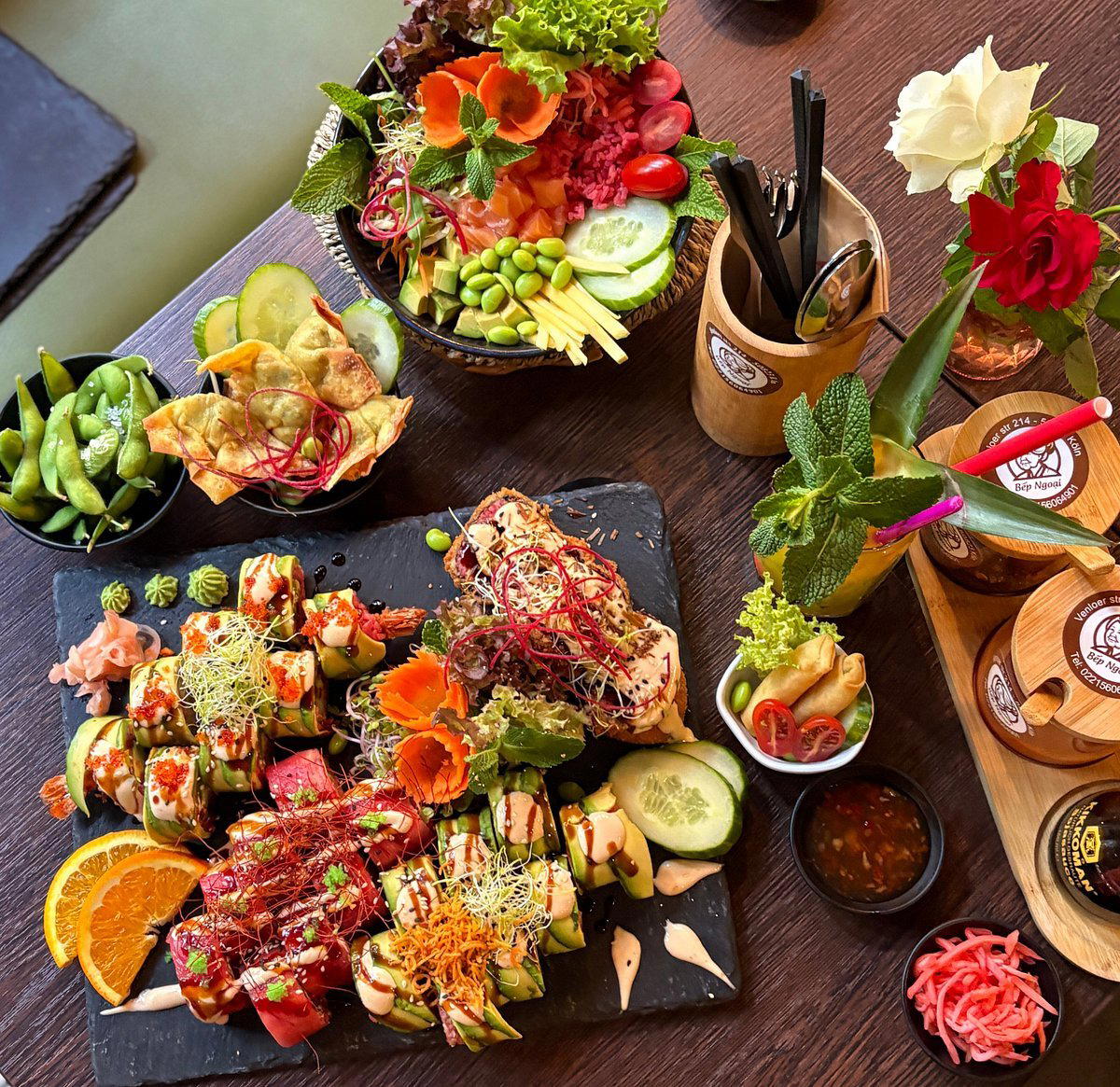
| Bep NgoaiThis venue — the venue you are viewing | Vietnamese Street Food & Sushi | Not listed | Not listed |
| Toki | Modern Japanese Omakase | $150–200 | Neustadt/Nord |
| Tigermilch | Modern Peruvian-Japanese Fusion | $30–50 | Neustadt/Süd |
| Da Damiano | Modern Italian | $50–100 | Altstadt/Nord |
| L'Imprimerie | French Bistro | $50–100 | Bayenthal |
| Reef and Beef | Steakhouse & Seafood | $50–100 | Bayenthal |