
Tabelog 100 #65
Our verdict
Beef Junkie sits in Nagoya’s yoshoku conversation rather than the city’s kaiseki or sushi lane, with hamburger steak, steak, and Japanese-style Western cooking as its center of gravity. Tabelog selected it for the Yoshoku EAST “Tabelog 100” in 2025 and previously in 2023, a useful signal in a category where craft is measured less by ceremony than by heat control, sauce work, and beef handling.

Pearl is the En Primeur Club membership app, where members save venues, book tables and use the concierge.
The menu
What to order
- Aged Wagyu Hamburg Steak
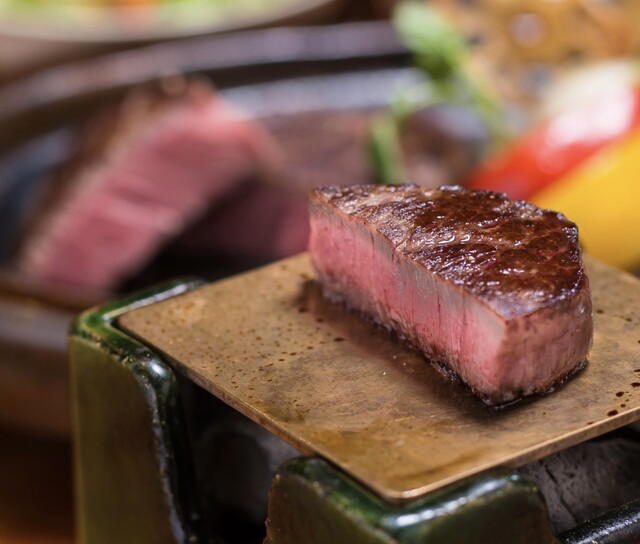
- Aged Fillet Steak
- Wagyu Hamburg Tartare
- Clay-pot rice with Niigata Tsukiakari rice
In Sakae’s denser restaurant grid, the appeal of a small yoshoku room is not spectacle but compression: counter seating, a short range of beef-led dishes, and a style of cooking that belongs to modern Japan as much as to Europe. Yoshoku began as adaptation, taking Western forms and making them fluent in Japanese dining habits. Hamburger steak, demi-glace, steak plates, rice alongside meat, and wine as a companion rather than a grand statement all sit inside that lineage. Beef Junkie belongs to this compact, meat-focused branch of the tradition, where the meal is built around the pleasure of browning, resting, cutting, and saucing rather than the procession of a long tasting menu.
Nagoya is often framed through miso katsu, tebasaki, hitsumabushi, and coffee-shop morning sets, but its higher-quality casual dining has a broader range than that shorthand suggests. Yoshoku occupies a useful middle register: less formal than French dining, more composed than a steakhouse chain, and often more technically demanding than its comfort-food reputation implies. The category rewards restaurants that can make familiar dishes feel exact without turning them into fine-dining theater. That is the lens through which Beef Junkie makes sense.
Yoshoku's beef grammar, sharpened for a small Nagoya room
The restaurant’s categories, hamburger steak, steak, and yoshoku, place it in a Japanese-Western field where beef is the argument. Hamburger steak in Japan is not a burger without a bun; it is a plated dish with its own expectations around texture, sauce, and doneness. Steak, by contrast, exposes sourcing and heat discipline more directly. Putting both on the same menu signals a kitchen working across two related but distinct readings of beef: one about seasoning and structure, the other about cut and cookery.
The Tabelog Yoshoku EAST “Tabelog 100” 2025 selection gives the restaurant a clear external credential, and the prior 2023 selection suggests it was not a single-cycle anomaly. In a dining culture where Tabelog’s category lists often act as practical filters for serious local eating, that recognition matters, especially outside Tokyo. The listed Tabelog score of 3.68 also places it in a band where Japanese users tend to treat consistency and specialization seriously, not merely as casual popularity.
Against Nagoya peers, the price position is telling. Le Chinois SANO Nagoya and Sushi Gonzaemon sit in higher dinner brackets, closer to destination-format Chinese and sushi spending. Unagi Okafuji occupies a different Nagoya classicism around eel, while Kreis and Daijin Honten represent more moderate evening budgets. Beef Junkie sits between everyday dining and formal splurge, which is exactly where yoshoku can be persuasive: enough spend to expect craft, not so much ceremony that the comfort of the form gets lost.
The room favors counter focus over ceremonial dining
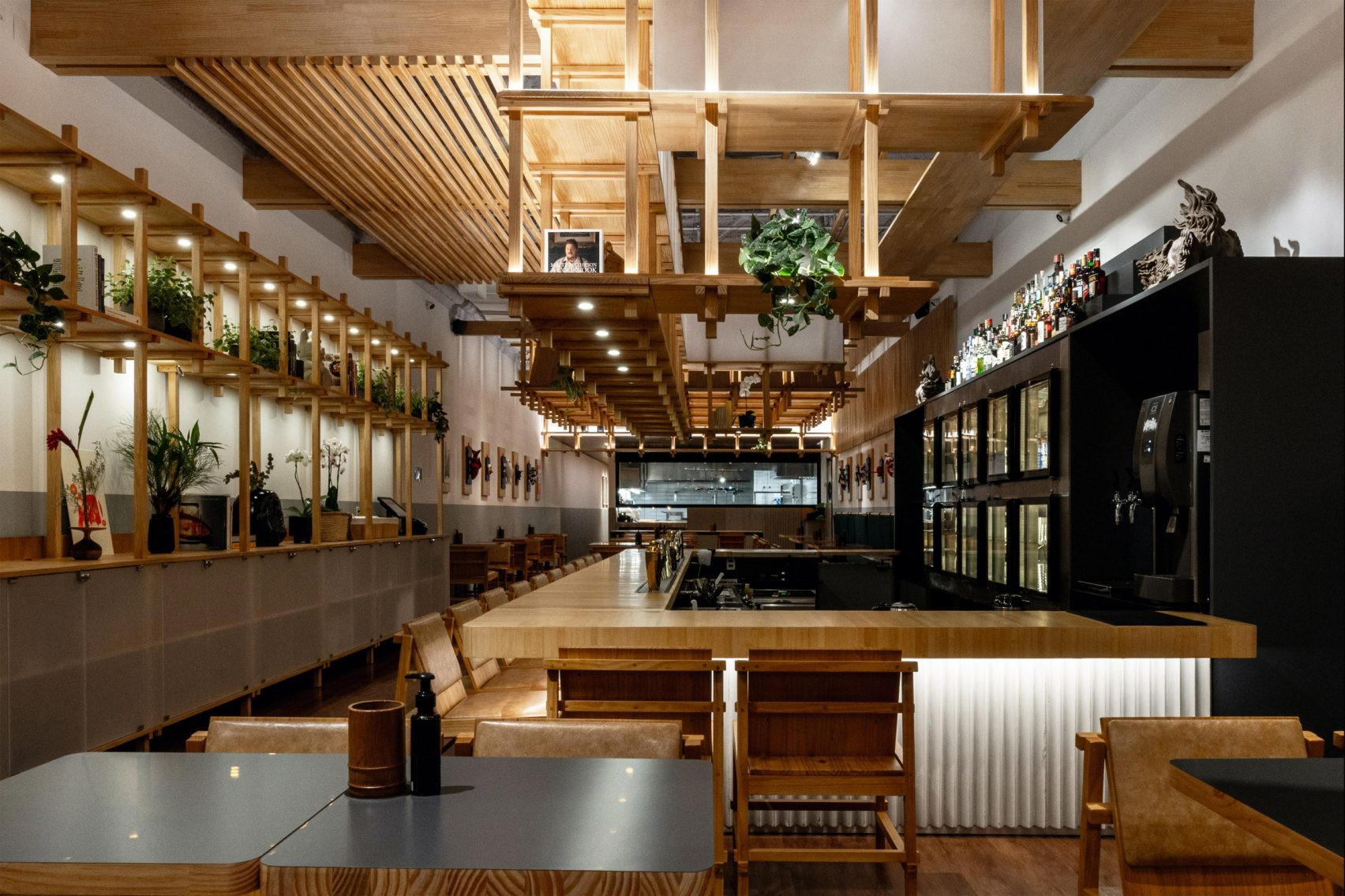
A 13-seat footprint changes the rhythm. Small yoshoku restaurants tend to work well when the room keeps attention on the cooking rather than the dining-room choreography. Counter seating, no private rooms, and a non-smoking setup point toward a direct, concentrated format. This is not the grammar of a hotel dining room or a banquet restaurant; it is closer to the modern Japanese specialist shop, where a narrow subject is given enough care to justify repeat attention.
That scale also affects who should go. The under-10 restriction makes the room better suited to adults who are there for a focused beef meal, not a flexible family stop between sightseeing blocks. The availability of an English multilingual menu and photo menu lowers friction for travelers, which is useful in Nagoya, a city where many rewarding restaurants remain built primarily for domestic diners. Wine is also noted as a point of emphasis, a meaningful detail for yoshoku: beef, demi-glace, and butter-rich Western-Japanese cooking often make more sense with wine than with the default beer-and-highball pattern.
The cultural point is that yoshoku has never been a static museum cuisine. It keeps absorbing habits from French, American, and Japanese dining, then normalizes them until they feel native. In Nagoya, where local food identity can be strong enough to crowd out quieter categories, a compact beef-led yoshoku restaurant offers a different reading of the city: urban, technical, and less tied to tourist shorthand.
Where it fits into a Nagoya dining itinerary
For travelers building a Nagoya food schedule, Beef Junkie is better treated as a focused dinner or sharper lunch than as a ceremonial anchor. It pairs naturally with a broader look at the city’s restaurant range in Our full Nagoya restaurants guide, especially if the surrounding days are already carrying sushi, unagi, or higher-ticket Chinese dining. The choice is not about chasing maximal formality; it is about understanding how Japan’s Western-influenced cooking became its own category, with beef as one of its strongest dialects.
For nearby comparisons and alternate angles, Nagoya’s dining map can stretch from 1022, 451, Aaron, Alan., and All Day Dining Montmartre to more specialized regional Japanese references. Wider trip planning belongs with Our full Nagoya hotels guide, Our full Nagoya bars guide, Our full Nagoya wineries guide, and Our full Nagoya experiences guide.
The broader Japan list shows how meat, casual formats, and category specialization travel across cities: -Grilled beef Sukiyaki- KAMAKURA TANUKIAN 鎌倉 たぬき庵 in Kamakura. 鮪と炭火焼き うお炭 秋葉原店 in Tokyo.cafe in Osaka.know in Kumamoto, (Shoku) Vietnam in Kawasaki, and [Curry Senmon Ten] Maruyama Kyoju. in Sapporo. For travelers extending the Japanese-casual thread abroad, Jōdo Saké Bar in Los Angeles and Onigiri Time in Pasadena show how specific formats migrate without needing the same Nagoya context.
Frequently asked questions
What's the pricing like at Beef Junkie?
Pricing at Beef Junkie is listed as JPY 8,000 - JPY 9,999 JPY 2,000 - JPY 2,999.
What are the opening hours for Beef Junkie?
Hours at Beef Junkie: Mon: 11:30 AM–2:30 PM, 5–9:30 PM; Tue: Closed; Wed: 11:30 AM–2:30 PM, 5–9:30 PM; Thu: 11:30 AM–2:30 PM, 5–9:30 PM; Fri: 11:30 AM–2:30 PM, 5–9:30 PM; Sat: 11:30 AM–2:30 PM, 5–9:30 PM; Sun: 11:30 AM–2:30 PM, 5–9:30 PM.
How do I find Beef Junkie?
Beef Junkie is located in Nagoya.
What has Beef Junkie built its reputation on?
Its standing comes from a focused yoshoku menu centered on hamburger steak and steak, plus selection for Tabelog 100 Yoshoku EAST in 2025 and 2023. The 13-seat counter room in Nagoya’s Fushimi area keeps the operation tightly run and easy to read.
What if I have allergies at Beef Junkie?
Beef Junkie provides a multilingual menu in English and menu photos, which helps when confirming ingredients before ordering. With reservations available for lunch and dinner, the clearest route is to flag allergies by phone when booking and again on arrival.
Cost Snapshot
Comparable venues for orientation by cuisine and category.
| Venue | Cuisine | Price | Awards | Notes |
|---|---|---|---|---|
| Beef JunkieThis venue (the venue you are viewing) | Wagyu Hamburg & Aged Fillet Steak | $50–100 | Tabelog 100 #65 | Not listed |
| Wiggo | Teppanyaki & A5 Matsusaka Beef Steakhouse | $50–100 | Tabelog 100 #9 | Naka, Teppanyaki & A5 Matsusaka Beef Steakhouse |
| ル・タン・ペルデュ | Modern Natural French | $50–100 | Tabelog 100 #90 | Naka, Modern Natural French |
| ComedorKito- | Omakase-style Modern Spanish Bistro | $50–100 | Tabelog 100 #53 | Nishi, Omakase-style Modern Spanish Bistro |
| ふじ原 | Seasonal Japanese Kaiseki | $100–150 | Tabelog 100 #71 | Higashi, Seasonal Japanese Kaiseki |
| Chisouan Hijiri | Traditional Kyoto-style kaiseki | $50–100 | Tabelog 100 #96 | Higashi, Traditional Kyoto-style kaiseki |
Recognition history
Dated appearances from independent guides and award organizations, with the underlying list record or original source where available.
Tabelog 100 #65 · No. 65
Tabelog · Tabelog 100 - Yoshoku - EAST - 2025
Continue exploring
More in Nagoya
Details
- Modern
- Trendy
- Intimate
- Elegant
- Cozy
- Date Night
- Business Dinner
- Celebration
- After Work
- Solo
- Chefs Counter
- Open Kitchen
- Standalone
- Design Destination
- Extensive Wine List
- Local Sourcing
- A La Carte
- Set Menu
- Counter Dining
- Wine
- Beer
Current opening hours
- Monday
- 11:30 AM–2:30 PM, 5–9:30 PM
- Tuesday
- Closed
- Wednesday
- 11:30 AM–2:30 PM, 5–9:30 PM
- Thursday
- 11:30 AM–2:30 PM, 5–9:30 PM
- Friday
- 11:30 AM–2:30 PM, 5–9:30 PM
- Saturday
- 11:30 AM–2:30 PM, 5–9:30 PM
- Sunday
- 11:30 AM–2:30 PM, 5–9:30 PM
Hours can change for holidays and private events. Hours as of .
Stylish and intimate counter-style space with a focus on the open charcoal grill and clay pot, modern design and warm, refined lighting that suits dates and special evenings more than casual family use.