
Tabelog 100 #56
Our verdict
451 brings Nagoya’s modern Chinese conversation into sharper focus: Sichuan heat, wine-bar instincts, and a compact Meieki-adjacent room built for course-style eating rather than banquet formality. Its selection for Tabelog’s Chinese EAST “Tabelog 100” 2026 places it in a serious regional bracket, with natural wine acting as more than a supporting extra.

Pearl is the En Primeur Club membership app, where members save venues, book tables and use the concierge.
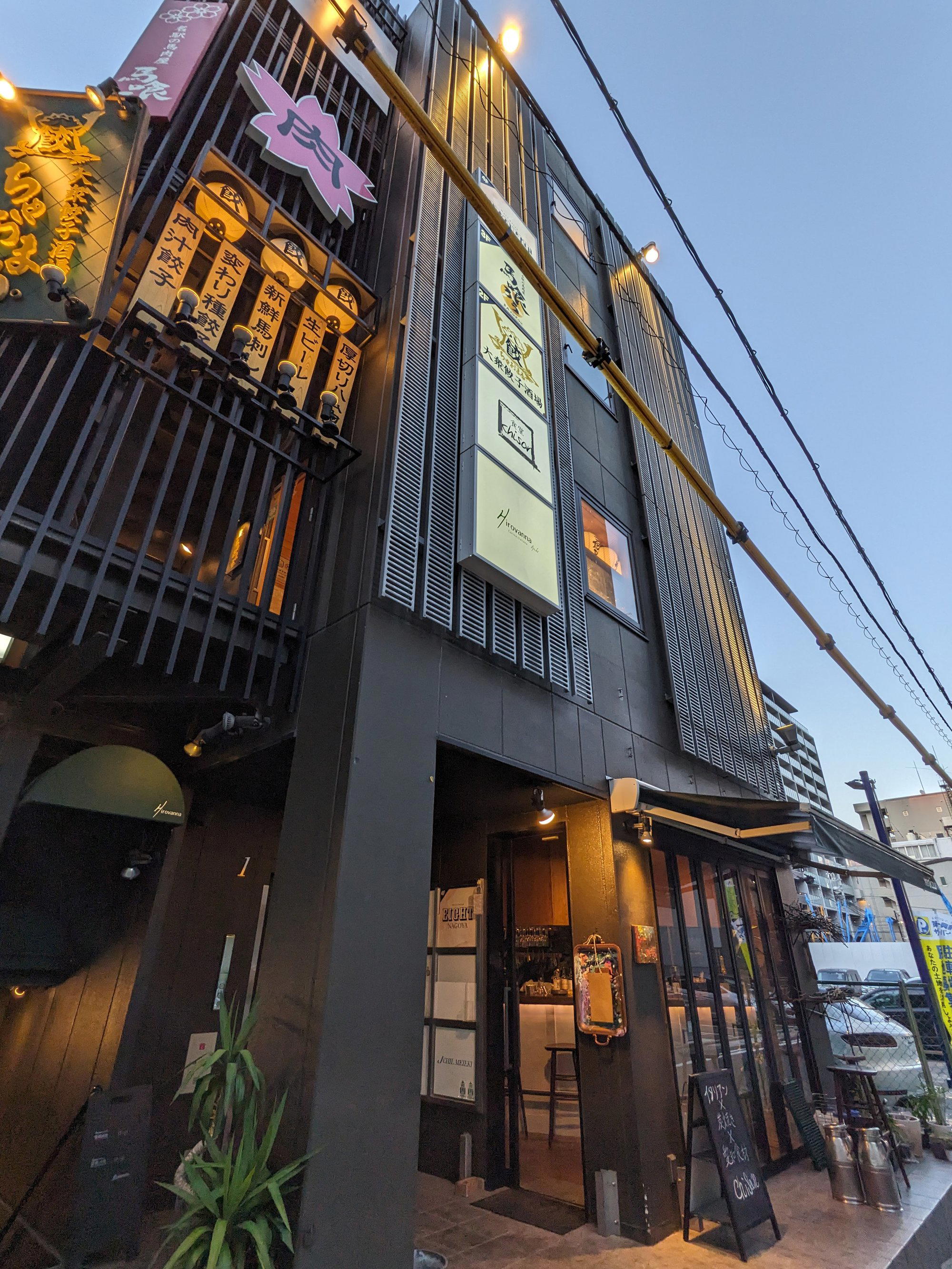
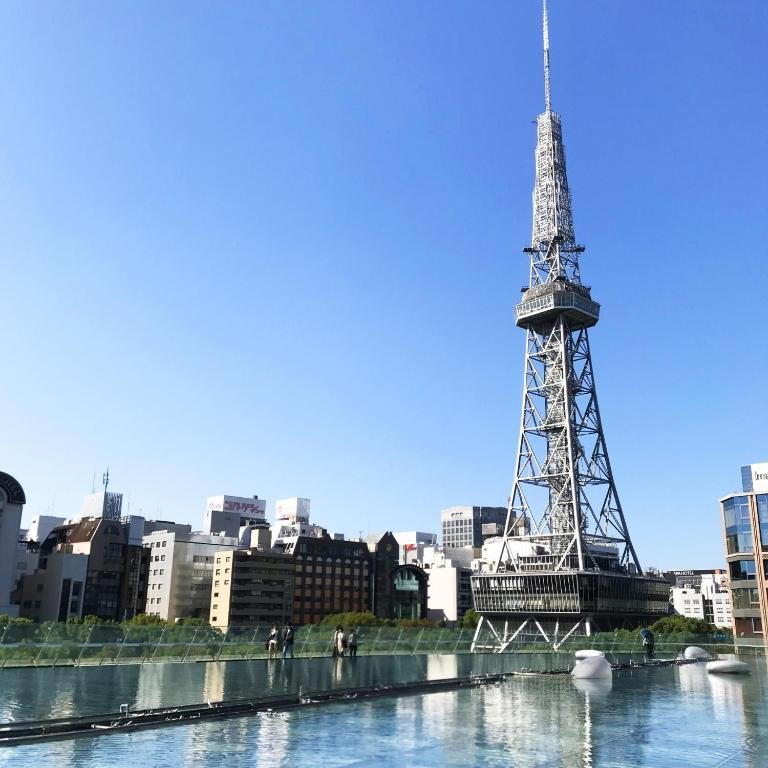
Approaching the Meieki side of Nagoya after dark, the city’s dining mood shifts fast: station traffic, office towers, side streets, then smaller rooms where the evening becomes specific. That setting suits modern Chinese cooking in Japan now, a genre moving beyond old banquet cues and hotel dining rooms into compact counters, wine-led pairings, and sharper regional references. 451 belongs to that newer register, where Sichuan is part of the grammar and the wine list is not an afterthought.
Nagoya is often reduced to miso katsu, hitsumabushi, kishimen, and morning-set coffee, but that shorthand misses the city’s strength in hybrid formats. Around Nagoya Station and Kokusai Center, business dinners, small-group counters, and chef-led rooms can stand without Tokyo’s spectacle. Here, Chinese cooking with a wine-bar spine feels less novel than timely: smaller parties, more attention to drinks, and less patience for ceremonial excess.
Sichuan language, Japanese scale, wine-bar logic
Chinese cuisine in Japan has always adapted, absorbing Cantonese banquet cooking, ramen-adjacent everyday forms, and Sichuan dishes translated through local palates. The current shift is different: instead of softening everything into comfort, a newer tier keeps regional identity visible while borrowing Japanese counter tempo and European cellar habits. 451 is listed across Chinese, wine bar, and Sichuan categories, a combination that says more about Nagoya’s dining moment than any single label.
The Tabelog Chinese EAST “Tabelog 100” 2026 selection matters because Chinese restaurants in Japan cover an unusually wide field: casual gyoza counters, ramen-linked shops, hotel Cantonese rooms, Sichuan specialists, and tasting-menu kitchens all compete under one broad cuisine heading. A Tabelog score of 3.70 places the room in a serious user-rated tier, while the 2026 recognition adds a formal editorial signal beyond neighbourhood popularity. Together, they help travellers place Nagoya’s contemporary Chinese cooking against the city’s more familiar categories.
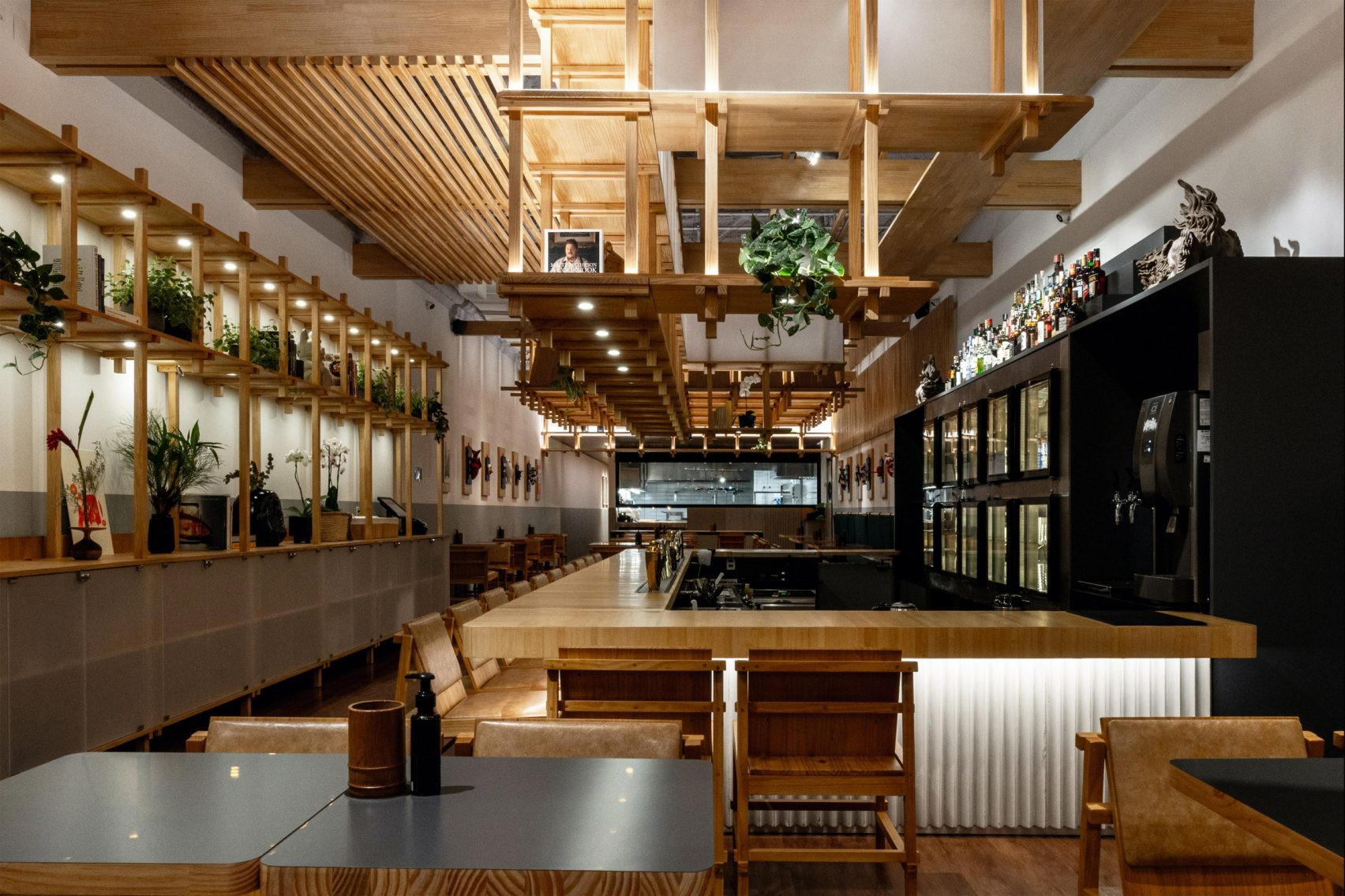
The format also tells the story. A 22-seat room with eight counter seats and 14 table seats is not built for anonymous volume; it sits closer to a modern bistro or kappo than a banquet restaurant. That changes how Chinese food is framed. Course-style dishes and à la carte options can coexist without forcing dinner into a rigid tasting-menu performance. Natural wine, with around 900 bottles listed, moves the meal toward acidity, texture, and conversation rather than the beer-and-highball default that still defines many casual Chinese rooms in Japan.
That wine emphasis is not cosmetic. Two sommeliers are listed, putting the drinks programme beyond restaurants that merely stock a few bottles. Sichuan cooking brings chilli, fermented bean pastes, peppercorn fragrance, vinegar, and smoke into play; pairing wine with that requires more precision than white-with-seafood and red-with-meat. The point is not to make Chinese food behave like French food, but to give its heat, oil, and savoury depth a wider set of contrasts.
Where it sits in Nagoya's dining map
For travellers using Nagoya as more than a rail stop, the useful comparison is format-to-format, not just cuisine-to-cuisine. Salamanger de Casino occupies a lower dinner band, while Ichibiki sits in a more casual bracket tied to Nagoya’s established local-food circuit. Joshin Ya, KAKO Yanagibashi ten, and coffee house KAKO Hanaguruma honten reflect daytime and everyday traditions, from coffee culture to quick local meals. 451 works in another evening category: smaller, more wine-conscious, and closer to destination dining than a quick regional checklist.
That matters because Nagoya rewards visitors who avoid a single-specialty crawl. A strong itinerary can move from coffee and local staples into a contemporary dinner without treating it as a break from the city. The station-side geography helps: Meieki is practical, but stronger nearby restaurants often trade on intimacy rather than transit convenience. Here Nagoya’s restaurant identity becomes interesting: less theatrical than Tokyo, less temple-like than Kyoto, and often more direct about value and format.
The broader EP Club map shows that spread. For other Nagoya dining references, compare 1022, Aaron, Alan., All Day Dining Montmartre, and Aroma-fresca Nagoya. The wider city index helps plot meals by neighbourhood and occasion: Our full Nagoya restaurants guide, Our full Nagoya hotels guide, Our full Nagoya bars guide, Our full Nagoya wineries guide, and Our full Nagoya experiences guide give the city more shape than a restaurant list alone.
Who should put it on the evening plan
This room suits diners interested in how Chinese cooking is being reinterpreted in Japan, not those simply seeking a familiar Sichuan meal. Counter seats support solo or pair dining; tables work for small groups. Private use is available, and private reservations for groups of 15 or more are listed with advance planning, placing it in the small-event category without turning the room into a party venue.
The practical reading is simple: treat 451 as a dinner anchor, not a casual backup. The average dinner band sits well above everyday Nagoya meals, and the wine programme can change the final spend depending on ordering. Payment flexibility is strong by Japanese standards, with major credit cards, transport IC cards, and PayPay listed. Private rooms are not part of the setup, and the non-smoking policy keeps the dining room cleanly defined, with smoking only indicated outside the restaurant.
For Japan itineraries beyond Nagoya, separate this contemporary Chinese-wine format from regional-specialty stops elsewhere. A sukiyaki-focused meal such as -Grilled beef Sukiyaki- KAMAKURA TANUKIAN 鎌倉 たぬき庵 in Kamakura, a Tokyo charcoal-and-tuna address like. 鮪と炭火焼き うお炭 秋葉原店 in Tokyo, or Osaka and Kumamoto café stops such as.cafe in Osaka and.know in Kumamoto serve different roles. Casual comfort also has its place, from (Shoku) Vietnam in Kawasaki and [Curry Senmon Ten] Maruyama Kyoju. in Sapporo to Los Angeles and Pasadena references such as Jōdo Saké Bar in Los Angeles and Onigiri Time in Pasadena. 451’s value is specific: it shows how Nagoya’s evening dining can absorb Chinese regional cues, wine-bar structure, and a compact Japanese room without losing its own rhythm.
Frequently asked questions
Does 451 work for a family meal?
Yes, provided the group fits the room’s scale. 451 has 22 seats, including 14 table seats, and reservations are available for private use for groups of 15 or more, making it practical for a larger family booking in Nagoya.
What's the vibe at 451?
It is a compact 22-seat room in Meieki with 8 counter seats, 14 table seats, and a wine-bar angle alongside Chinese and Sichuan cooking. The Tabelog 100 Chinese East 2026 selection signals a room with some traction beyond the immediate neighborhood.
What should I budget for a meal at 451?
Pricing at 451 is listed as JPY 8,000 - JPY 9,999.
When is 451 open?
Hours at 451: Mon: 5:30–11 PM; Tue: 5:30–11 PM; Wed: 5:30–11 PM; Thu: 5:30–11 PM; Fri: 5:30–11 PM; Sat: 5:30–11 PM; Sun: 5:30–11 PM.
Cost Snapshot
Nearby venues at a similar price tier for orientation.
| Venue | Cuisine | Price | Awards | Notes |
|---|---|---|---|---|
| 451This venue (the venue you are viewing) | Stylish Sichuan Chinese with Natural Wines | Not listed | Tabelog 100 #56 | Not listed |
| toraneko | Cantonese-inspired Creative Chinese | $100–150 | Tabelog 100 #41 | Higashi, Cantonese-inspired Creative Chinese |
| Koran | Seasonal Chinese Counter Dining | $100–150 | Tabelog 100 #48 | Naka, Seasonal Chinese Counter Dining |
| Chinese Meisai Rekishin | Chinese Fine Dining | $50–100 | Tabelog 100 #50 | Nishi, Chinese Fine Dining |
| 1022 | Modern Chinese Fine Dining | $150–200 | Tabelog 100 #90 | Nishi, Modern Chinese Fine Dining |
| Kofukusai Kamekichi | Sichuan Chinese | $50–100 | Tabelog 100 #18 | Higashi, Sichuan Chinese |
Recognition history
Dated appearances from independent guides and award organizations, with the underlying list record or original source where available.
Tabelog 100 #56 · No. 56
Tabelog · Tabelog 100 - Chinese cuisine - EAST - 2026
Continue exploring
More in Nagoya
Restaurants in Nagoya
All restaurants in Nagoya →
Details
- Trendy
- Modern
- Date Night
- Casual Hangout
- Wine Cellar
- Natural Wine
- Natural Wine
- Small Plates
- Set Menu
- Natural Wine
Current opening hours
- Monday
- 5:30–11 PM
- Tuesday
- 5:30–11 PM
- Wednesday
- 5:30–11 PM
- Thursday
- 5:30–11 PM
- Friday
- 5:30–11 PM
- Saturday
- 5:30–11 PM
- Sunday
- 5:30–11 PM
Hours can change for holidays and private events. Hours as of .
Trendy and sophisticated wine bar atmosphere