Palma
On a street that has defined downtown Manhattan's neighbourhood dining culture for decades, Palma at 28 Cornelia Street occupies a particular register: intimate, deliberate, and removed from the high-volume restaurant corridors nearby. The address puts it squarely in the West Village, where the gap between a quiet lunch and an evening reservation tends to be more pronounced than almost anywhere else in the city.
Pearl is the En Primeur Club membership app — saves, bookings, and concierge access live there. Same editors, same standards.
- Address
- 28 Cornelia St, New York, NY 10014
- Phone
- +12126912223
- Website
- palmanyc.com
- Directions
- Get directions
 Saves & bookings on Pearl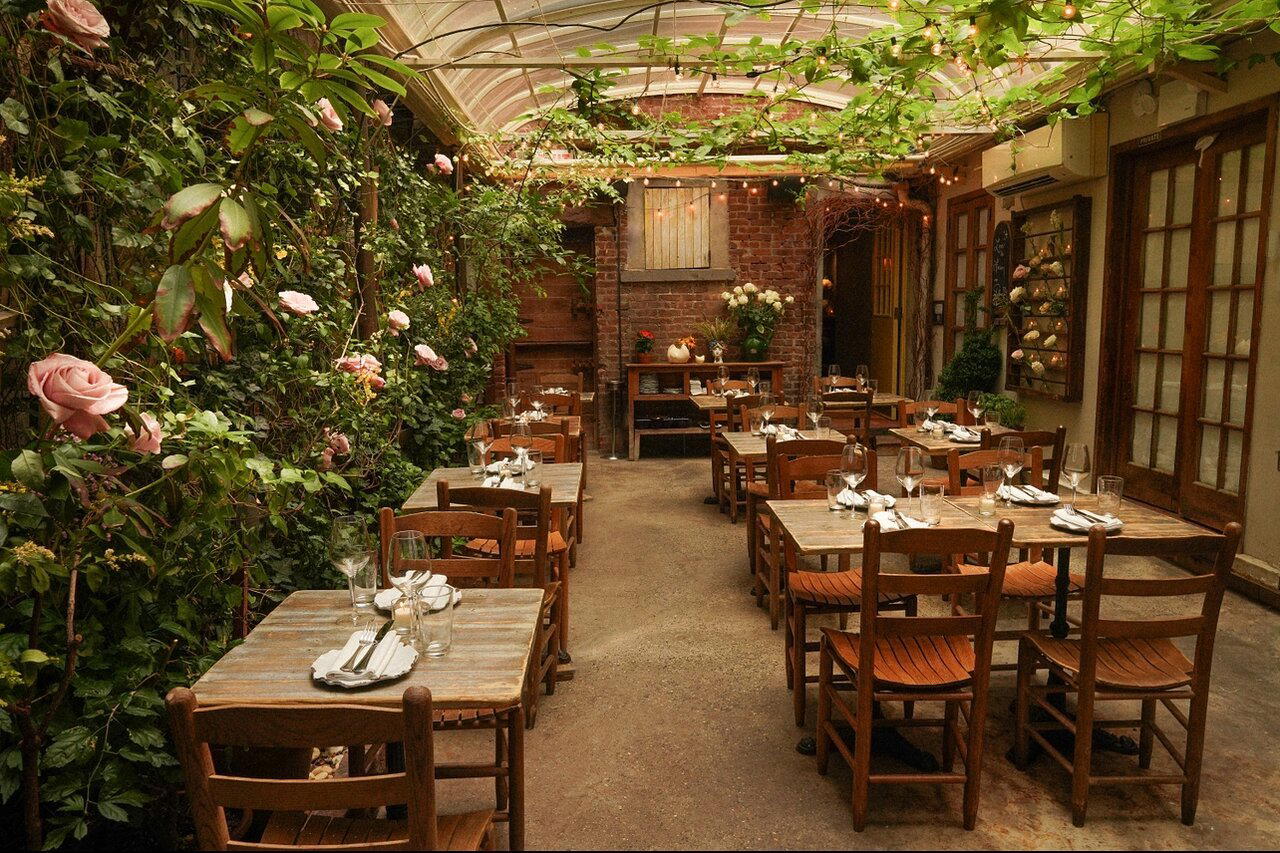
Cornelia Street and the West Village Dining Tradition
Cornelia Street has earned its place in the downtown Manhattan conversation through accumulated time rather than any single moment. The block running between Bleecker and West 4th is short enough to walk in under a minute, yet it has housed enough restaurants over the decades to function as a reliable barometer of the West Village's dining instincts: neighbourhood-scaled, resistant to the kind of high-gloss spectacle that defines the Meatpacking District a few blocks west, and consistently loyal to the idea that a room of thirty seats can carry more authority than one of three hundred. Palma, at number 28, operates within that tradition.
The West Village sits in a distinct position relative to the rest of New York's restaurant geography. The area is not where you find the city's Michelin-chasing tasting-menu circuit, which has largely consolidated around Midtown and the lower east side. Counters like Masa and Per Se in Columbus Circle, or the tightly formatted progression menus at Atomix and Jungsik New York, belong to a different category altogether, one defined by ceremony and capital outlay. The West Village has generally positioned itself elsewhere: as the part of the city where the food is taken seriously without the evening being treated as a performance.
The Lunch and Dinner Divide at Palma
In much of New York, the difference between lunch and dinner service is primarily one of speed and price compression. The West Village tends to make the divide feel more atmospheric, and Palma sits in a spot on Cornelia Street where that split is especially legible. During daytime hours, the block carries the low-frequency hum of a neighbourhood that is actually lived in rather than just frequented: the light through the windows is different, the foot traffic is local, and the pressure that accumulates in the city's evening restaurant culture is largely absent.
This dynamic is characteristic of particularly durable neighbourhood restaurants in downtown Manhattan. Lunch at a room like this tends to draw a different crowd than dinner, and the rhythm of service adjusts accordingly. The West Village lunch occasion has historically been less about the occasion itself and more about the space, the familiarity, and the sense that you are not being moved along. Evening service, by contrast, tends to tighten the room in a way that makes the table feel more charged. Across comparable neighbourhood restaurants in this part of the city, the dinner hour typically brings a sharper price point and a more deliberate pacing, with kitchen output oriented toward a seated progression rather than the more fluid drop of a midday meal.
For a visitor to New York trying to understand which version of Palma to book, this distinction matters. If the goal is the room itself and the texture of the street, lunch offers more of both. If the goal is the kitchen's fullest register and the energy of a West Village evening, dinner is the occasion. The two versions of the experience are not interchangeable, and the difference between them is not merely logistical.
Placing Palma in the Neighbourhood's Competitive Set
The West Village restaurant set has always operated at a remove from the city's formal fine dining infrastructure. The neighbourhood does not produce Michelin three-star addresses in the manner that certain other pockets of Manhattan do, and its most enduring restaurants have generally not competed on that axis. What the area does produce, consistently, is a category of restaurant that a certain kind of New York diner returns to over years rather than booking once for a special occasion. These are rooms where the cooking is accomplished but not theatrical, where the price ceiling is real but not aggressive, and where the table retains some warmth rather than being managed into a formal sequence.
Palma at 28 Cornelia Street fits within this reading of the neighbourhood. Its address positions it among a set of restaurants that compete less on spectacle and more on consistency, atmosphere, and the feeling of belonging to a specific block rather than to the city's broader dining machine. That positioning is meaningfully different from the dining logic at work in the city's highest-decibel rooms. For reference, operations like Le Bernardin represent one pole of New York's restaurant spectrum: rigorously formal, award-dense, and oriented toward a guest who is booking an event. Palma represents a different gravitational pull entirely.
Across American cities, the neighbourhood-restaurant model has become one of the more closely studied formats in the industry, precisely because it is harder to replicate at scale than either the casual fast-casual tier or the tasting-menu tier. Restaurants like Blue Hill at Stone Barns in nearby Tarrytown and Bacchanalia in Atlanta have each built durable reputations by anchoring to a specific sense of place rather than chasing the broader credentialing logic of the national fine dining circuit. The West Village operates by a related set of values, compressed into a denser urban context.
Closer in register, the neighbourhood-loyal formats found at Emeril's in New Orleans, Lazy Bear in San Francisco, and Providence in Los Angeles each illustrate how the model translates across American markets. Alinea in Chicago, Single Thread Farm in Healdsburg, The French Laundry in Napa, Addison in San Diego, and The Inn at Little Washington each occupy different points on the formality spectrum, but none of them are doing what Cornelia Street restaurants do: functioning as true neighbourhood anchors inside one of the world's densest urban grids.
Comparable Spots, Quickly
Comparable venues nearby, for context on price, style, and recognition.
| Venue | Cuisine | Price | Notes |
|---|---|---|---|
| PalmaThis venue — the venue you are viewing | Organic Italian with Housemade Pasta | $$$ | Not listed |
| Eataly - Flatiron | Authentic Italian Marketplace with Pizza, Pasta & Seafood | $$$ | Midtown South-Flatiron-Union Square |
| Serafina 38th | Italian Trattoria | $$$ | Midtown-Times Square |
| AperiBar | Italianesque Mediterranean | $$$ | Midtown-Times Square |
| Serafina - 777 Third Ave | Classic Italian Trattoria | $$$ | East Midtown-Turtle Bay |
| Altesi | Tuscan-Inspired Italian | $$$ | Upper East Side-Carnegie Hill |
Continue exploring
More in New York City
Restaurants in New York City
Browse all →
Bars in New York City
Browse all →
Hotels in New York City
Browse all →





At a Glance
- Romantic
- Cozy
- Intimate
- Elegant
- Date Night
- Special Occasion
- Brunch
- Garden
- Open Kitchen
- Extensive Wine List
- Organic
- Local Sourcing
- Farm To Table
- Garden
Current opening hours
- Monday
- Closed
- Tuesday
- Closed
- Wednesday
- 12–3 PM, 5–10 PM
- Thursday
- 12–3 PM, 5–10:30 PM
- Friday
- 12–3 PM, 5–10:30 PM
- Saturday
- 12–3 PM, 5–10:30 PM
- Sunday
- 12–3 PM, 5–10 PM
Hours can change for holidays and private events. Last verified .
Warm, inviting atmosphere with fresh flowers, ivy-covered walls, and a family-like feel enhanced by candlelight and garden seating.