Bank

The Good Food Guide GFG Good
Our verdict
Bank on Wells Road brings a sharply creative sharing-plates format to Totterdown, one of Bristol's more residential neighbourhoods. Chef Jack Briggs-Horan's open-fire kitchen draws on local and seasonal sourcing while ranging freely across global flavour references, from tandoori carrot to Szechuan syrup. Readers consistently flag the value-for-money fixed-price menus and the quality of the cocktail and local drinks list.

Pearl is the En Primeur Club membership app, where members save venues, book tables and use the concierge.
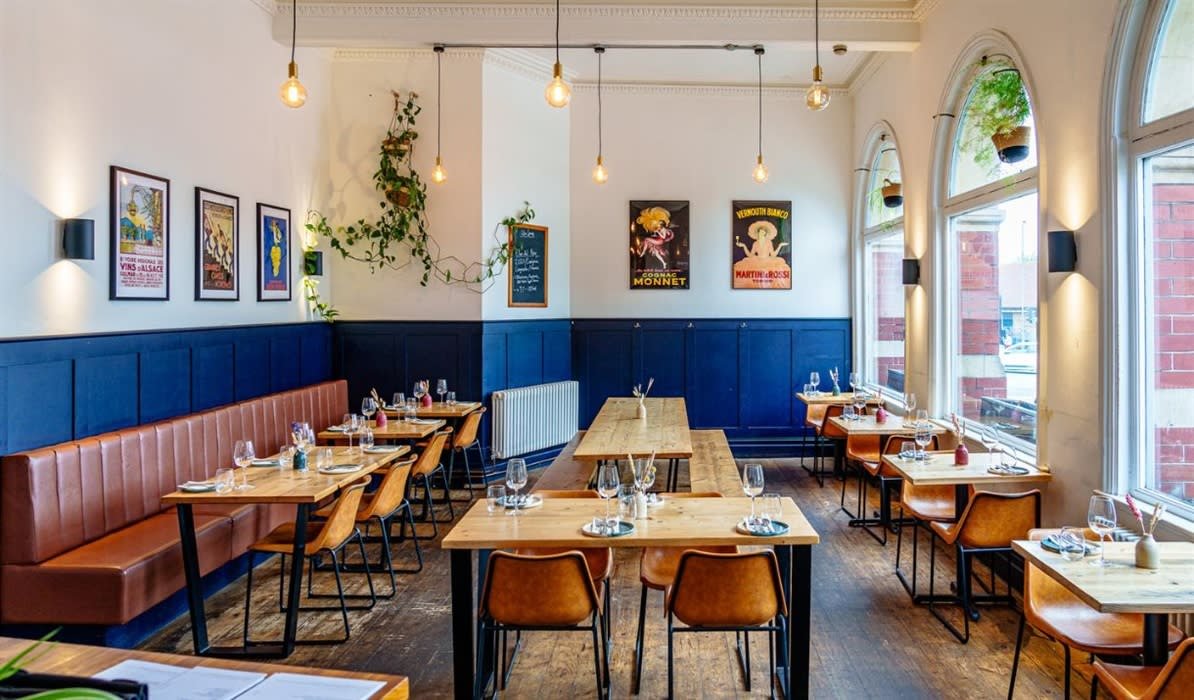
Where Totterdown's High Street Ends and the Kitchen Begins
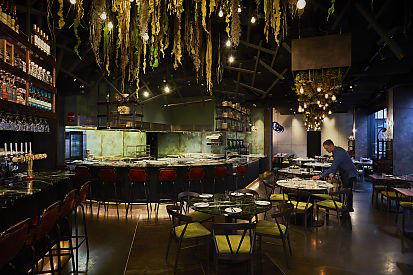
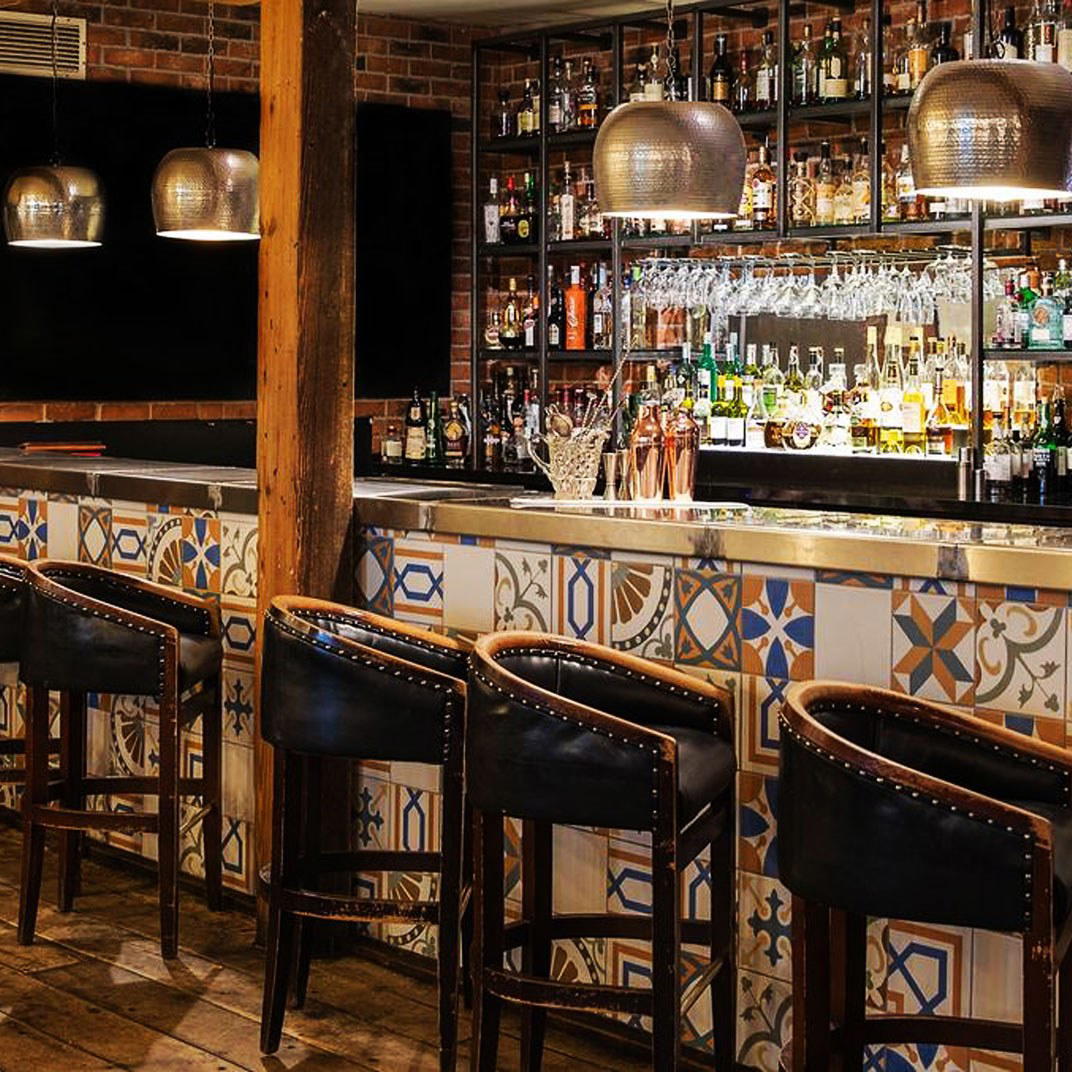
Bristol's neighbourhood dining scene has been pulling serious culinary ambition away from the centre for years, and Totterdown is one of the clearer examples of that shift. Wells Road runs south from the city with the slightly dishevelled character of a working residential strip, and Bank sits at 107 without much fanfare from the outside. Step through the door and the contrast is immediate: high ceilings, shiny hard surfaces, and spotless white walls create a modernist interior that reads as a deliberate separation from the street noise outside. It does not tip into the austere, though. The room functions as a neighbourhood joint as readily as it functions as a destination, you can drop in for a snack and an early-evening cocktail, or you can commit to a full table for dinner.
That balance, between serious cooking and approachable format, sits at the centre of what makes Bank worth the detour from central Bristol. Readers describe it as a 'welcome addition to Totterdown', which is the kind of local endorsement that tends to be harder to earn than a food-media mention. The dining format is sharing plates, which in Bristol has become a crowded category, but Bank's interpretation skews more technically adventurous than most of the city's casual end.
The Open Fire as a Sourcing Statement
The kitchen's open fire is not a decorative choice. It functions as a tool that shapes the flavour logic of the entire menu, adding smoked and charred elements across courses from snacks through to dessert. This matters as much as a sourcing commitment as it does as a cooking technique: working with fire demands precision about ingredient quality in a way that a closed oven does not. Charring amplifies sugar content and draws out moisture, so produce that is not at its peak reads immediately on the plate.
Chef Jack Briggs-Horan builds the menu around local and seasonal ingredients, and the kitchen's approach to those ingredients is shaped directly by what the fire can do with them. The result shows up across the menu in dishes like burrata with chicory, pickled blackcurrant and smoked beetroot, where the smoking is doing real flavour work rather than providing background effect. Smoked goat with tandoori carrot, blood-orange pickle and black garlic is a further example of how the sourcing and fire disciplines interact: the goat is a local protein choice, the cooking method gives it structural depth, and the surrounding elements bring acid and heat to cut through the fat.
The Sunday roast format at Bank takes the same approach rather than defaulting to conventional execution. Smoked short rib with wasabi mustard, or Middle White pork belly with black garlic and miso, sit in the same flavour register as the weekday menu. Middle White is a rare-breed British pig, and its appearance on a Sunday menu signals that the sourcing commitment extends into what might otherwise be the most casual service of the week. Bristol has a strong tradition of producers supplying directly to independent restaurants, and Bank sits inside that network.
This positions Bank differently from Bristol's more classically oriented end of the Modern British spectrum. Bulrush and Adelina Yard operate within a more formal frame, with tasting-menu structures and price points that reflect that ambition. BOX-E shares some of Bank's neighbourhood-joint DNA but operates from a very different physical format. Bank's fire-led, globally referenced menu sits in its own lane within Bristol's independent restaurant ecology.
Global References, Local Anchors
Briggs-Horan's menu has been described by readers as 'a head-spinning mash-up of eclectic global flavours and surprising textures', which is an accurate characterisation of how the kitchen operates. A dish like daikon piccata with green beans, tomato and peanut sauce, and green harissa draws simultaneously from Japanese ingredient vocabulary, Italian preparation technique, and North African condiment tradition. The logic is flavour-first rather than geography-first, which is a different approach to global influence than fusion restaurants that foreground the concept of combination itself.
This kind of cooking is increasingly common in British cities where chefs have trained across multiple traditions, but it remains harder to execute at the accessible price points that Bank operates on than it is at the higher-ticket end of the market. Places like The Ledbury or Moor Hall can absorb the cost of sourcing complexity into a £150-plus tasting menu. At Bank, readers consistently note 'exceptional value for money', which implies that the kitchen is absorbing real cost pressure to keep the menu accessible.
The wine list is short and described as keenly priced, augmented by an unusual cocktail selection alongside local beers and ciders. Bristol's independent brewing and cider-making scene is active enough to support this kind of list without reaching for generic alternatives, and Bank's drinks programme reflects that. For comparison, 1 York Place takes a more European-focused approach to its wine list, which gives you a sense of how differently independent Bristol restaurants are thinking about the drinks side.
Desserts and Snacks Through the Same Lens
The open-fire discipline extends to both ends of the menu. Charred olives appear as a snack, and the dessert card includes a whipped burnt Basque cheesecake with charred strawberries and Szechuan syrup. The Basque cheesecake format has become widely adopted across British casual dining, but the charring and Szechuan pepper addition moves it into territory that is specific to Bank's kitchen logic rather than simply following the trend. It is a small detail that illustrates how the fire commitment is applied consistently rather than selectively.
Planning a Visit to Bank
Bank is at 107 Wells Road, Totterdown, Bristol BS4 2BS, roughly two miles south of the city centre. The lunchtime and early-evening fixed-price menus represent the strongest value entry point, and readers specifically call these out as worth planning around. The neighbourhood is walkable from the Bedminster side of Bristol and accessible from the city centre by bus. Sunday roasts are available at lunch and follow the same experimental kitchen approach as the weekday menu, so do not arrive expecting a conventional plate. The neighbourhood character means that Bank functions as a drop-in as readily as a booked dinner, though the imaginative cooking and growing local reputation suggest that booking ahead is the more reliable approach, particularly at weekends.
For broader context on where to eat, stay, or drink in Bristol, our full Bristol restaurants guide maps the city's independent scene, and our Bristol hotels guide, Bristol bars guide, and Bristol experiences guide cover the wider picture. If you want to benchmark Bank's cooking against Bristol's traditional end, Blaise Inn offers a point of comparison at the more conventional, accessible end of the spectrum.
Frequently asked questions
Can I bring kids to Bank?
Bank operates as a neighbourhood joint at 107 Wells Road where dropping in for a snack or early cocktail is as welcome as a full dinner sitting. That casual, non-exclusionary format suggests a tolerant approach to families. The menu's adventurous flavour combinations, smoked goat, daikon piccata, charred olives, may suit curious eaters more than strict younger palates, but nothing in the format rules children out.
What's the overall feel of Bank?
Readers describe it as cool without being exclusionary, with modernist decor, high ceilings, white walls, hard shiny surfaces, that feels removed from the Wells Road traffic outside. The service draws consistent praise alongside the food, and the value-for-money reputation is strong enough that 'exceptional value' appears repeatedly in reader responses. Sunday roasts with smoked short rib or black garlic miso pork belly confirm this is a neighbourhood spot with a kitchen that takes itself seriously.
What distinctions does Bank have?
Bank has received recognition including: Readers love the ‘imaginative, beautifully presented food’, excellent service and ‘exceptional value for money’ on offer at this cool, independent sharing-plates diner, adding that it's a ‘welcome addition to Totterdown’. Once inside, the m….
What's the must-try dish at Bank?
The menu changes constantly, so chasing a specific dish is less reliable than trusting the open-fire framework that shapes every course. The smoked and charred components, from burrata with smoked beetroot through to a whipped burnt Basque cheesecake with charred strawberries and Szechuan syrup, represent the kitchen's most consistent and distinctive output. If those appear when you visit, order them.
Where is Bank located?
Bank is located at 107 Wells Rd, Totterdown, Bristol BS4 2BS, United Kingdom, Bristol.
Side-by-Side Snapshot
Comparable venues nearby, for context on price, style, and recognition.
| Venue | Cuisine | Price | Awards | Notes |
|---|---|---|---|---|
| BankThis venue (the venue you are viewing) | european | Not listed | The Good Food Guide GFG Good | Not listed |
| Spicer & Cole, Clifton Village | British Cafe Brunch | $10–20 | Not listed | Clifton |
| Bianchis | Italian Trattoria | $30–50 | The Good Food Guide GFG Good | Ashley |
| Sweven Coffee | Specialty Coffee Roastery | $1–10 | Not listed | Southville |
| Her Majesty's Secret Service | Cocktail Bar | $20–30 | Not listed | Clifton Down |
| Pazzo | Modern Italian | Not listed | The Good Food Guide GFG Good | Clifton Down |
Recognition history
Dated appearances from independent guides and award organizations, with the underlying list record or original source where available.
The Good Food Guide GFG Good
The Good Food Guide
Continue exploring
More in Bristol
Restaurants in Bristol
All restaurants in Bristol →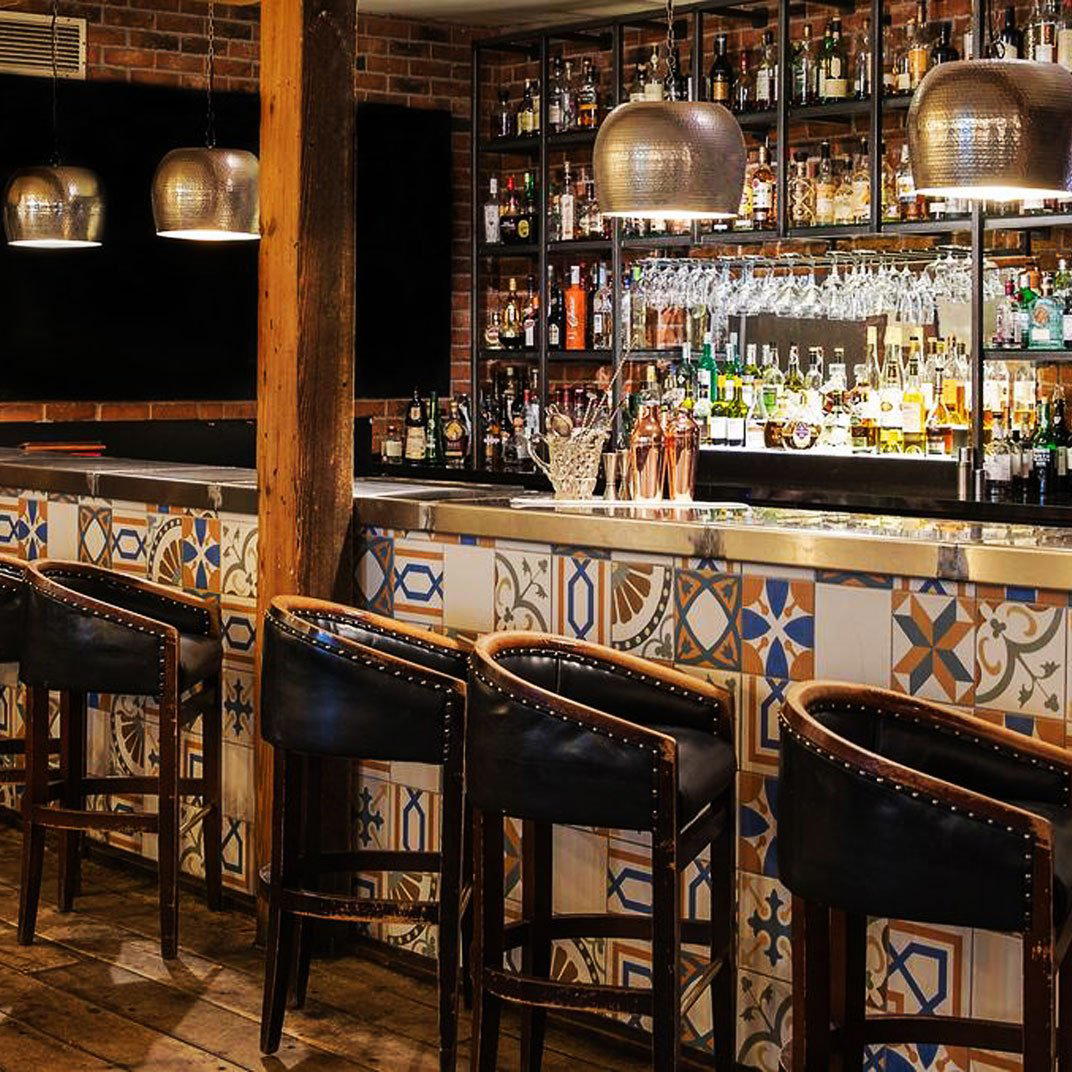
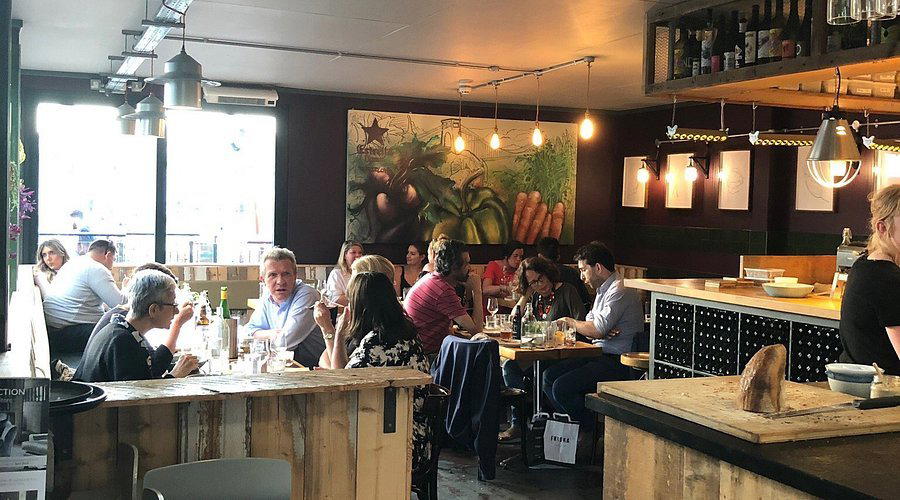
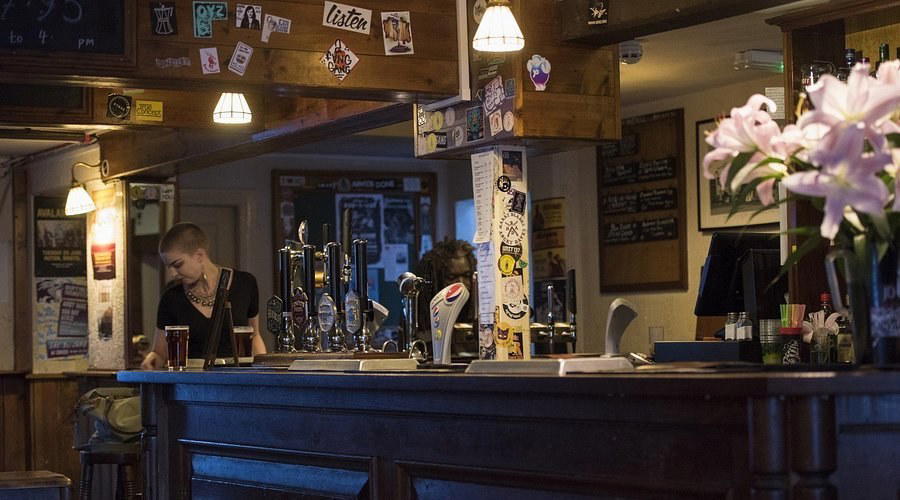
Bars in Bristol
All bars in Bristol →
Details
- Family
- A La Carte
- Vegan Options
Current opening hours
- Monday
- Closed
- Tuesday
- 6–10 PM
- Wednesday
- 6–10 PM
- Thursday
- 6–10 PM
- Friday
- 12–10 PM
- Saturday
- 12–10 PM
- Sunday
- 12–8 PM
Hours can change for holidays and private events. Hours as of .
spacious, airy with good atmosphere, bit noisy on weekends