Bulrush



Foraged precision defines Bulrush in the City of Bristol, where chef George Livesey crafts imaginative tasting menus, think “scallop Marmite” and wagyu fat waffles with koji ice cream, in an intimate Cotham dining room with a standout sommelier-led wine flight.
Pearl is the En Primeur Club membership app — saves, bookings, and concierge access live there. Same editors, same standards.
- Address
- 21 Cotham Rd S, Bristol BS6 5TZ, United Kingdom
- Phone
- +44 117 329 0990
- Website
- bulrushrestaurant.co.uk
- Directions
- Get directions
 Saves & bookings on Pearl
A Cotham Side Street and the Question of What Modern British Actually Means
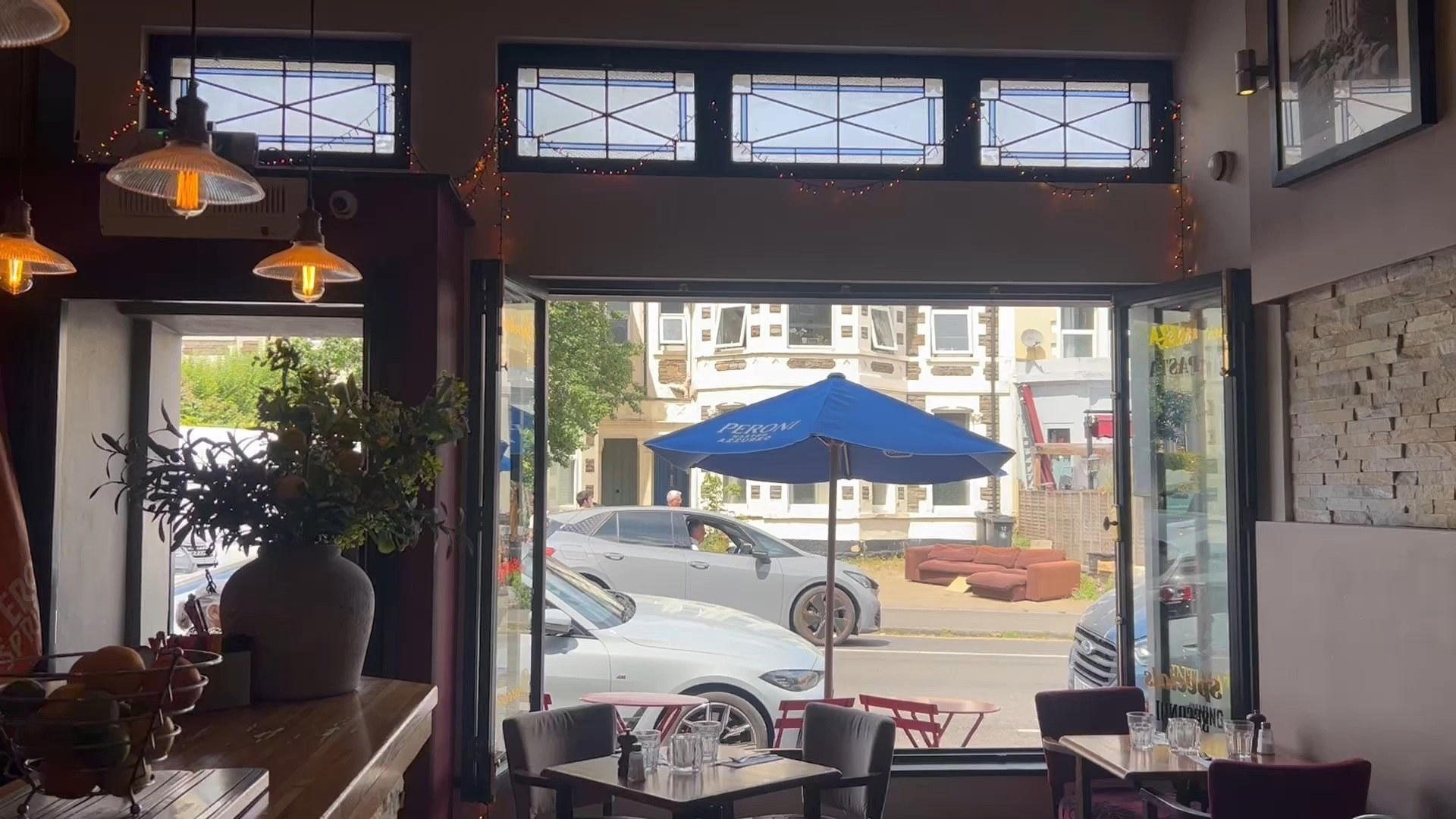
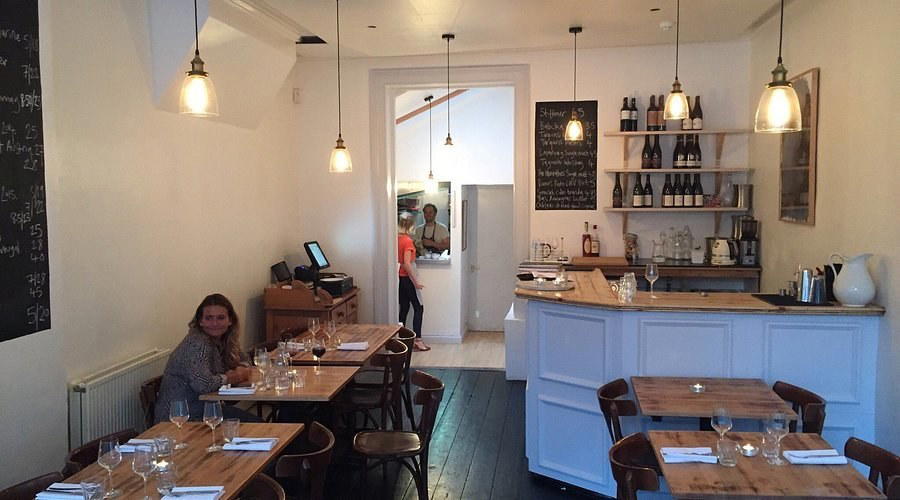
The sign above 21 Cotham Road South is easy to miss. There is no awning, no polished brass, no doorman. The former greengrocer's unit occupies a residential stretch of Cotham with the quiet confidence of somewhere that does not need to advertise. Inside, the room runs long and thin toward an open kitchen at the back: cream walls, functional lino, radiators that were never part of a designer's brief. The dining room at Bulrush looks, in short, like somewhere a local might duck into for a bowl of soup. That gap between expectation and what arrives from the kitchen is precisely the point.
Modern British cooking has always carried a tension at its core: the pull between the larder traditions of this island and the restlessness of a generation of chefs trained across Europe and Asia. At its weakest, that tension produces menus that feel like neither one thing nor another. At its most coherent, it produces cooking where fermented barley sits naturally beside yuzu, and where a scallop's umami is amplified through a Marmite preparation that draws on both Japanese dashi culture and the British storecupboard. Bulrush sits in the coherent camp, and the Michelin star it received in 2024 is the formal acknowledgment of that position.
Where Bulrush Sits in Bristol's Tasting Menu Tier
Bristol's serious tasting menu scene occupies a relatively small tier, with a handful of addresses competing for the same regulars and destination visitors. Wilsons operates at a comparable price point (£££) with a produce-first philosophy; BOX-E represents the accessible end of modern British in the city; and COR and Chef's Table each occupy distinct corners of the finer-dining bracket. Bulrush, at ££££, prices itself at the summit of that local tier and competes less with Bristol neighbours than with a national cohort of neighbourhood restaurants that have refused the trappings of formal fine dining without reducing their technical ambition.
Nationally, that cohort includes addresses like Hand and Flowers in Marlow, which similarly trades on atmosphere over decor. The grander end of the Modern British spectrum, from The Ledbury in London to L'Enclume in Cartmel, Moor Hall in Aughton, or CORE by Clare Smyth in London, operates at a different scale and with different expectations around room design and service formality. Bulrush chooses a third path: the neighbourhood restaurant that earns a Michelin star not because it has adopted the conventions of fine dining, but because it has declined to.
The Kitchen's Approach: Seasonality, Preservation, and Influence
The ingredients that arrive at this kitchen are either foraged or certified organic, and that sourcing commitment shapes the menu's character more than any single technique. Preservation and pickling run through multiple courses, acting as a structural thread rather than a garnish-level detail. This is not the nostalgic pickled-walnut school of British cooking, nor the strictly Scandinavian fermentation tradition, but something that draws on both without being reducible to either.
Chef George Livesey trained at St John and Club Gascon, two kitchens that sit at opposite ends of British culinary culture: the first defined by whole-animal nose-to-tail restraint, the second by the rich, fat-forward cooking of Gascony. That combination is visible in how meat appears on the menu when it does, treated with a whole-carcass logic rather than as a prime-cut transaction. Vegetables, meanwhile, get the same structural attention. A bowl of kuri squash with fermented barley, yuzu, pumpkin-seed foam, and barbecue cabbage sauce functions as a main event in its own right, not as a course that precedes meat.
The Scandi and Japanese influences Livesey brings to a fundamentally British framework are by now a familiar feature of a certain generation of London-trained cooks who moved outward to regional cities. What distinguishes the execution here is integration: the Japanese chawanmushi technique applied to a Jerusalem artichoke custard does not read as a cross-cultural reference point but as the logical delivery mechanism for that ingredient's flavour. That kind of quiet confidence in combination is harder to achieve than novelty, and it is where tasting menus either earn their length or exhaust it.
The Format and the Room
The tasting menu runs from six to nine courses, with sittings clustered into narrow windows: last orders for the evening sitting are at 7:30 PM Tuesday through Saturday, with a Friday and Saturday lunch service opening at noon. The restaurant is closed Sunday and Monday. Those hours place it in a category of serious operations that run at low covers and high intensity rather than trading across a full service week. Booking ahead is advisable; the combination of limited sittings and a single-sitting format means availability compresses quickly.
Sitting downstairs, close to the open kitchen, gives the leading return on the room's modest atmosphere. The kitchen view is not architectural theatre in the way it might be at a purpose-built counter restaurant; it is functional transparency that connects the diner to the pace and method of the cooking. Staff described across multiple published reviews as warm and genuinely enthusiastic contribute to an atmosphere that reads as relaxed without being inattentive.
The wine list is relatively short, but the wine flight is consistently flagged as strong value relative to the menu price. For a ££££ tasting menu, the flight offering represents a meaningful opportunity to access considered pairings without building a bottle-by-bottle list from scratch.
Bulrush in the Context of the Modern British Tradition
Modern British as a category has struggled with definition for decades. At one end, it encompasses the grand-hotel formality of somewhere like The Ritz Restaurant in London; at the other, it describes the stripped-back produce cooking of a market-town pub with rooms. The Fat Duck in Bray and Gidleigh Park in Chagford represent points on a spectrum that runs from avant-garde conceptualism to landscape-rooted classicism. Bulrush occupies a position closer to the produce end, but with a creative vocabulary that keeps the cooking from becoming purely ingredient-led.
What the leading examples of this tradition share is a willingness to treat British ingredients not as the default option but as the specific choice. Foraged and organic sourcing at Bulrush is not a marketing position; it is the precondition for a menu that relies on seasonal variation to change its character across the year. A restaurant running this format without that commitment to sourcing would need to compensate elsewhere, and the cooking here does not read as though it is compensating for anything.
Planning Your Visit
Bulrush is at 21 Cotham Road South, Bristol BS6 5TZ, in the Cotham neighbourhood north of the city centre. The restaurant operates Tuesday through Thursday evenings, Friday and Saturday at lunch and dinner, and is closed Sunday and Monday. Last orders for the evening sitting are at 7:30 PM across all dinner services. At ££££, the menu sits at the summit of Bristol's tasting menu price bracket; the wine flight is the recommended pairing option for its value relative to the menu length.7 from 460 ratings.
Where the Accolades Land
Comparable venues nearby, for context on price, style, and recognition.
| Venue | Cuisine | Price | Awards | Notes |
|---|---|---|---|---|
| BulrushThis venue — the venue you are viewing | Modern British Fine Dining | $$$ | Michelin 1 Star | Not listed |
| Wilsons | Modern British Fine Dining | $$$ | Michelin 1 Star | Cotham |
| OTHER | Steakhouse with Fresh Seafood | $$$ | Bib Gourmand | Southville |
| Root | Modern Vegetable-Led Small Plates | $$$ | Bib Gourmand | Central |
| Marmo | Modern Italian Osteria | $$ | Bib Gourmand | Central |
| BOX-E | Modern British Bistro | $$$ | Bib Gourmand | Central |
Recognition history
Dated appearances from independent guides and award organizations, with the underlying list record or original source where available.
Michelin 1 Star
Michelin
Michelin 1 Star
Michelin
The Good Food Guide GFG Very Good
The Good Food Guide
Michelin 1 Star
Michelin
Opinionated About Dining Top New Restaurants in Europe Recommended
Opinionated About Dining

At a Glance
- Cozy
- Intimate
- Modern
- Elegant
- Date Night
- Special Occasion
- Business Dinner
- Open Kitchen
- Extensive Wine List
- Local Sourcing
Current opening hours
- Monday
- Closed
- Tuesday
- 6–7:30 PM
- Wednesday
- 6–7:30 PM
- Thursday
- 6–7:30 PM
- Friday
- 12–1:30 PM, 6–7:30 PM
- Saturday
- 12–1:30 PM, 6–7:30 PM
- Sunday
- Closed
Hours can change for holidays and private events. Last verified .
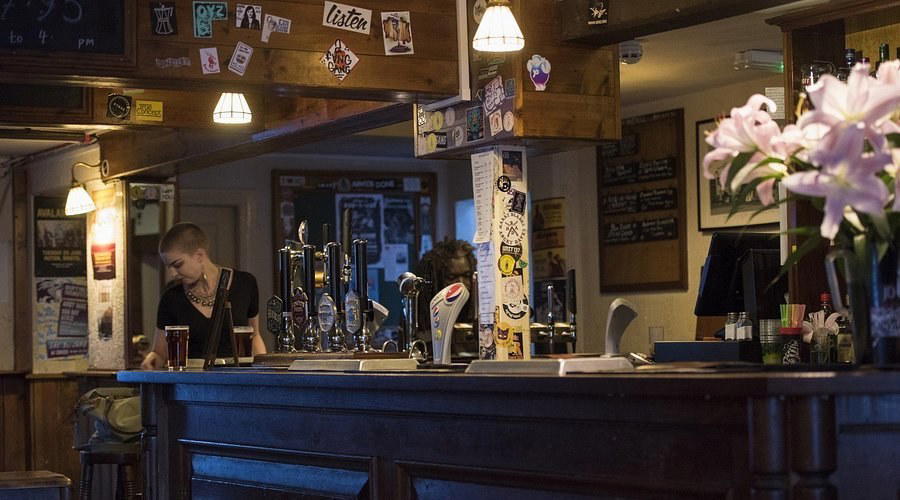
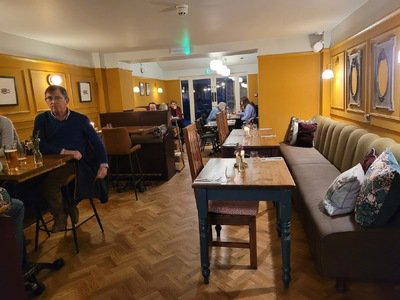
Cosy and intimate with a relaxed, modern-casual atmosphere, open kitchen downstairs, and simple stylish furnishings.