On a quiet side street in central Budapest's fifth district, Bangkok Thai brings Southeast Asian cooking to a city whose restaurant scene skews heavily toward Central European and modern Hungarian traditions. For a city with limited Thai representation, it occupies a niche that few others in Budapest currently fill. The address at Só utca 3 places it within easy reach of the Danube embankment and the Inner City's main dining corridor.
Pearl is the En Primeur Club membership app — saves, bookings, and concierge access live there. Same editors, same standards.
- Address
- Budapest, Só u. 3, 1056 Hungary
- Phone
- +3612660584
- Website
- thaietterem.hu
- Directions
- Get directions
 Saves & bookings on Pearl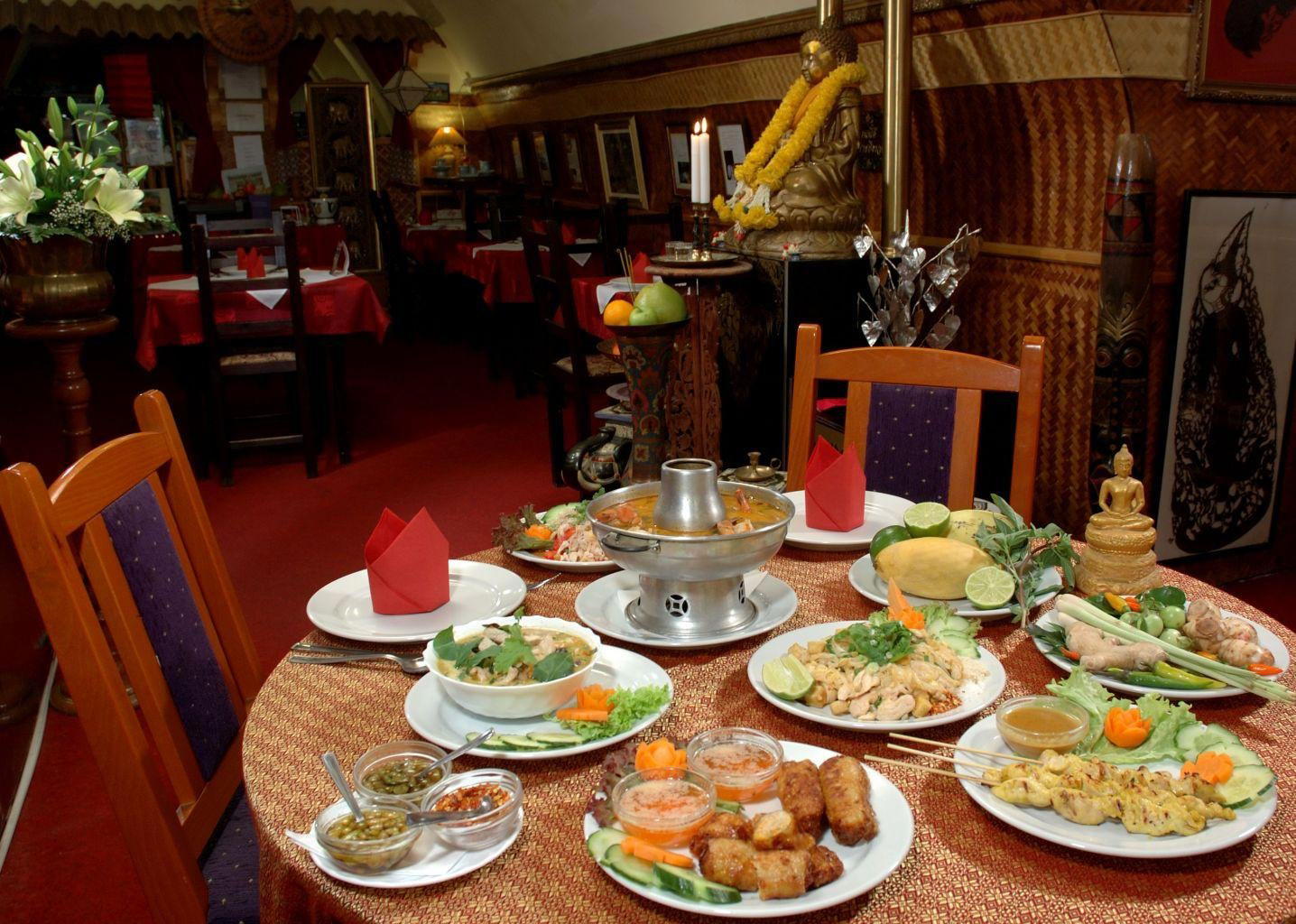
Thai Cooking in a City Built for Goulash
Budapest's restaurant scene has spent the past decade consolidating around two poles: a tier of ambitious modern Hungarian kitchens competing for Michelin recognition, represented by places like Babel, Costes, and Stand, and a broader mid-market layer of traditional Central European cooking. Southeast Asian cuisine occupies a far smaller share of that picture. Thai food in particular remains genuinely underrepresented for a capital city of Budapest's size and international traffic, which makes the category itself worth examining before the individual address.
The logic of Thai cooking in a landlocked Central European city is, on its face, complicated. The cuisine is built around ingredients that require either short supply chains or reliable importation: fresh galangal, makrut lime leaves, holy basil, green peppercorns still on the stem, and fish sauce from specific fermentation traditions in Thailand's Gulf coast. How a kitchen in Budapest resolves that sourcing problem says more about what ends up on the plate than any stated culinary ambition. This is the central question at any Thai restaurant operating far outside the cuisine's geographic origin, and it is a question worth keeping in mind when reading any menu in this category.
The Fifth District Address and What It Signals
Só utca is a short street in Budapest's fifth district, the Inner City, close to the Danube embankment and the pedestrian zone that connects Vörösmarty tér to the Elizabeth Bridge. The neighbourhood draws a mix of office workers at lunch and tourists in the evening, with a residential layer that keeps it from being purely transactional. Restaurants here compete against a dense field, and Thai cooking in this postcode places Bangkok Thai in a niche category: not the heavy game of the Michelin-tracked Hungarian kitchens further up the price ladder, and not the fast-casual international food that clusters around the main tourist corridors. For diners crossing the district after visiting the Inner City's landmarks, Só utca 3 sits at a walkable distance from the Danube riverfront, making it a practical dinner option in an area where the alternatives are heavily skewed toward European formats.
For a sense of how Budapest's dining geography extends beyond the capital, the EP Club also covers regional Hungarian tables worth the drive: Platán Gourmet in Tata, Pajta in Őriszentpéter, and Petrányi Csopak in Csopak represent the kind of region-rooted cooking that frames Budapest's own food identity. Our full Budapest restaurants guide maps the broader scene.
Ingredient Sourcing: The Structural Challenge of Thai Cooking Abroad
The quality ceiling for Thai restaurants outside Southeast Asia is almost always set by ingredients rather than technique. The aromatic base of Thai cooking, the holy trinity of galangal, lemongrass, and kaffir lime, does not survive substitution well. Dried galangal behaves differently from fresh; dried kaffir lime leaves lose the volatile oils that give Thai soups their characteristic lift. Fish sauce varies significantly by producer and fermentation duration, and shrimp paste, the backbone of most curry pastes, ranges from mild and sweet to intensely saline depending on origin and age.
In markets with established Thai communities, specialist importers supply fresh aromatics on weekly or biweekly cycles. Budapest does not yet have that supply infrastructure at scale, which means Thai kitchens here face a version of the problem that confronts Japanese restaurants in cities without direct fish shipments: the sourcing gap between what the cuisine requires and what the local logistics allow. Some kitchens resolve this through selective menu reduction, focusing on dishes that tolerate imported or shelf-stable ingredients without meaningful degradation. Others work directly with importers in Vienna or Prague, where Southeast Asian supply networks are more developed. The approach a kitchen takes to this problem is usually legible on the menu, in what is present, what is absent, and what appears in modified form.
This sourcing context applies across the category. Restaurants with more resources and larger operations, like Le Bernardin in New York City or Lazy Bear in San Francisco, invest substantially in ingredient provenance as a core editorial statement. For smaller operations in cities with thinner supply chains, the trade-offs are different in kind but not in logic.
How Bangkok Thai Sits in Budapest's Wider Restaurant Picture
At the price tier where most Thai restaurants in Budapest operate, the competitive set is not the modern Hungarian kitchens covered by Borkonyha Winekitchen or essência. The relevant comparison is the broader mid-market international dining sector, where value is assessed against authenticity and consistency rather than tasting-menu ambition. In that frame, a Thai restaurant that handles its sourcing well, maintains consistent curry paste production, and does not over-adapt its flavour profiles toward local palates occupies a distinct and useful position in Budapest's food map.
The fifth district's dining options skew heavily European, with Hungarian traditional formats and international hotel restaurants filling most of the available slots. A Thai kitchen here draws on a different customer logic: the diner who wants a break from paprika-led cooking, the expat community that has established itself in central Budapest, and the international visitor who seeks reference points outside the local culinary tradition. None of these are niche audiences in a city that receives millions of visitors annually, which is part of why the category, though small, is viable.
For those exploring Hungarian cooking beyond Budapest, the EP Club covers tables at Sauska 48 in Villány, Hosszú Tányér in Hosszúhetény, Kővirág in Köveskál, Teyföl in Szentendre, Öreg Prés in Mór, Botanica in Dánszentmiklós, and Old Kőrössy Fish Restaurant in Szegedin, all of which offer regional context for Budapest's food identity.
Planning Your Visit
Bangkok Thai is located at Só utca 3 in Budapest's fifth district, within walking distance of the Danube embankment and accessible from multiple metro and tram lines serving the Inner City. The fifth district sees heavy foot traffic on weekends, particularly in summer, so midweek visits typically allow for a quieter experience of this part of the city. For diners building a Budapest itinerary, the neighbourhood also offers access to the modern Hungarian kitchens tracked in our full Budapest restaurants guide, which maps the city's dining options by district and price tier.
Same-City Peers
Comparable venues nearby, for context on price, style, and recognition.
| Venue | Cuisine | Price | Notes |
|---|---|---|---|
| Bangkok ThaiThis venue — the venue you are viewing | Authentic Thai | $$ | Not listed |
| Maia | Modern Mexican Fusion | $$ | Varhegy |
| Wang Mester | Authentic Sichuan Chinese | $$ | Istvanmezo |
| La Bocca Budapest | Italian Brunch and Pizza | $$ | Belvaros |
| Retek Bisztro | Traditional Hungarian Bistro | $$ | Varhegy |
| In Town Hot Pot | Authentic Chinese Hot Pot | $$ | Ferencvaros |
Continue exploring
More in Budapest
Restaurants in Budapest
Browse all →
Bars in Budapest
Browse all →
Hotels in Budapest
Browse all →

At a Glance
- Cozy
- Family
- Date Night
Current opening hours
- Monday
- 11 AM–11 PM
- Tuesday
- 11 AM–11 PM
- Wednesday
- 11 AM–11 PM
- Thursday
- 11 AM–11 PM
- Friday
- 11 AM–11 PM
- Saturday
- 11 AM–11 PM
- Sunday
- 11 AM–11 PM
Hours can change for holidays and private events. Last verified .
Cozy and relaxing Asian-inspired atmosphere.