Killer Kebab
Our verdict
On Borgergade in Copenhagen's inner city, Killer Kebab occupies the casual end of a dining culture that otherwise trends toward tasting menus and Nordic restraint. The name is a provocation in a city of composed fine dining, and the address puts it within reach of the design-museum corridor. A straightforward reference point for fast, informal eating in a neighbourhood that rarely does casual.

Pearl is the En Primeur Club membership app — saves, bookings, and concierge access live there. Same editors, same standards.
- Address
- Borgergade 18, 1300 København, Denmark
- Hours
- Mon–Fri 11:30 AM–8:30 PMSat–Sun 12–8:30 PM
- Website
- killerkebab.com
- Directions
- Get directions
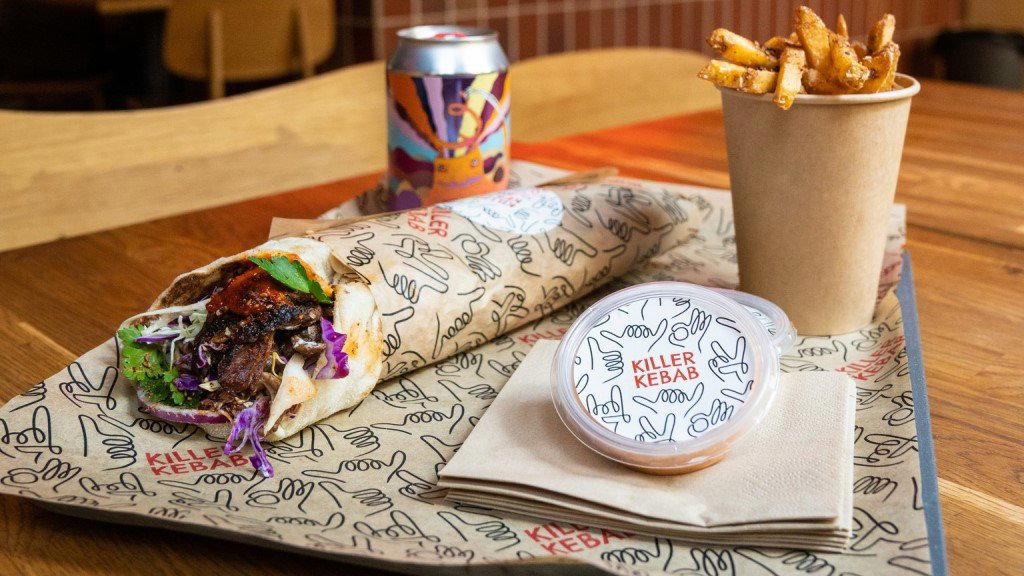
Borgergade After Dark: Copenhagen's Casual Counter-Programming
Copenhagen's dining reputation was built on the slow, the composed, and the considered. The city that gave the world the new Nordic tasting menu format, anchored by places like Noma and Geranium, has spent two decades training its visitors to expect ceremony. Which is exactly what makes the informal end of Copenhagen's food scene worth paying attention to. When a city's ambient dining standard is this high, even the quick stops carry a certain expectation of execution.
Killer Kebab sits on Borgergade 18, in the inner city district that bridges the old royal quarter around Kongens Nytorv and the canal-facing streets heading toward Christianshavn. It is not a neighbourhood that does a lot of casual. The design museums, the hotel bars, and the proximity to Nyhavn funnel a specific kind of visitor through these streets — people who have already booked their fine dining and are looking for something uncomplicated before or after. Killer Kebab reads clearly in that context: a name that announces itself, an address that puts it in striking distance of the city's more composed offerings.
The Sensory Register of Copenhagen's Street Food Tier
In a city where Alchemist delivers fifty-course theatrical experiences and Koan fuses New Nordic precision with kaiseki structure, the kebab shop operates in a completely different register. The sounds are different: the scrape of a blade against a rotating spit, the paper wrap of a takeaway order, conversation at street volume rather than the measured quiet of a tasting-menu room. The smells are fat and spice and char rather than the fermented and foraged notes that define the upper tier.
That contrast is not incidental. Copenhagen's fine dining circuit, which includes multi-star operations like Kadeau and the Michelin-recognised Jordnær in Gentofte, depends on an informal undercurrent to function. Visitors spending three or four days in the city cannot eat at that register for every meal, financially or practically. The informal tier absorbs the rest of the day's appetite. In Copenhagen, where even the grocery stores take food quality seriously, the competition within that casual tier is real.
Where Killer Kebab Sits in the Danish Dining Picture
Denmark's serious restaurant culture extends well beyond the capital. Frederikshøj in Aarhus, Alimentum in Aalborg, and ARO in Odense anchor a national fine dining circuit that has developed its own identity independent of Copenhagen's spotlight. Rural operations like Henne Kirkeby Kro and Dragsholm Slot Gourmet have built reputations as destination restaurants that justify the drive out of the city. At the other end of the spectrum, spots like MOTA in Nykøbing Sjælland and Domæne in Herning serve regional communities where the fine-to-casual ratio looks different from Copenhagen's tourist-heavy core.
Within Copenhagen itself, the casual eating category is dominated by the Torvehallerne market stalls, the smørrebrød lunch counter tradition, and a growing population of international fast food formats that have followed the city's increasing cosmopolitanism. The kebab shop occupies a specific niche in that mix — fast protein at low cost, a format with deep roots in Denmark's Turkish and Middle Eastern immigrant communities, and a product that has become as embedded in Danish late-night food culture as the hot dog stands that line the city's bicycle routes.
What the Address Signals
Borgergade 18 is a specific kind of inner-city address. The street runs through a district that handles significant foot traffic from visitors moving between the design and cultural institutions on Bredgade and the busier commercial zones further west. A kebab shop on this block is positioned to catch both passing trade and deliberate visits from the nearby residential population. The inner city postal code (1300) places it in a zone where rents are not low, which means operating even a casual format here requires volume or margin discipline that a suburban equivalent would not face in the same way.
That context matters when thinking about what Killer Kebab represents in the city's food map. It is not a destination in the way that LYST in Vejle or Frederiksminde in Præstø are destinations, places worth building an itinerary around. It functions instead as a neighbourhood constant, the kind of place that a city needs to have in order for its more ambitious restaurant culture to breathe. Copenhagen's visitors who have spent the day reading about Geranium's waiting list or trying to parse the full Copenhagen restaurants guide for a last-minute booking can arrive at Borgergade with no plan and leave fed.
The Kebab Format in a Nordic Context
The döner kebab arrived in Scandinavia via Germany's Turkish diaspora and has been standard late-night eating in Danish cities since the 1980s and 1990s. What distinguishes the stronger operators in that category today is less the format itself and more the sourcing and assembly: the quality of the bread, the temperature of the meat, the balance of sauce and vegetable. Copenhagen's general food culture, shaped by decades of new Nordic influence and a population that reads food labelling carefully, has pushed expectations upward even within the casual tier. A kebab shop operating in 2024 Copenhagen is not operating in the same environment as one in a different European city where the surrounding food standard is lower.
For comparison, the standards that define New York's serious dining rooms, places like Le Bernardin and Atomix, create a similar ambient pressure on casual formats in that city. In Copenhagen, that pressure comes from a different tradition, but the mechanism is the same: when the ceiling is high, everything below it gets measured against it.
Know Before You Go
- Address: Borgergade 18, 1300 København, Denmark
- Neighbourhood: Inner city, between Kongens Nytorv and Bredgade
- Format: Casual / fast food
- Booking: Walk-in format; no reservation infrastructure confirmed
- Phone / Website: Not publicly listed
- Price range: Not confirmed; casual kebab format typically operates at the lower end of Copenhagen's food spend
- Hours: Not confirmed; check locally before visiting
Frequently asked questions
What should I order at Killer Kebab?
Specific menu details for Killer Kebab are not published in any confirmed source available to EP Club. Given the format and name, the core product is almost certainly a döner-style kebab. In Copenhagen's casual eating tier, the differentiators between operators tend to be bread quality and sauce balance rather than dramatic menu variation. Order whatever the counter staff indicate is freshest or most in-demand at that moment.
Do they take walk-ins at Killer Kebab?
No booking infrastructure has been confirmed for Killer Kebab, which is consistent with the casual, counter-service format the venue appears to operate. Copenhagen's fine dining rooms, from Geranium to Koan, require advance reservations, sometimes months out. Killer Kebab functions on the opposite logic: arrive, order, eat. That accessibility is part of the point in a city where planned dining requires considerable lead time.
What do critics highlight about Killer Kebab?
No published critical reviews from named outlets are available in EP Club's confirmed data. The venue does not carry any documented awards or Michelin recognition. In a Copenhagen dining scene where critical attention concentrates heavily on the new Nordic fine dining tier and its successors, informal formats in this category rarely attract formal review coverage. Reputation in this segment travels through local word-of-mouth and repeat custom rather than editorial notice.
How does Killer Kebab handle allergies?
No allergen information or dietary accommodation policy has been confirmed for Killer Kebab. The venue does not have a listed website or phone number in EP Club's data.
Is Killer Kebab overpriced or worth every penny?
Price data is not confirmed in EP Club's records. Copenhagen is an expensive city by European standards, and even casual food formats here tend to sit above equivalent price points in Berlin or Warsaw. Whether any specific spend at Killer Kebab represents value depends on what you're comparing it to: against a Copenhagen fine dining meal, the spend is negligible; against kebab shops in cities with lower ambient costs, it may read differently. The relevant comparison is the quality of casual eating immediately around it on Borgergade.
Is Killer Kebab a good option for eating near Copenhagen's design museum district?
Borgergade 18 places Killer Kebab within easy walking distance of the Design Museum Denmark on Bredgade and the cluster of galleries and institutions along that corridor. For visitors spending a half-day in that part of the inner city, it represents one of the few fast, informal eating options in an area that otherwise trends toward sit-down cafes and hotel restaurants. It functions as practical calories rather than a dining occasion in itself, which is exactly what the neighbourhood lacks from its surrounding food supply.
At-a-Glance Comparison
Comparable venues nearby, for context on price, style, and recognition.
| Venue | Cuisine | Price | Notes |
|---|---|---|---|
| Killer KebabThis venue — the venue you are viewing | Middle Eastern Kebabs | $10–20 | Not listed |
| Elippa | Authentic Lebanese | $20–30 | Amager Vest |
| The Union Kitchen Østerbro | Scandinavian-International Comfort Café | $20–30 | Indre By |
| Lum Lum | Thai Street Kitchen | $20–30 | Nørrebro |
| Bavette | French Steakhouse | Not listed | Indre By |
| Boutique Emilia | Emilia-Romagna Pasta | $50–100 | Indre By |
Continue exploring
More in Copenhagen
Restaurants in Copenhagen
Browse all →
Bars in Copenhagen
Browse all →
Hotels in Copenhagen
Browse all →

Details
- Lively
- Trendy
- Casual Hangout
- A La Carte
- Vegetarian Friendly
Current opening hours
- Monday
- 11:30 AM–8:30 PM
- Tuesday
- 11:30 AM–8:30 PM
- Wednesday
- 11:30 AM–8:30 PM
- Thursday
- 11:30 AM–8:30 PM
- Friday
- 11:30 AM–8:30 PM
- Saturday
- 12–8:30 PM
- Sunday
- 12–8:30 PM
Hours can change for holidays and private events. Last verified .
Lively and casual fast-food atmosphere with focus on fresh ingredients and quick service.