Farabuto occupies a quiet address on Sisplac Street in Pula's old town, placing it within walking distance of the Roman amphitheatre and the layered stone streets that define Istria's most historically dense city. The restaurant sits in a dining scene where Istrian culinary tradition, truffles, Malvazija, and coastal seafood, anchors almost every serious kitchen in the region.
Pearl is the En Primeur Club membership app — saves, bookings, and concierge access live there. Same editors, same standards.
- Address
- Sisplac ul. 15, 52100, Pula, Croatia
- Phone
- +38552386074
- Website
- farabuto.hr
- Directions
- Get directions
 Saves & bookings on Pearl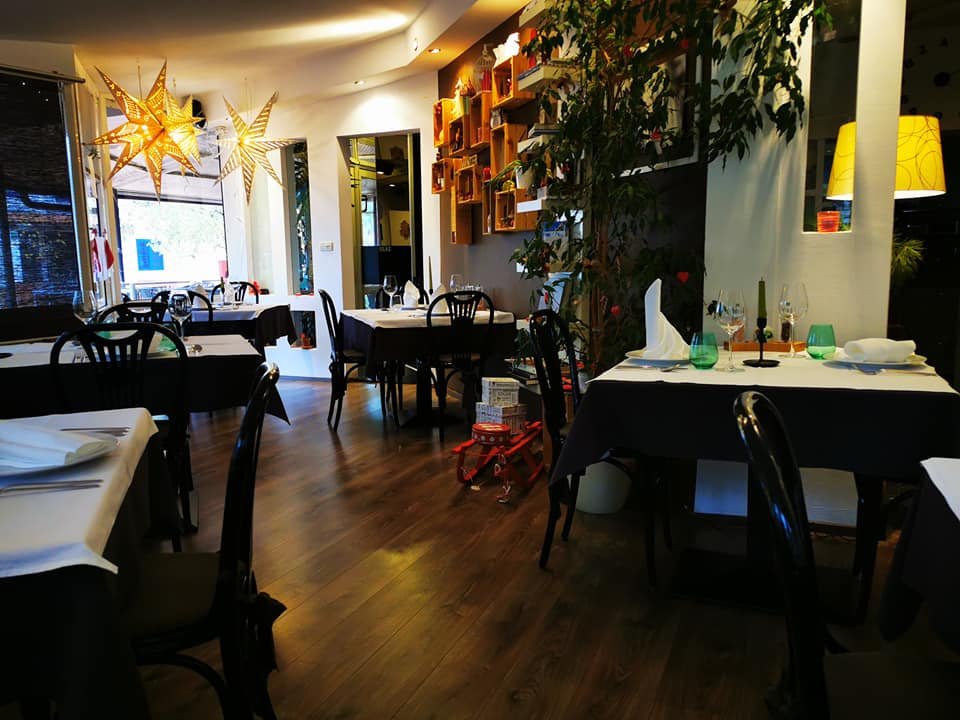
Pula's Dining Character and Where Farabuto Sits Within It
Pula occupies an unusual position in the Croatian dining conversation. It is Istria's largest city and the peninsula's historical anchor, yet its restaurant scene has developed more slowly than the boutique-tourism towns to its north. Rovinj and Motovun attract the headline chefs and the wine-country pilgrims; Pula draws the archaeology visitors, the ferry passengers, and the year-round residents who keep a local dining culture alive across seasons when coastal resort towns go quiet. That dynamic produces a different kind of restaurant: one oriented toward regulars and regional produce rather than seasonal spectacle.
Farabuto is a restaurant in Pula serving Istrian-Mediterranean Slow Food at a price tier of about $60 per person. It sits inside that local fabric. The street is a short walk from the Forum and the amphitheatre, which means the surrounding neighbourhood carries the texture of everyday Pula rather than the curated tourist core. Arriving on foot from the Roman ruins, the transition from monument to residential stone lane is immediate, the kind of shift that signals a restaurant exists for the city, not merely for its visitors.
The Istrian Kitchen: What the Region Demands of Its Restaurants
Understanding any Pula restaurant requires understanding what Istrian cuisine actually is, because the peninsula's food identity is specific enough to function as a standard against which kitchens are measured. Istria sits at the intersection of Venetian, Austro-Hungarian, and Slavic culinary histories, and the result is a cuisine that handles truffles (both black and white, from the Motovun forest), wild asparagus, boskarin beef, and Adriatic seafood with the kind of regional confidence that comes from centuries of layered influence rather than conscious positioning.
Malvazija Istarska, the indigenous white grape, is the default pairing for most dishes in this context, a wine with enough oxidative weight and stone-fruit character to hold against truffle fat and the salt of coastal fish. Teran, the dense red grown on the peninsula's iron-rich red soil, carries the heavier plates. Restaurants in this region that source locally and respect that pairing logic sit in a different register from those operating on a generic Mediterranean template. The Pula dining scene, across addresses like Fradis Minoris (Sardinian), Amfiteatar Restaurant, Gina, Kantina, and Kažun Tavern, spans that full range from regional-purist to broadly coastal.
Farabuto in the Context of Pula's Neighbourhood Restaurants
Pula's most interesting dining addresses tend to avoid the amphitheatre's immediate shadow, where tourist volumes push menus toward lowest-common-denominator Adriatic fare. Farabuto's Sisplac Street location places it in the zone between monument tourism and the quieter residential quarters to the south and west, a positioning that, historically, correlates with kitchens that take their regular clientele seriously. Neighbourhood restaurants in Istrian cities carry a specific obligation: they serve locals through the November-to-March period when the tourist economy contracts sharply, which disciplines their sourcing and their pricing in ways that purely seasonal venues never have to confront.
Within the broader Croatian coastal dining conversation, Pula sits below Rovinj in prestige but above most other Istrian cities in dining volume and diversity. The reference points for serious regional cooking elsewhere in Croatia include Agli Amici Rovinj in Rovinj, which operates at the upper end of Istrian fine dining, and further afield, Pelegrini in Sibenik and LD Restaurant in Korčula, both of which hold Michelin recognition and define what Croatian coastal cuisine looks like when it reaches the international awards circuit. Pula's neighbourhood tier operates well below those price points and formal frameworks, which is precisely its value for travellers who find the choreography of white-tablecloth Adriatic dining less interesting than the honest version.
Planning a Visit: What to Know Before You Go
Pula's dining season peaks between June and September, when the amphitheatre film festival and summer tourism bring significant visitor volumes into the city. Restaurants along the old town perimeter book faster during this window, and addresses that might seat walk-ins on a Tuesday in April require advance planning by July. Sisplac Street, one step removed from the heaviest tourist corridors, tends to be more accessible than Forum-facing addresses, but the general principle holds: if you have a specific evening in mind during high summer, a reservation inquiry is the sensible approach rather than an assumption of availability.
For travellers building a broader Istrian or Croatian itinerary, Pula functions well as either a base or a terminus. The Rijeka dining scene, anchored by addresses like Nebo by Deni Srdoč in Rijeka, is reachable within an hour to the north. Alfred Keller in Mali Lošinj represents the island tier of the Kvarner Gulf, accessible by ferry. Further south, the Dalmatian coast offers Krug in Split, Boskinac in Novalja, and Restaurant 360 in Dubrovnik for travellers continuing along the coast. Inland, Korak in Jastrebarsko and Dubravkin Put in Zagreb define the continental Croatian dining register, which differs substantially from the Istrian coastal tradition.
Why Pula's Local Dining Tier Matters
The Croatian dining story told through Michelin guides and international press tends to focus on a small number of formal addresses. That framing misses the category where most interesting eating actually happens: the neighbourhood restaurant operating within a specific regional food culture, sourcing from producers within the same peninsula, and serving a clientele that returns across the year rather than arriving once and leaving. Pula's local tier represents that category, and it is the appropriate lens through which to approach Farabuto. The comparison set is not Le Bernardin in New York City or Lazy Bear in San Francisco, addresses operating inside entirely different economies of ambition and resource. The relevant comparison is the honest regional trattoria tradition of the northern Adriatic, where the quality signal is sourcing fidelity and kitchen confidence with local ingredients, not technique display or tasting-menu architecture.
Istrian cooking at its most grounded does not require formal frameworks to be worth the trip. A bowl of fuži pasta with truffle, a plate of local prosciutto cut from air-dried Istrian pork, or a fillet of Adriatic fish cooked without theatrics can be the point in themselves, provided the kitchen is buying from the right people and cooking with the discipline that comes from knowing a cuisine rather than performing it. That is the standard Pula's neighbourhood restaurants are measured against, and it is the standard that makes the city's dining scene worth exploring beyond the amphitheatre's immediate radius.
Budget Reality Check
Comparable venues nearby, for context on price, style, and recognition.
| Venue | Cuisine | Price | Notes |
|---|---|---|---|
| FarabutoThis venue — the venue you are viewing | Not listed | $$$ | Not listed |
| Amfiteatar Restaurant | Not listed | $$ | Pula Arena, Mediterranean and Istrian with Modern Twist |
| Veritas Food&Wine | Not listed | $$$ | Old Town, Istrian Seafood & Mediterranean |
| Trattoria Vodnjanka | Not listed | $$$ | near market, Traditional Istrian Trattoria |
| Restoran Katarina | Not listed | $$ | Marina Polesana, Mediterranean Istrian Seafood |
| Gina | Stoja, Traditional Istrian | $$$ | Not listed |
Continue exploring
More in Pula
Restaurants in Pula
Browse all →
Bars in Pula
Browse all →
Hotels in Pula
Browse all →

At a Glance
- Romantic
- Elegant
- Intimate
- Quiet
- Date Night
- Family
- Group Dining
- Terrace
- Standalone
- Extensive Wine List
- Local Sourcing
- Farm To Table
Current opening hours
- Monday
- 12–10 PM
- Tuesday
- 12–10 PM
- Wednesday
- 12–10 PM
- Thursday
- 12–10 PM
- Friday
- 12–11 PM
- Saturday
- 12–11 PM
- Sunday
- Closed
Hours can change for holidays and private events. Last verified .
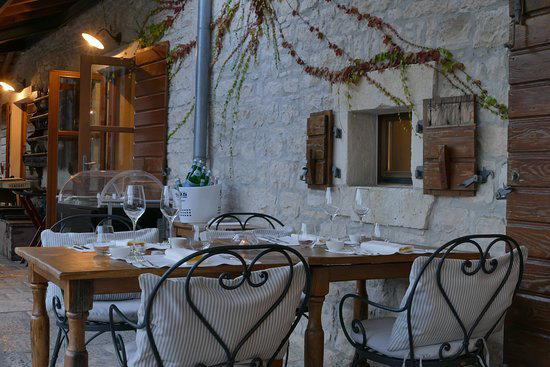
Serene and elegant with candlelit outdoor seating in a quiet residential area; intimate and unpretentious atmosphere with romantic ambiance suitable for couples and families.