
Tabelog 100 #65
Our verdict
Backstube Zopf is a Matsudo bakery with national-level bread recognition rather than a central Tokyo address. Its Tabelog Bread EAST 100 selection in 2022, earlier selections in 2017, 2018, 2019 and 2020, and 3.86 Tabelog score place it in the serious bakery tier, with a takeaway-only format that keeps the focus on bread, sandwiches and bagels.

Pearl is the En Primeur Club membership app, where members save venues, book tables and use the concierge.
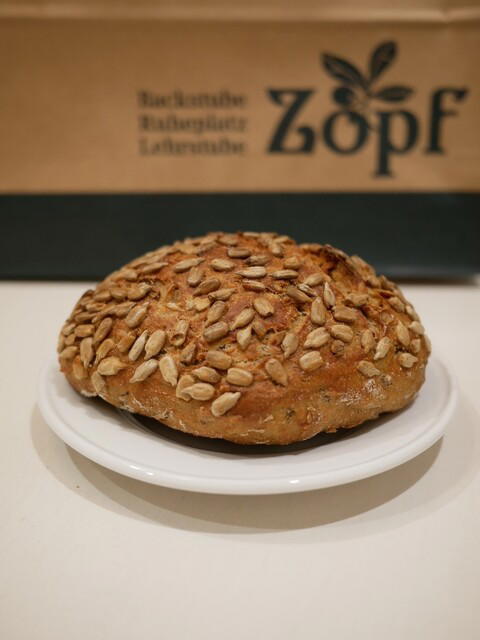
The menu
What to order
- Curry bread (カレーパン)
- Rye breads
- Assorted pastries
A serious Japanese bakery outside the capital’s obvious dining corridors changes the meal’s rhythm before anything is ordered. Expect no linen, counter theatre or long chef’s explanation: just a small shopfront, a practiced queue and shelves that turn breakfast into local discipline. In Matsudo’s Koganehara area, bread culture is less café lifestyle than daily craft: bought early, carried home, shared with children, or eaten standing between errands.
Japan’s bakery scene has never been simple European imitation. German names, French technique, American sandwich culture and Japanese precision often share one case, with customers choosing by occasion, not culinary nationalism. Backstube Zopf sits in that hybrid tradition. Its categories read as bread, sandwich and bagel, placing it in Japan’s broader bakery grammar: shop as pantry, breakfast stop, lunch counter and neighbourhood habit, not just pastry destination.
A Matsudo bakery in the serious bread tier
Japan’s restaurant conversation often favours sushi counters, ramen shops and kappo rooms, but bread has its own ranking culture and obsessive audience. Tabelog’s Bread 100 selections map that audience, separating everyday convenience from specialist bakeries that draw attention beyond their ward or station. Backstube Zopf was selected for Tabelog Bread EAST 100 in 2022, with earlier Bread 100 selections in 2017, 2018, 2019 and 2020. A 3.86 Tabelog score adds another signal: this is not just a sentimental local favourite, but a shop with attention across multiple selection cycles.
That matters in Matsudo, whose dining identity is not a single polished restaurant district but a commuter-belt food map stitched from ramen counters, curry shops, yoshoku rooms and specialist independents rewarding targeted detours. For the wider pattern, Our full Matsudo restaurants guide is the natural companion. Within that map, Chuka Soba Yanagi shows local ramen specialization, while baga tokidoki youshokutei points to Matsudo’s casual Western-influenced cooking. Bread belongs because it reveals suburban Japanese food culture at street level: repeatable, affordable, specific, and often stronger than the address suggests.
Compared with in-city peers in the same broad price band, the bakery format asks for different attention. Ramen shops such as Chuka Soba Yanagi concentrate value into one bowl and a narrow service window; a bakery spreads the decision across a counter, family bag and the day’s appetite. The lack of table service is not a downgrade but the operating logic. Takeaway-only shops suit commuters and families, and the listed eight-person in-store limit says more about demand than vague popularity claims.
Japan's bread culture, without the Tokyo shorthand
From abroad, Japan’s affection for bread is easy to misunderstand. Shokupan, anpan, curry pan, baguette, melon pan, bagel and sandwich can coexist in daily orbit, and better bakeries treat range as a technical challenge, not novelty display. Backstube Zopf moves the discussion beyond Tokyo’s central shopping floors and hotel bakeries. Matsudo gives bread a domestic context: school runs, weekend family buying, quick lunches and station-linked routines.
That suburban setting changes how recognition should be read. A Tabelog Bread EAST 100 selection lacks Michelin’s international shorthand, but for Japanese bakery hunting it is a meaningful filter. The EAST scope places the shop among eastern Japan’s stronger bread addresses, not only Matsudo’s. Multiple selections across years imply consistency in a category where output depends on daily production, early timing and repeat customers rather than a fixed tasting menu.
The December 2000 opening adds context. Japan’s independent bakery boom has passed through waves: European training influence, natural yeast enthusiasm, sandwich specialization, and destination bakeries circulated through review platforms and social media. A bakery operating across that span has survived changing tastes without fine dining’s protective theatre. Longevity is a credential because bread buyers are ruthless; they return for habit, not ceremony.
For travellers building a Matsudo food day rather than sightseeing alone, the city rewards a mixed itinerary. Ajitokoro Musashino, Chuka Soba Maruki and Curry House MUMBAI Matsudo ten each express the same local truth differently: Matsudo’s better eating is distributed, not concentrated in one strip. The travel rails help fill the day, from Our full Matsudo hotels guide to Our full Matsudo bars guide, Our full Matsudo wineries guide and Our full Matsudo experiences guide.
How to read the format
The practical intelligence is simple: treat this as a bakery run, not a leisurely dining room meal. The shop is takeaway only, with no chairs and small in-store capacity. Reservations are available, notable for a bakery because it signals demand management rather than restaurant-style hospitality. Parking and bicycle parking are listed, showing a customer base beyond pedestrians drifting from a nearby commercial street.
The better comparison is not a dessert café or hotel boulangerie, but Japanese specialist formats that compress quality into a narrow transaction. That is why the bakery belongs beside serious ramen, curry and yoshoku stops in Matsudo, not in a separate lifestyle category. It rewards planning, not ceremony. It also fits a broader Japan food itinerary comparing local craft across cities: -Grilled beef Sukiyaki- KAMAKURA TANUKIAN 鎌倉 たぬき庵 in Kamakura. 鮪と炭火焼き うお炭 秋葉原店 in Tokyo.cafe in Osaka.know in Kumamoto, (Shoku) Vietnam in Kawasaki and [Curry Senmon Ten] Maruyama Kyoju. in Sapporo all show how focused formats can define a trip as clearly as formal dining. Abroad, the same logic applies to compact Japanese-leaning specialists such as Jōdo Saké Bar in Los Angeles and Onigiri Time in Pasadena.
Critical reason to care is not that Backstube Zopf is cute, quaint or photogenic. It is that Matsudo’s food culture becomes clearer through places locals use regularly and ranking systems notice over time. Bread here is not a side category. It is one way Japan turns imported technique into daily life, then judges it with the seriousness applied to noodles, sushi rice or curry roux.
Frequently asked questions
What does dinner at Backstube Zopf typically cost?
Pricing at Backstube Zopf is listed as JPY 1,000 - JPY 1,999 JPY 1,000 - JPY 1,999.
What are the operating hours at Backstube Zopf?
Hours at Backstube Zopf: Mon: 7 AM–5 PM; Tue: 7 AM–5 PM; Wed: 7 AM–5 PM; Thu: 7 AM–5 PM; Fri: 7 AM–5 PM; Sat: 7 AM–5 PM; Sun: 7 AM–5 PM.
What part of town is Backstube Zopf in?
Backstube Zopf is located in Matsudo.
What is Backstube Zopf known for?
Backstube Zopf is primarily known for its core concept and execution in Matsudo.
Price and Recognition
Nearby venues at a similar price tier for orientation.
| Venue | Cuisine | Price | Awards | Notes |
|---|---|---|---|---|
| Backstube ZopfThis venue (the venue you are viewing) | Japanese bakery & pastry shop | $10–20 | Tabelog 100 #65 | Not listed |
| Tora Shokudo Matsudo bunten | Japanese Ramen | $1–10 | Tabelog 100 #6 | Matsuhidai, Japanese Ramen |
| baga tokidoki youshokutei | Hamburgers & Japanese-style Western cuisine in a Japanese tatami setting | $20–30 | Tabelog 100 #54 | Shin-Yahashira / Yabashira, Hamburgers & Japanese-style Western cuisine in a Japanese tatami setting |
| Tonikaku Matsudo honten | Ramen, tsukemen & abura soba | $10–20 | Tabelog 100 #42 | Matsudo, Ramen, tsukemen & abura soba |
| Ramen Tomita | Award-Winning Tsukemen Ramen | $20–30 | Tabelog 100 #94 | Matsudo, Traditional Japanese Tsukemen |
| Trattoria Il Regalo | Seasonal Italian Trattoria & Neapolitan Pizza | $30–50 | Tabelog 100 #90 | Matsudo, Seasonal Italian Trattoria & Neapolitan Pizza |
Recognition history
Dated appearances from independent guides and award organizations, with the underlying list record or original source where available.
Tabelog 100 #65 · No. 65
Tabelog · Tabelog 100 - Bread - EAST - 2022
Continue exploring
More in Matsudo
Restaurants in Matsudo
All restaurants in Matsudo →






Details
- Cozy
- Classic
- Rustic
- Solo
- Family
- Casual Hangout
- Brunch
- Standalone
- Design Destination
- A La Carte
- Coffee
- Tea
Current opening hours
- Monday
- 7 AM–5 PM
- Tuesday
- 7 AM–5 PM
- Wednesday
- 7 AM–5 PM
- Thursday
- 7 AM–5 PM
- Friday
- 7 AM–5 PM
- Saturday
- 7 AM–5 PM
- Sunday
- 7 AM–5 PM
Hours can change for holidays and private events. Hours as of .
A small, warm, Bavarian-inspired bakery with a stylish wooden exterior and cozy, classic interior, often busy but orderly, with a calm residential feel rather than a bustling cafe atmosphere.