Tabelog 100 #97
Our verdict
Awagen puts Osaka’s wagashi culture in a quieter register: takeaway-only Japanese traditional sweets in Sumiyoshi Ward, recognised in Tabelog’s 2023 Hyakumeiten selection for Japanese traditional sweets and sweets cafes in western Japan. The appeal is not luxury theatre but format discipline, daytime rhythm, and a price band that keeps it close to everyday Osaka rather than special-occasion dining.

Pearl is the En Primeur Club membership app, where members save venues, book tables and use the concierge.
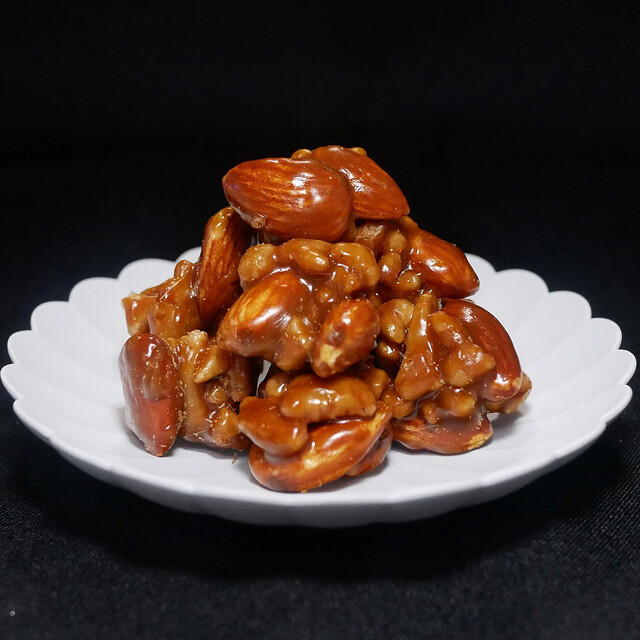
Approaching Osaka’s Sumiyoshi side changes the appetite. The city’s louder food shorthand points north or toward Namba: steam, queues, counter turnover, sauce, neon. In Uesumiyoshi, the pace becomes smaller and more local, where a sweets shop can carry as much cultural information as a long dinner. Awagen belongs to that quieter Osaka: a takeaway-only wagashi address with a brief transaction and a long tradition behind it.
Visitors often misread wagashi as Western-style restaurant dessert. In Japan, it sits closer to season, gift culture, tea, and neighbourhood ritual. The category rewards precision over abundance: measured sweetness, controlled texture, and packaging as social code. Osaka’s version is less ceremonious than Kyoto’s public image, but not less serious: practical, portable, and folded into daily life.
Takeaway wagashi in a city better known for counter food
The notable point is format. Awagen is takeaway only, outside the sit-down dessert-cafe model and closer to the old retail logic of Japanese sweets: buy with intention, carry away, serve later, share properly. That shifts the team’s role. With no dining-room choreography, front-of-house work becomes pacing, accuracy, packaging, and quickly reading what a customer needs.
This team dynamic differs from a restaurant brigade, but is no less exacting. In wagashi, production and service meet at the counter. The kitchen’s consistency must survive transport, and counter staff become final editors of the experience: what is available, how it should be carried, and how the order is assembled.
Recognition by Tabelog’s 2023 Hyakumeiten list for Japanese traditional sweets and sweets cafes in western Japan provides a useful external signal. Hyakumeiten selections are not Michelin-style star ratings; they work more like category maps, pointing to addresses that matter within a specific food type. For a specialist wagashi shop in Sumiyoshi Ward, that category recognition says more than a broad restaurant accolade.
The JPY 1,000 to JPY 1,999 price band keeps the experience grounded. It sits in the same everyday-accessible range as Osaka casual specialists such as M Kasse and POIRE Tezukayama honten, while occupying a different lane from higher-spend dining rooms such as Matasaburo. The comparison matters because Osaka’s eating culture can flatten into one idea of affordability; better to read the city as many low-to-mid price specialists, each with its own rules.
Sumiyoshi gives the sweets context, not spectacle
Sumiyoshi Ward is not Osaka’s first-timer checklist, which is part of the editorial interest. A wagashi stop here asks for a different itinerary: less station-hopping, more attention to residential texture. The address near Sumiyoshihigashi places it where food routines are tied to errands, family visits, and local movement rather than hotel concierges and dinner reservations.
That context separates the shop from Osaka’s more internationally legible categories. Takoyaki, okonomiyaki, kushikatsu, ramen, and department-store patisserie dominate the visitor’s mental map. Wagashi requires a slower read: what to bring, when to serve it, how sweet is enough, how formal the occasion feels. Children are welcomed, fitting a sweets culture that moves between generations without announcing itself as heritage.
The house-restaurant setting adds another clue. Osaka has many polished retail food counters, but a residential-scale sweets address works differently from a department-store basement. The purchase feels tied to a neighbourhood, not a transit hub. For travellers, the value is in the sweets and in seeing a specialised food tradition away from the city’s louder commercial corridors.
There is also a practical cultural point: takeaway wagashi rewards timing. It is better planned into the day than treated as a late-evening fallback. The shop runs daytime weekday hours and closes on weekends and public holidays, fitting a weekday south-Osaka route rather than an after-dinner impulse. Listed payment methods point to cash rather than card or digital settlement, common in older specialist retail but worth noting before heading out.
How to place it in an Osaka food itinerary
Awagen works as a counterweight to Osaka’s savoury canon. It is not a meal substitute; it sharpens a day built around small, exact food experiences. Pair a wagashi run with udon, ramen, bakery, or takeaway specialists for a clearer picture of how the city eats outside formal dining rooms. Kamaage Udon Isshin and Chuka Soba Kaminari Wantan show the low-price noodle side of that civic appetite, while 551 Horai (551蓬莱) represents Osaka’s portable comfort-food grammar at mass scale.
For a broader Osaka crawl, choose contrast over accumulation. A Sumiyoshi sweets specialist, a bakery such as 52CHO-ME BAKERY, and a casual stop like 551 Horai (551蓬莱) teach different things about the city’s appetite. The Italian end of the spectrum, from a canto (Italian) to 99 Pizza Napoletana Gourmet, shows how Osaka handles imported forms with the same appetite for specialisation. A lighter cafe stop such as .cafe belongs to another rhythm.
Readers building a wider Japan file can compare how regional casual formats travel: [ki:] in Kyoto sits in a different cultural register, while.know in Kumamoto, (Shoku) Vietnam in Kawasaki, [Curry Senmon Ten] Maruyama Kyoju. in Sapporo, -Grilled beef Sukiyaki- KAMAKURA TANUKIAN 鎌倉 たぬき庵 in Kamakura, and. 鮪と炭火焼き うお炭 秋葉原店 in Tokyo each point to a separate local logic. Outside Japan, Jōdo Saké Bar in Los Angeles and Onigiri Time in Pasadena show how Japanese formats are reframed abroad.
Use Awagen as a precise stop rather than a headline act. Its significance lies in how a small team, a takeaway counter, and a recognised wagashi category converge in a residential pocket of Osaka. For wider planning, see Our full Osaka restaurants guide, with companion context in Our full Osaka hotels guide, Our full Osaka bars guide, Our full Osaka wineries guide, and Our full Osaka experiences guide.
Frequently asked questions
What's Awagen's location?
Awagen is located in Osaka.
Is Awagen more mid-range or high-end?
Pricing at Awagen is listed as JPY 1,000 - JPY 1,999 JPY 1,000 - JPY 1,999.
What time does Awagen open and close?
Hours at Awagen: Mon: 9:30 AM–4:30 PM; Tue: 9:30 AM–4:30 PM; Wed: 9:30 AM–4:30 PM; Thu: 9:30 AM–4:30 PM; Fri: 9:30 AM–4:30 PM; Sat: Closed; Sun: Closed.
What's the signature at Awagen?
Awagen is a takeaway-only wagashi specialist in Osaka’s Sumiyoshi Ward, and its strongest credential is inclusion in Tabelog 100 for Japanese traditional sweets / Japanese sweets cafe WEST in 2023. Those details are not published. Check the venue's official channels for the latest details.
Standing Among Peers
Side-by-side context: comparable cuisine and price.
| Venue | Cuisine | Price | Awards | Notes |
|---|---|---|---|---|
| AwagenThis venue (the venue you are viewing) | Japanese Confectionery | $10–20 | Tabelog 100 #97 | Not listed |
| Sumisho Kishimoto | Traditional Yakitori (Grilled Chicken Skewers) | $30–50 | Tabelog 100 #17 | Abeno |
| Taisho Salon Hige to Boin | Creative Japanese Standing Bar (Obanzai) | $20–30 | Tabelog 100 #42 | Taishō |
| sake stand Ponshu Mania | Standing Japanese sake bar | $20–30 | Tabelog 100 #38 | Chūō |
| Restaurant Genchan | Japanese-Style Western (Yoshoku) Restaurant | $20–30 | Tabelog 100 #9 | Chūō |
| Sumibi Yakitori Ikoka Nishitenma | Charcoal-Grilled Yakitori Izakaya | $30–50 | Tabelog 100 #99 | Kita |
Recognition history
Dated appearances from independent guides and award organizations, with the underlying list record or original source where available.
Tabelog 100 #97 · No. 97
Tabelog · Tabelog 100 - Japanese traditional sweets / Japanese sweets cafe - WEST - 2023