On Queen Street East, Aura sits in a stretch of Toronto where neighbourhood character still outweighs restaurant-row polish. The address places it at the intersection of local-ingredients conviction and globally trained technique, a pairing that defines a growing tier of Canadian dining where the sourcing is hyperlocal but the kitchen vocabulary is decidedly international.
Pearl is the En Primeur Club membership app — saves, bookings, and concierge access live there. Same editors, same standards.
- Address
- 686 Queen St E, Toronto, ON M4M 1G9, Canada
- Phone
- +14164652872
- Website
- auraofficial.ca
- Directions
- Get directions
 Saves & bookings on Pearl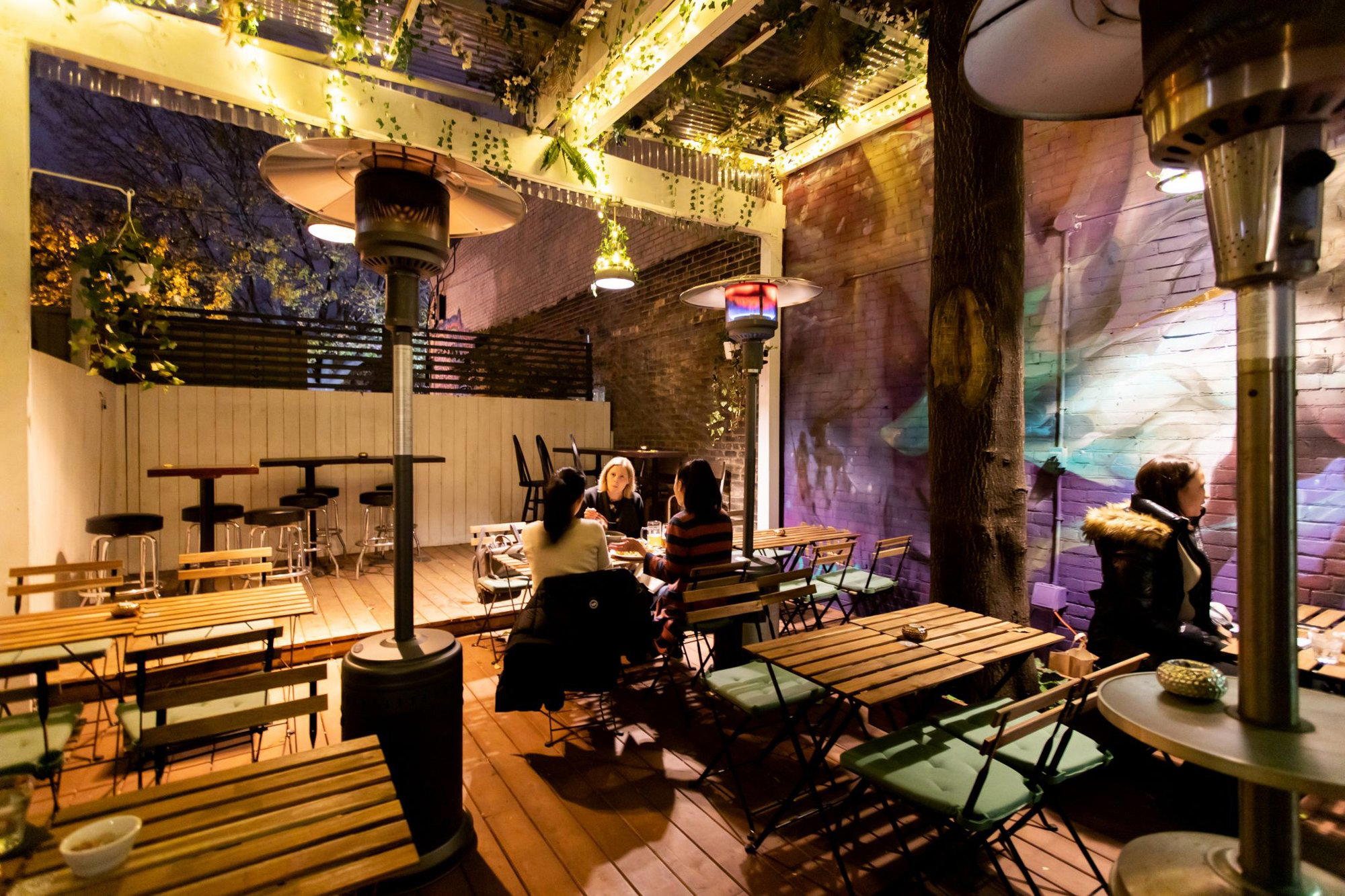
Queen Street East and the Question of Where Toronto Dining Is Going
Queen Street East between Broadview and Greenwood has never been Toronto's most decorated dining corridor. That is, in part, what makes it interesting. As the city's highest-profile restaurant tier has consolidated around the Entertainment District and King West, venues like Alo and Don Alfonso 1890 anchoring a recognisable luxury bracket, the east end has become the address for a different kind of ambition. Smaller rooms, less predictable formats, and kitchens that treat neighbourhood regulars as seriously as destination diners. Aura is a restaurant in Toronto, Ontario, at 686 Queen St E, known for global small plates with Turkish and Spanish influences and a $35 per person price point. Aura, at 686 Queen Street East, belongs to that tendency.
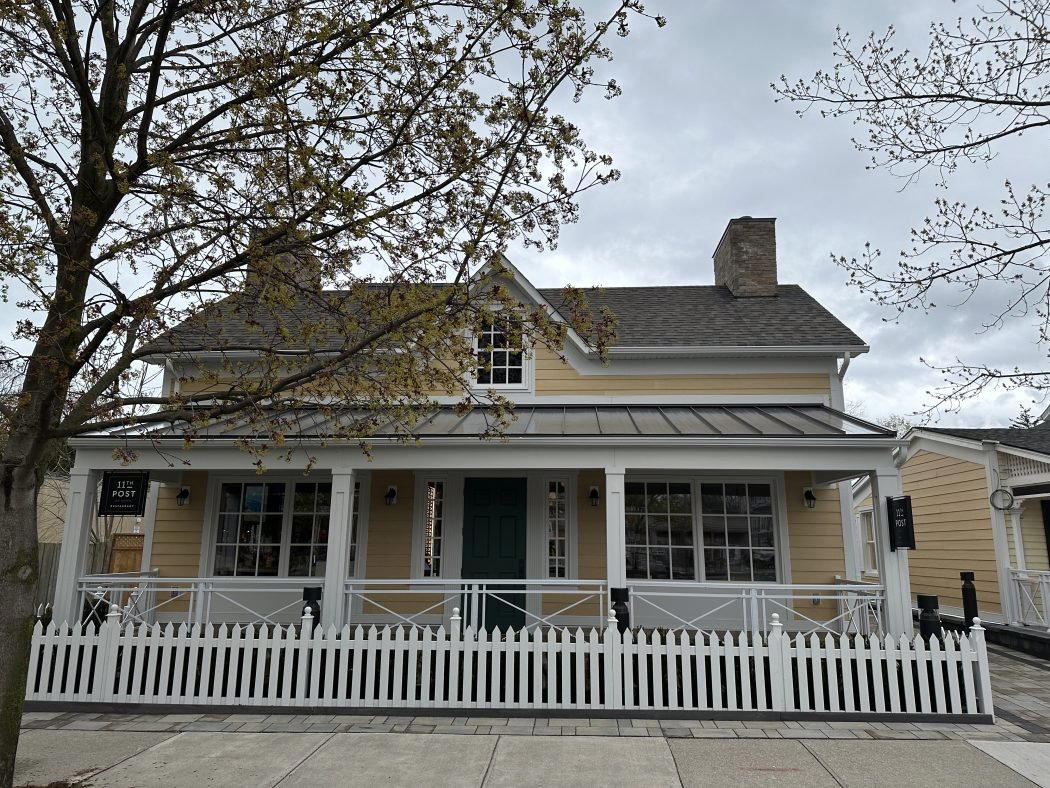
The building itself signals the area's character before you step inside: east-end Toronto vernacular, without the architectural flourish that accompanies properties built explicitly for the Instagram era. What you encounter approaching the address is closer to a working neighbourhood restaurant than a production designed for theatre. That restraint is not an accident in a dining culture where particularly technically serious rooms increasingly prefer to let the plate do the talking.
Local Ingredients, Global Method: The Approach That Defines a Generation
Across Canadian fine dining, especially coherent culinary identity among the past decade has been the marriage of hyper-regional sourcing with techniques imported from European and Japanese traditions. You see this at Tanière³ in Quebec City, where Laurentian ingredients meet classical French structure; at Restaurant Pearl Morissette in Lincoln, where Niagara Peninsula produce anchors a kitchen with distinctly modernist instincts; and at Fogo Island Inn Dining Room, where remote Newfoundland ingredients become the content of a globally legible fine-dining language.
Aura's position on Queen Street East places it in a Toronto iteration of that same conversation. The editorial angle here is not the chef's personal philosophy, it is a structural condition of ambitious Canadian cooking. Kitchens in this country increasingly source from within the province, the region, or even the immediate city, then reach internationally for technique. The result is a mode of cooking where Ontario's seasonal cycles become the constraint that forces creativity, and where classical or contemporary training from abroad becomes the toolkit applied to ingredients those traditions never encountered.
This matters for how you read the menu when you sit down. The frame is not fusion in the 1990s sense. It is something more rigorous: using a precise technical vocabulary, whether French brigade discipline, Japanese knife work and product respect, or modernist chemistry, to extract one honest expression from a carrot pulled in the Holland Marsh or a trout from Ontario cold water. Venues at the sharper end of this approach, including Eigensinn Farm in Singhampton and The Pine in Creemore, have made this their entire identity. The east end of Toronto offers a more urban, more accessible version of the same impulse.
Where Aura Sits in Toronto's Competitive Tier
Toronto's upper dining bracket has several clearly legible sub-tiers. At the leading, venues priced and formatted for special occasions and expense accounts: the omakase rooms like Sushi Masaki Saito and Aburi Hana, or the tasting-menu architecture of Alo. These are restaurants where the per-head spend signals commitment before you arrive. Below that tier, but not lesser in culinary seriousness, sit venues where the format is somewhat more flexible, the price point somewhat more approachable, and the neighbourhood context more integrated into the experience.
Aura's Queen East address places it in the latter group. The comparison that matters here is less with Michelin-starred downtown counters and more with places like DaNico, where serious kitchen pedigree meets a room that does not demand occasion-level formality, or with AnnaLena in Vancouver, which operates a similarly neighbourhood-embedded model on the west coast. For Toronto diners, this tier represents a genuine alternative to the destination restaurant circuit: technically serious food without the full apparatus of white-tablecloth production.
Internationally, the closest analogue in format and philosophy might be Lazy Bear in San Francisco, where a communal, neighbourhood-adjacent frame contains cooking that would sit comfortably in any formal tasting-menu room. The difference is scale and ambition relative to city size: Toronto's east end operates at lower volume, with correspondingly more attention at the individual table level.
The Broader Canadian Context
Understanding Aura means understanding where Canadian restaurant culture stands in 2024. The country's dining identity spent decades in the shadow of French and American models. What has emerged over the past fifteen years is something more confident: a mode where Canadian geography, its cold lakes, boreal forests, prairie grain belts, and Pacific coastlines, becomes a source of genuine culinary distinction rather than a limitation to be compensated for.
Restaurants across the country have contributed to this shift. Jérôme Ferrer's Europea in Montreal integrates Quebec product with classical European technique. Cafe Brio in Victoria builds around Pacific Northwest ingredients with Mediterranean structural logic. Narval in Rimouski takes Lower St. Lawrence seafood and applies a rigour that would be at home in any coastal European kitchen. Busters Barbeque in Kenora represents the same instinct at a different register: regional product, treated with conviction, in a format that belongs to its place.
What connects these is not a style, but a posture. The ingredients come from here; the craft comes from everywhere and from years of accumulated kitchen intelligence. Toronto's east end, with Aura as one of its addresses, is the urban expression of that posture.
Planning Your Visit
| Venue | Area | Price Range | Format | Booking Lead Time |
|---|---|---|---|---|
| Aura | Queen Street East | Not confirmed | Neighbourhood restaurant | Not confirmed |
| Alo | Spadina / Richmond | $$$$ | Tasting menu | Weeks to months ahead |
| Sushi Masaki Saito | Downtown | $$$$ | Omakase counter | Months ahead |
| DaNico | King West | Not confirmed | À la carte / bar | Days to weeks ahead |
For reference on what the global technique-meets-local-product approach looks like at its most formal, Le Bernardin in New York City offers a useful counterpoint: the same seriousness of execution, but with an entirely different geographic and ingredient logic.
At a Glance
Comparable venues nearby, for context on price, style, and recognition.
| Venue | Cuisine | Price | Notes |
|---|---|---|---|
| AuraThis venue — the venue you are viewing | Not listed | $$$ | Not listed |
| Cassette | Little Portugal, Modern Comfort Food | $$$ | Not listed |
| Petty Cash | Not listed | $$ | Fashion District, Modern American Gastropub |
| Apiecalypse Now! | Palmerston-Little Italy, Vegan Pizza | $$ | Not listed |
| SmoQue N' Bones | Not listed | $$ | Trinity Bellwoods, Southern BBQ Smokehouse |
| Pickle Barrel | Uptown Yonge, Classic Canadian Deli | $$ | Not listed |
Continue exploring
More in Toronto
Restaurants in Toronto
Browse all →
Bars in Toronto
Browse all →
Hotels in Toronto
Browse all →

At a Glance
- Cozy
- Romantic
- Trendy
- Whimsical
- Date Night
- Casual Hangout
- After Work
- Terrace
- Craft Cocktails
Current opening hours
- Monday
- 7 AM–3 PM
- Tuesday
- 7 AM–3 PM
- Wednesday
- 7 AM–3 PM, 5 PM–12 AM
- Thursday
- 7 AM–3 PM, 5 PM–12 AM
- Friday
- 7 AM–3 PM, 5 PM–2 AM
- Saturday
- 7 AM–3 PM, 5 PM–2 AM
- Sunday
- 7 AM–3 PM, 5 PM–12 AM
Hours can change for holidays and private events. Last verified .
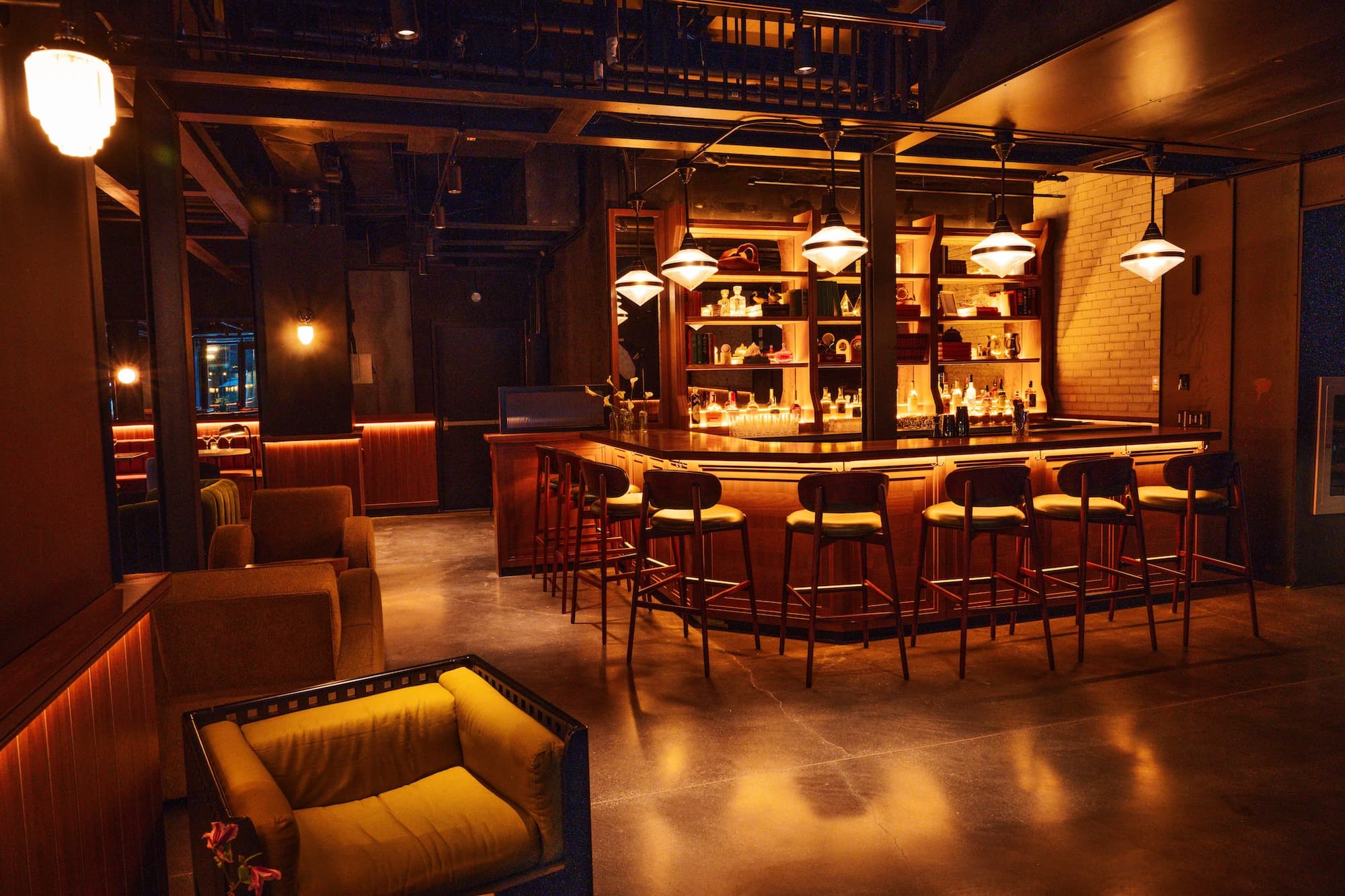
Warm, cozy, candlelit atmosphere with glowing lighting and serene hideaway vibe.