Atwood
Atwood occupies a prominent address in Chicago's Loop at 1 W Washington St, placing it at the intersection of the city's historic downtown and its working dining culture. The room draws from the architectural weight of its surroundings, offering a setting that rewards those looking for serious cooking in the heart of the city rather than a neighborhood detour. For Chicago's downtown dining circuit, it holds a position worth understanding before you book.
- Address
- 1 W Washington St, Chicago, IL 60602
- Phone
- +13123681900
- Website
- atwoodrestaurant.com
- Directions
- Get directions
The Loop as a Dining Address
Chicago's Loop has always operated on different logic than the city's neighborhood dining scenes. Where Fulton Market evolved through density of ambitious openings and the Near North Side built its reputation on see-and-be-seen footfall, the Loop's dining character is shaped by architecture, by proximity to city and county government, and by the rhythms of office workers, theater-goers, and hotel guests moving through among the more physically imposing blocks in the American Midwest. Atwood, at 1 W Washington St, sits at the center of that geography, a Washington Street address that puts it directly in the sightline of the historic Loop El tracks and within steps of Millennium Park's cultural draw.
That address matters more than it might seem. Downtown Chicago restaurants occupy a different competitive tier than their Randolph Street or Wicker Park counterparts. They absorb a mixed audience: business lunches, pre-theater dinners, hotel guests who may never return, and a smaller core of regulars who work or live nearby. The editorial question for any Loop restaurant is whether it holds up to scrutiny from that last group, the ones who could easily redirect to Smyth or Oriole for a special occasion, or to Kasama for something more personal. Atwood's answer to that question is rooted in its setting as much as its kitchen. The restaurant is permanently closed.
Architecture You Eat Inside
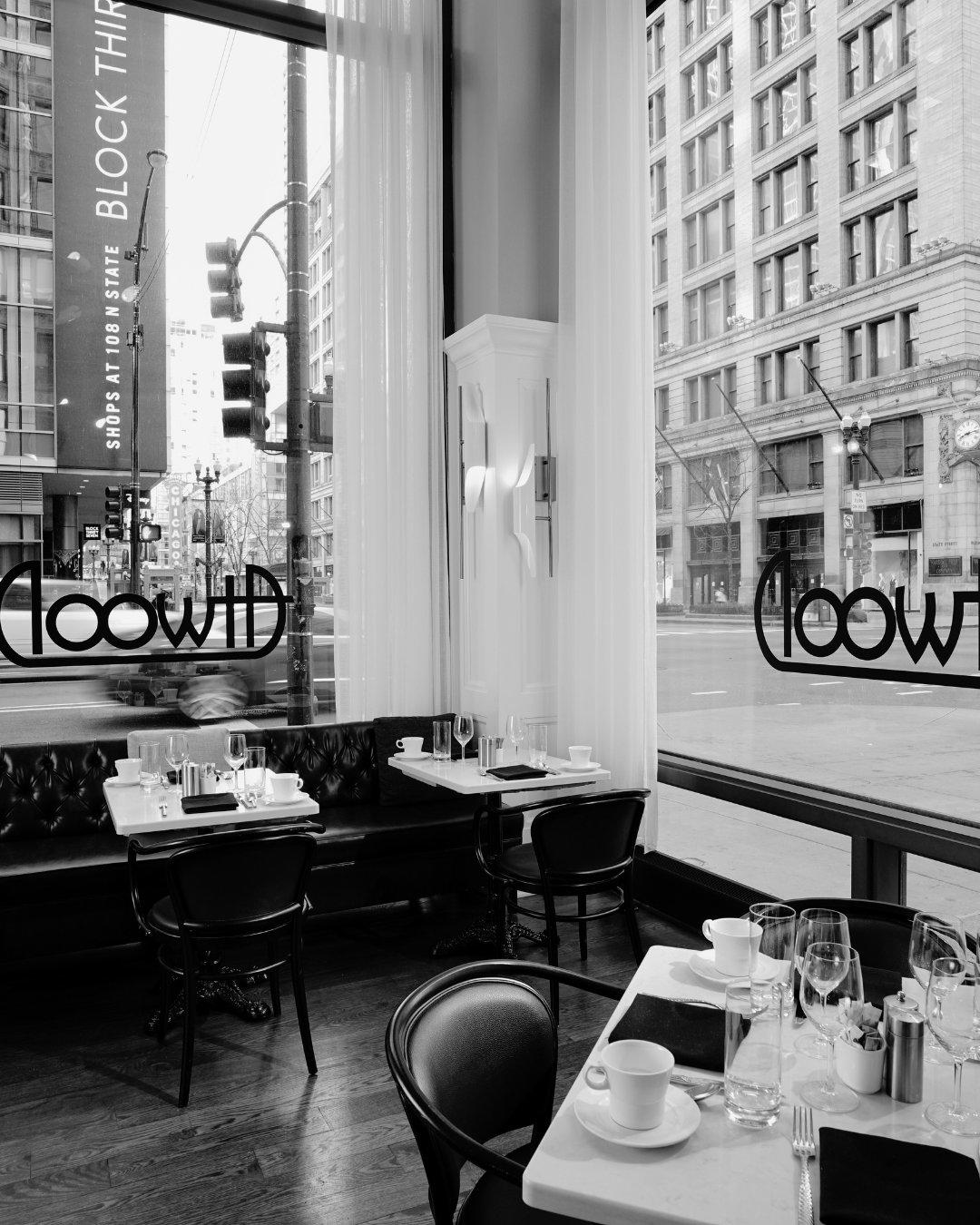
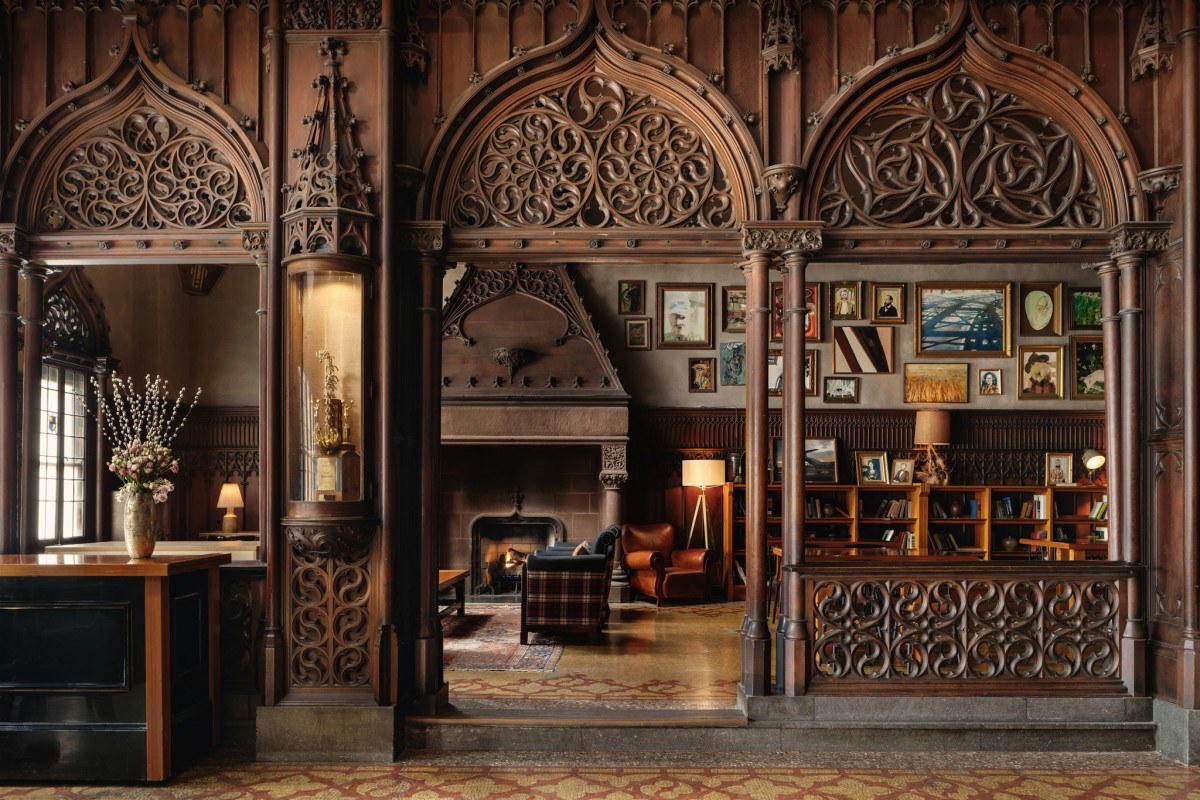
The Burnham Hotel, which houses Atwood, is a registered historic landmark, the former Reliance Building, completed in 1895 and considered a foundational text of Chicago School architecture. The building's terra-cotta facade and proto-curtain-wall glass prefigure the glass towers that would define the twentieth-century American skyline. Dining inside it is not incidental to the experience. The room carries the proportional logic of a late-Victorian commercial interior: high ceilings, tall windows looking onto Washington Street, and a material palette that reads as earned rather than designed-in. This is the kind of atmosphere that no amount of interior design budget can manufacture from scratch.
Premium American dining in cities like Chicago has increasingly split between two poles. On one side sit the tasting-menu destinations, Alinea, Next Restaurant, where the room is controlled theater and the evening runs on the kitchen's schedule. On the other side sit the rooms that prioritize flexibility: proper à la carte, walk-in-friendly, built for the city's working rhythm. That positioning connects it more to the downtown brasserie tradition than to the tasting-menu circuit, and it's a position that American dining has historically undervalued, a mistake that cities like New York, where places like Le Bernardin have demonstrated the staying power of formal-but-flexible formats, figured out decades ago.
What the Room Asks of You
There is a particular kind of sensory discipline that a dining room inside a building of this age demands. The light changes through service, afternoon into evening, the Washington Street traffic shifting from pedestrian to sparse, in ways that a purpose-built restaurant interior cannot replicate. The sound profile of a high-ceilinged Victorian commercial space also differs from the acoustic engineering of a contemporary dining room: voices carry differently, the ambient noise has a different texture, and the sense of being inside a building with genuine historical mass is present throughout the meal.
That sensory context is worth naming because it shapes what you bring to the table. Atwood is not the place to go if your priority is the enclosed, controlled world of a fully orchestrated tasting menu, for that, Chicago's scene offers Smyth and others with deep editorial track records. It is, however, the place to go if you want serious cooking framed by among the more architecturally significant dining rooms in the American Midwest, in a city that takes its built environment as seriously as its kitchens. Comparable experiences in other American cities, The Inn at Little Washington, or Frasca Food & Wine in Boulder, demonstrate how much a room's physical and historical character can do to anchor a meal in a sense of place.
Chicago in Broader Context
Chicago's dining scene has matured considerably since the early 2000s, when a handful of tasting-menu destinations carried most of the editorial weight. The city now runs across a much wider register: Filipino fine dining at Kasama, progressive American at multiple price points, and a hotel dining circuit that has, in select cases, caught up with the neighborhood scene.
Internationally, the standard for hotel-anchored dining has been set by places like Addison in San Diego or Providence in Los Angeles, which have built reputations independent of their physical context. In Europe, Atelier Moessmer Norbert Niederkofler in Brunico shows what commitment to place-specific identity can achieve within a heritage building. The thread connecting these examples is that physical setting and culinary ambition are not competing priorities. Atwood's architecture gives it a platform that most new openings cannot buy. Whether the kitchen makes full use of that platform is the question any visit should answer.
Category Peers
Comparable venues nearby, for context on price, style, and recognition.
| Venue | Cuisine | Price | Notes |
|---|---|---|---|
| AtwoodThis venue — the venue you are viewing | Modern American | $$ | Not listed |
| Lincoln Park Corner Kitchen | American Grill | $$ | Lincoln Park |
| Sanders BBQ Prime | Texas-Style BBQ | $$ | Beverly |
| Blue Door Farm Stand | Farm-to-Table American Cafe | $$ | Lincoln Park |
| Copper Club | American Brasserie | $$ | Theater District |
| Hoyt's Chicago | Modern American Tavern | $$ | Loop |

At a Glance
- Modern
- Lively
- Elegant
- Brunch
- Business Dinner
- Date Night
- Historic Building
- Hotel Restaurant
- Craft Cocktails
- Local Sourcing
- Street Scene
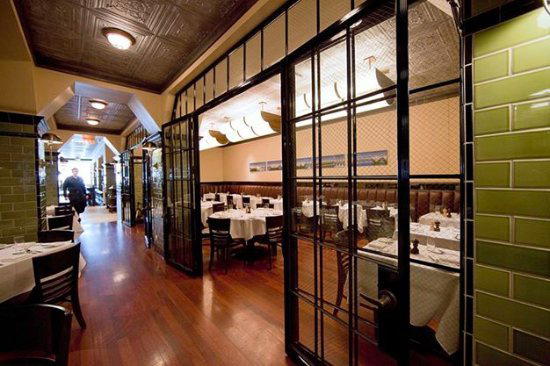
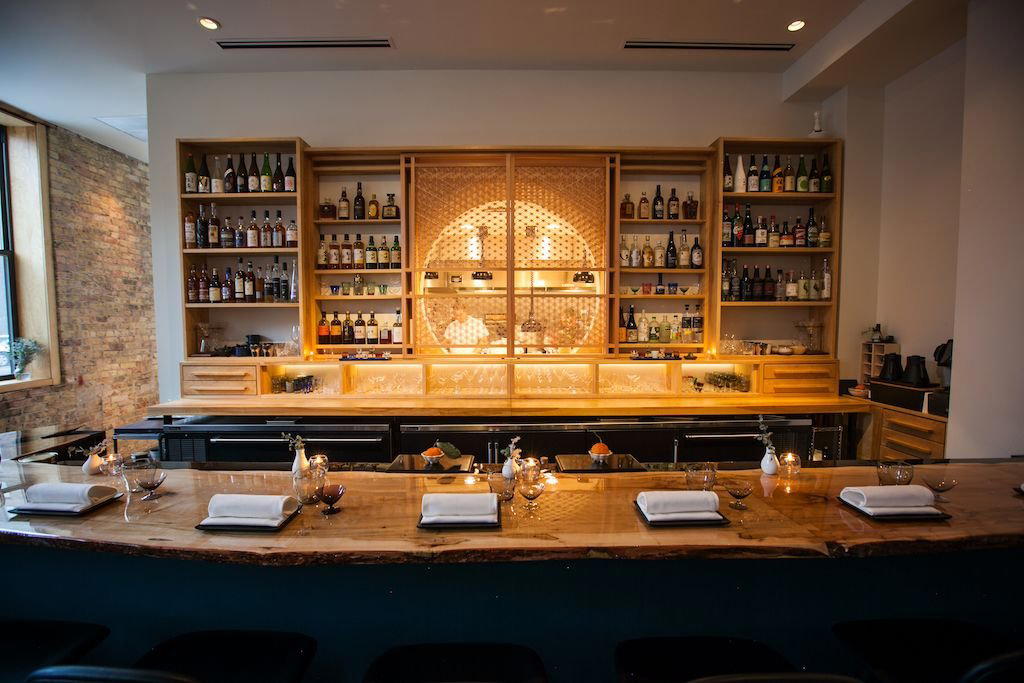
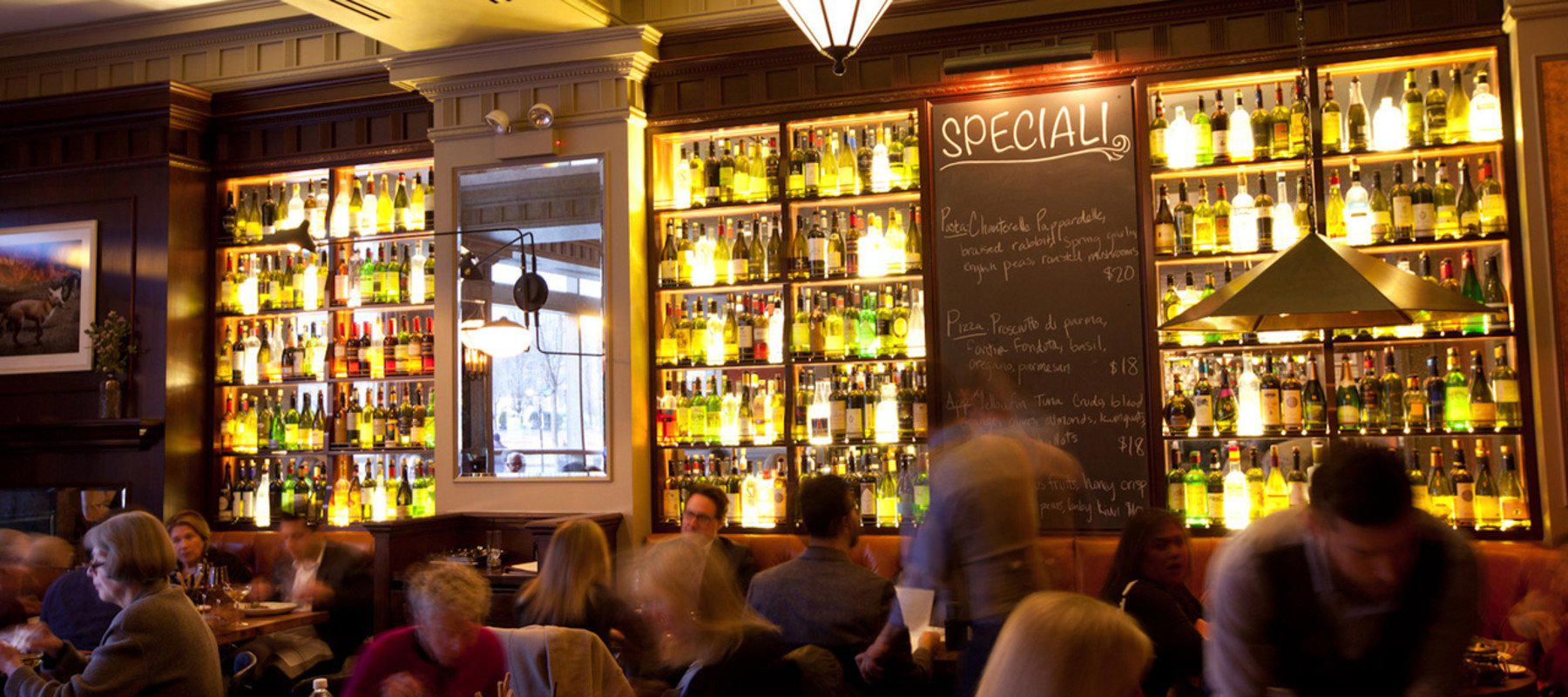
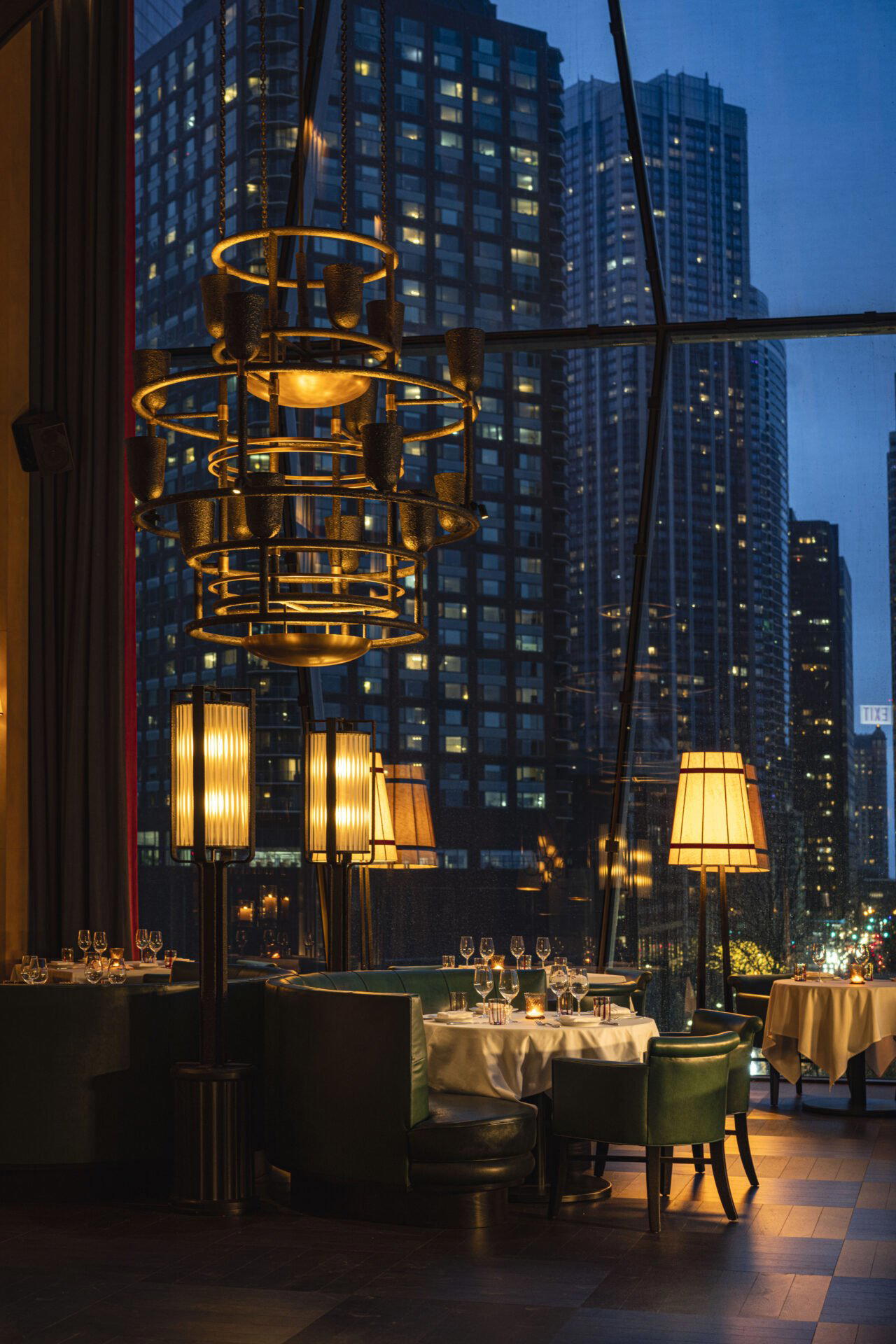
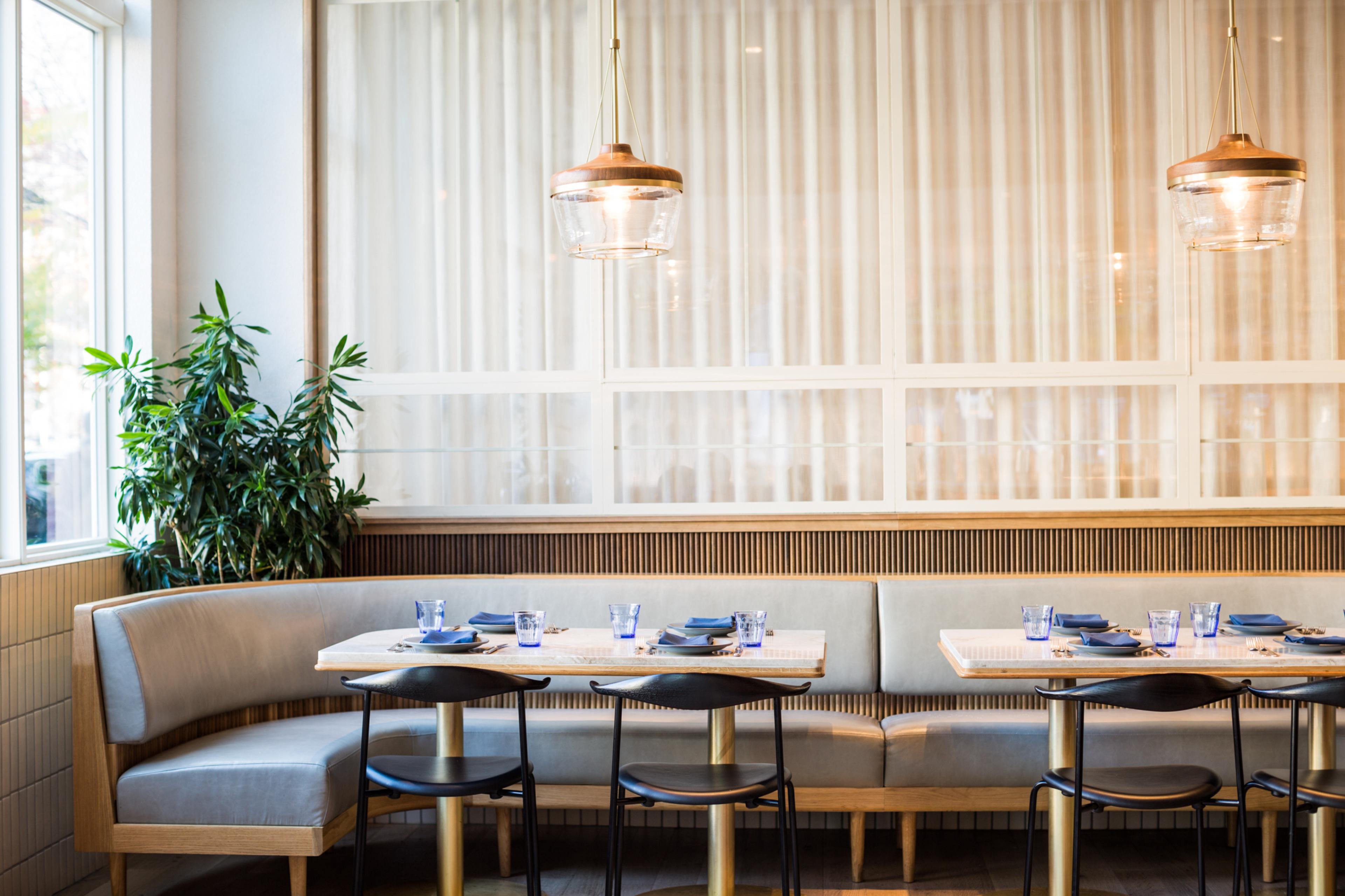
Strikingly modern dining room featuring white marble surfaces, glossy subway-tiled walls, plush leather booths, hanging industrial light fixtures, and a dramatic central bar.