Anzu occupies a considered position within San Francisco's hotel dining scene, operating from 222 Mason Street in the Union Square corridor where the city's more formal restaurant tradition meets a transient, demanding audience. The room has cycled through iterations over the years, each reflecting shifts in what the city expects from hotel-based fine dining. For visitors orienting around Union Square, it functions as a reliable anchor point in a neighbourhood where quality can be inconsistent.
Pearl is the En Primeur Club membership app — saves, bookings, and concierge access live there. Same editors, same standards.
- Address
- 222 Mason St, San Francisco, CA 94102
- Phone
- +14153941100
- Website
- restaurantanzu.com
- Directions
- Get directions
 Saves & bookings on Pearl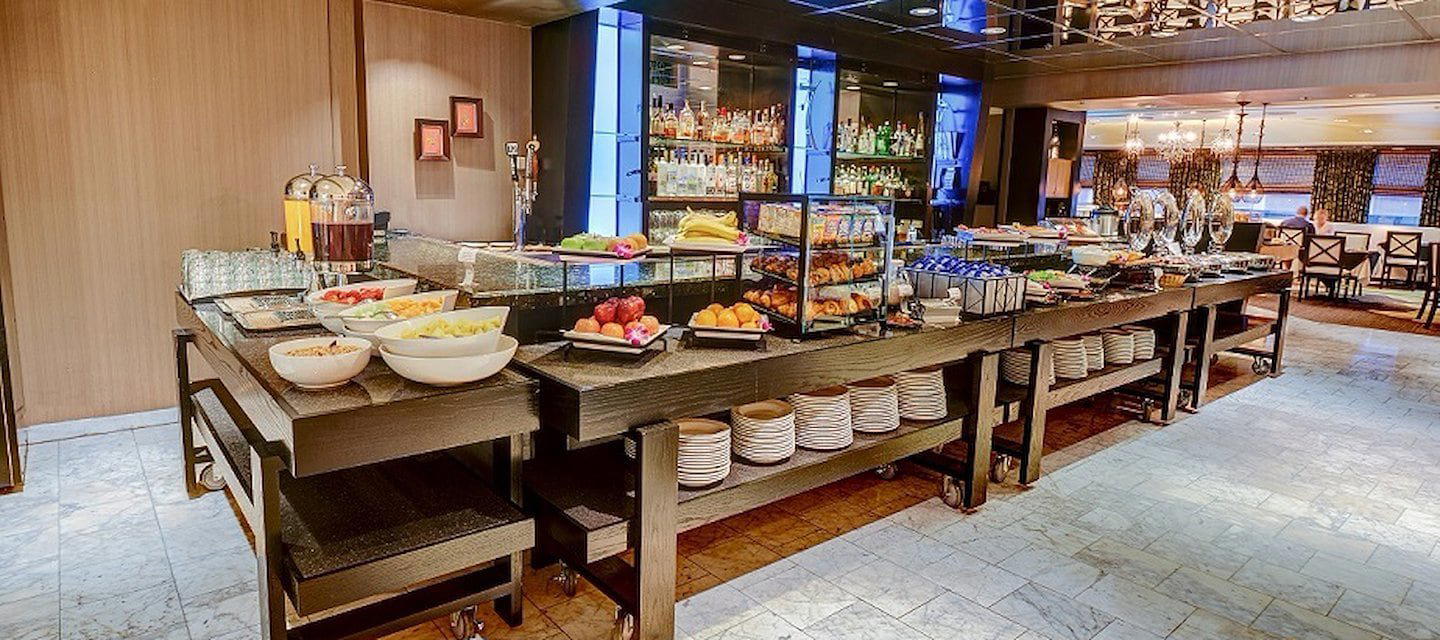
Hotel Dining in San Francisco and Where Anzu Sits
Anzu is a restaurant in San Francisco's Union Square district serving contemporary Japanese-Californian fusion at about $45 per person. The old model, in which hotel dining rooms existed primarily to serve guests who didn't want to venture out, has largely collapsed under pressure from a city dining public that holds restaurants to the same standards regardless of whether they share a building with a front desk. The better hotel kitchens have responded by operating with the same competitive intent as freestanding restaurants, drawing neighbourhood regulars and destination diners rather than relying on captive guests.
Anzu, located at 222 Mason Street in the Union Square district, operates within that revised framework. The address places it in a corridor that functions as a crossroads: close enough to the Financial District to pull a business lunch crowd, close enough to the Theatre District to attract pre- and post-show diners, and squarely within the radius of the city's most active visitor traffic. That positioning has historically made hotel restaurants in this part of San Francisco more commercially driven than conceptually ambitious, but the better examples have used the footfall as a foundation rather than a ceiling.
For context on where San Francisco's fine dining energy currently concentrates, the city's most discussed rooms, from Lazy Bear and Atelier Crenn to Benu and Quince, sit further from the Union Square core, in neighbourhoods where rents and formats allow for more focused, single-minded programming. Saison operates at the furthest conceptual distance from the hotel dining model, with a wood-fire-driven tasting format that positions itself against the city's most rarefied comparable set. Anzu's competitive frame is different: it sits where the hotel dining tradition and a broader urban dining expectation overlap, which creates its own distinct set of pressures and opportunities.
The Evolution of the Space and Its Ambitions
Anzu has not remained static. Hotel restaurants that survive more than a decade in a city as culinarily restless as San Francisco tend to do so through deliberate reinvention rather than inertia. The room has seen format shifts, menu repositioning, and adjustments to what kind of diner it is primarily serving. That pattern is common across the hotel dining tier in American cities: properties reassess as the surrounding neighbourhood changes, as guest profiles shift, and as the ambient competition from freestanding restaurants intensifies.
What the current iteration of Anzu represents is a version of the hotel restaurant that has absorbed some of those competitive pressures. The Union Square location means the room is always in dialogue with what visitors and locals expect from a San Francisco dining experience, an expectation shaped by a city that has produced some of the country's most influential kitchens. Nationally, the conversation around progressive American cooking has been advanced by rooms like The French Laundry in Napa, Smyth in Chicago, and Blue Hill at Stone Barns in Tarrytown, all of which have raised the baseline expectation for what serious American cooking looks like in a formal setting. Hotel restaurants that want to be taken seriously now operate in the shadow of that raised bar.
The trajectory of hotel dining more broadly, from Le Bernardin in New York City (which operates in a hotel-adjacent model with comparable formality) to Providence in Los Angeles, suggests that particularly successful examples define a clear culinary identity rather than attempting to serve every appetite in the building. Anzu's evolution reflects an awareness of that lesson, even if the specifics of its current direction are best confirmed through direct inquiry with the property.
The Union Square Context
The immediate neighbourhood around 222 Mason Street is not San Francisco at its most culinarily adventurous. Union Square's dining options skew toward accessibility and volume, serving the city's largest concentration of hotels, retail, and theatre venues. That context makes a restaurant like Anzu more significant to the neighbourhood than it might be in a district already saturated with ambitious cooking. For visitors staying in the Union Square corridor who don't want to commit to a cab ride to the Mission or the Embarcadero, the restaurant at their hotel carries disproportionate weight.
That dynamic recurs across American cities. Addison in San Diego and The Inn at Little Washington both demonstrate that hotel-linked dining can operate at the highest tier of ambition, though both benefit from less competitive surrounding environments. In San Francisco, the sheer density of serious cooking means that any hotel restaurant must be genuinely purposeful to hold the attention of a local audience. Frasca Food and Wine in Boulder and Atomix in New York City illustrate, from different directions, how specificity of identity translates into durability of reputation.
For a broader read on how San Francisco's dining scene distributes across neighbourhoods and formats, our full San Francisco restaurants guide maps the city's current shape. Internationally, the hotel-dining question plays out differently: Atelier Moessmer Norbert Niederkofler in Brunico and Emeril's in New Orleans represent different answers to how a destination restaurant builds and sustains its identity relative to its physical surroundings.
Peers in This Market
Comparable venues nearby, for context on price, style, and recognition.
| Venue | Cuisine | Price | Notes |
|---|---|---|---|
| AnzuThis venue — the venue you are viewing | Contemporary Japanese-Californian Fusion | $$$ | Not listed |
| Zentarou | Modern Japanese Sushi & Omakase | $$$ | Tenderloin |
| Yoshi's | Modern Japanese Jazz Club Cuisine | $$$ | Fillmore District |
| Sanraku | Authentic Japanese Sushi | $$ | Nob Hill |
| Delica | Japanese Deli Sozai | $$ | Financial District/South Beach |
| Ebisu | Authentic Japanese Sushi | $$ | Inner Sunset |
Continue exploring
More in San Francisco
Restaurants in San Francisco
Browse all →
Bars in San Francisco
Browse all →
Hotels in San Francisco
Browse all →
At a Glance
- Elegant
- Modern
- Intimate
- Sophisticated
- Date Night
- Business Dinner
- Brunch
- Hotel Restaurant
- Private Dining
- Extensive Wine List
- Craft Cocktails
- Sake Program
- Local Sourcing
Current opening hours
- Monday
- 6:30–10:30 AM
- Tuesday
- 6:30–10:30 AM
- Wednesday
- 6:30–10:30 AM
- Thursday
- 6:30–10:30 AM
- Friday
- 6:30–10:30 AM
- Saturday
- 6:30 AM–12 PM
- Sunday
- 6:30–10:30 AM
Hours can change for holidays and private events. Last verified .
Serene and contemporary with elegant modern decor and intimate atmosphere.