Antepliler Restaurant
On Green Lanes in Harringay, Antepliler Restaurant sits at the centre of one of London's most concentrated stretches of Turkish and Kurdish dining. The address places it inside a neighbourhood where southeastern Anatolian cooking, and particularly the traditions of Gaziantep, have taken serious hold in the capital. For visitors tracking that tradition, this is a practical and considered stop on a well-defined circuit.
Pearl is the En Primeur Club membership app — saves, bookings, and concierge access live there. Same editors, same standards.
- Address
- 45-46 Green Lanes, Harringay Ladder, London N4 1AG, United Kingdom
- Phone
- +44 20 8802 5588
- Website
- anteplilerlondon.co.uk
- Directions
- Get directions
 Saves & bookings on Pearl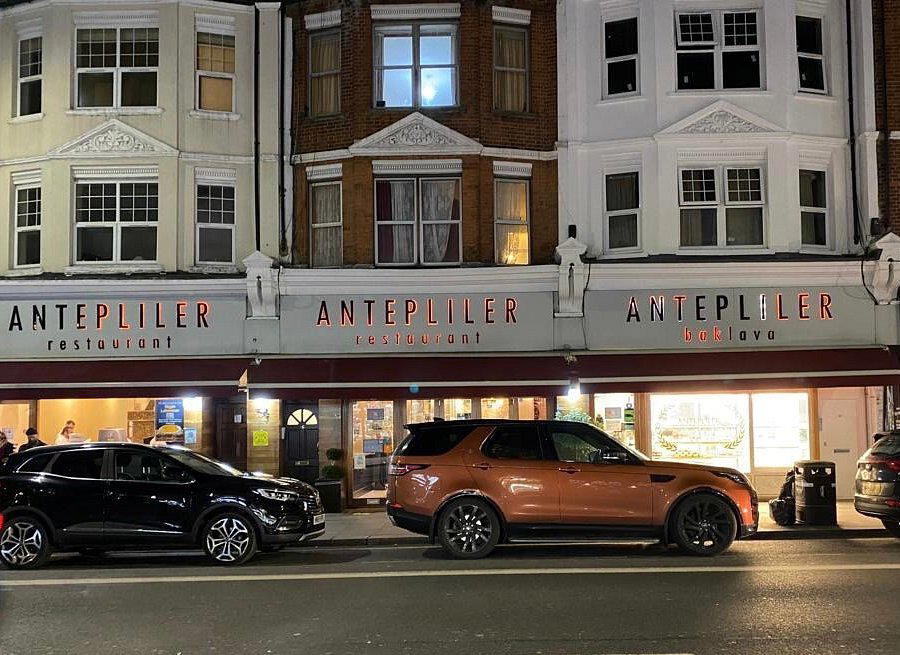
Green Lanes and the Gaziantep Tradition in North London
Green Lanes, running through Harringay and into Haringey, functions as one of London's clearest case studies in how a diaspora community shapes a street's culinary identity over decades. The stretch around the Harringay Ladder, where Antepliler Restaurant sits at numbers 45 to 46, carries the highest concentration of Turkish and Kurdish restaurants in the city. This is not a food quarter assembled for visitors; it developed through migration patterns from southeastern Turkey, and the kitchens along this strip largely reflect the cooking of the Gaziantep region, the city in Turkey's southeast that has earned UNESCO Creative City of Gastronomy status and whose culinary output is among the more technically demanding in the country.
For context: Gaziantep cooking is built on labour-intensive preparations. Spice blends are layered rather than applied in single notes. Meat is treated according to specific regional standards, with lamb and beef prepared in ways that distinguish Antep cuisine from the broader category of what London markets as Turkish food. The proximity of multiple kitchens working this tradition along a single street means that Green Lanes rewards comparison in a way that a single restaurant review cannot fully capture.
What the Address Signals
That contrast is not a weakness, it is the point. Green Lanes operates in a register that the formal fine-dining circuit in London does not replicate, and the cooking traditions it houses are not simplified for broader audiences.
In that sense it belongs to a different competitive logic than, say, Dinner by Heston Blumenthal, where the frame of reference is contemporary British culinary history. The frame here is southeastern Anatolian cooking in a diaspora context, which means the markers of quality are different: the sourcing of the right cuts, the grinding of specific spice combinations, the handling of dough for flatbreads that sit adjacent to but distinct from what most London menus label as pide or lahmacun.
Local Ingredients, Imported Technique
The editorial angle that matters most for understanding this address is the intersection of imported method and local market supply. Restaurants on this stretch of Green Lanes typically source through Turkish and Kurdish wholesale networks that supply ingredients not available in standard London food service channels: specific dried peppers, the particular grade of lamb used in Antep-style dishes, pomegranate molasses and sumac at scales and qualities intended for professional kitchens rather than retail shelves.
This supply infrastructure is itself a form of culinary intelligence. It means that the technique applied to ingredients here is meeting the right raw material, rather than approximating a dish with substitutions. That combination, inherited knowledge applied to correctly sourced product, is what separates the serious end of Green Lanes from the generic Turkish grill houses that appear throughout London.
Seasonal Considerations for This Address
The wholesale supply lines that feed these kitchens shift with the Turkish agricultural calendar in ways that affect what appears on the table: fresh herbs, specific varieties of pepper, and lamb at particular ages are not year-round constants. Autumn also brings distinct preparations in Gaziantep cooking, when dried pulses and preserved ingredients take on greater prominence. Arriving outside peak London tourist season, roughly outside July and August, also means the neighbourhood operates at its own rhythm rather than accommodating visitor traffic, which affects both service pace and the availability of tables without advance planning.
How Green Lanes Fits the Wider London Dining Map
London's serious dining is frequently mapped through its Michelin-starred rooms and the handful of destination addresses that attract international travel. Waterside Inn in Bray, Moor Hall in Aughton, Midsummer House in Cambridge, and rooms further afield like Ynyshir Hall in Machynlleth, Gidleigh Park in Chagford, or Restaurant Andrew Fairlie in Auchterarder all occupy one end of the British fine-dining spectrum. Green Lanes occupies a different axis entirely, one defined by community cooking with deep regional roots rather than by tasting menu formats or wine programme ambition.
That difference is worth stating clearly because London's food coverage tends to compress these distinctions. The city's Turkish restaurant scene, particularly on Green Lanes and the nearby Stoke Newington corridor, represents a form of culinary preservation that parallels what city-based diaspora communities have achieved in comparable contexts internationally, whether on the outer boroughs of New York or in the working neighbourhoods of San Francisco explored by rooms like Lazy Bear and the broader dining culture they sit within. The preservation of Gaziantep cooking methods in London is a story about cultural continuity under commercial pressure, not about refinement or elevation in the conventional fine-dining sense.
For a fuller orientation across the capital's dining options at all price points and registers, the EP Club London restaurants guide maps the range from neighbourhood-level specialists to destination-tier rooms. Venues like Hand and Flowers in Marlow and hide and fox in Saltwood illustrate how British regional cooking is being reassessed outside the capital; Green Lanes makes the equivalent argument for diaspora cooking inside it. Both conversations are worth tracking if you are reading London's food scene with any seriousness.
Planning Your Visit
Antepliler Restaurant at 45 to 46 Green Lanes is accessible by overground from Harringay Green Lanes station, which puts it within a manageable journey from central London. The neighbourhood is direct to approach from the Seven Sisters Road corridor or via the Piccadilly line to Manor House, followed by a short walk north.
Peers You’d Cross-Shop
Comparable venues nearby, for context on price, style, and recognition.
| Venue | Cuisine | Price | Notes |
|---|---|---|---|
| Antepliler RestaurantThis venue — the venue you are viewing | Authentic Antep Turkish | $$ | Not listed |
| Yosma Express | Turkish Mediterranean | $$ | Mayfair |
| Liman Restaurant | Authentic Turkish & Mediterranean | $$ | Islington |
| Grand Bazaar | Authentic Turkish Meze and Grill | $$ | Marylebone |
| Caravan King's Cross | Globally Inspired Fusion | $$ | King's Cross |
| Anima e Cuore | Authentic Italian Pasta | $$ | Chalk Farm |
Continue exploring
More in London
Restaurants in London
Browse all →
Bars in London
Browse all →
Hotels in London
Browse all →


At a Glance
- Lively
- Rustic
- Group Dining
- Casual Hangout
- Late Night
- Standalone
Current opening hours
- Monday
- 12–11 PM
- Tuesday
- 12–11 PM
- Wednesday
- 12–11 PM
- Thursday
- 12–11 PM
- Friday
- 12–11 PM
- Saturday
- 12–11 PM
- Sunday
- 12–11 PM
Hours can change for holidays and private events. Last verified .
Humming with customers in a bustling Turkish neighborhood setting on a diverse commercial street.