Anima e Cuore
On Kentish Town Road, Anima e Cuore sits within a North London neighbourhood better known for its market traders and indie music venues than for serious dining. The kitchen applies continental European technique to locally sourced British produce, placing it in a small peer group of London restaurants where the ambition of the cooking consistently outpaces the modesty of the postcode. Bookings are advisable.
Pearl is the En Primeur Club membership app — saves, bookings, and concierge access live there. Same editors, same standards.
- Address
- 127 Kentish Town Rd, London NW1 8PB, United Kingdom
- Phone
- +44 20 3337 0353
- Website
- instagram.com
- Directions
- Get directions
 Saves & bookings on Pearl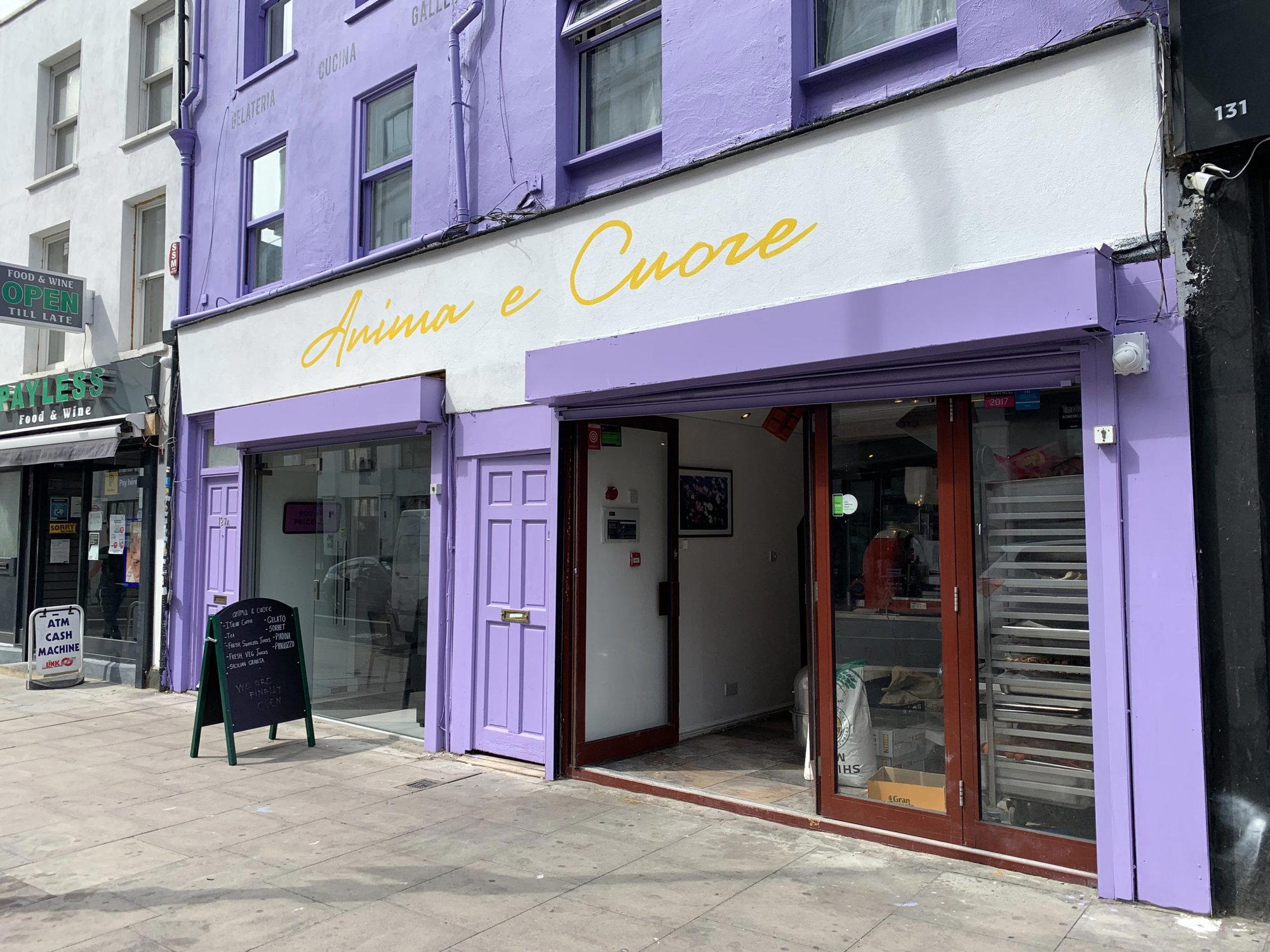
North London, Seriously
Kentish Town Road has long operated on the margins of London's dining conversation. The stretch running north from Camden sits closer in character to a working neighbourhood high street than to the polished restaurant corridors of Mayfair or Chelsea. That context matters when assessing Anima e Cuore, because the kitchen's evident seriousness reads differently here than it would on a street lined with comparable ambition. In North London, a restaurant that applies genuine European technique to British seasonal produce is not competing for the same diner as the Michelin-saturated zones to the south. It is doing something more localised: making a case for the neighbourhood itself.
That argument is one London's dining culture has been making with increasing confidence over the past decade. The shift away from the West End as the sole centre of serious eating accelerated after 2010, as chefs and restaurateurs began treating areas like Islington, Hackney, and Kentish Town as viable homes for cooking that could hold its own against the capital's more established addresses. Anima e Cuore, situated at 127 Kentish Town Rd, NW1, belongs to that broader pattern: a restaurant whose location is not incidental to its identity but is, in fact, part of its proposition.
The Meeting Point of Method and Material
The editorial angle worth pressing here is technique applied to local material. Continental European kitchens, particularly those shaped by Italian and French traditions, have spent centuries developing methods for extracting depth from produce: slow braises, careful reductions, the discipline of seasonal menus tied to what regional land and sea provide. When those methods arrive in Britain and work with British ingredients, the results tend to land somewhere between tribute and synthesis. The Italian reference embedded in the name Anima e Cuore (literally, soul and heart) signals an emotional and culinary lineage from that tradition.
Britain is, at this point, a genuinely compelling source larder. The argument for British produce at a serious table has moved beyond novelty. Chefs across the country from Simon Rogan at L'Enclume in Cartmel to the team at Moor Hall in Aughton have demonstrated that indigenous ingredients, handled with continental rigour, produce cooking that can benchmark against any European peer. In London, that conversation runs through addresses like CORE by Clare Smyth and The Ledbury, both operating at the three-Michelin-star tier and both committed to a version of the same local-ingredients, global-technique synthesis, albeit at a price point that places them in a different competitive category entirely.
The restaurant sits further down the formality spectrum. The address, the neighbourhood, and the absence of the kind of awards infrastructure that surrounds the capital's most decorated rooms all suggest a restaurant that is working within tighter constraints and making choices accordingly. That is not a diminishment. Particularly interesting cooking in any city happens at the boundary between genuine craft and modest means, where a kitchen cannot rely on prestige ingredients or institutional reputation and must earn attention through what arrives on the plate.
Placing the Room
Kentish Town occupies the zone between Camden's tourist density and the quieter residential stretches of Tufnell Park and Dartmouth Park. The street itself carries the character of a neighbourhood that has gentrified partially and unevenly: independent traders alongside longstanding local businesses, a mix of demographics that has not been fully smoothed out by the usual pressures. A restaurant on this strip operates in an environment where the audience is largely local and largely loyal, where word-of-mouth carries more weight than a placement in a national best-of list, and where the dining experience is shaped as much by the room's intimacy as by what is on the menu.
That dynamic separates the restaurant from the trophy-dining circuit in a way that is worth stating plainly. Restaurants like Restaurant Gordon Ramsay or Sketch, The Lecture Room and Library draw from a national and international pool of diners for whom the meal is partly occasion, partly destination. A Kentish Town address draws from a tighter radius, with higher repeat-visit rates and a different set of expectations around formality. The cooking still has to be serious. The atmosphere has to earn the visit on different terms.
The British–European Template
The intersection of Italian or broader European technique with British seasonal produce has produced particularly compelling cooking in the country over the past two decades. It is the model underlying much of what Dinner by Heston Blumenthal does with historical British recipes reprocessed through scientific method, what Gidleigh Park in Chagford has long practised in its classical French-British idiom, and what drives the menus at places like Hand and Flowers in Marlow and hide and fox in Saltwood. Across different registers and price points, these restaurants share a common premise: that one credible expression of place involves knowing both where the ingredients come from and what traditions of cookery can leading reveal them.
In cities where that synthesis is more fully developed, such as New York, where Le Bernardin applies French technique to American seafood or Atomix reworks Korean culinary logic through fine-dining architecture, the approach has produced particularly formally recognised cooking in the world. London's version of that story is still being written, and it is being written partly in neighbourhoods like Kentish Town, by restaurants willing to make the argument away from the established prestige corridors.
Planning a Visit
The Fat Duck in Bray remains a useful point of comparison for understanding where European technique and British specificity can intersect at the highest level of investment and intent.
The Essentials
Comparable venues nearby, for context on price, style, and recognition.
| Venue | Cuisine | Price | Notes |
|---|---|---|---|
| Anima e CuoreThis venue — the venue you are viewing | Chalk Farm, Authentic Italian Pasta | $$ | Not listed |
| Cacio&Pepe | Pimlico, Authentic Roman-Style Italian | $$ | Not listed |
| Da Moreno Pizzeria | Not listed | $$ | Northfields, Authentic Neapolitan Wood-Fired Pizza |
| l'Oro di Napoli Hanwell | West Ealing, Authentic Neapolitan Pizza | $$ | Not listed |
| Caponata | Camden Town, Sicilian Italian | $$ | Not listed |
| Bancone Golden Square | Soho, Modern Italian Pasta | $$ | Not listed |
Continue exploring
More in London
Restaurants in London
Browse all →
Bars in London
Browse all →
Hotels in London
Browse all →

At a Glance
- Cozy
- Intimate
- Date Night
- Special Occasion
- Open Kitchen
Current opening hours
- Monday
- Closed
- Tuesday
- 6–10 PM
- Wednesday
- 6–10 PM
- Thursday
- 12–10 PM
- Friday
- 12–10 PM
- Saturday
- 12–10 PM
- Sunday
- 12–8 PM
Hours can change for holidays and private events. Last verified .
Simple, unpretentious, cozy space with plain back room, friendly homely feel, focus on food over decor.