Liman Restaurant
Liman Restaurant occupies a considered position on Penton Street in Islington, a neighbourhood that has gradually drawn a more serious dining crowd away from the West End circuit. The address places it within a cluster of independently minded restaurants where sourcing decisions and kitchen discipline tend to speak louder than formal accolades. For visitors tracking London's evolving approach to ethical dining, Islington's N1 corridor repays attention.
Pearl is the En Primeur Club membership app — saves, bookings, and concierge access live there. Same editors, same standards.
- Address
- 60 Penton St, London N1 9PZ, United Kingdom
- Phone
- +442035836442
- Website
- liman.co.uk
- Directions
- Get directions
 Saves & bookings on Pearl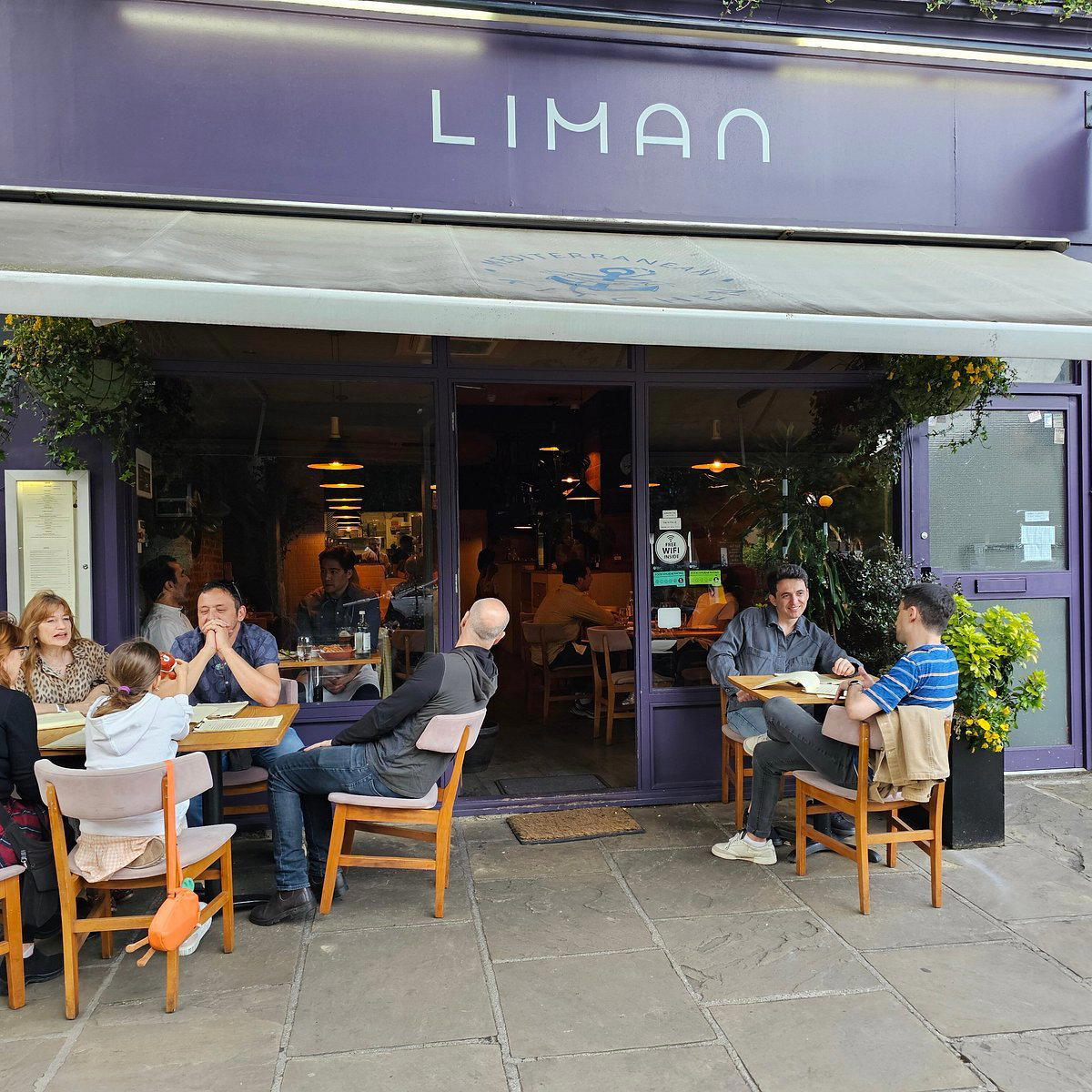
Islington's Quieter Dining Register
London's restaurant conversation has long defaulted to a handful of postcodes: Mayfair, Chelsea, the City fringe. Islington sits at an angle to that geography, and Penton Street in particular operates at a remove from the well-worn circuits. That distance is partly logistical and partly attitudinal. The restaurants along this stretch of N1 tend to draw a neighbourhood crowd rather than a destination diner, and the kitchens that endure here have generally done so through consistency and relationship with their immediate community rather than through awards cycles or media campaigns. Liman Restaurant, at number 60, fits within that broader pattern.
The address is worth noting in the context of London's wider dining structure. The capital's Michelin-starred tier, represented by places like CORE by Clare Smyth, Restaurant Gordon Ramsay, Sketch, The Lecture Room and Library, The Ledbury, and Dinner by Heston Blumenthal, clusters in specific zones and operates under a different set of pressures than a neighbourhood independent. Liman sits outside that formal recognition tier, which means its proposition rests on its Turkish and Mediterranean cooking and local following. In a city where the dining public has grown more attentive to sourcing ethics and environmental accountability, that can be a different kind of credential.
The Sustainability Frame in London's Independent Sector
Across European cities, the conversation around ethical sourcing has shifted from a point of differentiation to a baseline expectation in a certain tier of independent restaurant. London's independent sector has absorbed this shift at uneven speed. Some neighbourhoods, Hackney, Peckham, parts of Islington, now show a clear concentration of kitchens that treat supplier relationships, waste reduction, and seasonal discipline as structural rather than promotional. The N1 corridor, where Liman operates, falls within that broader current.
The sustainability argument in independent restaurants rarely arrives with certification or third-party verification. It tends to be embedded in operational decisions: how the menu changes in response to supply, what happens to off-cuts and trimmings, whether the kitchen builds relationships with growers who practice responsible land use. These are harder to document from the outside than a star rating or a price point, but they are the markers that increasingly define a certain class of serious independent in London and across the UK. For comparison, operations like L'Enclume in Cartmel and Moor Hall in Aughton have made their own growing and sourcing infrastructure a central part of their editorial identity. The independent city restaurant occupies a different scale, but the underlying question, where does the food come from, and at what cost, is the same.
What the Penton Street Address Signals
Restaurants in this part of Islington operate in a medium-density residential and commercial strip. The clientele is predominantly local, and the economics of the neighbourhood mean that price sensitivity is real. Kitchens that survive here long-term tend to have a clear point of view that doesn't require constant reinvention, and they tend to develop loyalty through reliability rather than through novelty. That dynamic shapes what a sustainability approach looks like in practice: less about high-concept garden-to-table theatre and more about consistent purchasing from known suppliers and a menu that reflects what's actually available rather than what's fashionable.
This kind of operation sits in a different comparable set from the destination independents found in more touristic London zones, and also from the formal starred tier. Relevant regional comparisons might include Midsummer House in Cambridge or hide and fox in Saltwood, kitchens that operate outside central London but have built coherent identities around considered sourcing. The city independent has fewer resources to do so, but the intent can be legible in the menu structure and in the kitchen's relationship with local suppliers.
London in a Broader UK and International Context
London's independent sector does not exist in isolation. The conversation about ethical sourcing and environmental accountability is playing out simultaneously at properties like Waterside Inn in Bray, Le Manoir aux Quat'Saisons in Oxford, and Gidleigh Park in Chagford, though at a different resource level. At the other end of the recognition spectrum, starred operations like Opheem in Birmingham and Restaurant Andrew Fairlie in Auchterarder have incorporated sourcing transparency into their public-facing identity. Internationally, Le Bernardin in New York City and Atomix in New York City represent how fine dining operations at the summit of their respective tiers have absorbed similar pressures with different results. The neighbourhood independent like Liman is absorbing the same cultural pressure with far smaller margins.
For readers building a London itinerary with sustainability considerations in mind, the independent sector in N1, E8, and SE15 repays attention precisely because these kitchens have less to gain from greenwashing and more to lose from community trust. The full London restaurants guide maps the city's dining across price tiers, neighbourhoods, and cuisine types for broader orientation. The Hand and Flowers in Marlow offers a useful data point from just outside London on how a casual-format operation can build institutional credibility over time.
Planning a Visit
Liman Restaurant is at 60 Penton Street, London N1 9PZ. The address is within walking distance of Angel tube station on the Northern line, making it accessible from both central and north London. Penton Street runs between Upper Street and the Pentonville Road, and the immediate area has a mixture of residential and small commercial uses typical of inner Islington.
Reservations are recommended, dress is casual, and the price per person is around $30. Hours run Monday through Saturday from 12 to 10 PM, with Sunday service until 9 PM.
Comparable Venues
Comparable venues nearby, for context on price, style, and recognition.
| Venue | Cuisine | Price | Notes |
|---|---|---|---|
| Liman RestaurantThis venue — the venue you are viewing | Authentic Turkish & Mediterranean | $$ | Not listed |
| Tas Restaurant | Authentic Anatolian Turkish Grill | $$ | Borough |
| Dem Restaurant | Traditional Turkish Mezze & Grill | $$ | Gipsy Hill |
| The Hart | Modern British Gastropub | $$ | Marylebone |
| The Compass | Dining | Not listed | Angel |
| Nando's | Afro-Portuguese Flame-Grilled PERi-PERi Chicken | $$ | Hoxton |
Continue exploring
More in London
Restaurants in London
Browse all →
Bars in London
Browse all →
Hotels in London
Browse all →

At a Glance
- Cozy
- Group Dining
- Family
- Casual Hangout
- Standalone
Current opening hours
- Monday
- 12–10 PM
- Tuesday
- 12–10 PM
- Wednesday
- 12–10 PM
- Thursday
- 12–10 PM
- Friday
- 12–10 PM
- Saturday
- 12–10 PM
- Sunday
- 12–9 PM
Hours can change for holidays and private events. Last verified .
Warm, inviting, and comfortable neighborhood atmosphere with friendly, welcoming service.