Bull & Last





Michelin Plate · Star Wine List · The Good Food Guide GFG Good
Our verdict
A sympathetically refurbished Victorian pub on Highgate Road, Bull & Last holds a Michelin Plate and consecutive Opinionated About Dining rankings for cooking that takes traditional British pub food seriously without abandoning the things that make a pub a pub. Generous portions, a lively ground-floor bar, a quieter first-floor dining room, and overnight rooms make it a complete address in north London.

Pearl is the En Primeur Club membership app — saves, bookings, and concierge access live there. Same editors, same standards.
- Address
- 168 Highgate Rd, London NW5 1QS, United Kingdom
- Phone
- +44 20 7267 3641
- Website
- thebullandlast.co.uk
- Directions
- Get directions
- Booking
- Book on SevenRooms
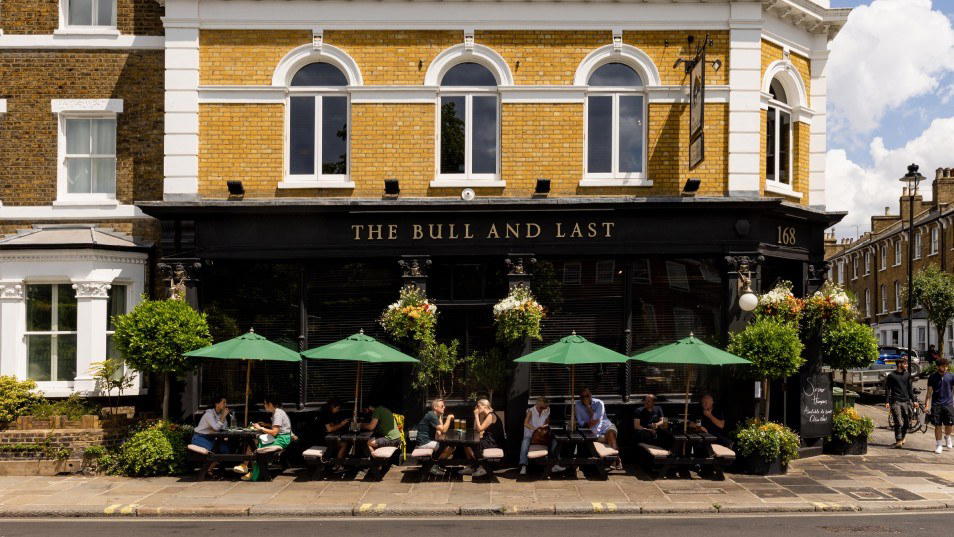
Highgate Road on a weekday lunchtime operates at a different register from central London. The traffic thins, the buildings drop in scale, and the Victorian pub frontage of Bull & Last reads as something that belongs to the neighbourhood rather than to a hospitality group's rollout strategy. That physical groundedness matters when assessing what kind of gastropub this is, because the category now spans an enormous range, from perfunctory food in a heritage shell to places where the kitchen is doing work that would hold up in a formal dining room.
The Gastropub Tradition, Placed
The gastropub as a format has had a complicated thirty years in Britain. It emerged from a legitimate frustration with pub food in the early 1990s, became fashionable, then got diluted by operators who understood the aesthetic but not the cooking discipline. What survived that cycle, and what the better north and south London examples now represent, is something more considered: pubs where the bar function is real, where the food is cooked with ambition, and where the two halves of the operation actually reinforce each other rather than compete. Bull & Last sits in that more serious cohort.
For comparison, the same tradition produces very different expressions elsewhere in the country. Hinds Head in Bray and Hope & Anchor in South Ferriby represent the gastropub format at its most rigorous. At the other end of the formality dial, London's own Drapers Arms in Islington stakes its reputation on a similar combination of neighbourhood anchoring and honest cooking. Bull & Last shares that positioning: serious enough to earn guide recognition, unpretentious enough to retain a genuine pub atmosphere.
Modern British Identity at the Bar and Table
The tension inside modern British cooking, at every price point, is between the pull of international technique and the case for restraint and legibility. At the ££££ end, where CORE by Clare Smyth, The Ledbury, and Restaurant Gordon Ramsay operate, that tension resolves through highly composed tasting menus that use British produce as raw material for elaborate construction. At the gastropub tier, the resolution tends to be different: technique exists to improve the dish, not to demonstrate itself. The Michelin assessors' own language for Bull & Last is instructive here. They describe dishes that are direct and generous, citing mushroom tempura as representative of what the kitchen produces consistently. That is not faint praise in the context of pub cooking, where straightforwardness is harder to achieve than complexity and generosity is a commitment to value that fine dining kitchens rarely have to honour in the same way.
Chef Ollie Pudney leads the kitchen. The food under his direction reflects the premise that traditional British cooking, handled with care and proper sourcing, does not need international reference points to justify itself. The portions are substantial by design; this is food calibrated to the setting and to an audience that wants to eat well without ceremony.
The Space: Two Floors, Two Registers
The pub occupies a refurbished Victorian building, and the renovation has kept the character of that structure intact rather than smoothing it into a generic gastro aesthetic. The ground floor operates as a functioning bar with the social energy that entails: noise, proximity, the rhythm of people moving between bar and table. The first-floor dining room opens later in the week and runs at a quieter pitch, which makes it suited to longer meals and conversations that benefit from lower ambient volume. The venue also offers bedrooms, which gives it a range beyond the typical London pub and places it in the same category as destination pub-inns in the countryside, where the ability to stay overnight changes the logic of the visit entirely.
For those building a wider trip, our full London hotels guide covers the city's accommodation spectrum, and our full London bars guide maps the city's drinking options across neighbourhoods and formats.
Where Bull & Last Fits in the Wider British Picture
London's dining scene is often discussed in terms of its tasting-menu tier and its fast-casual tier, with the middle ground getting less attention than it deserves. The gastropub with real cooking credentials occupies a position that neither of those categories covers: it combines genuine hospitality, pricing that keeps the experience accessible, and food that has been thought about rather than assembled. Bull & Last's sustained guide presence, across three consecutive years with Opinionated About Dining and two Michelin Plates, is evidence that it maintains standards rather than coasting on an early reputation.
Nationally, British cooking at its most technically ambitious is documented at places like The Fat Duck in Bray, L'Enclume in Cartmel, and Moor Hall in Aughton. At the other end of the geographic and format spectrum, Gidleigh Park in Chagford and hide and fox in Saltwood demonstrate how regional British kitchens handle formal dining outside the capital. Bull & Last is not competing with any of these on their terms. It is making the case for a different format, one where the pub structure and the cooking discipline coexist without either compromising the other.
For a full picture of what London's restaurant scene covers at every price point and format, our full London restaurants guide provides the broader context. Those interested in high-formality modern British should look at Sketch, The Lecture Room and Library for a very different expression of what the city's kitchens are capable of. Hand and Flowers in Marlow is also worth noting as a benchmark for how pub-format cooking can hold serious critical recognition over time. EP Club's London wineries guide and London experiences guide round out the picture for those planning a full visit.
Know Before You Go
- Address: 168 Highgate Rd, London NW5 1QS
- Price range: ££
- Hours: Monday to Thursday 12–11 pm; Friday 12 pm–12 am; Saturday 9 am–12 am; Sunday 9 am–10 pm
- Awards: Michelin Plate 2024 & 2025; Opinionated About Dining Casual in Europe Recommended (2023), #605 (2024), #754 (2025)
- Rooms: Bedrooms available on-site
- Dining format: Ground-floor bar (all week); first-floor dining room (opens later in the week)
Frequently asked questions
What do people recommend at Bull & Last?
The kitchen's reputation, confirmed by both Michelin and Opinionated About Dining assessors, rests on generous, well-executed dishes with clear British reference points. Michelin specifically cites the mushroom tempura as a dish that demonstrates the kitchen's approach: technically considered, satisfying in portion, and calibrated to the pub setting. Chef Ollie Pudney's direction ensures consistency across that output. The ££ pricing means value is built into the proposition at every point on the menu.
How would you describe the vibe at Bull & Last?
Bull & Last at ££ pricing occupies a specific position in the north London market: accessible enough for regular visits, credentialled enough to justify a trip from further across the city. The ground-floor bar runs with genuine pub energy, while the first-floor dining room offers a quieter frame for the same cooking. It is not a destination restaurant that happens to have a bar; it is a pub where the kitchen is operating at a level that most comparable London addresses do not reach.
Is Bull & Last child-friendly?
At ££ pricing and with a ground-floor pub format, Bull & Last sits at the accessible end of London's guide-recognised dining. The generous portions and traditional British menu format are broadly suitable for families. Saturday and Sunday morning openings from 9 am extend the visit options beyond evening dining. Families planning a wider London trip should cross-reference our full London restaurants guide for options across neighbourhoods and price points that fit different group compositions.
A Credentials Check
A quick peer check to anchor this venue’s price and recognition.
| Venue | Cuisine | Price | Awards | Notes |
|---|---|---|---|---|
| Bull & LastThis venue — the venue you are viewing | Modern British Gastropub | $50–100 | Michelin Plate · Star Wine List | Not listed |
| The Ledbury | Modern British Fine Dining | $300–500 | 3 Michelin Stars · World's 50 Best #42 | Modern European, Modern Cuisine |
| Sketch, The Lecture Room and Library | Modern French Fine Dining | $200–300 | 3 Michelin Stars · World's 50 Best #18 | Modern French |
| CORE by Clare Smyth | Modern British Fine Dining | $150–200 | 3 Michelin Stars · World's 50 Best #97 | Modern British |
| Restaurant Gordon Ramsay | French Fine Dining | $200–300 | 3 Michelin Stars · World's 50 Best #13 | Contemporary European, French |
| Dinner by Heston Blumenthal | Historic British Fine Dining | $200–300 | 2 Michelin Stars · World's 50 Best #45 | Modern British, Traditional British |
Recognition history
Dated appearances from independent guides and award organizations, with the underlying list record or original source where available.
Michelin Plate
Michelin
Star Wine List
Star Wine List
Opinionated About Dining Casual in Europe Recommended
Opinionated About Dining
Top 50 Gastropubs 2026 Estrella Damm Top 100 Gastropubs #39
Top 50 Gastropubs
The Good Food Guide GFG Good
The Good Food Guide
Full recognition history (10 entries)
Michelin Plate
Michelin
Opinionated About Dining Casual in Europe Ranked #754
Opinionated About Dining
Michelin Plate
Michelin
Opinionated About Dining Casual in Europe Ranked #605
Opinionated About Dining
Opinionated About Dining Casual in Europe Recommended
Opinionated About Dining
Continue exploring
More in London
Restaurants in London
Browse all →
Bars in London
Browse all →
Hotels in London
Browse all →



Details
- Rustic
- Cozy
- Classic
- Group Dining
- Casual Hangout
- Historic Building
- Open Kitchen
- Beer Program
- Local Sourcing
- A La Carte
- Small Plates
- Beer
- Vegetarian Friendly
Welcoming historic pub atmosphere with friendly service; can be lively downstairs during peak times.