Our verdict
Ann Guay Tiew Kua Gai sits in Bangkok's Pom Prap Sattru Phai district, a neighbourhood where old-city street cooking has operated largely unchanged for generations. The kitchen centres on kua gai — stir-fried noodles with chicken — a dish that anchors the surrounding area's hawker identity. For travellers cross-referencing Bangkok's street food geography, this address in the Wat Thep Sirin precinct offers a direct entry point into that tradition.

Pearl is the En Primeur Club membership app — saves, bookings, and concierge access live there. Same editors, same standards.
- Address
- 419 à¸. หลวภWat Thep Sirin, Pom Prap Sattru Phai, Bangkok 10100, Thailand
- Phone
- +6620500199
- Hours
- Daily 2–11 PM
- Website
- facebook.com
- Directions
- Get directions
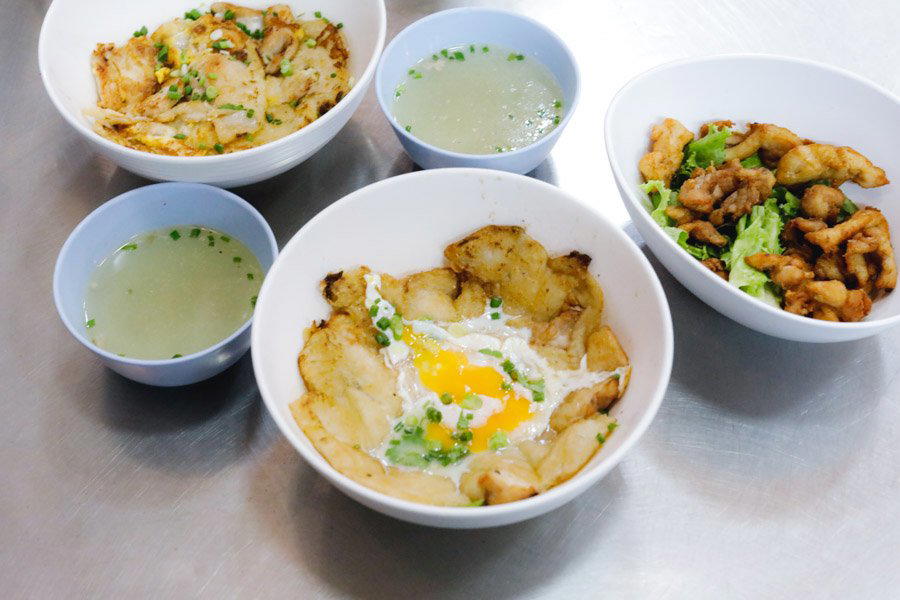
The menu
What to order
- Guay Tiew Kua Gai with runny egg
- Crispy chicken skin
- Fried noodles with chicken, ham, squid
Old Bangkok, One Pan
Pom Prap Sattru Phai is one of Bangkok's older commercial districts, a quarter where the street-food infrastructure predates the city's current dining boom by several decades. The lanes around Wat Thep Sirin have long supported a particular style of hawker cooking: high-heat wok work, concentrated broths, and noodle dishes sold fast and eaten faster. Ann Guay Tiew Kua Gai sits on this stretch at 419 Th. Luang, operating within a tradition that Bangkok's restaurant press has largely left to locals to discover. That relative obscurity, in a city where food commentary tends to cluster around Michelin-starred tasting menus and hotel dining rooms, is itself a meaningful signal about where to find cooking with real neighbourhood roots.
Bangkok's dining coverage skews heavily toward the upper price tiers. Venues like Sorn (Southern Thai), Baan Tepa (Thai contemporary), Gaa (Modern Indian, Indian), Sühring (German), and Côte by Mauro Colagreco (Mediterranean, Modern Cuisine) all operate at the ฿฿฿฿ tier, where tasting menus, sommelier programs, and front-of-house choreography are the norm. That ecosystem is real and worth engaging with. But the street-food tier — operating at a fraction of the price point, without reservations systems or social media strategy — represents a different and equally legitimate strand of the city's food culture. Ann Guay Tiew Kua Gai belongs to that strand.
The Dish That Defines the Address
Kua gai as a category is worth understanding before arriving. The name refers to stir-fried rice noodles cooked with chicken, egg, and typically seasoned with a combination of soy, oyster sauce, and dark soy, all handled in a wok at temperatures that most home kitchens cannot reach. The defining characteristic of well-executed kua gai is wok hei, the breath of the wok, a slightly smoky, caramelised quality that only develops through sustained high heat and skilled timing. It is, by design, a technique-dependent dish: the margin between correct and overcooked is narrow, and the result reads plainly in every mouthful. At street level, this is the kind of cooking where operator consistency over years becomes the primary trust signal.
The address signals a specific geography within Bangkok's hawker map. The Pom Prap Sattru Phai area, running toward the old Chinatown precincts near Yaowarat, has historically been home to Chinese-Thai cooking, dishes that absorbed Teochew and Hokkien techniques into the Thai pantry over generations. Kua gai sits inside that hybrid tradition, a dish with clear Chinese-Thai roots that has since become thoroughly embedded in Bangkok's everyday food vocabulary. Eating it in this part of the city, rather than at a mall food court or tourist-facing street food market, places the dish in a more authentic geographic context.
Service, Setting, and What the Format Asks of You
Street-level hawker operations in Bangkok do not run on the same choreography as the city's fine-dining rooms. There is no sommelier program here, no front-of-house manager directing a team through a timed sequence. The team dynamic at an operation like this is built around speed and consistency: the cook at the wok, the person managing orders and payment, and the rhythm between them that keeps a busy service moving. That efficiency is its own form of discipline, and regulars who understand the format, order clearly, eat at the pace the kitchen sets, clear your space when done, will find the interaction direct.
For visitors accustomed to the reservation-led, hospitality-heavy format of venues like Le Bernardin in New York City or Lazy Bear in San Francisco, the contrast is instructive. Those rooms are built around extended service sequences, wine pairings, and timed courses. Here, the entire interaction may last fifteen minutes. The food is the point, and it arrives fast.
Bangkok in Context: Street Food Beyond the Tourist Map
Thailand's food geography extends well beyond Bangkok's central districts, and a growing number of serious operations are now drawing attention in secondary cities and regional centres. PRU in Phuket operates at the fine-dining end of the southern coast, while AKKEE in Pak Kret represents a different kind of neighbourhood specificity just north of the capital. Further afield, Ayutthayarom in Phra Nakhon Si Ayutthaya and Baan Chik Pork Noodles in Udon Thani signal that regional Thai cooking is increasingly legible to food-aware travellers willing to leave Bangkok's core. Baan Heng in Khon Kaen, Baan Suan Lung Khai in Ko Samui, Banmai Chay Nam in Nakhon Ratchasima, Banrimbung in Nakhon Pathom, The Spa in Lamai Beach, and Anuwat in Phang Nga collectively sketch a national food map that rewards travellers who treat Thailand as more than a single-city destination. For the full Bangkok picture, our full Bangkok restaurants guide maps the city's dining tiers from street level to tasting-menu rooms.
Planning Your Visit
Ann Guay Tiew Kua Gai is located at 419 Th. Luang (Wat Thep Sirin), Pom Prap Sattru Phai, Bangkok 10100. The MRT Hua Lamphong station provides the most direct public transit access to this part of the old city. No booking method, confirmed hours, or contact details are currently listed in public records, which is consistent with how most old-city hawker operations run in Bangkok: walk-in only, cash preferred, schedule subject to the operator's own rhythm. Arriving before peak mealtime, midday or early evening, reduces the chance of finding the kitchen wound down for the day. Given the informal format, there is no dress code and no advance reservation process to manage.
Frequently asked questions
Where exactly is Ann Guay Tiew Kua Gai?
Ann Guay Tiew Kua Gai is located at 419 à¸. หลวภWat Thep Sirin, Pom Prap Sattru Phai, Bangkok 10100, Thailand, Bangkok.
How does the location of Ann Guay Tiew Kua Gai relate to Bangkok's Chinese-Thai cooking tradition?
The stall sits at 419 Th. Luang in Pom Prap Sattru Phai, a district directly adjacent to Bangkok's Chinatown corridor where Teochew-Chinese technique and Thai ingredients merged across generations of hawker cooking. Kua gai as a dish category reflects that lineage — the wok method is Chinese in origin, the seasoning profile shaped by Thai palate. The MRT Hua Lamphong station provides the most direct transit access to this part of the city.
What's the signature dish at Ann Guay Tiew Kua Gai?
Kua gai is the answer the name itself provides: stir-fried rice noodles cooked with chicken and egg, prepared in a wok at high heat. In Bangkok's street-food canon, this dish category demands consistent flame control and timing — the char and texture separate a competent execution from a forgettable one. This address in Pom Prap Sattru Phai is built around that single discipline.
Should I book Ann Guay Tiew Kua Gai in advance?
No booking is required or possible. Ann Guay Tiew Kua Gai operates as a street-level hawker stall in Pom Prap Sattru Phai, Bangkok, where walk-in queuing is the standard format. Arriving early in a service window is the practical alternative to any reservation system.
A Pricing-First Comparison
Comparable venues nearby, for context on price, style, and recognition.
| Venue | Cuisine | Price | Awards | Notes |
|---|---|---|---|---|
| Ann Guay Tiew Kua GaiThis venue — the venue you are viewing | Thai Fried Noodles with Chicken | $1–10 | Not listed | Not listed |
| Sanguan Sri | Authentic Central Thai Curries | $1–10 | Not listed | Sukhumwit, Authentic Central Thai Curries |
| Eat Pad Thai | Michelin Bib Gourmand Pad Thai | $1–10 | Michelin Bib Gourmand | Wat Bawon Niwet, Specialty Pad Thai |
| Supanniga Eating Room by Khun Yai | Authentic Eastern Thai Homestyle | $20–30 | Not listed | Khlong Tan, Authentic Eastern Thai Homestyle |
| Je Aoun Chicken Rice | Thai Hainanese Chicken Rice (Khao Man Gai) | $1–10 | Not listed | Chatuchak, Thai Hainanese Chicken Rice (Khao Man Gai) |
| Bangkok Bold Kitchen | Bold, regional Thai comfort food | $1–10 | Not listed | Pathum Wan, Bold, regional Thai comfort food |



Details
- Well Known
- Lively
- Rustic
- Casual Hangout
- Solo
- Group Dining
- Late Night
- Open Kitchen
- Street Scene
- A La Carte
- Counter Dining
Current opening hours
- Monday
- 2–11 PM
- Tuesday
- 2–11 PM
- Wednesday
- 2–11 PM
- Thursday
- 2–11 PM
- Friday
- 2–11 PM
- Saturday
- 2–11 PM
- Sunday
- 2–11 PM
Hours can change for holidays and private events. Last verified .