Andeok

Michelin Bib Gourmand
Our verdict
Andeok in Jongno-gu draws queues for its beef naengguksu and mandutguk, two dishes that sit at the quieter, more considered end of Seoul's cold noodle tradition. The mulguksu here uses a higher buckwheat content than most, producing softer, springier noodles in a clean broth built around lightly seasoned beef. Arrive at opening to avoid the lunchtime wait.

Pearl is the En Primeur Club membership app, where members save venues, book tables and use the concierge.
The menu
What to order
- Chilled beef naengguksu
- Mandutguk
- Mulguksu
- Fried peppers
Where Buckwheat Meets Broth: Seoul's Cold Noodle Tradition at Andeok
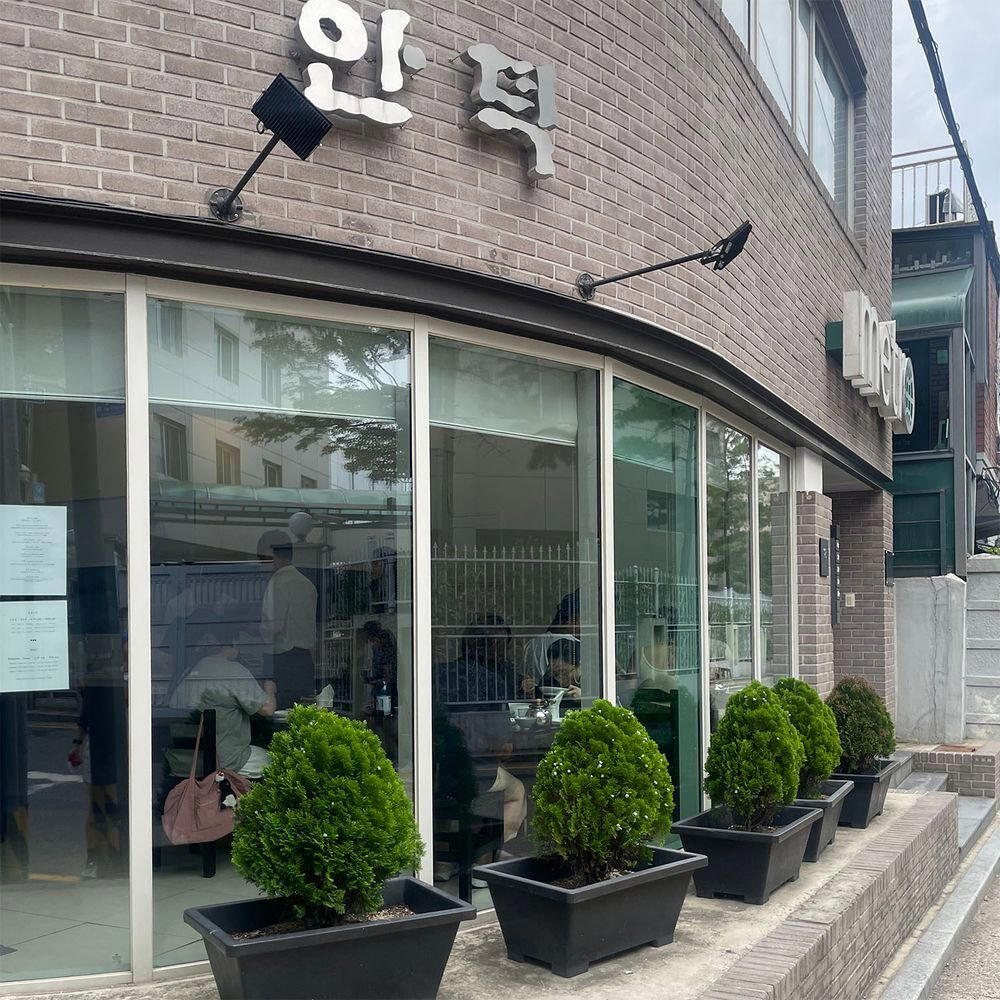
Jongno-gu carries a particular weight in Seoul's food memory. The district sits north of the old palace walls and has, for generations, been the kind of neighbourhood where lunch spots outlast empires. The streets around Jahamun-ro move at a different pace to the plate-glass restaurant corridors of Gangnam, and the places that survive here tend to do so because what they serve is precise, repeatable, and quietly authoritative. Andeok, at 18 Jahamun-ro 17-gil, belongs to that category. There is nothing about its address or exterior that signals ambition. The signal comes from the queue that forms before the doors open.
The Cultural Weight of Cold Noodles
Naengmyeon is one of the few Korean dishes that carries genuine regional politics. The Pyongyang style, anchored to the northern capital now inaccessible to most Koreans, has been preserved and adapted by restaurants in Seoul since the mid-twentieth century, many of them founded by people who carried recipes south. The dish became a kind of culinary memory object: buckwheat noodles in a cold, clear beef or dongchimi broth, topped with sliced beef, cucumber, and a boiled egg, meant to be eaten with precision and without hurry.
What Andeok makes is mulguksu, a dish that sits in close dialogue with Pyongyang-style naengmyeon but diverges on a key technical point. The buckwheat content in the noodles is higher here, which changes the texture substantially. Where the Pyongyang original tends toward a firmer, slightly dense bite, Andeok's noodles are softer and springier, a difference that matters more than it might sound on paper. Buckwheat at higher concentrations is harder to work with and more sensitive to temperature, so the texture achieved is a marker of control in the kitchen. The broth is clean and mild, built around beef and kept deliberately restrained, which means the quality of that beef carries the dish.
This kind of restraint is not unusual in Seoul's older noodle houses. What Andeok represents is a strand of the city's dining culture that operates outside the contemporary Korean fine dining conversation happening at places like Mingles, Jungsik, and Soigné. Those restaurants are, in various ways, reinterpreting Korean culinary tradition through a contemporary lens. Andeok is simply executing a traditional form at a high level, without reframing or recontextualising it. In a city that has developed considerable appetite for the former, venues that do the latter well command their own kind of authority.
The Menu: Naengguksu, Mandutguk, and the Fried Pepper
The menu at Andeok is focused. The beef naengguksu is the primary draw, and the mandutguk, a dumpling soup, runs alongside it as the other anchor. The mandutguk tradition in Korea reflects a dish category that spans the peninsula: dumplings in a clear broth, the quality of which depends entirely on the wrapper, the filling, and the stock. At Andeok, the approach aligns with the same ethos as the noodles: clean, broth-forward, built on beef.
The fried peppers have developed their own following. The preparation places a meat-and-vegetable filling inside a pepper, encases it in a crisp batter, and fries it. The result is listed among the dishes the venue is known for, and the assessment that the filling is unexpectedly flavourful points to the kind of cooking where a side dish carries as much kitchen intelligence as the headliner. In broader Korean culinary terms, this preparation belongs to a family of jeon-style fried dishes that appear across the country's food culture, though the specific combination of pepper, meat filling, and batter is characteristic of a particular northern-influenced register.
For readers tracking Seoul's wider food scene, the contrast with the contemporary Korean dining tier is instructive. Kwonsooksoo and alla prima represent the innovation-led end of Korean cuisine, where tasting menus run long and technique is foregrounded. Andeok represents something orthogonal to that: the kind of single-dish or narrow-menu specialist that Korean food culture has always produced alongside its more elaborate forms, and which draws its authority from repetition and precision rather than novelty.
Planning Your Visit
The logistical intelligence on Andeok is simple and worth taking seriously. Arriving at opening time is the documented strategy for avoiding the lunchtime queues that build quickly. This is a pattern common to Seoul's best-known specialist lunch venues: once word has circulated about a place over years or decades, the queue becomes part of the operating reality and the solution is always arrival before the crowd, not after.
The address, 18 Jahamun-ro 17-gil in Jongno-gu, places the venue in a walkable part of the district. Jongno-gu is well connected by Seoul's subway network, which makes it accessible from most parts of the city without requiring a taxi.
For visitors building a Seoul itinerary around food, Andeok sits naturally in a half-day programme that takes in Jongno's older streetscape. The broader Seoul dining picture, from Michelin-tracked fine dining to neighbourhood specialists, is covered in our full Seoul restaurants guide. For accommodation context, our full Seoul hotels guide covers the relevant options by neighbourhood. Visitors who want to extend beyond restaurants will find further coverage in our full Seoul bars guide, our full Seoul experiences guide, and our full Seoul wineries guide.
For Korean dining in other parts of the country, Mori in Busan and Baegyangsa Temple in Jangseong-gun offer contrasting reference points on how Korean culinary tradition operates outside Seoul. For comparison with Seoul's contemporary Korean fine dining tier, 권숙수 in Gangnam-gu and Soigné sit in a different competitive register but illuminate how wide the spectrum of Korean dining has become. Beyond Korea, the discipline of single-dish or narrow-menu execution at a high level finds parallels in venues like Lazy Bear in San Francisco and the focused menus at Le Bernardin in New York City, though the culinary idiom differs entirely.
Frequently asked questions
Is Andeok okay with children?
Andeok's menu is straightforward and familiar in format, cold noodle broth, dumpling soup, fried peppers, which translates well for younger diners without adventurous palates. The dining environment is a traditional Korean lunch spot in Jongno-gu, not a formal setting, so the atmosphere is relaxed enough for families. That said, the queue at peak hours means a long wait with children in tow, so arriving at opening is the practical move.
What is the atmosphere like at Andeok?
Andeok runs as a functional lunch destination in Jongno-gu, the kind of place where regulars arrive with purpose and the queue forms before the doors open. The focus is entirely on the food, beef naengguksu, mandutguk, fried peppers, rather than on room design or hospitality theatre. Expect a no-frills environment where the broth does the talking.
What kind of recognition has Andeok received?
Andeok has received recognition including: Andeok is known for its beef naengguksu and mandutguk. The mulguksu here is similar to Pyongyang-style naengmyeon, though the noodles are softer and springier thanks to the higher buckwheat content. The clean, mild broth is complemented by ….
What's the must-try dish at Andeok?
The beef naengguksu is the primary draw. The noodles carry a higher buckwheat content than standard naengmyeon, producing a softer, springier texture, and the broth is clean and mild with lightly seasoned beef delivering the depth. The fried peppers, filled with meat and vegetables in a crisp batter, have developed their own following as a secondary order worth adding to the table.
Where is Andeok in Seoul?
Andeok is located at 18 Jahamun-ro 17-gil, Jongno-gu, Seoul.
Can I walk in to Andeok?
Andeok does not appear to operate a reservation system, so walk-ins are the standard approach. The documented advice, however, is to arrive at opening time: the lunch queue at this Jongno-gu address builds quickly, and waiting times mid-service can be significant. Early arrival is the practical strategy, not an abundance of caution.
Cost and Credentials
Comparable venues nearby, for context on price, style, and recognition.
| Venue | Cuisine | Price | Awards | Notes |
|---|---|---|---|---|
| AndeokThis venue (the venue you are viewing) | Traditional Korean Noodles | $10–20 | Michelin Bib Gourmand | Not listed |
| Oilje | Korean Perilla Seed Miyeok-guk | Not listed | Michelin Plate | 한강로동, Korean Perilla Seed Miyeok-guk |
| Jinokhwa Halmae Wonjo Dakhanmari | Traditional Korean Dakhanmari (Whole Chicken Soup) | $20–30 | Not listed | Jongno-gu, Dongdaemun, Traditional Korean Whole Chicken Soup (Dakhanmari) |
| Pyeongyang Myeonok | Pyongyang-style Naengmyeon | $10–20 | Michelin Plate | 을지로동, Pyongyang-style Naengmyeon |
| Sool052 | Modern Korean Gastropub | $30–50 | Michelin Plate | Doseon-dong, Modern Korean Gastropub |
| 진옥화할매 원조닭한마리 (陳玉華ハルメ元祖タッカンマリ) (진옥화할매 원조닭한마리) | Traditional Korean Dakhanmari (Whole Chicken Soup) | $20–30 | Not listed | Jongno-gu, Jongno 5-ga (Dongdaemun), Traditional Korean Dakhanmari (Whole Chicken Soup) |
Recognition history
Dated appearances from independent guides and award organizations, with the underlying list record or original source where available.
Michelin Bib Gourmand
Michelin
Full recognition history (2 entries)
Michelin Plate
Michelin · 2026 Michelin Plate
Continue exploring
More in Seoul
Restaurants in Seoul
All restaurants in Seoul →
Bars in Seoul
All bars in Seoul →
Details
- Casual
- Cozy
- Casual Hangout
- Solo
- Group Dining
- Open Kitchen
- A La Carte
- Counter Dining
Current opening hours
- Monday
- Closed
- Tuesday
- Closed
- Wednesday
- 11:30 AM–3 PM, 6–9 PM
- Thursday
- 11:30 AM–3 PM, 6–9 PM
- Friday
- 11:30 AM–3 PM, 6–9 PM
- Saturday
- 11:30 AM–3 PM, 6–9 PM
- Sunday
- 11:30 AM–3 PM, 6–9 PM
Hours can change for holidays and private events. Hours as of .