ĂN BÁNH MÌ
Our verdict
The address in the 40233 postal district places it away from the tourist centre, in a neighbourhood where everyday eating shapes the character of the street.

Pearl is the En Primeur Club membership app — saves, bookings, and concierge access live there. Same editors, same standards.
- Address
- Ackerstraße 161, 40233 Düsseldorf, Germany
- Phone
- +4921130187472
- Hours
- Mon 11:30 AM–10 PMTue 11:30 AM–3 PM, 5–10 PMWed–Sun 11:30 AM–10 PM
- Website
- anbanhmi.de
- Directions
- Get directions
- Booking
- Book on the venue's website
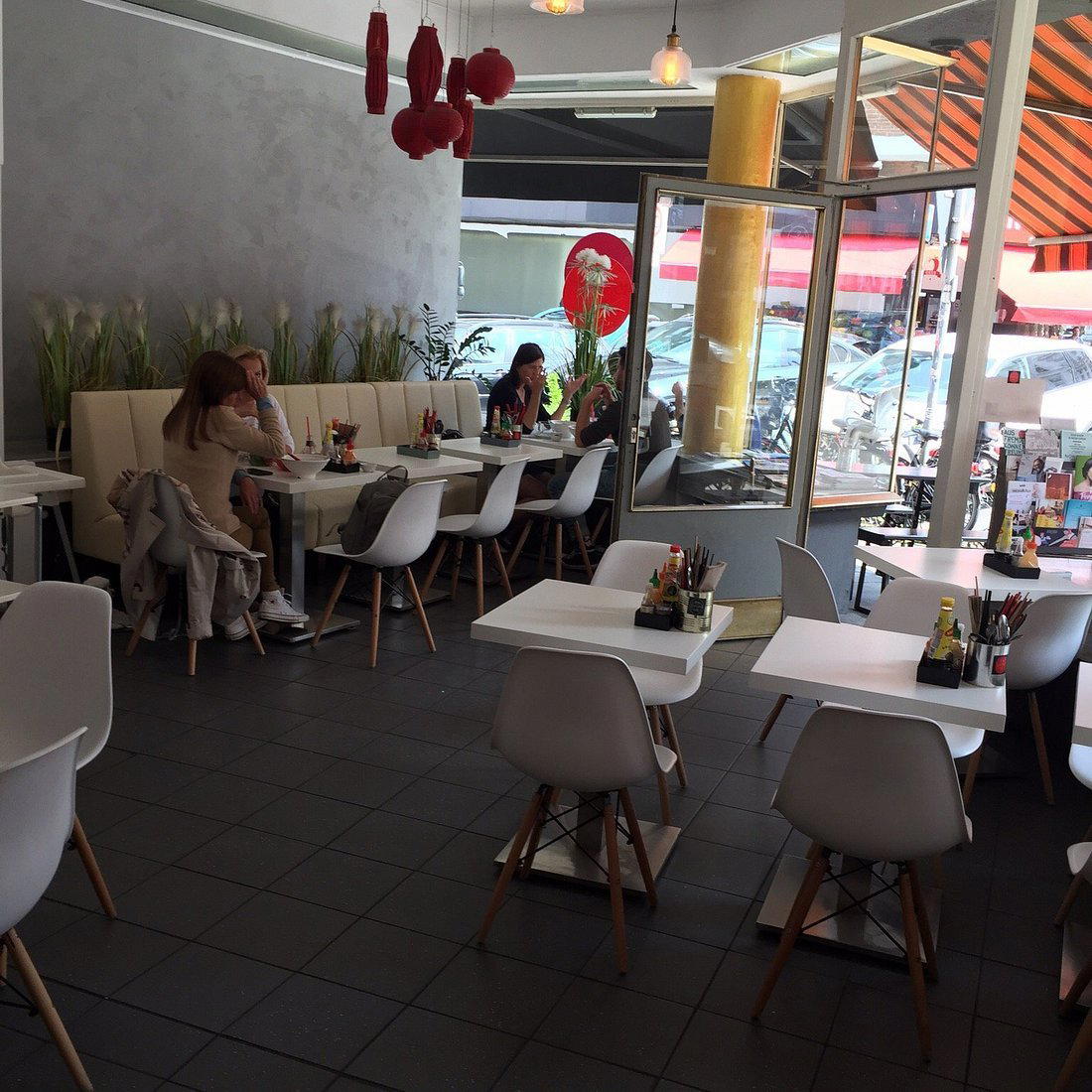
The menu
What to order
- Meatball Banh Mi with Lemongrass
- Curry Chicken Banh Mi
- Pho Noodle Soup
Southeast Asian formats, and Vietnamese food specifically, occupy a different and somewhat younger niche in this picture. The bánh mì sandwich is, structurally, a fast-service proposition: assembly-line preparation, short dwell times, price points that compete with döner rather than with sit-down restaurants. Ăn Bánh Mì positions itself in that bracket, serving a neighbourhood where the transaction is functional as much as experiential. That is not a criticism. The leading bánh mì counters in Paris, London, and Berlin operate on exactly the same logic, and the format's integrity depends on keeping it affordable and fast.
The Progression of a Bánh Mì Meal
Unlike a tasting menu at, say, Schwarzwaldstube in Baiersbronn or Aqua in Wolfsburg, where the arc of a meal is designed over hours and courses, the bánh mì sequence compresses into a single object held in both hands. But there is a progression. The bread comes first: the quality of the baguette, how well the crust holds against the moisture of the fillings, sets the ceiling for everything that follows. Then the spread layer, typically butter or pâté or both, which acts as a moisture barrier and a richness anchor. The pickled vegetables — daikon and carrot, quick-brined to retain crunch — arrive mid-bite as an acidic counterpoint. The protein, whatever has been chosen, carries the savoury weight. Fresh herbs and chilli at the end lift the whole construction out of heaviness.
What separates a competent bánh mì from a memorable one is almost always the bread and the balance of acid. In Germany, sourcing a baguette with the right crust-to-crumb ratio is genuinely harder than in France, which means Vietnamese sandwich shops here often work with local bakeries or develop their own supply relationships. How Ăn Bánh Mì resolves that sourcing question is not something the available record can confirm, but it is the technical problem at the centre of any bánh mì operation outside Vietnam or France.
The Neighbourhood as Context
The 40233 postal district covers residential and light-commercial streets east of the city centre. This is not the gallery district or the luxury retail corridor. It is the kind of neighbourhood where a Vietnamese sandwich counter can charge honest prices and fill a lunch queue with office workers, local residents, and students rather than tourists. That demographic shapes what the kitchen needs to deliver: consistency, speed, and value at volume, not theatrical presentation or rare-ingredient sourcing.
For visitors making the deliberate trip from the city centre, the calculus is direct: a bánh mì from a dedicated shop on a working-class residential street is likely to be more grounded in the actual format tradition than something served at a pan-Asian concept in a hotel district. See our JAN in Munich, Vendôme in Bergisch Gladbach, and CODA Dessert Dining in Berlin, or at the three-star level by Victor's Fine Dining by Christian Bau in Perl, ES:SENZ in Grassau, Schanz in Piesport, and Waldhotel Sonnora in Dreis, operates at the opposite end of the cost and format spectrum from a street-level bánh mì counter. The comparison is not made to flatter either category at the expense of the other. It is made because any serious food city sustains both, and the vitality of a local eating scene depends as much on its affordable, honest, daily-use formats as on its prestige counters. Hamburg's Restaurant Haerlin and international reference points like Le Bernardin in New York City or Lazy Bear in San Francisco represent one end of the dining spectrum.enprimeurclub. The Vietnamese sandwich format sits in that company by price point, though it draws from a substantially different culinary tradition. Given the format and neighbourhood positioning, walk-in service is the likely operational model, with peak demand falling at lunch. The address is in the eastern residential part of the city, reachable by tram from the city centre, and the surrounding streets offer little in the way of co-designed dining itineraries, making this a deliberate single-stop visit rather than part of a curated neighbourhood evening.
Frequently asked questions
Where exactly is ĂN BÁNH MÌ?
ĂN BÁNH MÌ is located at Ackerstraße 161, 40233 Düsseldorf, Germany, Dusseldorf.
What's the signature dish at ĂN BÁNH MÌ?
The bánh mì itself is the entire point of the operation at Ackerstraße 161. The sandwich format, originating from the French colonial period in Vietnam, layers protein, pickled vegetables, and fresh herbs in a baguette-style roll.
How hard is it to get a table at ĂN BÁNH MÌ?
Bánh mì shops typically operate as walk-in counters rather than reservation-based restaurants, and Ăn Bánh Mì on Ackerstraße fits that format. Timing around lunch service is usually when demand peaks at this style of venue.
What has ĂN BÁNH MÌ built its reputation on?
The venue sits on Ackerstraße 161 in Düsseldorf's 40233 district, a residential stretch that draws regular local custom rather than passing tourist trade. That neighbourhood positioning is itself a signal: the customer base here is repeat and community-rooted rather than destination-driven.
Standing Among Peers
Comparable venues nearby, for context on price, style, and recognition.
| Venue | Cuisine | Price | Notes |
|---|---|---|---|
| ĂN BÁNH MÌThis venue — the venue you are viewing | Vietnamese Banh Mi Sandwiches | $10–20 | Not listed |
| Yede-Gör | Turkish Döner Kebab | $1–10 | Stadtmitte |
| 3h's burger & chicken | Halal Burgers & Chicken | $10–20 | Pempelfort |
| Shawarma city | Levantine Shawarma | $1–10 | Stadtmitte |
| Leo's Grill | Dutch-German Grill Snacks | $10–20 | Unterbilk |
| Dauser | Traditional German Soups and Stews | $10–20 | Derendorf |
Continue exploring
More in Düsseldorf
Restaurants in Düsseldorf
Browse all →
Bars in Düsseldorf
Browse all →
Hotels in Düsseldorf
Browse all →
Wineries in Düsseldorf
Browse all →
Details
- Trendy
- Cozy
- Casual Hangout
- Terrace
- A La Carte
- Vegetarian Friendly
Current opening hours
- Monday
- 11:30 AM–10 PM
- Tuesday
- 11:30 AM–3 PM, 5–10 PM
- Wednesday
- 11:30 AM–10 PM
- Thursday
- 11:30 AM–10 PM
- Friday
- 11:30 AM–10 PM
- Saturday
- 11:30 AM–10 PM
- Sunday
- 11:30 AM–10 PM
Hours can change for holidays and private events. Last verified .
Casual and unkompliziert atmosphere with a small terrace for summer dining.