Agata's

1 Michelin Star
Our verdict
Agata's holds a Michelin star for the second consecutive year in 2025, placing Chef Philipp Lange's creative cooking among Düsseldorf's most recognised fine dining addresses. The restaurant sits in the Kirchfeld district, operating at the €€€€ tier alongside a cluster of other starred contemporaries that have quietly repositioned the city on Germany's fine dining map.7 across 271 reviews suggests the recognition extends well beyond the Michelin committee.

Pearl is the En Primeur Club membership app — saves, bookings, and concierge access live there. Same editors, same standards.
- Address
- Kirchfeldstraße 59, 40217 Düsseldorf, Germany
- Phone
- +49 211 20030616
- Hours
- Mon–Tue ClosedWed–Sat 6–10 PMSun Closed
- Website
- agatas.de
- Directions
- Get directions
- Booking
- Book on TheFork
Creative Fine Dining in a City Finding Its Footing
Kirchfeldstraße is not the address that first comes to mind when listing Düsseldorf's dining landmarks, but that is precisely what makes the street's emergence as a serious destination worth paying attention to. The Kirchfeld district sits south of the Altstadt, quieter and more residential than the city's Old Town drinking belt, and the restaurants that have taken root here reflect a different set of priorities: deliberate cooking over volume, a focused creative programme over crowd-pleasing menus. Agata's, at number 59, belongs to this quieter but increasingly credentialled tier.
Germany's creative fine dining scene has expanded steadily beyond its traditional strongholds. Baiersbronn, the Black Forest village that hosts Schwarzwaldstube, and Wolfsburg, where Aqua operates, have long anchored the country's Michelin geography. But urban restaurants in mid-size cities have grown their share of recognition over the last decade, and Düsseldorf has been part of that shift. Agata's Michelin star, retained for both 2024 and 2025, positions it within a city cohort that now includes several starred addresses operating at the same €€€€ price point.
The Creative Cuisine Tradition and What It Demands
The "creative" classification in European fine dining carries specific weight. It is neither the comfort of French classical cuisine nor the defined grammar of a regional tradition. Creative cooking, as practised at addresses like Alléno Paris au Pavillon Ledoyen or Arpège, demands a coherent internal logic: the chef's conceptual framework must substitute for the external scaffolding that tradition provides. Without that framework, creative menus risk feeling arbitrary. The Michelin committee's two-year recognition of Chef Philipp Lange's programme at Agata's suggests the kitchen has established a sufficiently coherent point of view to justify the classification.
This is the harder path for a restaurant in a city that is not yet a first-tier international dining destination. In Munich, where JAN operates, or in Berlin, where CODA Dessert Dining has made the dessert-first format a serious critical proposition, the competitive density and international visitor base give starred kitchens a certain momentum. In Düsseldorf, the audience is more locally anchored, and the critical scrutiny is less intense. Sustained recognition in that environment reflects genuine cooking quality rather than hype geography.
Düsseldorf's Starred Cohort and Where Agata's Sits
The city's Michelin-starred restaurants at the €€€€ tier now form a recognisable cluster, each working within a distinct culinary classification. Im Schiffchen operates in the Contemporary European and Classic Cuisine register, a more conservative frame than Agata's creative programme. 1876 Daniel Dal-Ben and LA VIE by thomas bühner both occupy the creative and modern cuisine space, making them closer stylistic comparators. Jae approaches the same price tier from a fusion angle. This is not a homogeneous group: the stylistic diversity within Düsseldorf's top tier means that diners are not choosing between slight variations on the same menu, but between meaningfully different approaches to high-end cooking.
Agata's sits within that creative bracket alongside Zwanzig23 by Lukas Jakobi, another address working the contemporary creative register. The comparison is instructive: both kitchens operate without the historical weight of a decades-old institutional address, which means their credibility derives from the current menu rather than accumulated reputation. That sharpens both the risk and the reward for diners choosing between them.
Cultural Roots of the Creative Format
The creative fine dining format that Agata's operates within has recognisable European roots, even when it resists national categorisation. Germany's contribution to this tradition runs through precision technique and a willingness to apply rigour to ingredient sourcing, a set of priorities visible at addresses like Vendôme in Bergisch Gladbach and ES:SENZ in Grassau. The country's fine dining kitchens have generally prioritised structural discipline over theatrical presentation, which distinguishes them from some French or Nordic contemporaries operating in the same creative register.
At the €€€€ tier, creative menus in Germany typically run as set tasting formats, with a wine pairing offered as a secondary investment. The sourcing story, particularly around regional producers and seasonal constraint, has become a consistent narrative frame across the country's starred kitchens. These are not decorative claims: the Michelin committee has shown consistent interest in kitchens that anchor creative ambition in specific product relationships, and sustained star retention suggests this framework applies at Agata's as much as at its peers.
A Michelin star is a committee judgement made on a small number of visits across the year. High-scoring creative tasting menus in mid-size cities sometimes carry a gap between critical and popular reception, particularly when the conceptual ambition of the cooking runs ahead of the explanatory frameworks the dining room provides to guide non-specialist guests. A 4.7 aggregate suggests the kitchen and front-of-house are managing that translation effectively.
Planning a Visit
Agata's is located at Kirchfeldstraße 59, 40217 Düsseldorf, in the Kirchfeld district south of the city centre. At the €€€€ price tier, the restaurant operates in a bracket where advance reservation is standard practice, and booking well ahead is advisable, particularly for weekend dates. The Kirchfeld neighbourhood is accessible from the city's main transport network, and the area around Kirchfeldstraße has developed a concentration of higher-end dining addresses that makes it a viable anchor point for an evening in Düsseldorf without travelling back to the Altstadt. Those planning a broader stay should consult our full Düsseldorf hotels guide for accommodation options at a range of price points, and our full Düsseldorf bars guide for options before or after dinner. For a complete picture of the city's dining scene, our full Düsseldorf restaurants guide maps the full range of addresses across cuisines and price tiers. Additional context on the city's broader cultural and experiential offerings is available through our full Düsseldorf experiences guide and our full Düsseldorf wineries guide.
Frequently asked questions
What's the address for Agata's?
Agata's is located at Kirchfeldstraße 59, 40217 Düsseldorf, Germany, Düsseldorf.
Is there a head chef associated with Agata's?
The chef associated with Agata's is Philipp Lange.
What do people recommend at Agata's?
Agata's has held a Michelin star in both 2024 and 2025, and at the €€€€ price tier the kitchen's output centres on a tasting menu format under chef Philipp Lange. The creative cuisine classification means dishes are driven by technique and composition rather than a fixed regional tradition. Guests consistently reference the precision of the cooking across review platforms, aligning with the Michelin committee's repeated recognition.
Category Peers
| Venue | Cuisine | Price | Awards | Notes |
|---|---|---|---|---|
| Agata'sThis venue — the venue you are viewing | Modern International with Asian Influences | $150–200 | 1 Michelin Star | Not listed |
| Im Schiffchen | Classic French Haute Cuisine | $200–300 | 1 Michelin Star | Contemporary European, Classic Cuisine |
| 1876 Daniel Dal-Ben | Modern Creative Fine Dining | $200–300 | 1 Michelin Star | Creative |
| Jae | Modern Korean-European Fusion | $100–150 | 1 Michelin Star | Fusion |
| Le Flair | Modern French Fine Dining | $100–150 | Michelin Plate | Mediterranean Cuisine |
| Nagaya | Japanese-European Fusion Fine Dining | $150–200 | 1 Michelin Star · La Liste Top Restaurants | Japanese |
Recognition history
Dated appearances from independent guides and award organizations, with the underlying list record or original source where available.
Michelin 1 Star
Michelin
Full recognition history (3 entries)
Michelin 1 Star
Michelin
Michelin 1 Star
Michelin
Continue exploring
More in Düsseldorf
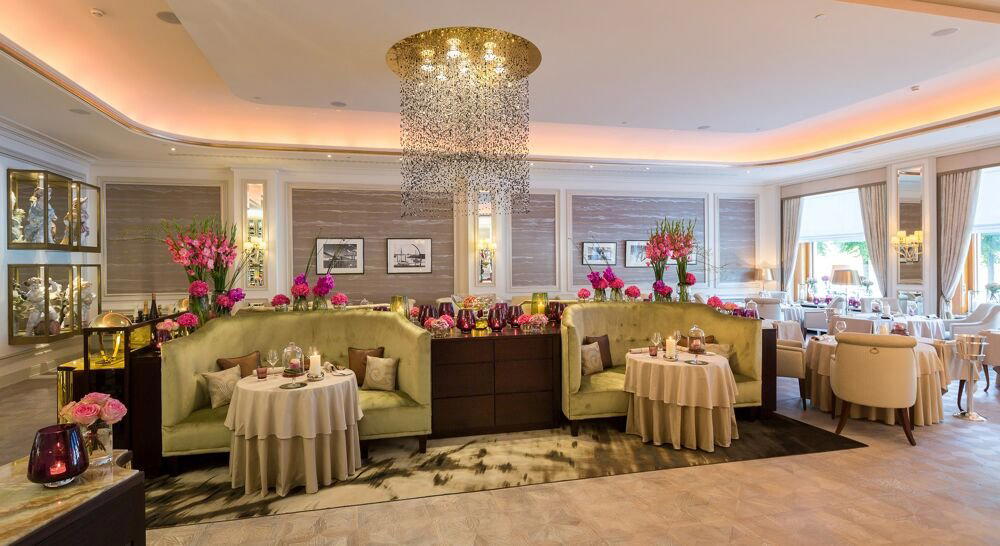
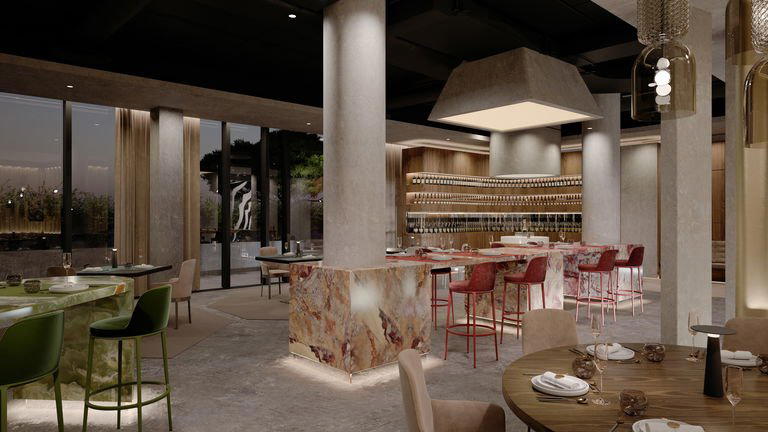
Restaurants in Düsseldorf
Browse all →
Bars in Düsseldorf
Browse all →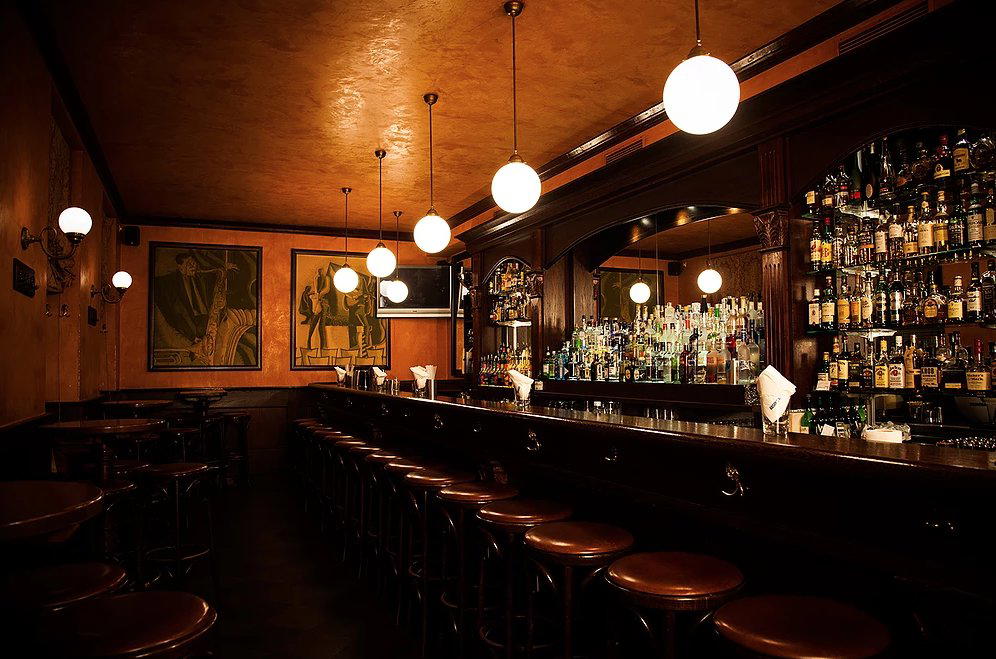
Hotels in Düsseldorf
Browse all →
Wineries in Düsseldorf
Browse all →
Details
- Elegant
- Intimate
- Sophisticated
- Modern
- Date Night
- Business Dinner
- Celebration
- Special Occasion
- Private Dining
- Open Kitchen
- Hotel Restaurant
- Extensive Wine List
- Sommelier Led
- Local Sourcing
- Tasting Menu
- Set Menu
- Wine
- Champagne
- Vegetarian Friendly
- Vegan Options
- Gluten Free Options
- Allergy Accommodating
Current opening hours
- Monday
- Closed
- Tuesday
- Closed
- Wednesday
- 6–10 PM
- Thursday
- 6–10 PM
- Friday
- 6–10 PM
- Saturday
- 6–10 PM
- Sunday
- Closed
Hours can change for holidays and private events. Last verified .
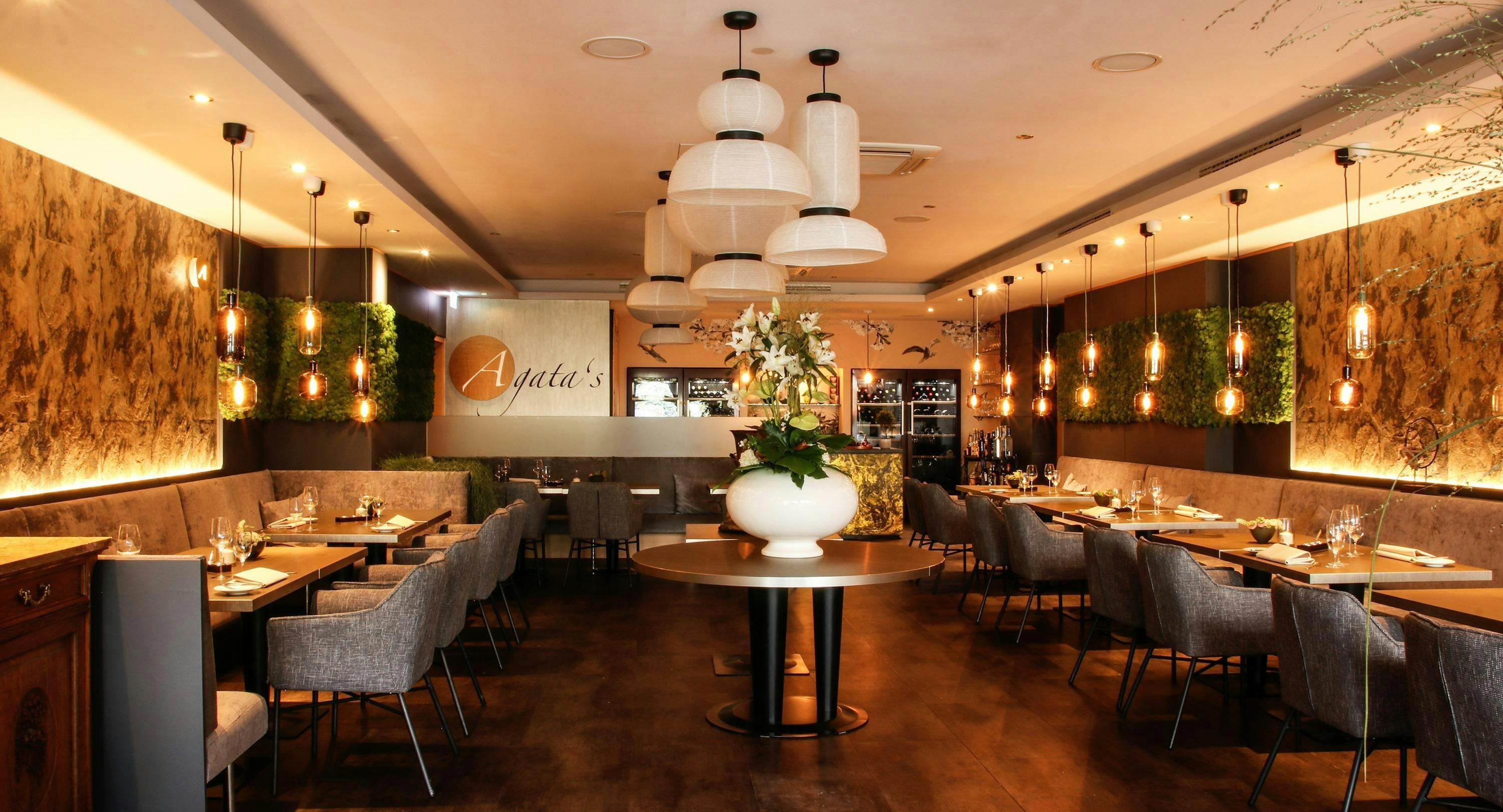
Light and elegant interior with modern design, earthy tones, and floral motifs creating a warm yet refined atmosphere; intimate and tranquil ambiance without being overly formal.