Dauser
On Ulmenstraße in Düsseldorf's residential north, Dauser occupies a quiet address that sits outside the city's more trafficked dining corridors. The surrounding neighbourhood sets an understated register that carries through to the dining room itself. For visitors mapping Düsseldorf's full restaurant range, it represents a neighbourhood-rooted option worth placing alongside the city's broader scene.
Pearl is the En Primeur Club membership app — saves, bookings, and concierge access live there. Same editors, same standards.
- Address
- Ulmenstraße 118, 40476 Düsseldorf, Germany
- Phone
- +4949211486164
- Website
- dauser-online.de
- Directions
- Get directions
 Saves & bookings on Pearl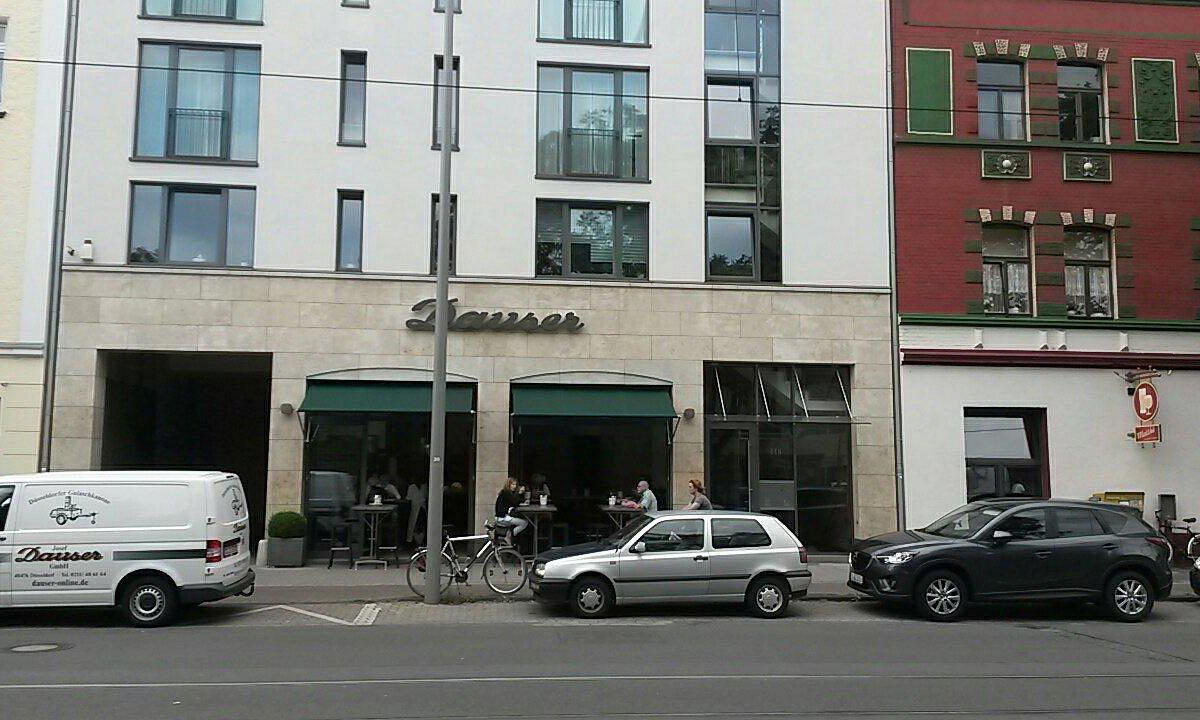
A Street, a Room, a Register
Ulmenstraße 118 sits in a part of Düsseldorf that does not announce itself. The street runs through a residential quarter north of the Altstadt, where quieter facades, plane trees, and the slower rhythm of a neighbourhood that feeds locals rather than tourists. Arriving here, you notice what is absent before you notice what is present: no queuing crowd, no valet gesture, no curated exterior lighting pushing a concept before you reach the door. Dauser occupies this address with the kind of low-key physical presence that places in Düsseldorf's more residential pockets tend to sustain.
Düsseldorf's dining scene has long operated on two registers simultaneously. The first is the Altstadt-adjacent circuit, dense with international restaurants, izakaya-style spots serving the city's substantial Japanese community, and the kind of modern European rooms that attract expense accounts and weekend visitors. The second register is quieter and more neighbourhood-specific, where restaurants are embedded in the texture of the surrounding streets rather than positioned against a citywide dining map. Dauser belongs to the second category.
What the Neighbourhood Signals
The residential context along Ulmenstraße shapes the sensory expectations a diner brings to any address here. Rooms in this kind of location tend to be smaller, the acoustics less engineered, the lighting less theatrical. The physical environment reads more like a room that has been inhabited over time than a concept that has been installed. That quality, whether a dining room achieves it through age or intention, tends to produce a particular kind of atmosphere: conversations carry across tables without the amplification of a room designed to buzz, and the pace of service reflects the neighbourhood's own tempo rather than a policy of throughput.
This kind of residential-format dining has parallels across German cities. In Munich, JAN demonstrates how a tightly controlled format in a non-central location can develop a consistent following. At the three-Michelin-star level, rooms like Schwarzwaldstube in Baiersbronn and Waldhotel Sonnora in Dreis show how Germany's most formally recognised kitchens often operate at a remove from urban centres entirely. Dauser does not occupy that refined tier, but the broader pattern holds: restaurant address and neighbourhood character are not incidental in Germany. They shape what a room communicates from the moment you locate it on a map.
Düsseldorf's Neighbourhood Dining in Context
The city's casual neighbourhood options cover a wide range. Turkish and Middle Eastern kitchens are woven into many of the residential corridors; Alanya Döner is one example of the fast-format döner operations that anchor local eating on many Düsseldorf streets. Wine-focused neighbourhood spots like Amuni Wein- und Käsebar represent a different neighbourhood format, one where the proposition is built around product curation rather than kitchen ambition. Italian-leaning rooms such as Anfora and Mediterranean options including Arca Alacati fill out a neighbourhood dining map that is, in aggregate, more diverse than the city's tourist-facing reputation tends to suggest.
For a quick-service alternative in the city, 3h's burger & chicken represents the informal end of the spectrum. Dauser sits somewhere in this mid-range neighbourhood band, distinct from the high-format rooms that draw visiting critics and distinct from pure fast-service operations.
Germany's Broader Fine Dining Frame
Germany's wider restaurant hierarchy shows how much kitchen ambition concentrates outside the country's largest cities. Aqua in Wolfsburg, Vendôme in Bergisch Gladbach, and Victor's Fine Dining by Christian Bau in Perl are all three-Michelin-star operations located in places that would barely register on a general European travel itinerary. Schanz in Piesport and ES:SENZ in Grassau confirm the pattern. Germany's guide-recognised kitchen talent is geographically distributed in a way that makes any single-city framing incomplete.
At the innovation end, CODA Dessert Dining in Berlin operates a format that would be anomalous in almost any other European capital, and Restaurant Haerlin in Hamburg holds its position in a city that has its own distinct dining culture. Internationally, rooms like Le Bernardin in New York City and Lazy Bear in San Francisco illustrate how format discipline and neighbourhood context interact differently at a global scale. Knowing the frame helps calibrate what neighbourhood-format dining in a German city means relative to the wider conversation.
Planning a Visit
Ulmenstraße 118 is the confirmed address; Düsseldorf's tram and bus network connects the residential northern districts to the centre, and the street is accessible without a car. Dauser is walk-in friendly, open Monday to Friday from 8 AM to 7 PM, Saturday from 8 AM to 5 PM, and closed on Sunday. The surrounding neighbourhood offers enough alternative options that building an itinerary around this part of the city is sensible regardless of what you find at the address itself.
Awards and Standing
Comparable venues nearby, for context on price, style, and recognition.
| Venue | Cuisine | Price | Notes |
|---|---|---|---|
| DauserThis venue — the venue you are viewing | Traditional German Soups and Stews | $ | Not listed |
| Luxor Grill | German Grill & Fast Food | $ | Unterrath |
| Berliner Imbiss Klemensplatz | Berlin-Style German Fast Food | $ | Kaiserswerth |
| Leo's Grill | Dutch-German Grill Snacks | $ | Unterbilk |
| Urfa Lahmacun | Turkish Lahmacun & Kebab | $ | Stadtmitte |
| Grill House 56 Düsseldorf | Greek Grill | $ | Stadtmitte |
Continue exploring
More in Düsseldorf
Restaurants in Düsseldorf
Browse all →
Bars in Düsseldorf
Browse all →
At a Glance
- Cozy
- Classic
- Lively
- Casual Hangout
- Business Dinner
- Standalone
- Street Scene
Current opening hours
- Monday
- 8 AM–7 PM
- Tuesday
- 8 AM–7 PM
- Wednesday
- 8 AM–7 PM
- Thursday
- 8 AM–7 PM
- Friday
- 8 AM–7 PM
- Saturday
- 8 AM–5 PM
- Sunday
- Closed
Hours can change for holidays and private events. Last verified .