Al Dente Ristorante
Our verdict
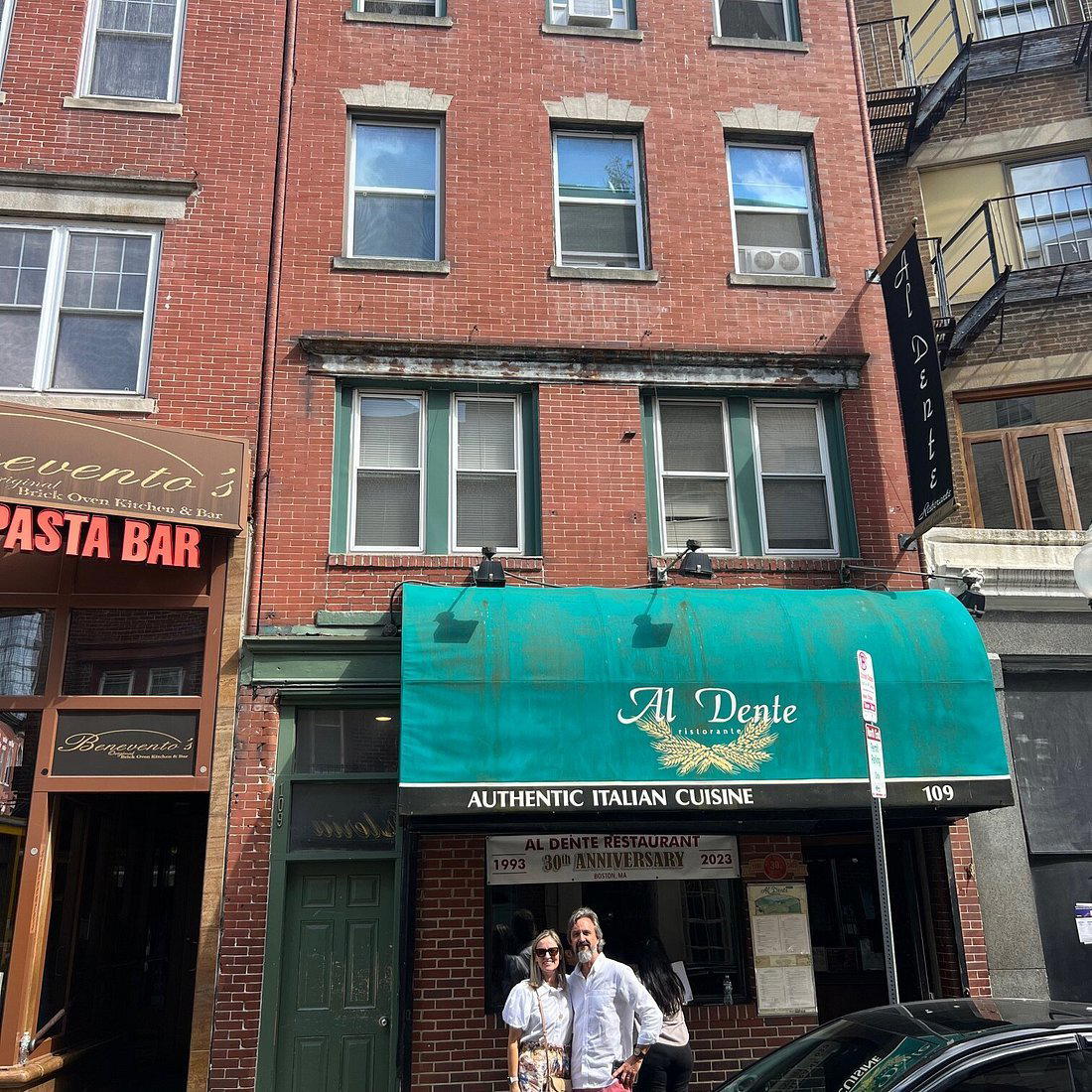
Al Dente Ristorante occupies a quietly positioned address on Salem Street in Boston's North End, the city's Italian-American corridor where red-sauce tradition and more technique-driven cooking share the same few blocks. The kitchen works within that neighborhood context, drawing on the imported methods that define serious Italian cooking while operating in a dining room that reflects the area's characteristically unpretentious register.

Pearl is the En Primeur Club membership app, where members save venues, book tables and use the concierge.
The menu
What to order
- Shrimp Grand Marnier
- Lobster Ravioli
- Al Dente Special
Salem Street and the North End's Culinary Positioning
Boston's North End is among the most compressed Italian-American dining districts on the East Coast. Salem Street, where Al Dente Ristorante sits at number 109, runs through the heart of it, a stretch where trattorias, pasticcerias, and more ambitious kitchens operate within a few hundred feet of each other. The neighborhood's dining character is shaped by that density: kitchens here compete not on novelty alone but on execution within a tradition that local regulars know well and hold to a specific standard. For a visitor arriving from outside the city, the North End functions as a legible shorthand for Italian-American cooking; for Bostonians, the differences between individual kitchens on this street matter considerably more.
That context shapes how a restaurant like Al Dente Ristorante is leading understood. This is not a destination that positions itself against Le Bernardin in New York City or the refined tasting-counter model of Agosto in Boston's own fine dining tier. It belongs to the neighborhood fabric, the kind of address that regulars use on a Wednesday and that out-of-towners seek out for a credible version of Italian cooking in a city where that cuisine carries genuine cultural weight, not just restaurant-industry signaling.
Local Ingredients, Imported Method: The Organizing Logic of North End Italian
The most instructive frame for understanding what happens in North End kitchens is the intersection of Italian culinary technique, pasta-making discipline, long braise traditions, the structural grammar of Italian regional cooking, with ingredients that are distinctly New England. Boston's position at the edge of some of the Atlantic's most productive cold-water fishing grounds means that the raw material available to a North End kitchen is, by any measure, different from what a cook would find in Bologna or Rome. The question serious kitchens in this neighborhood answer, implicitly or explicitly, is how to honor imported method while responding to what New England actually produces.
This is a question that defines a broader category of American-Italian cooking at its more thoughtful end. Restaurants like Blue Hill at Stone Barns in Tarrytown or Single Thread Farm in Healdsburg have made the local-ingredient-plus-imported-technique argument central to their identities and their price points. In the North End, that argument plays out at a less formal register, but it is no less present in the kitchens that take it seriously. The Atlantic provides bivalves and cold-water fin fish that respond well to Italian preparations, the restraint of a brodetto, the simplicity of a pasta alle vongole, precisely because the technique doesn't overwhelm what's already good about the ingredient.
For anyone tracking how American-Italian cooking has developed across the country, from Emeril's in New Orleans to the farm-anchored tasting formats at Smyth in Chicago, the North End represents an older, less self-conscious version of that same negotiation. The technique arrived with immigration; the ingredients were already here.
Where Al Dente Sits in the North End Spectrum
The North End's dining options span a wide range, from tourist-facing red-sauce houses to smaller rooms where the cooking rewards more careful attention. Nearby comparisons within Boston's broader dining map are instructive: O Ya operates a Japanese counter that sits at the high-spend, reservation-intensive end of Boston dining, while Neptune Oyster anchors the raw bar tradition that the neighborhood's waterfront adjacency makes logical. Sarma and La Brasa occupy different genre territories entirely. Al Dente Ristorante is none of those things, it is an Italian kitchen on an Italian street in a neighborhood that has been defined by that cuisine for over a century.
For visitors who want to orient the North End visit within a broader Boston restaurant itinerary, our full Boston restaurants guide maps the city's dining character by neighborhood and price tier. For a sense of what the highest-commitment dining in the city looks like, 311 Omakase operates at the opposite end of the formality and price spectrum. Abe & Louie's anchors the steakhouse tier. 75 on Liberty Wharf and 1928 Rowes Wharf cover the waterfront dining end of the market. Al Dente occupies none of those positions, which is precisely what makes it useful to understand on its own terms.
Planning a Visit: What to Know Before You Go
Salem Street operates at a pedestrian pace that rewards arriving on foot through the neighborhood rather than by car. The North End's streets are narrow, parking is constrained, and the density of the district is better navigated as a walker than a driver. Boston's MBTA provides access through Haymarket station, from which Salem Street is a short walk north. Timing matters in a neighborhood this compact: summer and weekend evenings bring significant foot traffic, and smaller Italian rooms on this street can fill quickly. Visitors who prefer a more settled pace would do well to consider early-week evenings or off-peak lunch hours, when the neighborhood's character is more legible and the kitchens are working without weekend-volume pressure.
For those building a multi-day Boston dining itinerary that extends beyond the North End, the comparison set across American cities is worth noting. The farm-anchored seriousness of The French Laundry in Napa, the coastal-ingredient focus of Providence in Los Angeles, and the technique-driven ambition of Addison in San Diego all operate at a higher formality tier than anything in the North End. The neighborhood's register is different, more immediate, less ceremonial, and that difference is part of its coherence as a dining destination. Internationally, the local-ingredient-plus-alpine-technique model practiced by Atelier Moessmer Norbert Niederkofler in Brunico offers a pointed European parallel to the negotiation North End kitchens conduct with New England's seasonal produce and seafood.
Frequently asked questions
Where is Al Dente Ristorante located?
Al Dente Ristorante is located at 109 Salem St # 1, Boston, MA 02113, Boston.
Is Al Dente Ristorante a good choice for a first visit to Boston's North End Italian dining scene?
Al Dente's address at 109 Salem St places it at the center of the North End, Boston's most historically rooted Italian-American neighborhood, which makes it a practical starting point for understanding how the district's cooking tradition operates. The North End as a whole spans a range from straightforward red-sauce rooms to smaller kitchens where technique carries more weight, and Salem Street sits within that full spectrum. Visiting on a quieter evening allows for a more attentive experience in what is consistently a busy part of the city.
What do regulars order at Al Dente Ristorante?
Specific dish details aren't documented for Al Dente, but the North End context is instructive: kitchens along Salem Street tend to anchor their menus around housemade pasta and long-simmered sauces, the formats that built the neighborhood's reputation over generations. Asking the server what's made in-house that day is a reliable approach at any serious room on this block.
How far ahead should I plan for Al Dente Ristorante?
Al Dente sits at 109 Salem St in Boston's North End, a district where smaller dining rooms fill quickly on weekends and during summer months when foot traffic on the narrow streets peaks. Contacting the restaurant directly before your intended visit is advisable, particularly for Friday and Saturday evenings. Arriving mid-week gives more flexibility across most North End rooms of this scale.
Comparable Spots
Comparable venues nearby, for context on price, style, and recognition.
| Venue | Cuisine | Price | Awards | Notes |
|---|---|---|---|---|
| Al Dente RistoranteThis venue (the venue you are viewing) | Traditional Italian Trattoria | $30–50 | Not listed | Not listed |
| La Summa | Authentic Sicilian Italian | $30–50 | Not listed | North End |
| MIDA | Modern Italian Neighborhood Pasta | $30–50 | James Beard Award Semi Finalist | South End |
| Little Steve's Pizzeria | Italian & Greek Pizza | Not listed | Not listed | Symphony |
| Forcella | Modern Italian | $30–50 | Not listed | North End |
| Massimino's | Authentic Italian Trattoria | $20–30 | Not listed | North End |
Continue exploring
More in Boston
Restaurants in Boston
All restaurants in Boston →
Bars in Boston
All bars in Boston →

Details
- Classic
- Cozy
- Date Night
- Group Dining
- Casual Hangout
- Standalone
- Extensive Wine List
- A La Carte
- Vegetarian Friendly
Current opening hours
- Monday
- 11:30 AM–10 PM
- Tuesday
- 11:30 AM–10 PM
- Wednesday
- 11:30 AM–10 PM
- Thursday
- 11:30 AM–10 PM
- Friday
- 11:30 AM–11 PM
- Saturday
- 11:30 AM–11 PM
- Sunday
- 11:30 AM–10 PM
Hours can change for holidays and private events. Hours as of .
Warm and welcoming atmosphere.