O Ya


James Beard Award Semi Finalist
Our verdict
O Ya has held a consistent place among North America's most closely watched Japanese restaurants, appearing on the Opinionated About Dining Top Restaurants list every year from 2023 to 2025. Operating from a compact room in Boston's Leather District, the counter-format restaurant under chef Tim Cushman applies Japanese technique through an American creative lens, drawing a reservation-focused clientele on a tight Tuesday-to-Saturday schedule.

Pearl is the En Primeur Club membership app — saves, bookings, and concierge access live there. Same editors, same standards.
- Address
- 9 East St, Boston, MA 02111
- Phone
- (617) 654-9900
- Hours
- Mon ClosedTue–Sat 5–8:30 PMSun Closed
- Website
- o-ya.restaurant
- Directions
- Get directions
- Booking
- Book on Tock
The menu
What to order
- Watermelon Oyster
- Nodoguro with Miso Vinaigrette
- Ora King Salmon
- Kyoto Style Morel Mushroom
- Foie Gras with Balsamic Chocolate
- A5 Wagyu Beef
- Fried Oyster Nigiri with Squid Ink Foam
A Leather District Address, a Japanese Counter Tradition
Boston's Leather District sits just south of Downtown Crossing, separated from the Financial District by a few blocks of converted warehouse buildings and narrow cross streets. It is not the neighborhood most visitors associate with serious dining, which is partly what makes O Ya's location at 9 East Street worth noting. The room itself signals the format before the first course arrives: this is counter dining in the Japanese tradition, where proximity to the kitchen is the point and the sequence of dishes carries the evening's structure. In a city whose high-end Japanese scene has grown steadily over the past decade, O Ya occupies a specific position — it is not a purist omakase house, nor a fusion showcase in the loose sense of the word. It sits somewhere more considered, applying Japanese technique and seasonal attentiveness through a distinctly American creative lens.
Where O Ya Sits in Boston's Japanese Dining Tier
Boston's Japanese restaurant market has stratified significantly since the mid-2000s. The lower tier is dense with accessible sushi bars. The middle is populated by izakayas, ramen specialists, and robata-influenced rooms. Above that, a smaller group of restaurants operates on tasting-menu or counter-format principles with pricing and booking dynamics that place them in direct conversation with comparable rooms in New York, Chicago, and San Francisco. O Ya belongs to that upper bracket. For context, the same city is home to Uni, a sashimi bar operating at a similar conceptual altitude, and 311 Omakase, which takes a more strictly traditional Japanese approach to the format. The three venues represent different answers to the same question about how Japanese technique translates in a New England dining environment.
Nationally, O Ya has drawn consistent peer recognition. The Opinionated About Dining survey, which aggregates assessments from serious diners and industry professionals rather than professional critics alone, ranked it 241st in North America in 2025, 116th in 2024, and 141st in 2023. The ranking movement across those three years reflects either genuine menu and experience evolution or shifts in the composition of the survey's evaluator pool — possibly both. Either way, sustained presence on that list places O Ya in a specific competitive conversation that includes rooms like Alinea in Chicago, Lazy Bear in San Francisco, and Le Bernardin in New York City, restaurants where the format, not just the food, is the proposition.
The Evolution: From Arrival to Sustained Relevance
O Ya opened in 2007, at a moment when the American fine-dining conversation was beginning to shift away from French-inflected formality toward more technically adventurous, less hierarchical formats. Japanese cuisine, particularly omakase-style counter dining, offered an alternative structure: a sequence controlled by the kitchen, a mise-en-scène that rewarded attention, and an emphasis on ingredient quality that aligned with what serious American diners were beginning to demand. Chef Tim Cushman arrived at the format with training that was cross-cultural rather than traditionally Japanese, which positioned O Ya from the start as an interpretive room rather than a preservation project.
What the Opinionated About Dining trajectory reveals is that O Ya has maintained relevance over nearly two decades, a span that has seen several waves of competition enter the Boston market and a significant restructuring of what American diners expect from a high-commitment Japanese meal. Restaurants that disappear from such lists between cycles have typically stalled; O Ya has not.
For comparison, rooms at a similar creative and technical register nationally include Single Thread Farm in Healdsburg and The French Laundry in Napa, both of which, like O Ya, have navigated the challenge of maintaining a defined identity through a long operational period in a shifting market. Boston's dining scene also changed around O Ya: steakhouses like Abe and Louie's, Italian rooms like Bar Mezzana, and New American projects like Asta collectively raised the ambient standard, which made sustained recognition harder to maintain, not easier.
The Japanese Counter Tradition in an American Context
Part of what distinguishes O Ya within its competitive set is its relationship to Japanese dining tradition more broadly. Omakase counter dining in Tokyo operates within a codified system of lineage, seasonal calendars, and ingredient sourcing networks that take decades to build. Rooms like Myojaku and Azabu Kadowaki in Tokyo work within that system; O Ya, like most American Japanese counter restaurants, works adjacent to it. That is not a criticism, it is a structural reality that shapes how the restaurant should be read. The American interpretive tradition, at its strongest, brings creative range and ingredient diversity that pure-form Japanese counter dining does not typically prioritize. At O Ya, that range has historically been the offering, with Cushman using Japanese technique as a grammar rather than a destination.
Planning a Visit
O Ya operates Tuesday through Saturday, with service running from 5 to 8:30 pm each evening. The restaurant is closed Sunday and Monday, which is a tighter weekly window than many comparable Boston rooms. The address, 9 East Street in the Leather District, is walkable from Downtown Crossing and South Station, making it accessible without a car for guests staying in the central city. For hotel options nearby, our full Boston hotels guide covers the range of properties across neighborhoods. Given the format and the restaurant's recognition profile, advance reservations are the working assumption; this is not a walk-in room.
Visitors exploring Boston's broader dining range will find context in our full Boston restaurants guide. Those interested in the bar program the city has developed alongside its restaurant scene can reference our full Boston bars guide. For cultural programming and experiences beyond the table, our full Boston experiences guide and our full Boston wineries guide extend the picture. Internationally minded readers comparing O Ya to what Emeril's in New Orleans represented for American creative dining in a different era will find useful reference points in the contrast between those projects and what O Ya has attempted over its run.
Frequently asked questions
Who is the chef connected to O Ya?
The chef associated with O Ya is Tim Cushman.
What should I eat at O Ya?
O Ya runs a fixed omakase sequence, so the kitchen sets the order and selection rather than offering à la carte choices. Chef Tim Cushman's counter format means the progression is the meal — arriving with specific requests is less relevant than arriving with an open approach to the full sequence. The Tuesday-through-Saturday service window (5–8:30 pm) is deliberately tight, which reflects the counter's paced, course-by-course structure.
Is O Ya open every day?
Hours at O Ya: Hours: Monday Closed Tuesday 5–8:30 pm Wednesday 5–8:30 pm Thursday 5–8:30 pm Friday 5–8:30 pm Saturday 5–8:30 pm Sunday Closed.
Where is O Ya in Boston?
O Ya is located at 9 East St, Boston, MA 02111, Boston.
What distinctions does O Ya have?
O Ya has received recognition including: Opinionated About Dining Top Restaurants in North America Ranked #241 (2025); Opinionated About Dining Top Restaurants in North America Ranked #116 (2024); Opinionated About Dining Top Restaurants in North America Ranked #141 (2023).
What's O Ya best at?
Consistency over time. O Ya has held a position on Opinionated About Dining's North America rankings for three consecutive years — ranked #241 in 2025, #116 in 2024, and #141 in 2023 — which in a field that turns over frequently points to sustained kitchen discipline rather than a single high-profile season. The counter format at 9 East St keeps service tight and the experience anchored to the omakase tradition rather than crowd-volume throughput.
Reputation Context
A short peer table to compare basics side-by-side.
| Venue | Cuisine | Price | Awards | Notes |
|---|---|---|---|---|
| O YaThis venue — the venue you are viewing | Modern Japanese Omakase | $200–300 | James Beard Award Semi Finalist | Not listed |
| La Brasa | Global Grill with Mexican & Mediterranean Influences | $50–100 | Not listed | Mexican |
| Neptune Oyster | Modern New England Seafood Oyster Bar | $50–100 | Michelin Plate | Raw Bar-Seafood |
| Oishii Boston | Modern Creative Japanese Sushi | $100–150 | Wine Spectator Award of Excellence | Sushi |
| Ostra | Mediterranean Seafood | $100–150 | James Beard Award Semi Finalist · Wine Spectator Award of Excellence | Seafood Grill |
| Sam LaGrassa’s | Classic New York-Style Deli Sandwiches | $20–30 | Diners, Drive-Ins and Dives Featured Restaurant | Sandwiches |
Recognition history
Dated appearances from independent guides and award organizations, with the underlying list record or original source where available.
James Beard Award Semi Finalist
James Beard Award
Opinionated About Dining Top Restaurants in North America Recommended
Opinionated About Dining
Full recognition history (6 entries)
Opinionated About Dining Top Restaurants in North America Ranked #241
Opinionated About Dining
Opinionated About Dining Top Restaurants in North America Ranked #116
Opinionated About Dining
Opinionated About Dining Top Restaurants in North America Ranked #141
Opinionated About Dining
James Beard Award Best Chefs
James Beard Award
Continue exploring
More in Boston
Restaurants in Boston
Browse all →
Bars in Boston
Browse all →
Hotels in Boston
Browse all →



Wineries in Boston
Browse all →

Details
- Elegant
- Intimate
- Sophisticated
- Modern
- Celebration
- Special Occasion
- Date Night
- Business Dinner
- Chefs Counter
- Open Kitchen
- Private Dining
- Extensive Wine List
- Sake Program
- Sommelier Led
- Sustainable Seafood
- Local Sourcing
- Omakase
- Tasting Menu
- Prix Fixe
- Sake
- Wine
- Vegetarian Friendly
- Vegan Options
- Allergy Accommodating
Current opening hours
- Monday
- Closed
- Tuesday
- 5–8:30 PM
- Wednesday
- 5–8:30 PM
- Thursday
- 5–8:30 PM
- Friday
- 5–8:30 PM
- Saturday
- 5–8:30 PM
- Sunday
- Closed
Hours can change for holidays and private events. Last verified .
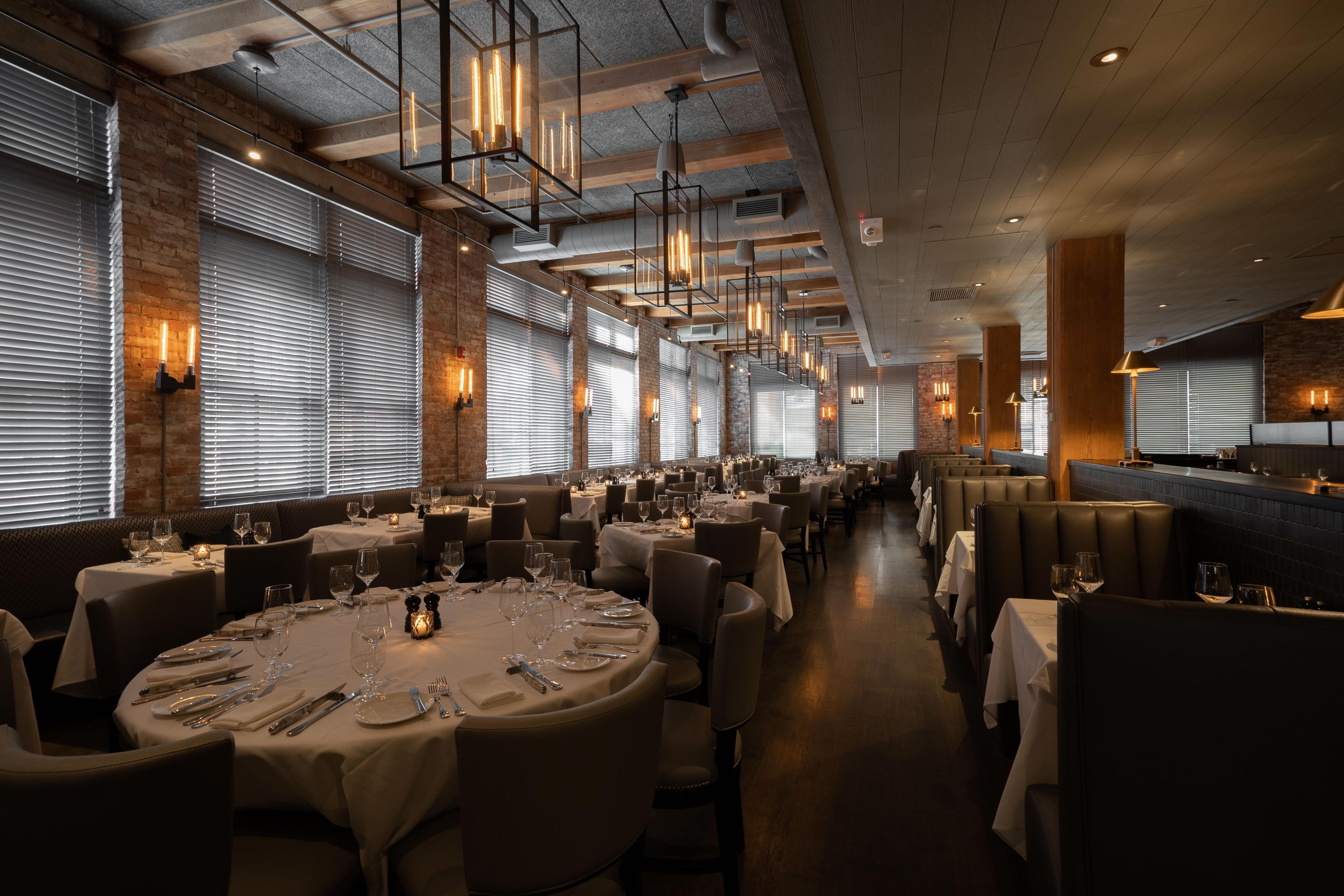
Dark, cozy, and intimate with pleasant lighting; described as a sophisticated lounge-like atmosphere with a focus on the culinary experience rather than traditional fine dining reverence.