Akira Back



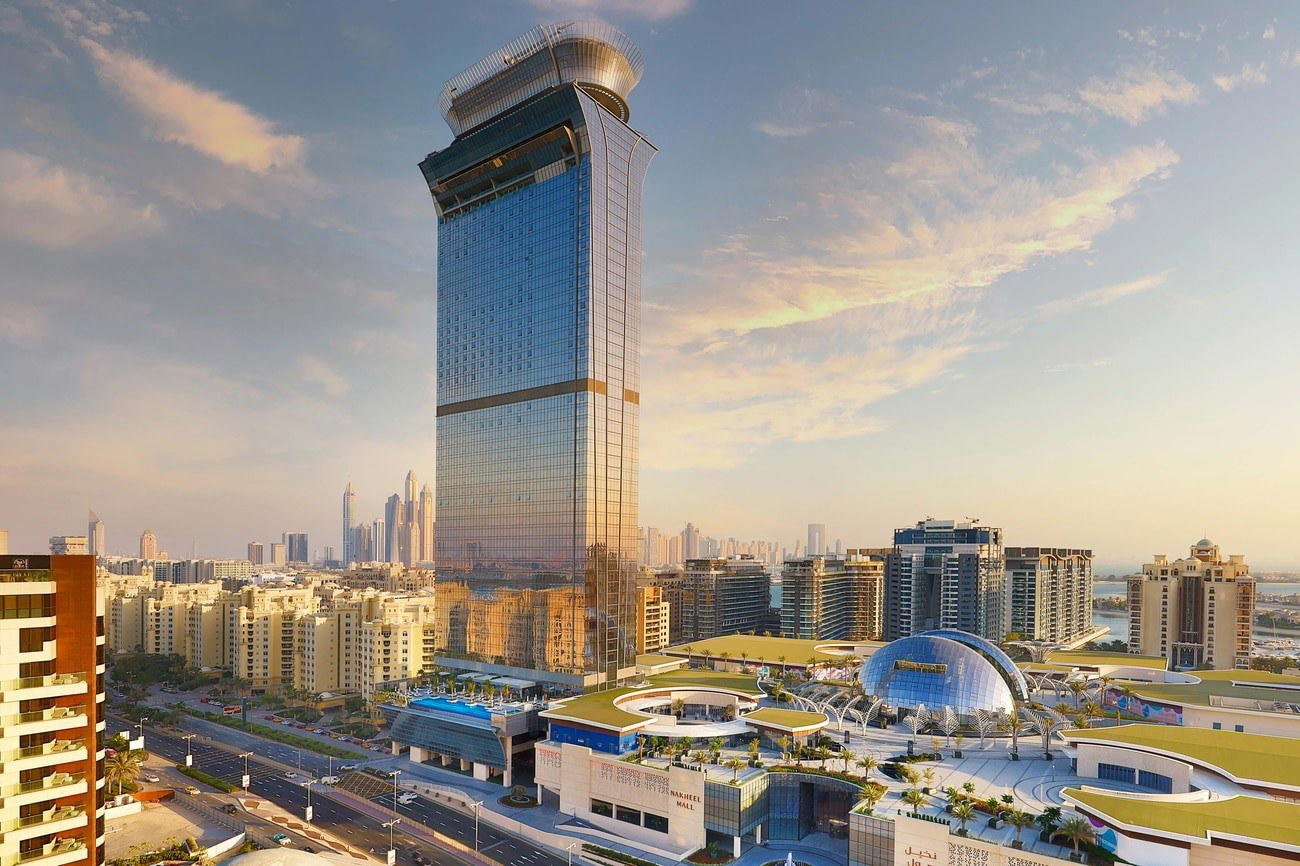
Akira Back occupies the fifth floor of the W Dubai – The Palm, where floor-to-ceiling windows frame the Palm Jumeirah skyline and a terrace terrace extends the drama further. The kitchen works across Japanese foundations with Korean and international inflections, earning a Michelin Plate in 2025 and the Star Wine List White Star. At the $$$ tier, it sits in Dubai's mid-to-upper Japanese Contemporary bracket alongside Zuma and Mimi Kakushi.
Pearl is the En Primeur Club membership app — saves, bookings, and concierge access live there. Same editors, same standards.
- Address
- W Dubai – The Palm - West Crescent - Palm Jumeirah - Dubai - United Arab Emirates
- Phone
- +971 4 245 5800
- Website
- akirabackdubai.com
- Directions
- Get directions
 Saves & bookings on Pearl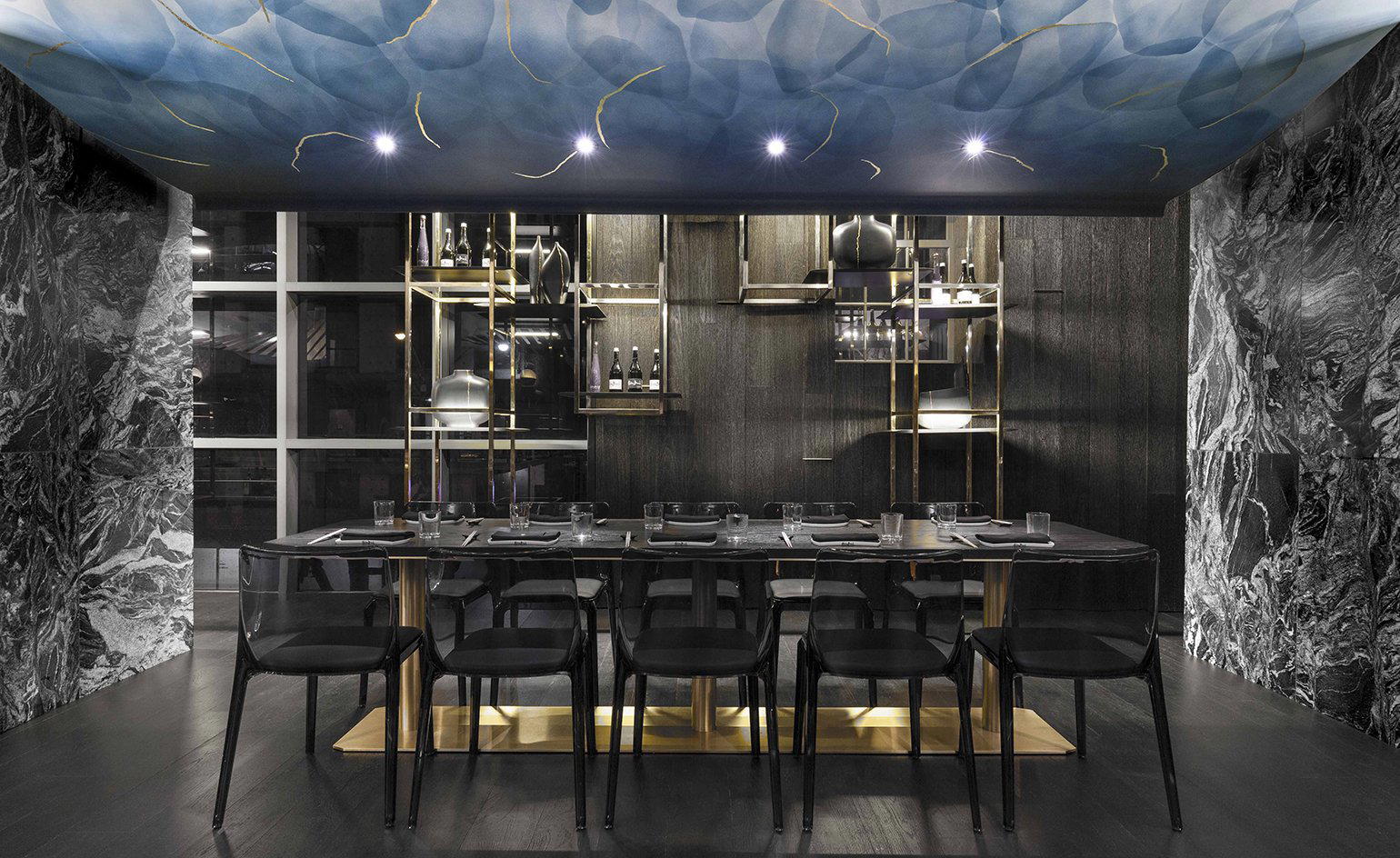
Fifth Floor, West Crescent: Where Setting Does Some of the Heavy Lifting
Dubai's Japanese Contemporary dining tier has expanded sharply over the past decade, moving from a handful of sushi-centric counters to a broad spectrum of hybrid kitchens that fold in Korean and broader Asian reference points. The format that has emerged at the upper-mid end of that spectrum shares some consistent traits: theatrical settings, menus that treat Japanese technique as a framework rather than a strict vocabulary, and wine programs substantial enough to earn independent recognition. Akira Back, a Japanese-Korean Fusion restaurant on the fifth floor of the W Dubai – The Palm on the West Crescent of Palm Jumeirah, fits that description precisely.
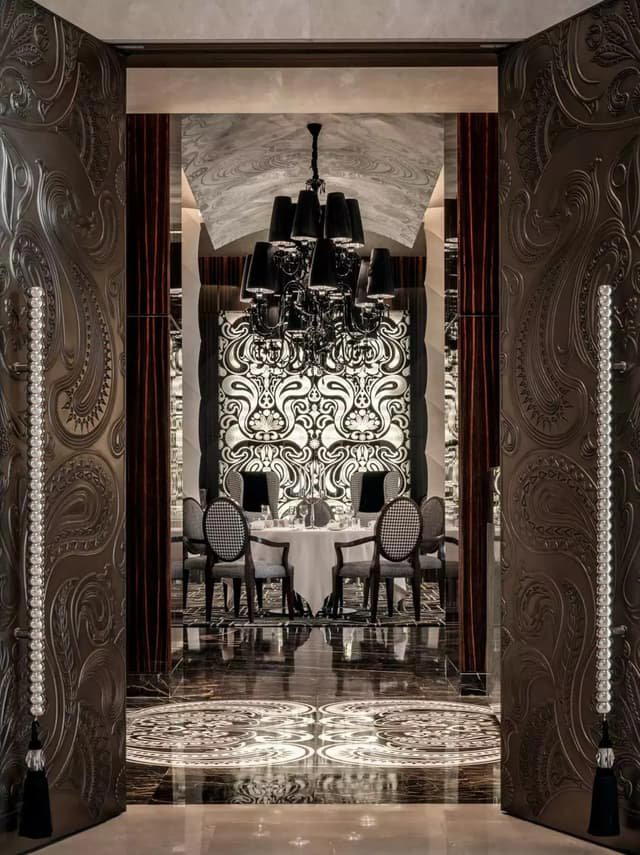
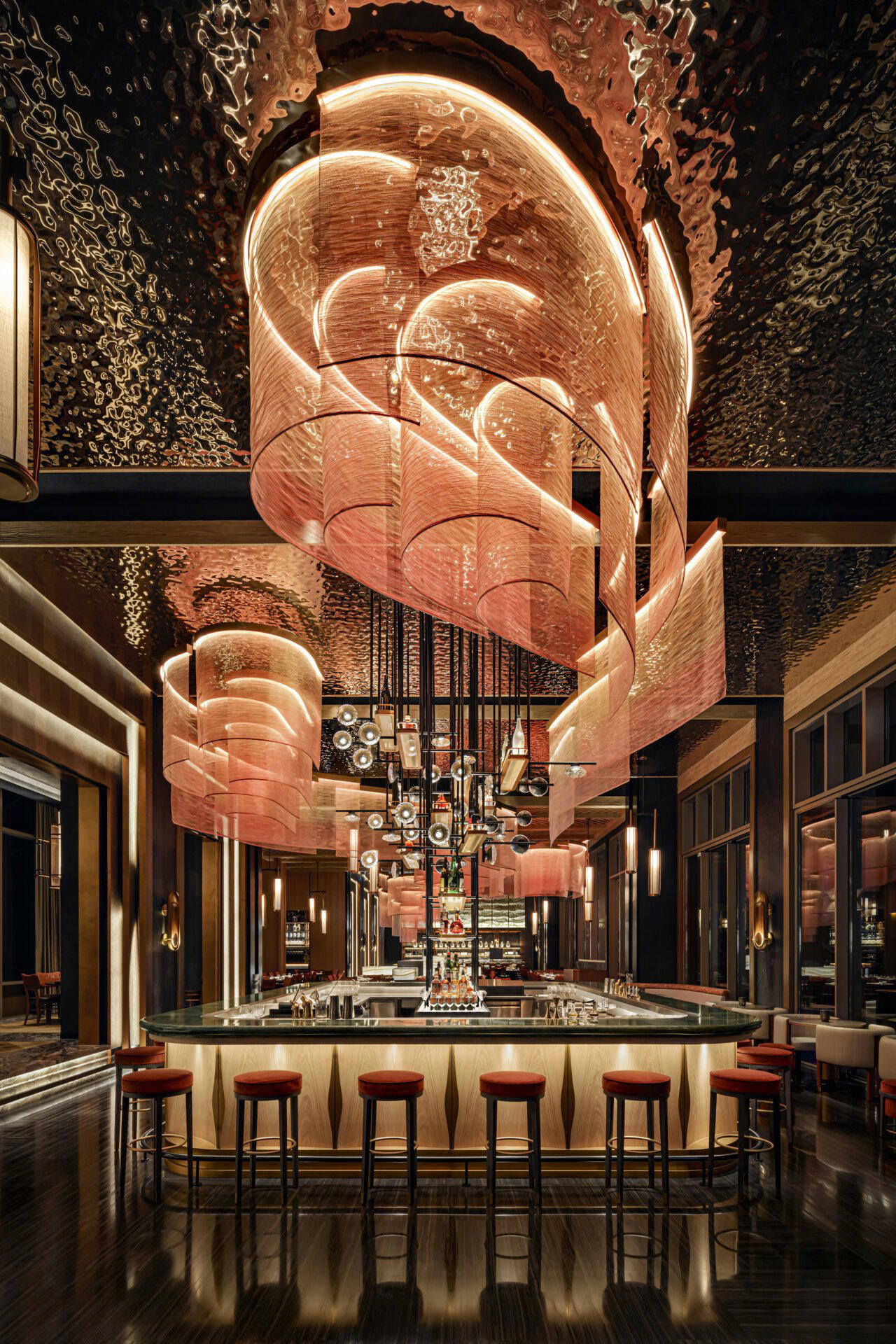
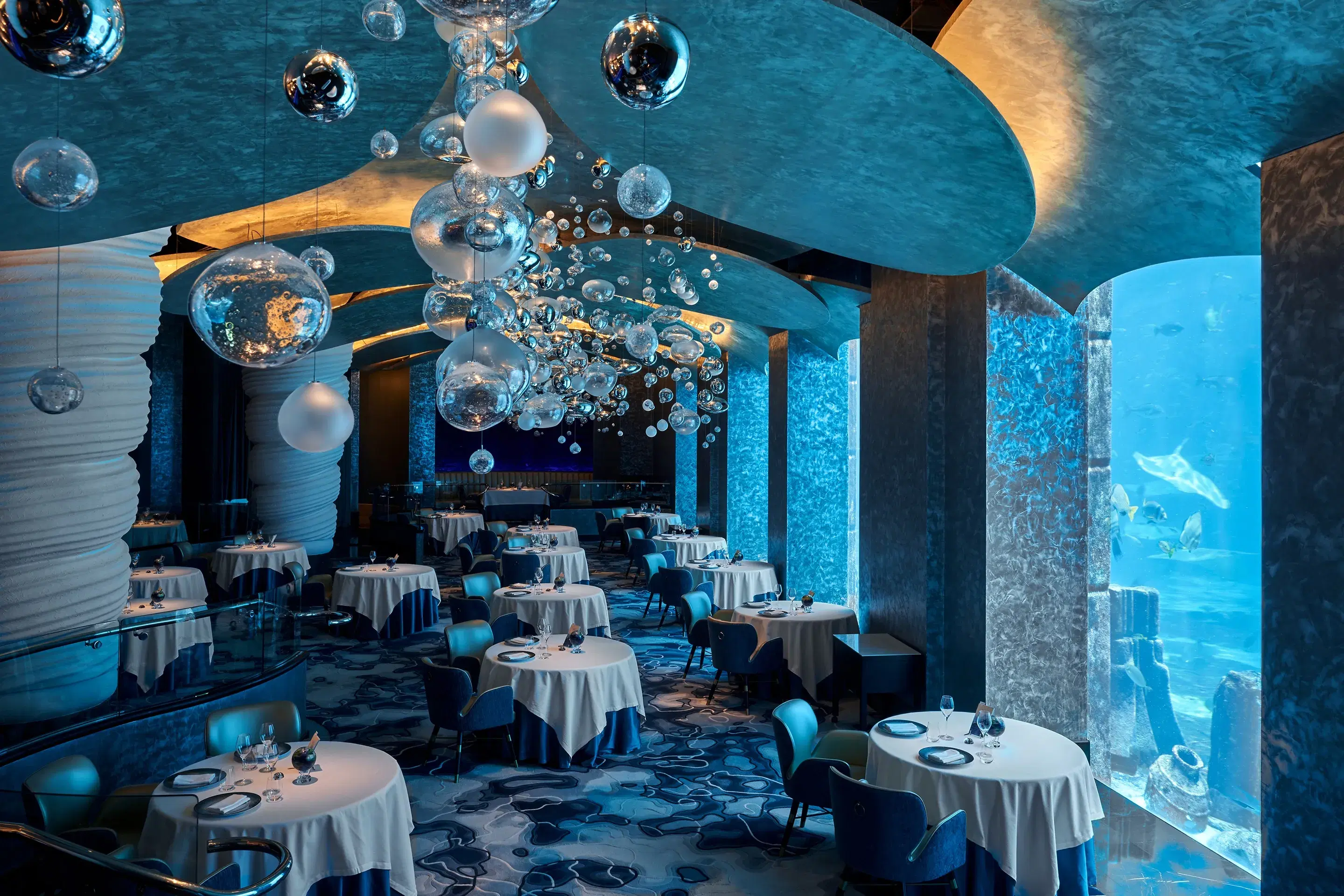
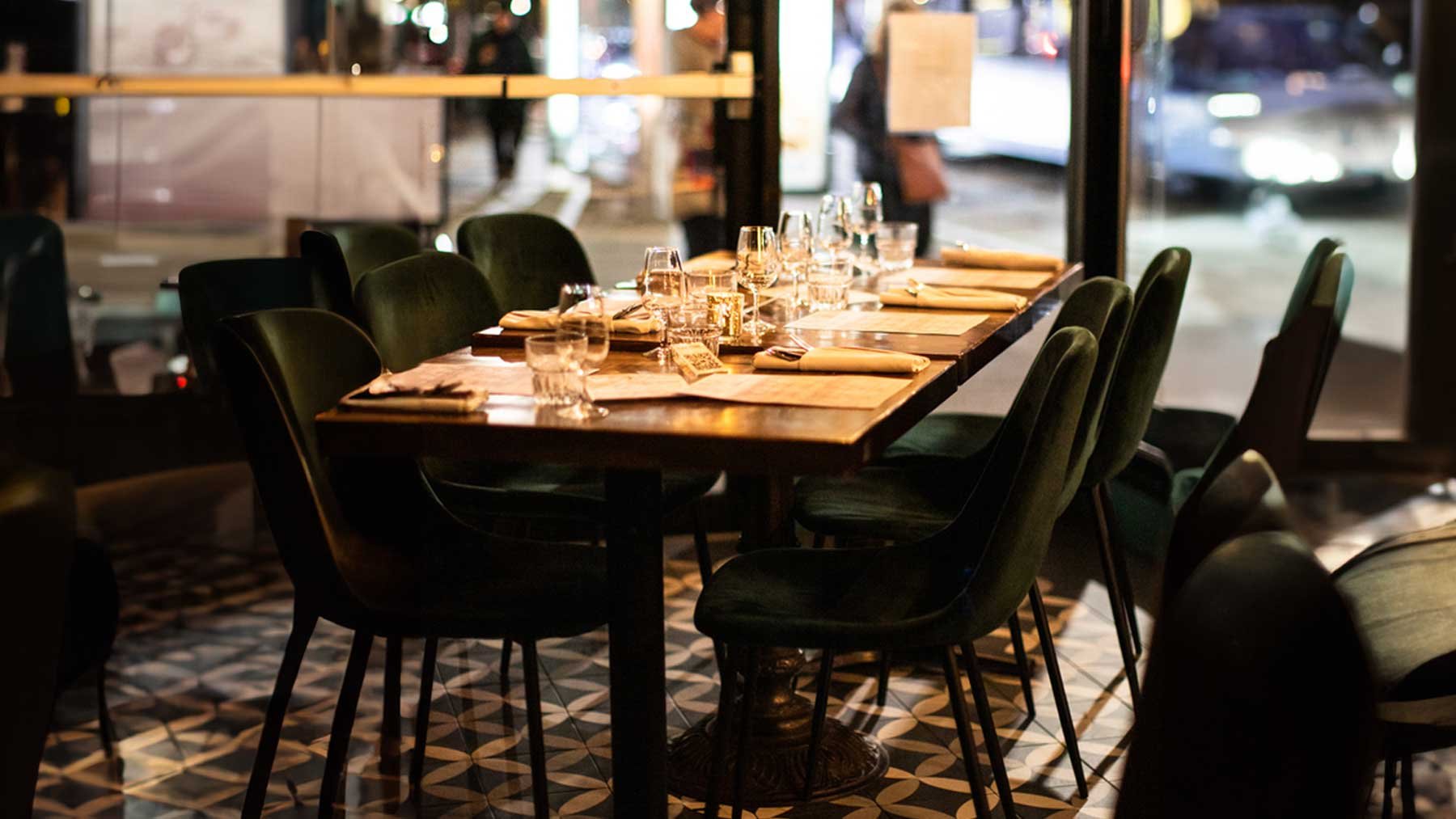
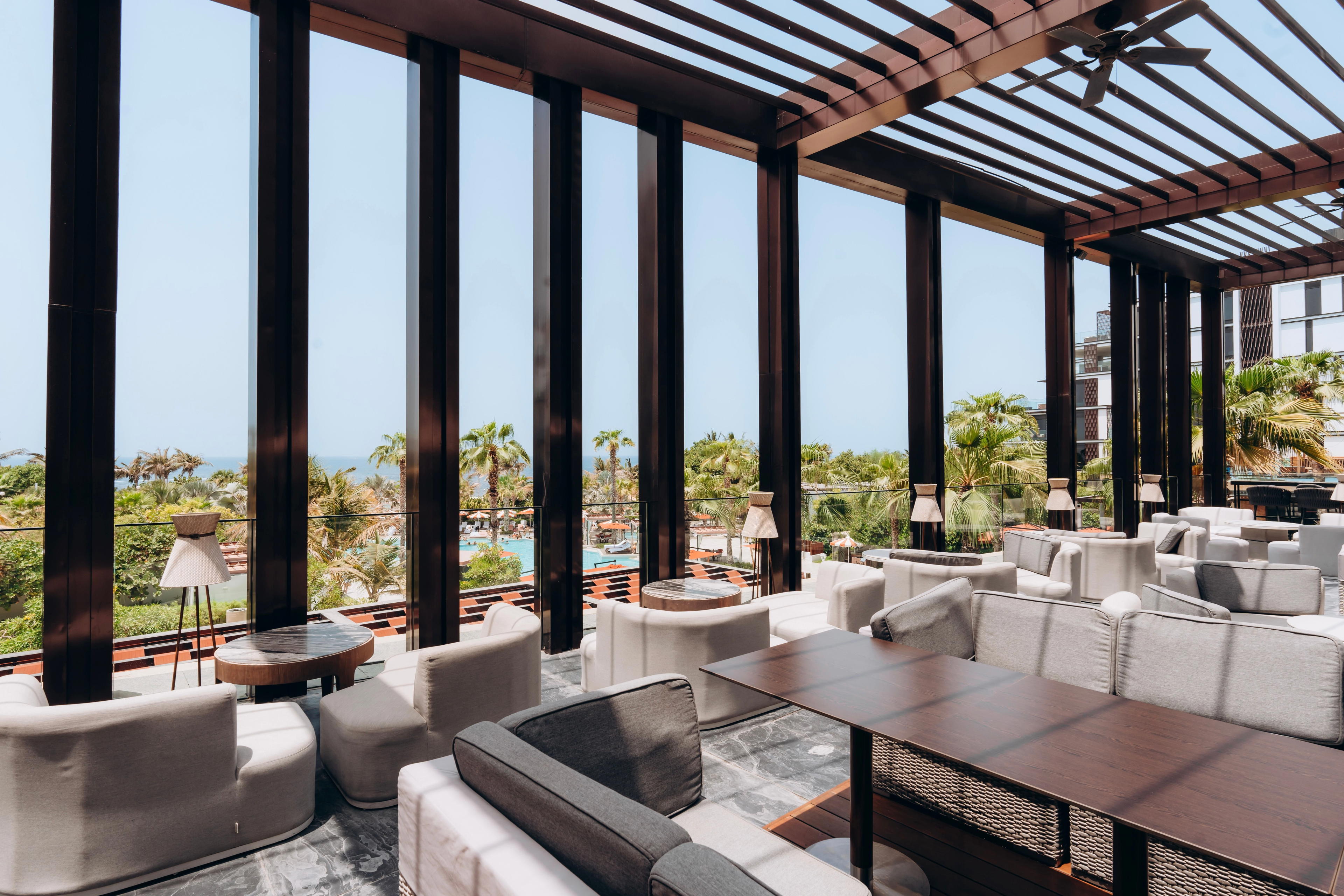
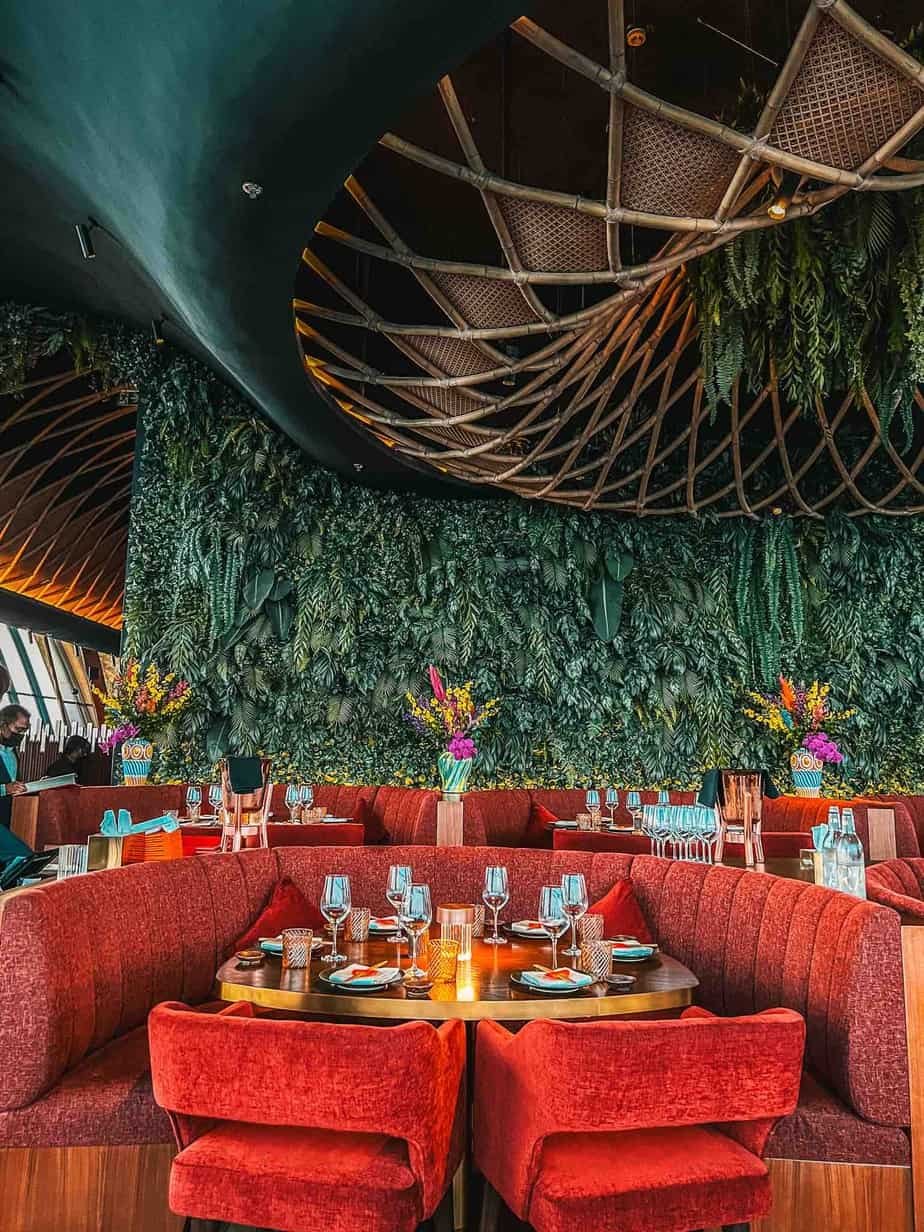
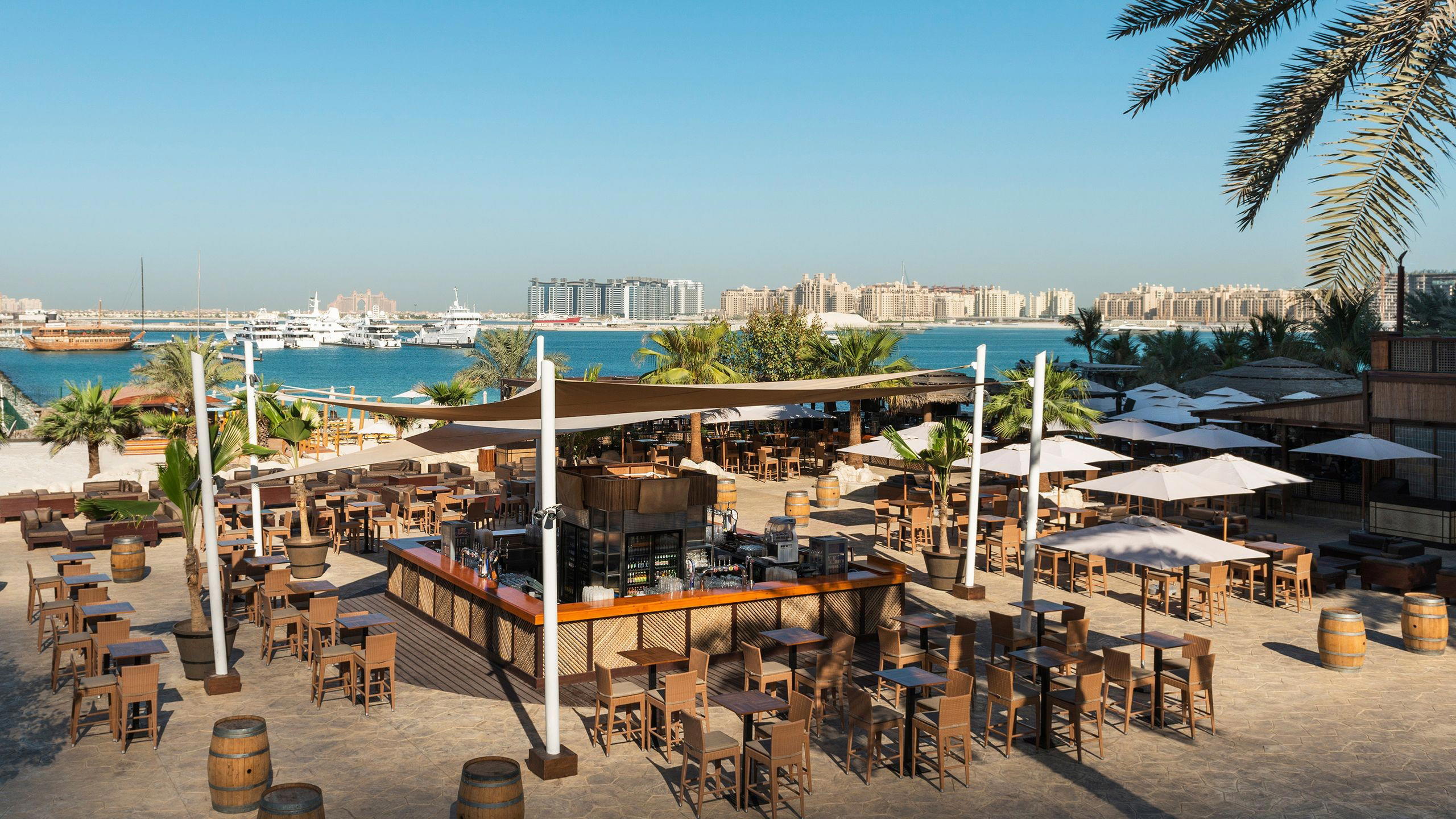
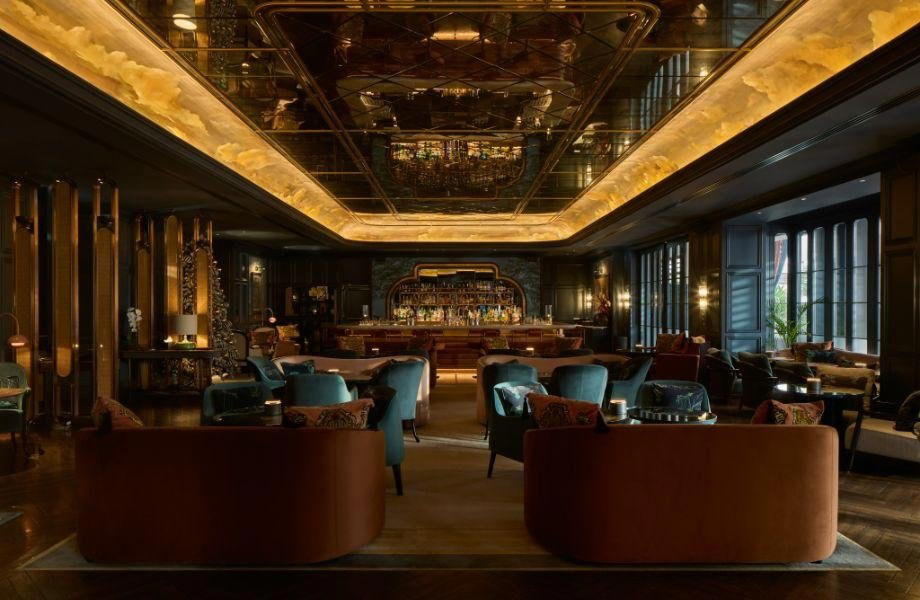
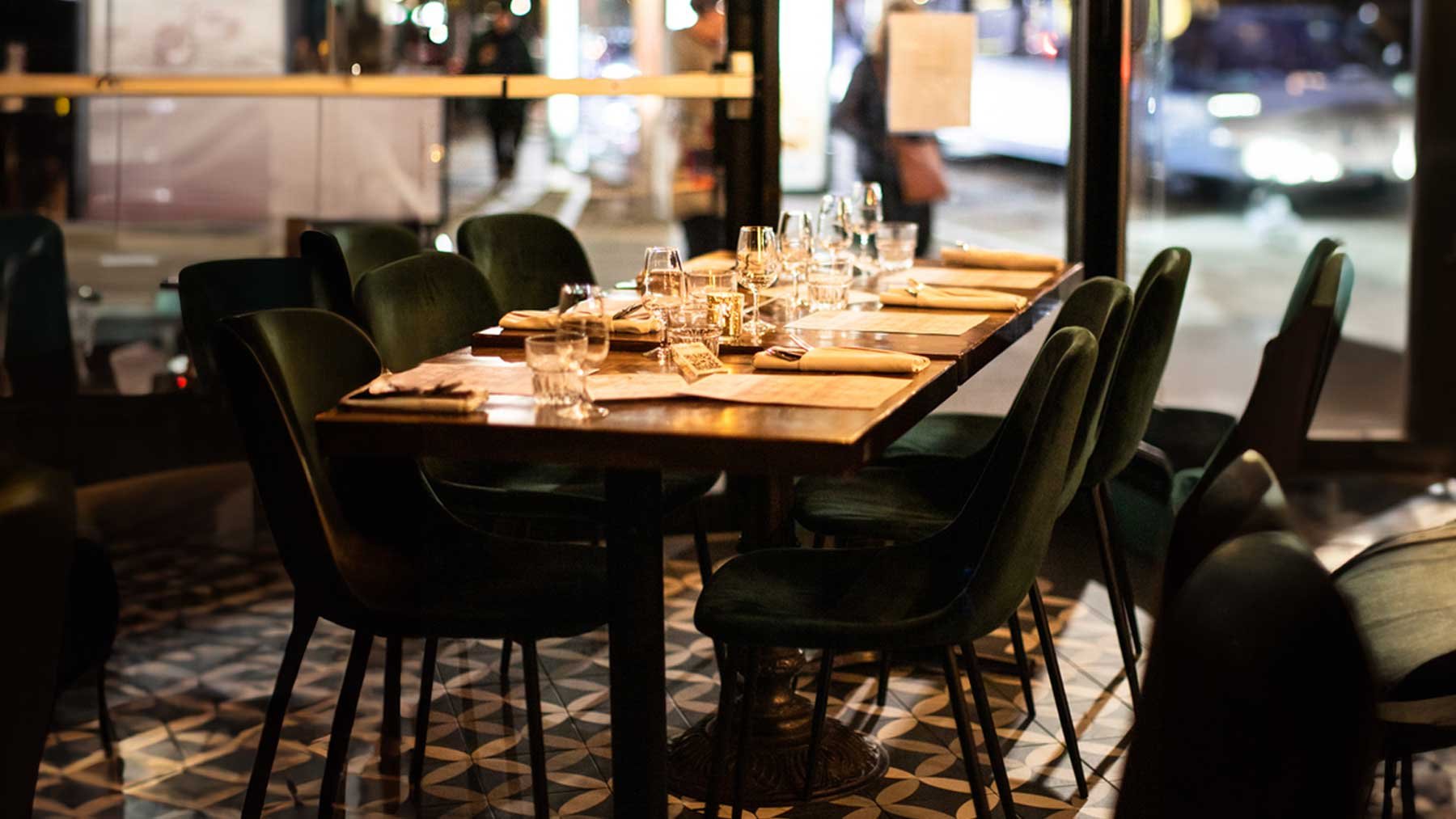
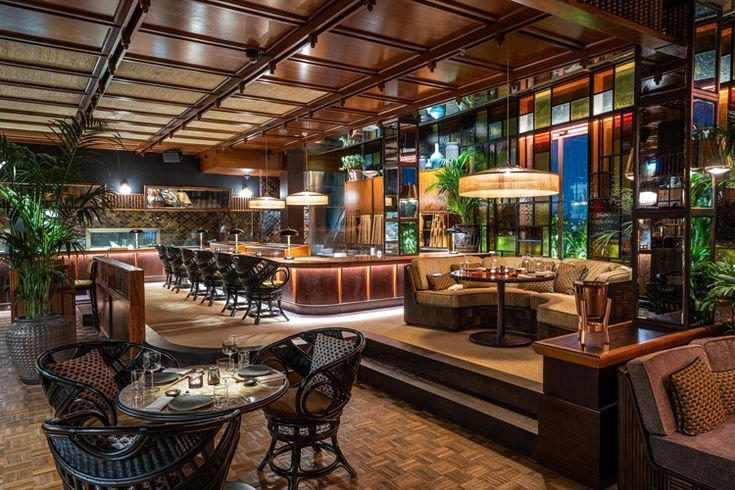
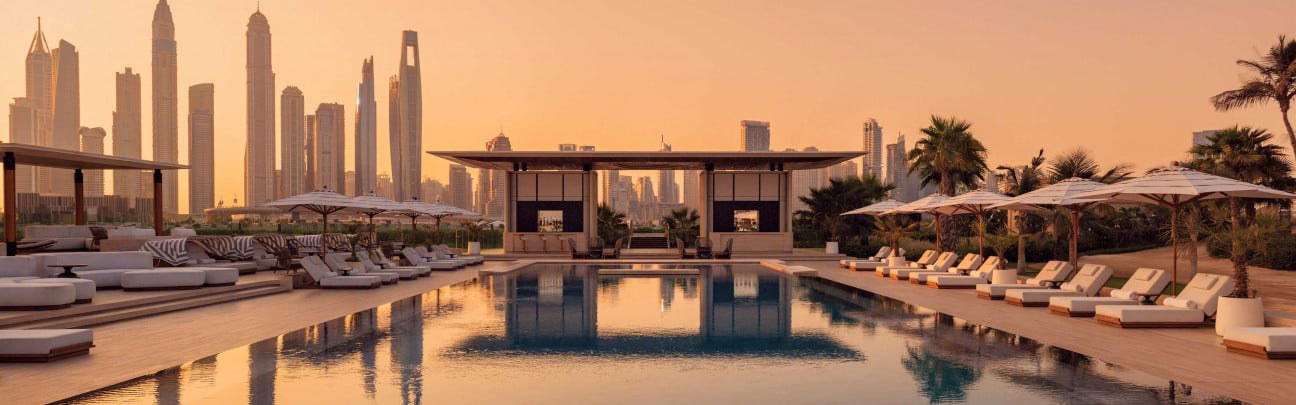
The room itself is part of the proposition. Raised alcoves section the dining floor into smaller sightlines, so the space reads more intimate than its actual scale might suggest. Colour is deliberate, the W Hotel's chromatic identity carries into the restaurant without overwhelming it, and the terrace adds a second mode entirely. At night, with the Dubai skyline spread across the water, the terrace functions less as overflow seating and more as the main event for anyone booking ahead. In a city where rooftop and waterfront positions are standard tools of restaurant marketing, the fifth-floor Palm Jumeirah view remains a genuinely strong card.
Japanese Foundations, Korean and International Inflections
The broader Japanese Contemporary category in Dubai covers significant ground. At one end sit the omakase-focused counters prioritising Japanese ingredient sourcing and minimal intervention; at the other are the social dining formats that use Japanese culinary language loosely, as aesthetic backdrop. Akira Back occupies a point between those poles. The kitchen works from Japanese technique but incorporates Korean flavours as a consistent thread rather than an occasional flourish, a combination that has become something of a signature logic across the Akira Back brand's global footprints.
That combination reflects a real culinary lineage: Korean-American training filtered through Japanese disciplines produces a kitchen vocabulary that reads as coherent rather than eclectic. For Dubai diners familiar with the narrower register of traditional Japanese dining, it offers a point of distinction. For those coming from Zuma's izakaya-inflected format or the more pan-Asian energy of comparable venues, the cooking here occupies a distinct and specific lane. Peer venues in the Japanese Contemporary bracket, including Mimi Kakushi and Clap, each hold a different position within that range, with Mimi Kakushi leaning further into Japanese-speakeasy atmosphere and Clap working a looser Japanese-social format.
The Team Dynamic: Front-of-House as Editorial Layer
In restaurants operating at the $$$$ tier in Dubai, the gap between strong cooking and a strong experience frequently comes down to floor execution. A kitchen can deliver technically accomplished dishes; whether a guest understands what they are eating, why the wine pairing works, or what to order on a second visit depends almost entirely on the quality of front-of-house communication. Akira Back's service model, as documented in Michelin's 2025 assessment, emphasises staff willingness to guide, a notable credential in a format where menus that blend Japanese and Korean references can confuse guests unfamiliar with one or both traditions.
The Star Wine List White Star awarded in 2024 adds a second layer to that team reading. A White Star from Star Wine List signals that the wine program clears a threshold of both selection quality and floor-level presentation, the list has to be accessible and well-supported by staff, not merely extensive. In Dubai, where Japanese Contemporary restaurants often treat wine as a secondary consideration behind spirits and sake, an independent wine recognition of this kind positions the restaurant inside a smaller subset of venues where the beverage program holds equal weight to the food. That integration between sommelier guidance, chef intent, and front-of-house recommendation is exactly the kind of team coherence that converts a single visit into repeat bookings.
For comparison against Dubai's broader upper-mid dining tier: 99 Sushi Bar and Armani Hashi each approach the Japanese Contemporary format from more formally Japanese positions, while 3Fils operates at a lower price point with a more casual social format. The restaurant's combination of Michelin Plate recognition and wine credentialing places it in a comparable set where the full-service experience is the core offering.
Akira Back in the Wider Japanese Contemporary Context
The Japanese Contemporary format is now genuinely global. Kitchens working from Japanese technique with local or international inflections can be found from São Paulo, where Murakami works a distinct Brazilian-Japanese register, to Istanbul, where Sankai by Nagaya brings a precision-focused Japanese approach, to Andermatt, where The Japanese Restaurant operates in a different guest-volume context. In Abu Dhabi, NIRI represents the category's continued expansion in the UAE. The thread connecting these venues is the flexibility of Japanese technique as a foundation: it absorbs local and international influence without losing structural coherence. The restaurant's Korean inflection is one version of that logic, among many operating simultaneously across the format globally.
Within Dubai specifically, the Palm Jumeirah address carries its own contextual weight. The West Crescent is primarily a hotel dining zone, where restaurants serve a combination of hotel guests and destination-dining traffic from the wider city. That guest mix differs from the more neighbourhood-regular pattern seen at spots like 3Fils in Jumeirah Fishing Harbour or 3Fils in the marina corridor. For the restaurant, the W Hotel setting means the front-of-house team is also working across a broader range of guest familiarity levels, another reason the staff recommendation model noted in the Michelin citation matters operationally, not just as a hospitality gesture.
Holding a 4.6 across that sample size, alongside Michelin Plate recognition and a White Star wine credential, indicates the full-service model is working across most guest types, not just enthusiast diners.
For regional context beyond Dubai, Erth in Abu Dhabi represents a different point on the UAE dining spectrum. The Japanese Contemporary category across Europe can be traced through Izakaya in Zagreb, 893 Ryotei in Berlin, and Eika in Taipei.
Know Before You Go
- Location: W Dubai – The Palm, West Crescent, Palm Jumeirah, Dubai, UAE
- Floor: Fifth floor, with terrace access
- Price range: $$$$
- Cuisine: Japanese Contemporary with Korean and international inflections
- Awards: Michelin Plate 2025; Star Wine List White Star (published March 2024); Star Wine List #1 ranking 2025 6 / 5 (645 reviews)
- Booking: Terrace tables should be booked in advance, particularly for evening seatings with skyline views
- Peak search months: January and March
What Do Regulars Order at Akira Back?
Regulars at the restaurant tend to anchor their ordering around the kitchen's core strength: dishes where Japanese precision and Korean flavour logic intersect most clearly. The front-of-house team's willingness to guide, noted specifically in the Michelin 2025 citation, means that first-time guests who ask for recommendations will typically be directed toward the menu's most representative plates rather than its safest ones. For wine pairings, the Star Wine List White Star credential suggests the sommelier program is designed to work alongside the food rather than operate independently, which makes asking for a pairing recommendation a genuinely useful move rather than a formality. The awards trail, from Michelin Plate to wine recognition, provides a useful external anchor for what the kitchen does at its most consistent.
The Short List
Comparable venues nearby, for context on price, style, and recognition.
| Venue | Cuisine | Price | Notes |
|---|---|---|---|
| Akira BackThis venue — the venue you are viewing | Palm Jumeirah, Japanese-Korean Fusion | $$$$ | Not listed |
| 99 Sushi Bar | Not listed | $$$$ | Downtown Dubai, Modern Japanese Sushi and Robata |
| Sexy Fish | Not listed | $$$$ | Za'abeel 2, Modern Asian Seafood |
| Ronin | Not listed | $$$$ | Al Sufouh 2, Modern Japanese with Teppanyaki & Robata Grill |
| Nobu Dubai | Palm Jumeirah, Japanese-Peruvian Fusion | $$$$ | Not listed |
| Netsu by Ross Shonhan | Not listed | $$$$ | Jumeira, Modern Japanese Warayaki Steakhouse |
Recognition history
Dated appearances from independent guides and award organizations, with the underlying list record or original source where available.
Gault & Millau UAE Selected Restaurant
Gault & Millau · Gault & Millau UAE 2026 - Selected Restaurant
Star Wine List
Star Wine List
Michelin Plate
Michelin
Michelin Plate
Michelin
At a Glance
- Trendy
- Elegant
- Sophisticated
- Modern
- Lively
- Date Night
- Special Occasion
- Group Dining
- Celebration
- Terrace
- Open Kitchen
- Hotel Restaurant
- Panoramic View
- Craft Cocktails
- Sake Program
- Skyline
- Waterfront
Current opening hours
- Monday
- 6–11:30 PM
- Tuesday
- 6–11:30 PM
- Wednesday
- 6–11:30 PM
- Thursday
- 6–11:30 PM
- Friday
- 6–11:30 PM
- Saturday
- 1–4:30 PM, 7–11:30 PM
- Sunday
- 1–3:30 PM, 7–11:30 PM
Hours can change for holidays and private events. Last verified .
Lively and stylish with sleek minimalist interiors, lively music, open kitchens, and natural daylight enhancing the sophisticated yet relaxed atmosphere.