Zuma
.png)

The restaurant that introduced izakaya-inspired Japanese dining to London, Zuma has operated from its Knightsbridge address for over two decades and shows little sign of slowing. The robata grill anchors the menu, the room draws a consistently glamorous crowd, and a Michelin Plate recognition in 2025 confirms it still earns its place at the serious end of London's Japanese dining scene.
 Discover on Pearl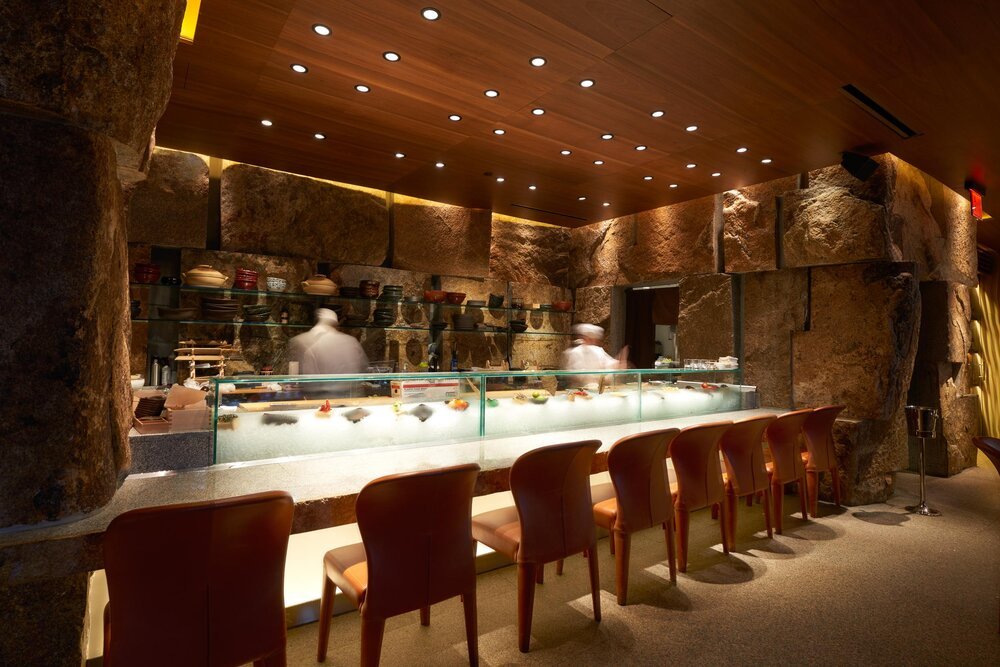
Where London's Japanese Dining Scene Began to Change
When informal izakaya-style Japanese dining arrived in London in the early 2000s, it arrived via Knightsbridge rather than Soho. Zuma, operating from 5 Raphael St since that opening, did not replicate the quiet counter etiquette of traditional Japanese restaurants — it built something louder, more social, and architecturally considered. That model has since spread across global capitals, but the London address precedes the expansion and remains the reference point against which later iterations are measured.
Two decades on, that originating status matters less than the question of whether the restaurant has kept pace with a city whose Japanese dining offer now runs from stripped-back omakase counters in Mayfair to ramen specialists in Soho. The answer, based on continued full rooms and a 4.5 Google rating across 2,678 reviews, appears to be yes. Holding a Michelin Plate in 2025 places Zuma in recognised territory — not at the starred level occupied by places like Kioku by Endo, but acknowledged within the guide's framework nonetheless.
The shortlist, unlocked.
Hard-to-book tables, cellar releases, and concierge-planned trips.
Get Exclusive Access →The Room and the Register
London's premium restaurant tier has split in recent years between the tasting-menu formality of addresses like CORE by Clare Smyth or The Ledbury and a looser, sharing-format category where the atmosphere does much of the editorial work. Zuma sits firmly in the second group. The room is striking , high ceilings, natural stone, an open kitchen visible from much of the dining area , and the crowd it attracts reflects the Knightsbridge postcode. This is not a quiet corner for a two-hour conversation over wine; it is a room built for energy, and it runs that way consistently through service.
At the £££ price point, it occupies a tier below the full ££££ formality of Restaurant Gordon Ramsay or Sketch, The Lecture Room and Library, which means the spending ceiling is lower but the evening tends to move faster and with less ceremony. For those who find tasting-menu pacing passive, that trade-off is a feature rather than a limitation.
Lunch vs. Dinner: Two Different Propositions
The lunch and dinner experiences at Zuma operate in noticeably different registers, and understanding that split is useful before booking. Lunch at a Knightsbridge address of this profile tends to attract a calmer, often more deliberate crowd: the room fills more slowly, tables turn less urgently, and the sharing format lends itself to an extended afternoon. It is a reasonable entry point if the primary objective is the food rather than the atmosphere , the robata grill is fully operational, and the menu breadth is the same across both services.
Dinner is a different proposition. By early evening, the room reaches the kind of sustained noise level that goes with the territory of a large, open-plan space in a wealthy London neighbourhood. The glamorous clientele referenced across years of coverage is more visible at dinner , this is where Zuma performs most completely as a social venue, not just a restaurant. The bar, which runs alongside the dining operation, contributes to that atmosphere and serves as a standalone destination for those who want cocktails without committing to a full table booking.
For value-conscious visitors, lunch and the early part of the dinner window typically offer the same menu with marginally less competition for prime tables. A Zuma Knightsbridge reservation at peak dinner hours, particularly on Fridays and Saturdays, benefits from booking well in advance , this is not a walk-in venue at the busiest parts of the week.
The Menu Logic
Zuma's menu is extensive by the standards of Japanese restaurants operating at this price level, which makes the sharing approach the most sensible way to work through it. Three broad cooking formats anchor the offer: the sushi and sashimi counter, the main kitchen handling hot dishes, and the robata grill. The robata section is consistently cited as the section to prioritise , the grill produces a range across proteins and vegetables, with chicken wings and tofu both appearing as reference points in the restaurant's own framing of its strengths.
The format rewards groups over couples, simply because the range is wide enough that two people covering the menu comprehensively will overspend to achieve what four people accomplish at lower individual cost. Solo diners and couples visiting for the first time should resist the temptation to order across all three formats and instead commit to the robata section alongside one or two cold selections.
For readers also following the Japanese Contemporary category internationally, The Japanese Restaurant in Andermatt and Eika in Taipei offer useful comparisons across different market contexts.
Knightsbridge in Context
Zuma sits in a Knightsbridge pocket that skews toward high-spend international dining, which is part of why the restaurant's consistent occupancy reflects genuine demand rather than neighbourhood novelty. The address at 5 Raphael St sits close to Hyde Park's southern edge, a short distance from the density of hotels that drives a significant proportion of the area's restaurant traffic. That demographic shapes the room in ways that distinguish Knightsbridge Japanese dining from the more local, neighbourhood-rooted Japanese offer in areas like Fitzrovia or St James's.
For visitors building a broader London itinerary, EP Club's guides cover the full range: London restaurants, London hotels, London bars, London experiences, and London wineries. For those extending beyond the capital, addresses like The Fat Duck in Bray, L'Enclume in Cartmel, Moor Hall in Aughton, Gidleigh Park in Chagford, Hand and Flowers in Marlow, and Le Manoir aux Quat' Saisons in Great Milton represent the wider UK dining tier worth planning around.
Know Before You Go
| Address | 5 Raphael St, London SW7 1DL |
|---|---|
| Cuisine | Japanese Contemporary (izakaya-inspired) |
| Price range | £££ |
| Recognition | Michelin Plate (2025); Google 4.5 / 5 (2,678 reviews) |
| Booking | Advance reservation strongly recommended, particularly for weekend dinner , a zuma restaurant london booking at peak hours requires planning ahead of several weeks |
| Format | Sharing plates; robata grill, sushi counter, hot kitchen |
| Leading for | Groups of three or more; dinner atmosphere; robata-focused ordering |
What Dish Is Zuma Famous For?
The robata grill is the section of the menu most consistently associated with Zuma's identity. Among the items the restaurant itself highlights, the robata-grilled chicken wings and tofu are both cited as priorities within an extensive menu. The robata format , cooking over binchōtan charcoal at high, direct heat , produces a distinct texture and smoke register that separates these dishes from the sushi and sashimi sections. Visitors making a first Zuma Knightsbridge reservation are generally advised to anchor their order around the grill, then supplement with cold selections, rather than attempting equal coverage of all three kitchen formats.
5 Raphael St, London SW7 1DL, United Kingdom
+44 20 7584 1010
At a Glance
A quick snapshot of similar venues for side-by-side context.
| Venue | Notes | Price |
|---|---|---|
| Zuma | This venue | £££ |
| The Ledbury | Modern European, Modern Cuisine, ££££ | ££££ |
| Sketch, The Lecture Room and Library | Modern French, ££££ | ££££ |
| CORE by Clare Smyth | Modern British, ££££ | ££££ |
| Restaurant Gordon Ramsay | Contemporary European, French, ££££ | ££££ |
| Dinner by Heston Blumenthal | Modern British, Traditional British, ££££ | ££££ |
Need a table?
Our members enjoy priority alerts and concierge-led booking support for the world's most difficult tables.
Get Exclusive AccessThe shortlist, unlocked.
Hard-to-book tables, cellar releases, and concierge-planned trips.
Get Exclusive Access →