
893 Ryotei on Kantstraße holds a 2025 Michelin Plate,000 reviews, placing it firmly in the serious tier of Berlin's Japanese contemporary scene. Set in Charlottenburg's dense restaurant corridor, the kitchen works in a register that sits closer to izakaya-style communal eating than formal kaiseki ceremony. The price range sits at €€€, making it one of the more accessible addresses in this culinary bracket.
Pearl is the En Primeur Club membership app — saves, bookings, and concierge access live there. Same editors, same standards.
- Address
- Kantstraße 135/136, 10625 Berlin, Germany
- Phone
- +49 176 56754107
- Website
- 893ryotei.de
- Directions
- Get directions
 Saves & bookings on Pearl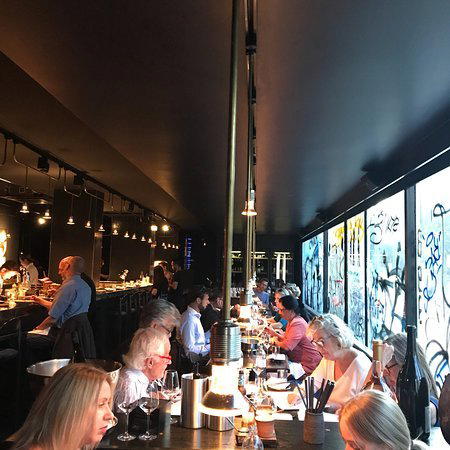
Kantstraße and the Case for Japanese Contemporary in Berlin
Charlottenburg's Kantstraße has long functioned as one of Berlin's most concentrated strips for Asian dining, shaped partly by the neighbourhood's pre-reunification history as a hub for East Asian communities and businesses. Within that corridor, the competition between Japanese addresses is real and tiered: everything from fast ramen counters to refined omakase formats operates within a few blocks.
That credibility matters in a city where Japanese dining has expanded rapidly without always deepening. Berlin now has a wide range of Japanese concepts, but the cohort that combines contemporary technique with the communal, convivial spirit of izakaya culture remains relatively small. 893 Ryotei operates in that space, where the goal is not ceremonial precision but shared plates, drinking, and the kind of meal that unfolds laterally across a table rather than vertically through a fixed sequence of courses.
Izakaya Logic in a European Setting
Izakaya culture is worth understanding on its own terms before arriving. In Japan, the format is specifically social: food arrives as it's ready, in portions designed for sharing, alongside beer, sake, shochu, or whisky highballs. The meal has no fixed endpoint and no obligation to move from course to course. The European equivalent, the long, shared table, the wine carafe, the late finish, maps on reasonably well, but the Japanese version tends to be lighter on the plate and more deliberate in its seasoning, relying on dashi, mirin, and fermented condiments where a European kitchen might reach for fat or salt.
Contemporary Japanese kitchens in European cities often adapt this format by adding Western wine pairing and incorporating local produce without abandoning the underlying logic of the izakaya: eat as you drink, drink as you eat, let the table dictate the pace. At €€€ pricing, 893 Ryotei positions itself below the formal tasting-menu tier occupied by addresses like Restaurant Tim Raue and Rutz, both of which operate at €€€€ and within structured formats. That pricing decision is itself a statement about what kind of experience is on offer: one built around repeat visits and shared plates rather than a single, occasion-driven progression.
The Berlin Fine-Dining Context
Berlin's serious dining scene is dominated by Modern European formats. The Michelin-recognised addresses that define the city's upper tier, Nobelhart & Schmutzig, FACIL, and CODA Dessert Dining, work within European frameworks even when they push at creative edges. Japanese Contemporary, as a category, represents a different strand: one that draws on a culinary tradition with its own distinct logic around seasonality, restraint, and fermentation, applied in a city that has absorbed those influences but on its own schedule.
The Michelin Plate distinction, awarded in 2025, signals kitchen quality without the star designation. It sits below the star addresses but above the general recommendation tier, a position that, in practical terms, means the kitchen is consistent enough to warrant the trip while remaining less institutionally freighted than a starred address. For context on how German fine dining more broadly distributes across cities and price tiers, the EP Club guides to Aqua in Wolfsburg, JAN in Munich, and Schwarzwaldstube in Baiersbronn illustrate the range from destination dining to regional excellence.
Internationally, Japanese Contemporary as a format has developed differently across cities. The Japanese Restaurant in Andermatt and Eika in Taipei offer comparisons across European Alpine and East Asian urban contexts respectively, showing how the same culinary tradition calibrates to different guest expectations and supply chains.
Planning a Visit
893 Ryotei is at Kantstraße 135/136 in Charlottenburg, well-served by the S-Bahn and U-Bahn at Savignyplatz and Charlottenburg stations respectively, making it direct to reach from most parts of the city without a taxi. The €€€ price bracket typically implies per-person spend, food and drink combined, in a range consistent with a relaxed, multi-dish shared meal rather than a quick single plate. Given the 2,059-review base and its 4.6 rating, the restaurant sustains consistent occupancy; booking ahead is advisable, particularly for weekend evenings. Specific hours, booking method, and current contact details are best confirmed directly with the venue, as these can shift seasonally. For a wider view of where this restaurant sits within Berlin's dining options, the EP Club Berlin restaurants guide maps the full range from casual to formal.
German dining at the upper end also distributes well beyond Berlin. Vendôme in Bergisch Gladbach, ES:SENZ in Grassau, and Restaurant Haerlin in Hamburg each represent different regional expressions of the country's fine-dining reach, useful reference points for any extended trip through Germany.
Cost and Credentials
Comparable venues nearby, for context on price, style, and recognition.
| Venue | Cuisine | Price | Awards | Notes |
|---|---|---|---|---|
| 893 RyoteiThis venue — the venue you are viewing | Charlottenburg, Japanese Fusion | $$$$ | Michelin Plate | Not listed |
| OTSUKA | Gesundbrunnen, Authentic Omakase Sushi | $$$ | Michelin Plate | Not listed |
| The Catch | Not listed | $$$ | Not listed | Charlottenburg, Contemporary Japanese Izakaya |
| MIYO Sushi Experience | Charlottenburg, Modern Japanese Sushi | $$$ | Not listed | Not listed |
| Julius | Wedding, Modern Japanese-Inspired | $$$ | Michelin Plate | Not listed |
| Kumami | Köpenick, Traditional Japanese Omakase | $$$$ | Not listed | Not listed |
Recognition history
Dated appearances from independent guides and award organizations, with the underlying list record or original source where available.
Michelin Plate
Michelin · 2026 Michelin Plate
Michelin Plate
Michelin
Continue exploring
More in Berlin
Restaurants in Berlin
Browse all →
Bars in Berlin
Browse all →
Hotels in Berlin
Browse all →


At a Glance
- Trendy
- Elegant
- Modern
- Date Night
- Special Occasion
- Group Dining
- Open Kitchen
- Sake Program
Current opening hours
- Monday
- Closed
- Tuesday
- 6–11 PM
- Wednesday
- 6–11 PM
- Thursday
- 6–11 PM
- Friday
- 6–11 PM
- Saturday
- 6–11 PM
- Sunday
- Closed
Hours can change for holidays and private events. Last verified .
Dark, trendy all-black interior with spot lighting, lively atmosphere centered around the open kitchen, closely spaced small tables creating an intimate yet energetic vibe.