3Fils



Michelin Bib Gourmand · World's 50 Best #17
Our verdict
Few restaurants in Dubai have rewritten expectations as decisively as 3Fils, the unlicensed, cash-casual Japanese contemporary spot at Jumeirah Fishing Harbour. Ranked 14th at the World's 50 Best MENA 2024 and twice awarded the Michelin Bib Gourmand, it proved that serious cooking and stripped-back surroundings are not in contradiction, and that the MENA region's most sought-after table doesn't need a dress code or a cocktail list to earn its place.

Pearl is the En Primeur Club membership app, where members save venues, book tables and use the concierge.
The menu
What to order
- Chilean seabass with beurre blanc
- Togarashi-glazed chicken wings
- Salmon carpaccio
- Spicy tuna sushi
- Lamb ribs with spiced barbecue marinade
A Harbour Setting That Reframes Dubai Dining
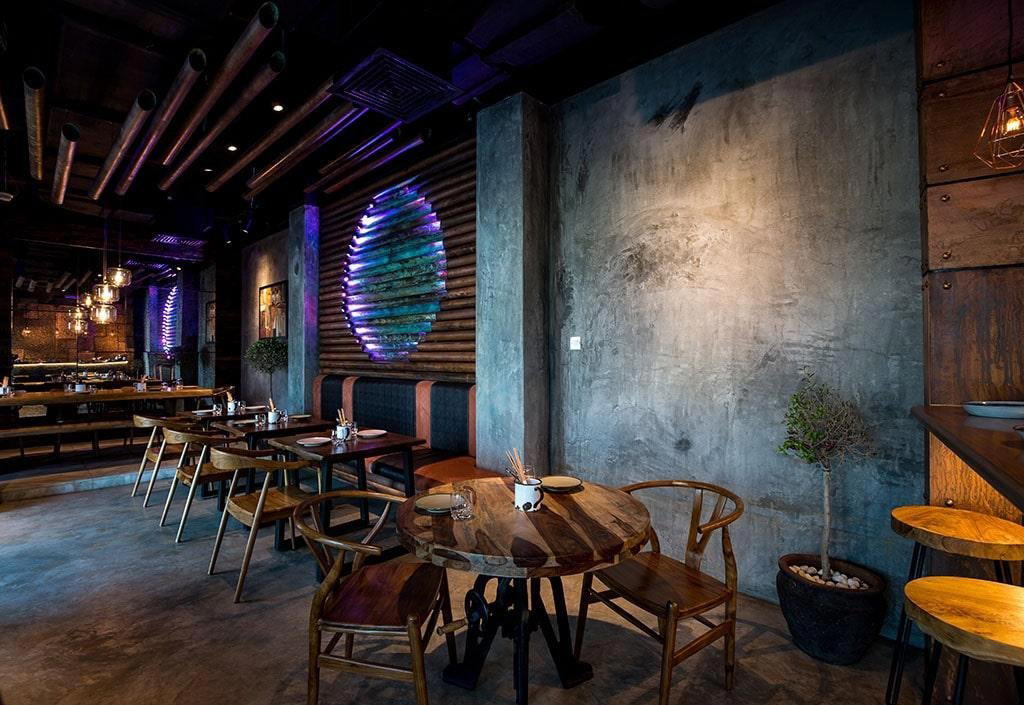
The approach to 3Fils along Al Urouba Street, past the low-slung boat sheds of Jumeirah Fishing Harbour, sets up a deliberate contrast with the glass-and-chandelier register of Dubai's usual fine-dining corridors. The waterfront here is working, salt-aired, and unpretentious, and the restaurant leans into that character rather than compensating for it. No valet theatre, no mirrored facade. The dining room is compact, the furniture utilitarian, and the crowd a mix of residents who discovered it early and visitors who've tracked it through the award circuits. That combination of context and cooking is precisely what placed 3Fils at the centre of a broader conversation about what premium dining in this region actually requires.
Dubai's Japanese contemporary category has expanded sharply over the past decade. Properties like Mimi Kakushi, Akira Back, and Armani Hashi occupy the hotel-anchored, high-production end of that spectrum, while 99 Sushi Bar and Clap represent the buzzy, licence-heavy middle. 3Fils operates on different logic entirely: no alcohol, low price point, and a format built around ingredient quality rather than theatrical service. Its recognition confirms that the market has room for a counter-model, and that enough diners in Dubai are willing to queue or pre-plan to access it.
The Ingredient Argument at the Heart of the Menu
Japanese contemporary cooking, when it travels beyond Japan, faces a structural problem: the ingredient chain shortens and the discipline required to maintain quality at distance increases. The cuisine's internal hierarchy, where raw material always precedes technique, is difficult to honour when dashi-grade kombu, live shellfish, and premium fish must be sourced across supply chains not designed around them. What distinguishes serious practitioners of the form, whether in Dubai, Istanbul at Sankai by Nagaya, or Taipei at Eika, is the degree to which they solve that problem rather than paper over it with sauce and presentation.
At 3Fils, the approach under Chef Shun Shiroma is ingredient-forward in a way that the price point makes more, not less, meaningful. The Bib Gourmand designation from Michelin specifically signals value relative to quality, the guide awards it where inspectors find cooking of genuine standard at a price accessible enough to represent a different kind of hospitality proposition. In Dubai's Japanese sector, where a comparable meal at a hotel venue could cost three to four times as much, the pricing gap becomes part of the editorial argument: restraint in room and décor frees up margin for what ends up on the plate.
The cooking draws on Asian fusion references without losing the structural logic of Japanese technique. Acidity, temperature contrast, and textural precision are applied with discipline that positions it well above the Bib's usual neighbourhood-bistro associations. The harbour location also provides proximity to local seafood supply chains, a practical advantage in a city where ingredient freshness is often the variable that separates the serious from the serviceable.
What the Awards Actually Say
In 2022, 3Fils became the inaugural recipient of the Leading Restaurant in the Middle East and North Africa title, a signal that the region's most authoritative food recognition was willing to crown a venue with no alcohol licence, a street-level address, and a price range that starts where others' starters end. That decision mattered because it validated a model: that the MENA dining scene had moved past the assumption that award-level cooking must come wrapped in luxury hospitality infrastructure.
The Michelin Bib Gourmand followed in 2024 and was retained in 2025, providing the international cross-reference that places the restaurant in a globally legible context. A ranking of 14th at the World's 50 Best MENA 2024 further confirms that this is not a local anomaly but a venue that benchmarks against the strongest regional competition. Across these three separate recognition systems, regional specialist, Michelin, and 50 Best, 3Fils produces consistent results, which is the kind of pattern that removes doubt about whether any single award reflects a good year versus a sustained standard.
For comparative purposes: the other Dubai venues in the Japanese contemporary category with comparable recognition sit at significantly higher price tiers. That price-to-recognition ratio is not accidental. It reflects deliberate operational choices about format, licensing, and what the kitchen budget is allowed to prioritise.
The MENA Japanese Contemporary Scene in Context
The Japanese contemporary format has found particular traction across the Middle East and North Africa over the past decade, partly because the cuisine's emphasis on precision and restraint aligns with regional appetites for technical cooking, and partly because the Asian fusion subset allows for enough local inflection to feel place-responsive. In Abu Dhabi, NIRI represents the more formal end of that continuum, while the broader region's interest in the format is evidenced by its appearance in the 50 Best MENA rankings year-on-year.
What the 3Fils model adds to that picture is proof that the format does not require the full luxury apparatus to achieve recognition. Elsewhere in the world, analogous moves have been made: in São Paulo, Murakami occupies a similar casual-but-serious register; in Zagreb, Izakaya demonstrates how the format travels into entirely different culinary markets. The thread connecting them is not geography but methodology: ingredient primacy, controlled format, and cooking discipline that doesn't depend on room spend to justify itself.
That the inaugural MENA Leading Restaurant title went to this kind of operation rather than to a hotel rooftop or a licensed waterfront venue with an international celebrity affiliation signals something specific about where the region's food culture had arrived by 2022, and where it has continued to develop since.
Planning a Visit: What to Know
3Fils sits at Shop 02, 1 Al Urouba Street, within the Jumeirah Fishing Harbour complex, a low-key location that is worth knowing in advance rather than discovering by luck. The harbour sits in Jumeira First, accessible by car or taxi from the main Dubai arterials, and the address is distinctive enough that mapping it directly is advisable. The restaurant is unlicensed, so the drinks list runs to non-alcoholic options; visitors accustomed to wine pairings with Japanese contemporary cooking should factor that in before booking.
Reservations are advisable, particularly for evenings and weekends, given both the room's compact scale and the level of sustained recognition the venue carries. The price range sits at the lower end of Dubai's dining spectrum, the $ classification here means a full meal costs substantially less than at most venues in the same recognition tier, which increases demand from a broad visitor and resident base.
For those building a wider Dubai itinerary around food and hospitality, our full Dubai restaurants guide covers the complete field. The Dubai hotels guide, bars guide, and experiences guide provide the broader context for planning. If the trip extends to Abu Dhabi, Erth represents the UAE capital's equivalent argument for place-rooted, award-recognised cooking at a remove from the hotel-luxury circuit. For those tracking the Japanese contemporary format across other markets, the The Japanese Restaurant in Andermatt and 893 Ryotei in Berlin offer instructive points of comparison. The Dubai wineries guide rounds out the regional picture for those interested in the full beverage landscape.
What Regulars Order at 3Fils
The most consistent pattern among 3Fils regulars reflects the kitchen's ingredient-forward philosophy: dishes built on quality seafood and clean Japanese technique tend to anchor repeat orders, with the Asian fusion elements providing textural and flavour contrast rather than complexity for its own sake. The combination of precise knife work, acidity-driven balance, and fresh harbour-adjacent sourcing is what draws people back, and what anchors the venue's reputation across both the Michelin and 50 Best circuits. Chef Shun Shiroma's kitchen leans on technique that respects the ingredient rather than transforming it beyond recognition, which means the leading dishes at any given service are typically those where the sourcing was sharpest that week. Regulars learn to follow that logic rather than ordering from habit.
| Venue | Cuisine | Price | Awards | Notes |
|---|---|---|---|---|
| 3FilsThis venue (the venue you are viewing) | Modern Japanese Tapas | $30–50 | Michelin Bib Gourmand · World's 50 Best #17 | Not listed |
| 11 Woodfire | Modern Woodfire Grill | $150–200 | 1 Michelin Star · World's 50 Best #14 | Modern Cuisine |
| Avatara Restaurant | Modern Vegetarian Indian Fine Dining | Not listed | 1 Michelin Star · Gault & Millau UAE Selected Restaurant | Indian |
| Al Mahara | Modern Italian Seafood | $300–500 | Michelin Plate · World's 50 Best #31 | Seafood |
| Zuma | Modern Japanese Izakaya | $150–200 | Michelin Plate · World's 50 Best #34 | Japanese - Asian, Japanese, Japanese Contemporary |
| City Social | Modern European with Japanese influences | $150–200 | Michelin Plate · Star Wine List | Modern British, Modern Cuisine |
Recognition history
Dated appearances from independent guides and award organizations, with the underlying list record or original source where available.
Michelin Bib Gourmand
Michelin
World's 50 Best MENA's Best Restaurants #17
World's 50 Best
Opinionated About Dining Top Restaurants in Asia Ranked #387
Opinionated About Dining
Full recognition history (5 entries)
World's 50 Best MENA's Best Restaurants #14
World's 50 Best
Michelin Bib Gourmand
Michelin
Continue exploring
More in Dubai
Restaurants in Dubai
All restaurants in Dubai →
Bars in Dubai
All bars in Dubai →
Details
- Scenic
- Modern
- Casual
- Lively
- Casual Hangout
- Group Dining
- Date Night
- Open Kitchen
- Waterfront
- Standalone
- Waterfront
- Small Plates
- A La Carte
- Non Alcoholic
- Mocktails
- Pescatarian Friendly
Current opening hours
- Monday
- 12–11:30 PM
- Tuesday
- 12–11:30 PM
- Wednesday
- 12–11:30 PM
- Thursday
- 12–11:30 PM
- Friday
- 12–11:30 PM
- Saturday
- 12–11:30 PM
- Sunday
- 12–11:30 PM
Hours can change for holidays and private events. Hours as of .
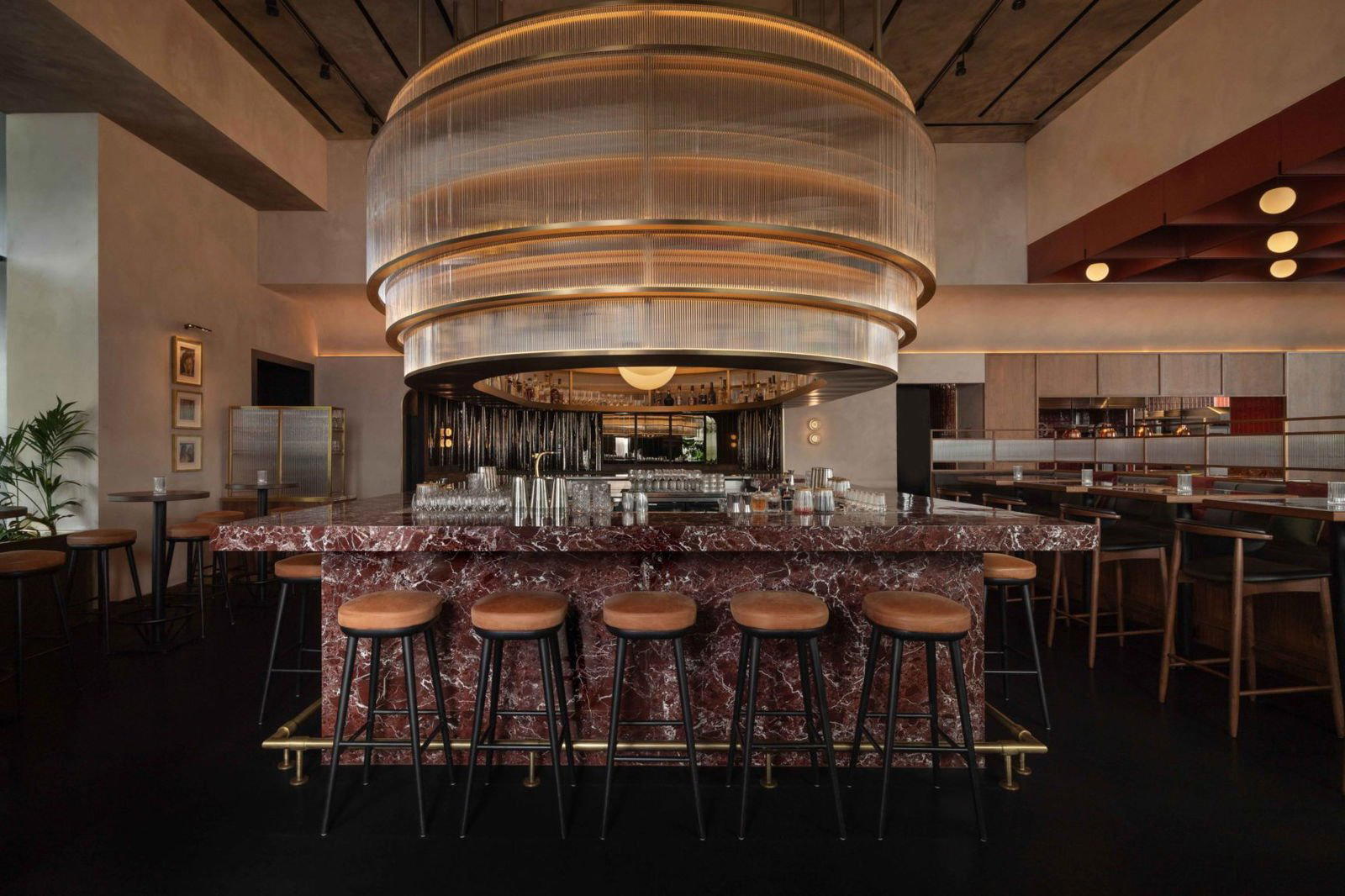
Bright, casual, and unpretentious with an open kitchen; natural lighting from waterfront location overlooking Jumeirah Fishing Harbour; pared-back interior with a relaxed, contemporary vibe.