
Inside New Chitose Airport’s ramen zone, Ajisai Shin chitose kuukou ten gives transit dining a Hokkaido-specific anchor rather than a generic terminal meal. The draw is Hakodate ramen, tied here to clear broth traditions, southern Hokkaido kombu, and a 2025 Tabelog 100 Ramen Hokkaido selection.
Pearl is the En Primeur Club membership app — saves, bookings, and concierge access live there. Same editors, same standards.
- Address
- 987-22 Bibi, Chitose, Hokkaido 066-0012, Japan
- Phone
- +81 123-45-8550
- Website
- ajisai.tv
- Directions
- Get directions
 Saves & bookings on Pearl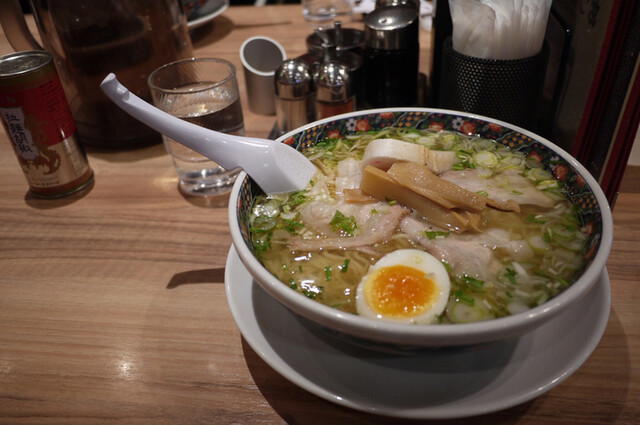
New Chitose Airport can feel less like a transit hub than a compressed map of Hokkaido appetites: dairy sweets, seafood counters, curry shops, and ramen rooms competing for passengers still zipped into runway coats. Here, ramen carries particular weight. It is not just feeding layovers; it is staging regional identity in bowls that must work quickly, clearly, and at airport volume.
Ajisai Shin chitose kuukou ten belongs to that Hokkaido airport genre, satisfying locals moving through Chitose with a short window and visitors trying to understand Hokkaido ramen before leaving the island. Its 2025 selection for Tabelog 100 Ramen Hokkaido gives the shop a useful credential in a crowded field, but the style matters more. Hakodate ramen is the quieter counterweight to the richer miso identity associated with Sapporo, a contrast that counts in an airport lined with Hokkaido comfort food.
Hakodate ramen brings a lighter Hokkaido register to the airport
Hokkaido ramen is often flattened into one image: miso, butter, corn, winter hunger. Hakodate’s tradition is different, commonly linked to a clearer salt-led broth that leaves room for marine seasoning and restraint rather than heavy miso depth. At Ajisai Shin chitose kuukou ten, the house identity points to Hakodate ramen, with kombu from southern Hokkaido in the broth base alongside pork bones and chicken carcasses. That detail is more than trivia; kombu helps explain how Hokkaido ramen culture can be broad without losing regional logic.
The airport setting sharpens the distinction. Nearby counters such as Hokkaido Meibutsu Ramen Ebisoba Ichigen Shin chitose kuukou ten pull toward shellfish intensity, while Sapporo Miso Ramen Senmon Ten Keyaki Shin chitose kuukou ten and Ramen Sora Shin chitose kuukou ten point diners into the Sapporo miso lane. Ajisai Shin chitose kuukou ten answers with Hakodate clarity, useful when a traveler wants Hokkaido ramen without committing to the heavier end before a flight.
Price shapes the read. With an average price below JPY 999, this sits in the quick-service ramen bracket rather than the destination-counter tier. That makes the award signal more relevant, not less: the question is whether a high-turnover airport shop can keep a regional style legible under pressure. The 40-seat format, counter seating, non-smoking setup, and wheelchair access all point to a practical airport room rather than a hushed ramen specialist. The editorial question is whether the bowl can carry place in a setting built for speed.
The sourcing story is regional, not decorative
Ingredient language is easily abused in ramen writing, especially when every broth is called careful and every bowl a revelation. Here, the specific claim worth keeping is southern Hokkaido kombu. Kombu gives Japanese stock structure, and Hokkaido’s coastal waters are central to that supply chain. In Hakodate-style ramen, that matters because the broth depends on clarity and seasoning balance, not the masking power of heavy fat or miso.
The broader Chitose airport dining scene makes that sourcing coherent. Biei Senka Shin chitose kuukou ten leans into agricultural Hokkaido, while Hokkaido Gyunyu Castella turns the island’s dairy reputation into a portable sweet. Ramen makes the savory version of the same argument: Hokkaido is not one flavor but a set of ingredients, climates, and city traditions condensed for travelers. Ajisai’s Hakodate framing gives that argument a coastal inflection.
That is why airport ramen in Chitose should not be dismissed as convenience. The terminal concentrates regional brands in a way that can be more instructive than a hurried city detour. A traveler comparing this shop with Ebisoba Ichigen, Keyaki, or Ramen Sora is effectively comparing Hokkaido ramen dialects without leaving the airport. For a broader view of the city’s dining range, Our full Chitose restaurants guide places the airport names beside independent addresses such as IOrI and Kita no Hana Hayashi.
How to read the experience before or after a flight
The room belongs to the airport, so calibrate expectations. This is not a long-form tasting-menu context, and it is not trying to be. Reservations are unavailable, children are welcome, and a kids menu is listed, placing the shop firmly in functional travel dining. Credit cards, transport IC cards, electronic money, and QR payments are accepted, another sign of an operation built for mixed passenger traffic rather than a narrow specialist audience.
The better use of the restaurant is as a regional benchmark inside a tight schedule. It suits travelers who want a Hakodate-leaning bowl before leaving Hokkaido, especially those who have already had miso ramen elsewhere in Sapporo or are comparing airport styles. The parking note, one hour free, reinforces the local-use angle: this is not only for passengers moving through security-adjacent routines, but also for people treating the terminal as a food destination.
Chitose is often read through the airport, yet the surrounding travel pattern is wider than arrivals and departures. For planning beyond a meal, Our full Chitose hotels guide, Our full Chitose bars guide, Our full Chitose wineries guide, and Our full Chitose experiences guide frame the city as a base rather than a boarding pass. For readers mapping Japanese dining more broadly, compare how regional specificity changes across -Grilled beef Sukiyaki- KAMAKURA TANUKIAN 鎌倉 たぬき庵 in Kamakura. 鮪と炭火焼き うお炭 秋葉原店 in Tokyo.cafe in Osaka.know in Kumamoto, (Shoku) Vietnam in Kawasaki, and [Curry Senmon Ten] Maruyama Kyoju. in Sapporo. Across the Pacific, Jōdo Saké Bar in Los Angeles and Onigiri Time in Pasadena show how Japanese formats translate when the regional source is memory rather than immediate geography.
The verdict is pragmatic but not faint. In Chitose, this is a credible airport ramen stop for travelers who care about Hakodate clarity versus Sapporo miso weight. The Tabelog 100 Ramen Hokkaido 2025 selection gives it recognition; the southern Hokkaido kombu connection gives it a reason to matter in place.
At-a-Glance Comparison
Comparable venues by cuisine and price in the same metro.
| Venue | Cuisine | Price | Notes |
|---|---|---|---|
| Ajisai Shin chitose kuukou ten | Hakodate Shio Ramen | $ | New Chitose Airport |
| Hokkaido Gyunyu Castella | Hokkaido milk castella café | $ | New Chitose Airport |
| IOrI | Ramen | $$ | Sumiyoshi |
| Sapporo Miso Ramen Senmon Ten Keyaki Shin chitose kuukou ten | Sapporo miso ramen shop | $$ | New Chitose Airport Domestic Terminal 3F (Hokkaido Ramen Dojo) |
| Hokkaido Meibutsu Ramen Ebisoba Ichigen Shin chitose kuukou ten | Hokkaido shrimp-based ramen | $ | New Chitose Airport |
| Mizushiro | Traditional Japanese Kaiseki | $$$ | Shikotsu Onsen Bangaichi |
Recognition history
Dated appearances from independent guides and award organizations, with the underlying list record or original source where available.
Tabelog 100 #75 · No. 75
Tabelog · Tabelog 100 - Ramen - HOKKAIDO - 2025
Continue exploring
More in Chitose
Restaurants in Chitose
Browse all →
At a Glance
- Classic
- Cozy
- Well Known
- Solo
- Family
- Casual Hangout
- Group Dining
- Standalone
- Beer Program
Current opening hours
- Monday
- 9:45 AM–8:30 PM
- Tuesday
- 9:45 AM–8:30 PM
- Wednesday
- 9:45 AM–8:30 PM
- Thursday
- 9:45 AM–8:30 PM
- Friday
- 9:45 AM–8:30 PM
- Saturday
- 9:45 AM–8:30 PM
- Sunday
- 9:45 AM–8:30 PM
Hours can change for holidays and private events. Last verified .
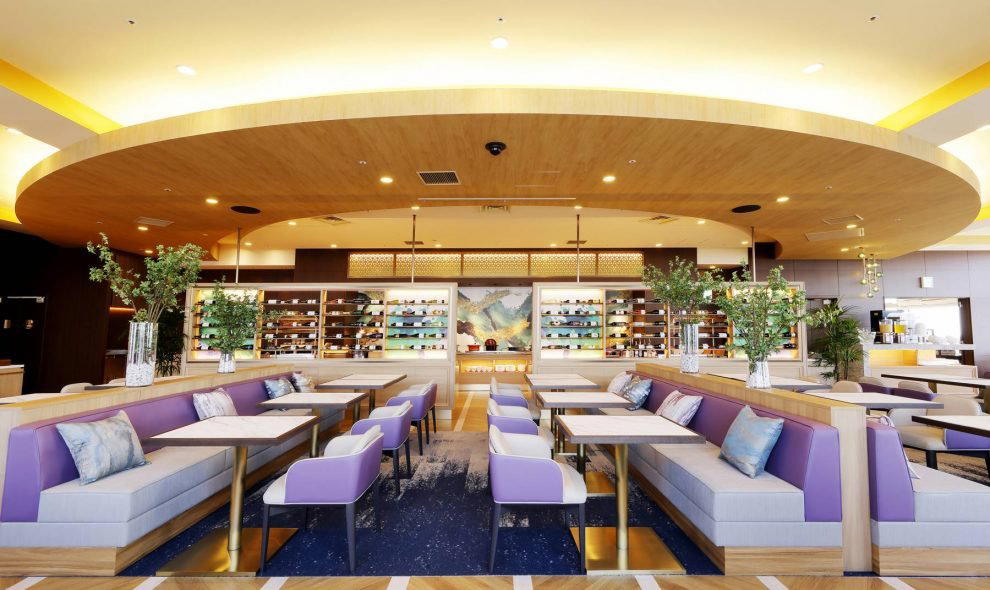
Casual airport ramen shop atmosphere with counter seating and a quick, easy dining experience inside the Hokkaido Ramen Dojo.