料理屋 稲家 belongs to Osaka’s quieter counter-dining register: small-room Japanese cooking in Kitashinchi, where sourcing, seasonality, and pacing matter more than spectacle. The appeal is less about a public mythology than about the city’s long habit of treating market produce, sake, and intimate service as serious restaurant culture.
Pearl is the En Primeur Club membership app — saves, bookings, and concierge access live there. Same editors, same standards.
- Address
- Japan, 〒530-0002 Osaka, Kita Ward, 曽根崎新地1 Chome−10−2 Kitashinchi Place, 7階
- Phone
- +81 6-6341-3177
- Website
- inaya-h.com
- Directions
- Get directions
 Saves & bookings on Pearl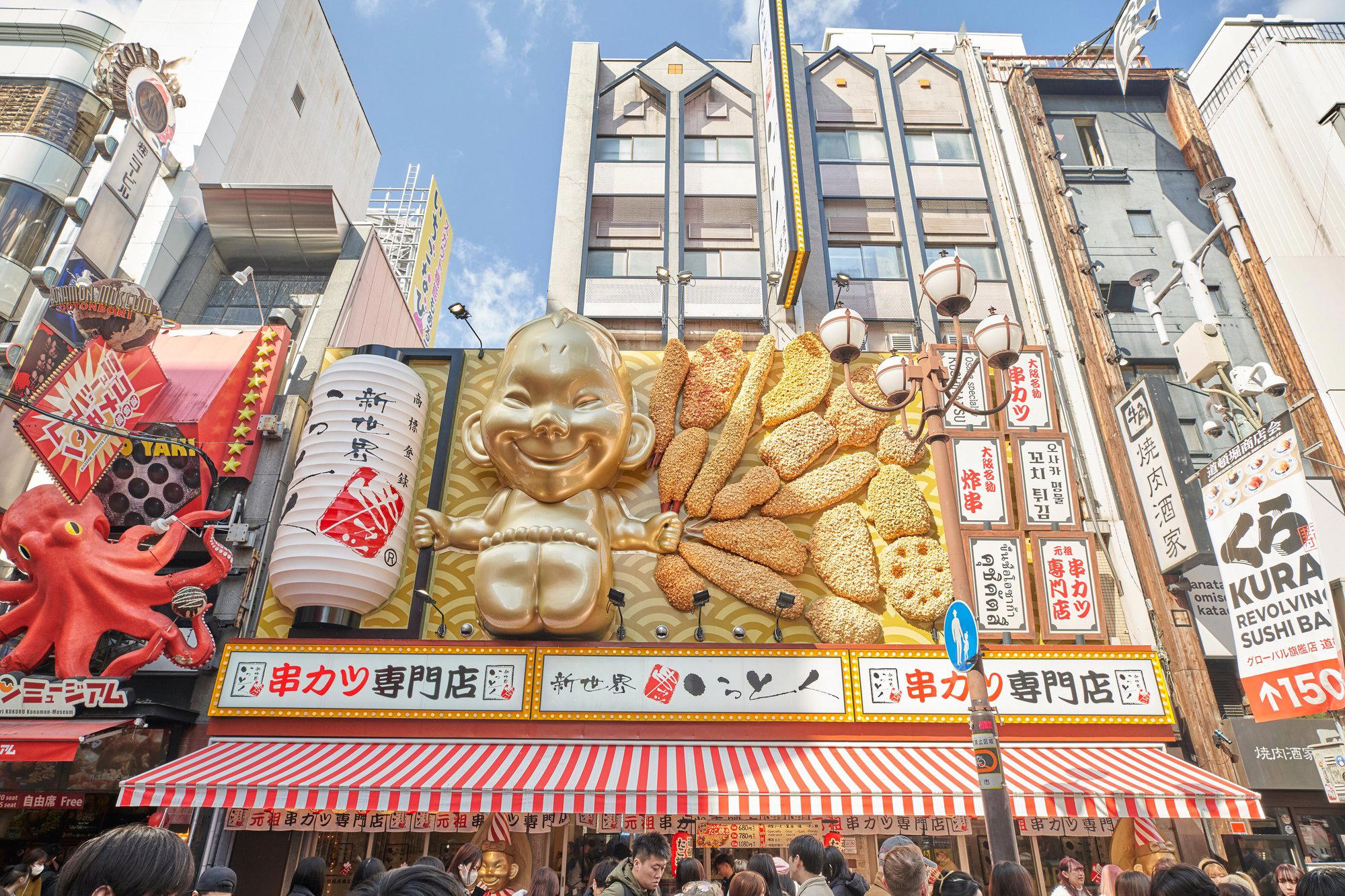
Kitashinchi changes character after office hours: elevators open onto compact dining rooms, conversations drop in volume, and the city’s appetite moves from street-level speed to private-room precision. 料理屋 稲家 sits inside that register, where the experience is shaped by proximity, restraint, and the rhythm of Japanese cooking rather than by theatrical dining-room design. In Osaka, that matters. The city is famous abroad for takoyaki and okonomiyaki, but its more expensive end is built on a different discipline: fish handled with timing, vegetables chosen for season, and courses that read the market before they read a concept.
The useful way to understand this address is through sourcing. Osaka’s serious Japanese restaurants do not need to announce locality as a slogan; the expectation is already there. The Kansai pantry has long pulled from Setouchi waters, Kyoto vegetable culture, Nara and Wakayama producers, and Osaka’s own commercial food networks. At this level, the question is not whether ingredients are seasonal, but how directly the kitchen lets them lead the meal. That puts 料理屋 稲家 in a local tradition where restraint is a test of confidence.
Kitashinchi's small-room dining rewards season over spectacle
Kitashinchi is one of Osaka’s densest districts for adult dining, but its luxury is often vertical and discreet rather than grand. Restaurants stack above street level, rooms are compact, and regulars matter. That ecology suits Japanese cooking because the meal can be built around pacing: a warm dish placed before the room cools, sashimi served in a narrow temperature window, rice arriving when conversation has already slowed. The format also creates a different kind of value judgment. Diners are not paying for monumentality; they are paying for selection, timing, and the confidence to avoid excess.
That context separates the area from Osaka’s louder food image. Namba and Dotonbori sell immediacy; Kitashinchi sells editing. A restaurant such as Ajihei Sonezaki speaks to the neighborhood’s after-dark dining habits, while more formal Kansai cuisine can be read alongside Ajikitcho Bunbuan. For a broader map of the city’s dining range, Our full Osaka Shi restaurants guide is the more useful starting point than any single genre label.
Ingredient-led Japanese cooking in Osaka is a question of editing
Ingredient sourcing is often discussed as a supply-chain matter, but in Japanese restaurant culture it becomes a style. The kitchen’s choices determine whether a meal leans toward kaiseki formality, kappo flexibility, sushi-counter concentration, or izakaya generosity. With no public tasting-menu architecture or named chef mythology defining the room, the stronger reading is categorical: 料理屋 稲家 belongs to the part of Osaka dining where the plate should show what was worth buying that day and what was better left alone.
That makes comparison useful, if handled carefully. Within Osaka Shi, venues such as カピ, Sushidokoro Tada, 長樂, きたしんち 弓場慎之佑, and 緒乃 occupy neighboring mental territory for diners comparing intimate Japanese formats rather than large-format restaurants. The differences between them are less about broad cuisine labels than about counter culture, sourcing emphasis, and how much ceremony the room expects. Diners looking beyond Japanese formats in the city can place the decision against Aka to Shiro, Az, or Calendrier, each useful as a reminder that Osaka’s serious restaurant scene is broader than a single tradition.
The sourcing lens also changes what to value at the table. In this category, a defining dish is often less important than a defining idea: the kitchen’s ability to let product set the tempo. Fish, vegetables, rice, broth, and sake pairings can all become evidence of the same standard. The stronger meal is not necessarily the longest one; it is the one where nothing feels included only to justify price.
Who should choose this room over Osaka's louder pleasures
This is the kind of Osaka dinner that suits travelers who already know the city’s street-food pleasures and want the quieter counterpoint. It is also a better fit for diners who care about provenance and seasonality than for those chasing a named signature dish. The absence of public awards attached to the restaurant should not be misread as absence of seriousness; in Japan, many small restaurants operate on reputation, regulars, and narrow availability rather than international badge culture.
Planning should be done with the habits of Kitashinchi in mind. The district is businesslike, adult, and reservation-oriented, especially for small Japanese rooms where seating can be limited even when no seat count is public. Travelers building a full Osaka itinerary can pair dinner here with the wider city guides to Osaka Shi hotels, Osaka Shi bars, Osaka Shi wineries, and Osaka Shi experiences, rather than treating the meal as an isolated reservation.
For readers comparing Japanese dining across cities, the contrast is instructive. A beef-led meal such as -Grilled beef Sukiyaki- KAMAKURA TANUKIAN 鎌倉 たぬき庵 in Kamakura has a clearer product focus, while. 鮪と炭火焼き うお炭 秋葉原店 in Tokyo signals a more direct tuna-and-charcoal proposition. Casual specialists such as.cafe in Osaka.know in Kumamoto, (Shoku) Vietnam in Kawasaki, [Curry Senmon Ten] Maruyama Kyoju. in Sapporo, Jōdo Saké Bar in Los Angeles, and Onigiri Time in Pasadena show how far Japanese dining can stretch when one ingredient, drink, or format takes command. The Kitashinchi model is subtler: the product changes, the room stays controlled, and the meal is judged by how cleanly the kitchen edits the season.
How It Stacks Up
Comparable venues by cuisine and price in the same metro.
| Venue | Cuisine | Price | Notes |
|---|---|---|---|
| 料理屋 稲家This venue — the venue you are viewing | Japanese Restaurant | Not listed | Not listed |
| Moeyo Mensuke Ramen | Duck & Shellfish Ramen | $$ | Fukushima |
| Osaka chuo oroshi-uri Ichiba | Japanese Seafood Market Dining | $$ | Fukushima |
| 鮨 三心 | Kushikatsu | Not listed | Chūō |
| かしわや泰 美酒佳鶏 | Yakitori | $$$ | Fukushima |
| 鮨一永 | Japanese Pasta | $$ | Chūō |
Continue exploring
More in Osaka
Restaurants in Osaka
Browse all →




Bars in Osaka
Browse all →




Hotels in Osaka
Browse all →




Wineries in Osaka
Browse all →
At a Glance
Classic and cozy