
Michelin Plate
Our verdict
4 across more than 1,100 reviews. The kitchen draws on Cantonese tradition in a city where that cuisine occupies a distinct, if smaller, niche relative to Taiwanese and Hokkien cooking. For visitors building a broader Taipei dining itinerary, it offers an accessible entry point into the capital's Chinese regional dining scene.

Pearl is the En Primeur Club membership app, where members save venues, book tables and use the concierge.
The menu
What to order
- BBQ suckling pig
- Buddha Jumps over the Wall
- Egg white dumpling with black truffle
- Braised abalone
That context matters, because Taipei's relationship with Cantonese cuisine is not the same as Hong Kong's or Guangzhou's. In a city where the dominant dining grammar is Taiwanese, Hokkien, and Hakka, Cantonese restaurants operate as a distinct register rather than a default one. The techniques, clear broths built across hours, wok hei applied with restraint, sauces that amplify rather than mask, read as considered choices here, not as background noise. A Michelin Plate in 2024 positions 85TD within the city's acknowledged tier of quality Chinese cooking, below the three-star altitude of Le Palais but within the same broad conversation about what Cantonese craft looks like when executed seriously.
Tea as Structure, Not Ceremony
Across serious Cantonese dining rooms in the region, tea is not a gesture toward tradition. It is a structural element of the meal, calibrated against the weight and sequence of dishes in ways that parallel a wine pairing in French service. The yum cha tradition, which underpins Cantonese food culture at nearly every price point, treats tea as the through-line of a sitting rather than an amenity offered before the food arrives and forgotten afterward.
At the mid-to-premium tier that 85TD occupies, this means the tea programme becomes one of the clearest signals of how seriously a kitchen takes the full Cantonese experience. Lighter, floral varieties, white peony, jasmine, lighter oolongs, tend to sit early in a sequence, before oil and umami accumulate on the palate. Aged pu-erh, with its fermented depth and capacity to cut through fat, arrives later, functioning as a reset between richer courses. High-roast oolongs occupy the middle ground: enough body to hold against braised proteins, enough clarity to avoid competing with delicate steamed preparations.
The logic is not decorative. A well-managed tea programme at a Cantonese table does the same work as acidity in wine: it resets, contrasts, and extends the diner's capacity to keep tasting. For visitors moving through Taipei's Chinese regional dining tier, paying attention to how a restaurant handles its tea service is one of the more reliable indicators of overall kitchen discipline.
Where 85TD Sits in Taipei's Chinese Dining Tier
Taipei's Michelin-recognised Chinese restaurants span a wider range than the star count alone implies. At the apex, Le Palais at the Palais de Chine Hotel operates at three stars with a price point and formality to match. One tier down, places like Ya Ge and Lin Ju carry one-star recognition with tasting menus and refined service structures. The Michelin Plate category sits below that, it signals quality cooking worth knowing about, without the full architecture of a starred experience.
This is not an entry-level proposition, but it is meaningfully less expensive than the starred Cantonese alternatives in the city. For a diner who wants to trace Cantonese technique in Taipei across a multi-day itinerary, that price differential creates a useful before-and-after comparison: the Plate-level execution at 85TD against the one-star interpretations elsewhere, with the three-star benchmark at Le Palais available for the clearest upward contrast.
Cantonese cooking also appears as a comparative touchstone when reading Taiwan's dining scene against its regional peers. Forum in Hong Kong sets a reference point for what the cuisine looks like at the highest level of classical execution. Chef Tam's Seasons in Macau and 102 House in Shanghai represent how the tradition travels across different Chinese urban contexts. Understanding those reference points sharpens what a visit to 85TD actually reveals: how Cantonese cooking adapts and sustains itself in a city where it is a deliberate choice rather than an inherited default. The neighbourhood's dining character skews toward polished sit-down restaurants rather than street food, making 85TD a natural fit for evenings when the itinerary calls for something structured.
For visitors building a broader Taipei dining programme, the logical sequence places 85TD alongside the city's other mid-tier Chinese and contemporary options. JUNTO and Longyue offer different angles on Chinese-influenced cooking in the same general price register. Beyond Taipei, JL Studio in Taichung, GEN in Kaohsiung, A Cun Beef Soup in Tainan, and Akame in Wutai Township map Taiwan's broader dining range for those making a longer trip. For accommodation and other Taipei planning, our full Taipei hotels guide, bars guide, wineries guide, and experiences guide cover the full picture. The complete Taipei restaurants guide provides the wider context for building a dining itinerary across the city. For stays outside the city, Given the Cantonese framework and the restaurant's Michelin Plate recognition in 2024, the ordering logic at 85TD follows a familiar pattern for the cuisine at this tier. Cantonese regulars tend to anchor a table around one or two roasted or braised proteins, supplemented by wok-fried vegetables and a steamed seafood preparation that tests the kitchen's timing and sourcing discipline. At mid-to-premium Cantonese rooms, the steamed fish in particular functions as a quality signal: the margin for error is narrow, and experienced diners read the result carefully.
2024 Michelin Plate, suggests a kitchen that handles that kind of scrutiny consistently. For first-time visitors, the tea pairing logic described above applies: read the menu sequence and let the tea selection follow the progression from lighter to heavier preparations. That approach will carry you further at a serious Cantonese table than any single dish recommendation. For the broader peer context, both Le Palais and Ya Ge offer a useful calibration of what Cantonese execution looks like one tier above.
Frequently asked questions
Where is 85TD located?
85TD is located at No. 7, Section 5, Xinyi Rd, Xinyi District, Taipei City, Taiwan 110, Taipei.
What kind of recognition has 85TD received?
85TD has received recognition including: Michelin Plate (2024).
What do regulars order at 85TD?
At a Michelin Plate-recognised Cantonese room like 85TD, the ordering pattern typically centres on roasted proteins, wok-fired vegetables, and slow-cooked broth dishes, the three pillars of the Cantonese kitchen. Tea selection at serious Cantonese venues functions alongside the food rather than preceding it, so regulars engage with it as part of the meal's structure. The $$$ price range places 85TD in the mid-upper tier of Taipei's Chinese dining scene, suggesting a menu built around craft preparations rather than banquet volume.
What price level is 85TD?
Pricing at 85TD is listed as $$$.
Peers in This Market
Comparable venues nearby, for context on price, style, and recognition.
| Venue | Cuisine | Price | Awards | Notes |
|---|---|---|---|---|
| 85TDThis venue (the venue you are viewing) | Contemporary Cantonese | Not listed | Michelin Plate | Not listed |
| Cheng Jia | Refined Taiwanese Private Kitchen | $100–150 | Michelin Plate | Xinfu |
| Shi | Seasonal Contemporary Taiwanese | $50–100 | Michelin Plate | Heng'an |
| 3927 | Modern Taiwanese Fusion | Not listed | Michelin Plate | Guangwu |
| Longyue | Refined Cantonese | $50–100 | Not listed | Xikang |
| EMBERS | Modern Taiwanese Fine Dining | $50–100 | Michelin Plate | Dun'an |
Recognition history
Dated appearances from independent guides and award organizations, with the underlying list record or original source where available.
Michelin Plate
Michelin
Full recognition history (2 entries)
Michelin Plate
Michelin
Continue exploring
More in Taipei
Restaurants in Taipei
All restaurants in Taipei →
Bars in Taipei
All bars in Taipei →
Hotels in Taipei
All hotels in Taipei →
Wineries in Taipei
Browse all →
Details
- Elegant
- Sophisticated
- Modern
- Intimate
- Date Night
- Special Occasion
- Business Dinner
- Panoramic View
- Private Dining
- Craft Cocktails
- Skyline
- A La Carte
- Tasting Menu
- Small Plates
Current opening hours
- Monday
- 12–2:30 PM, 6–10 PM
- Tuesday
- 12–2:30 PM, 6–10 PM
- Wednesday
- 12–2:30 PM, 6–10 PM
- Thursday
- 12–2:30 PM, 6–10 PM
- Friday
- 12–2:30 PM, 6–10 PM
- Saturday
- 12–2:30 PM, 6–10 PM
- Sunday
- 12–2:30 PM, 6–10 PM
Hours can change for holidays and private events. Hours as of .
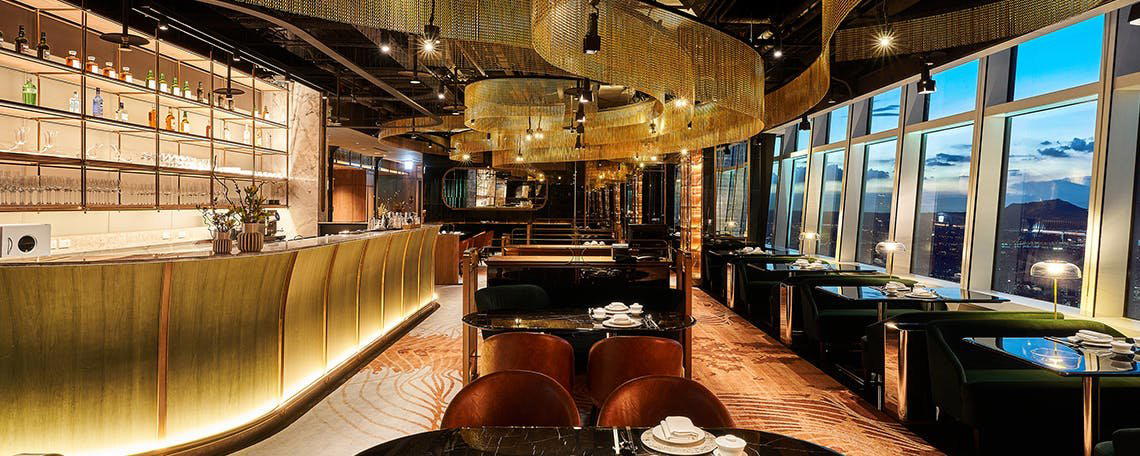
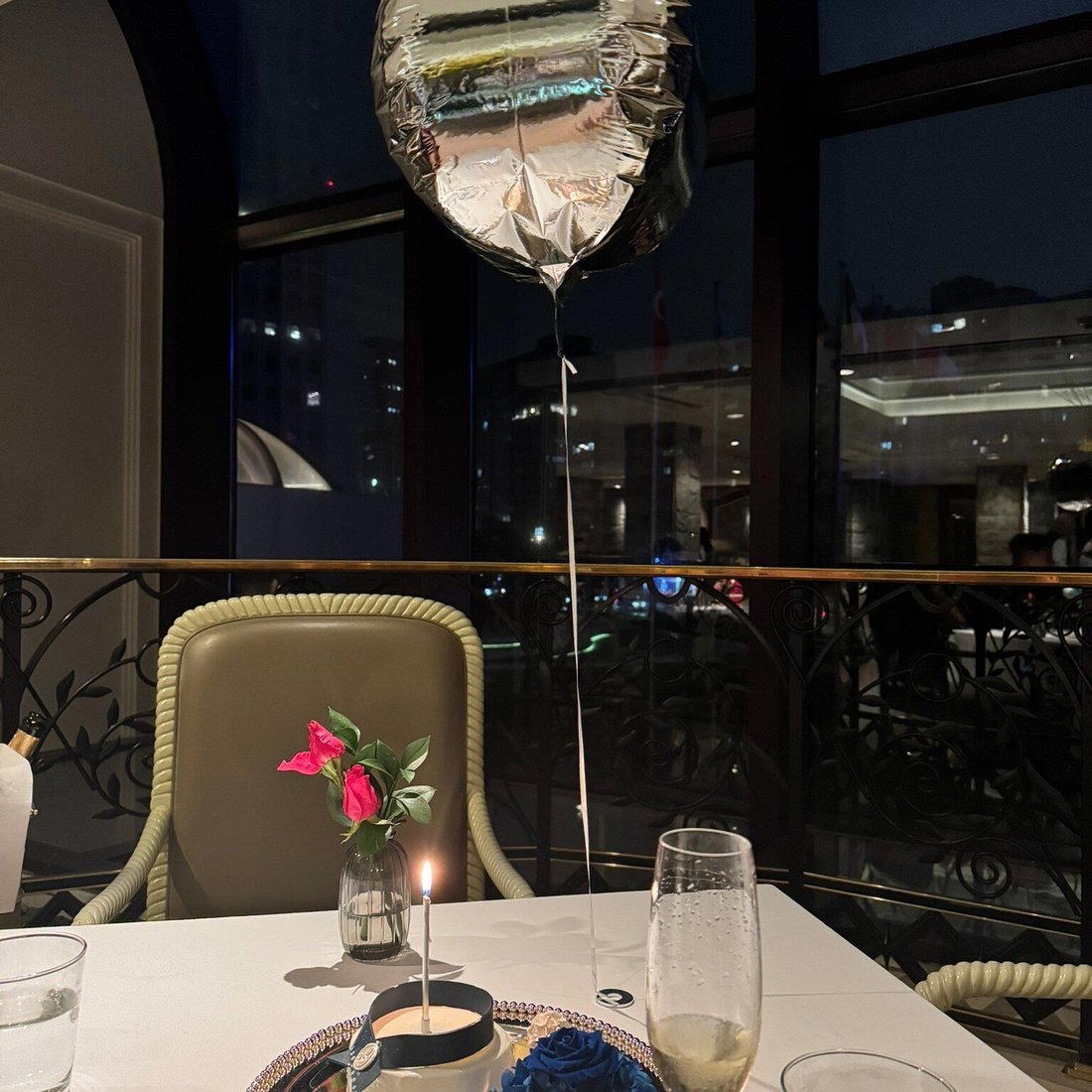
Hip retro space with olive-green decor, brass trims, and sweeping window views of the Taipei skyline.