Our verdict
In the mountain town of Takachiho, Miyazaki Prefecture, ラーメン十八番 occupies a position familiar to anyone who has eaten seriously through rural Japan: a neighbourhood ramen shop where the draw is consistency and place rather than accolades. Set against a town better known for its gorge and Shinto mythology than its dining scene, it represents the kind of everyday eating that defines provincial Japanese food culture.

Pearl is the En Primeur Club membership app, where members save venues, book tables and use the concierge.
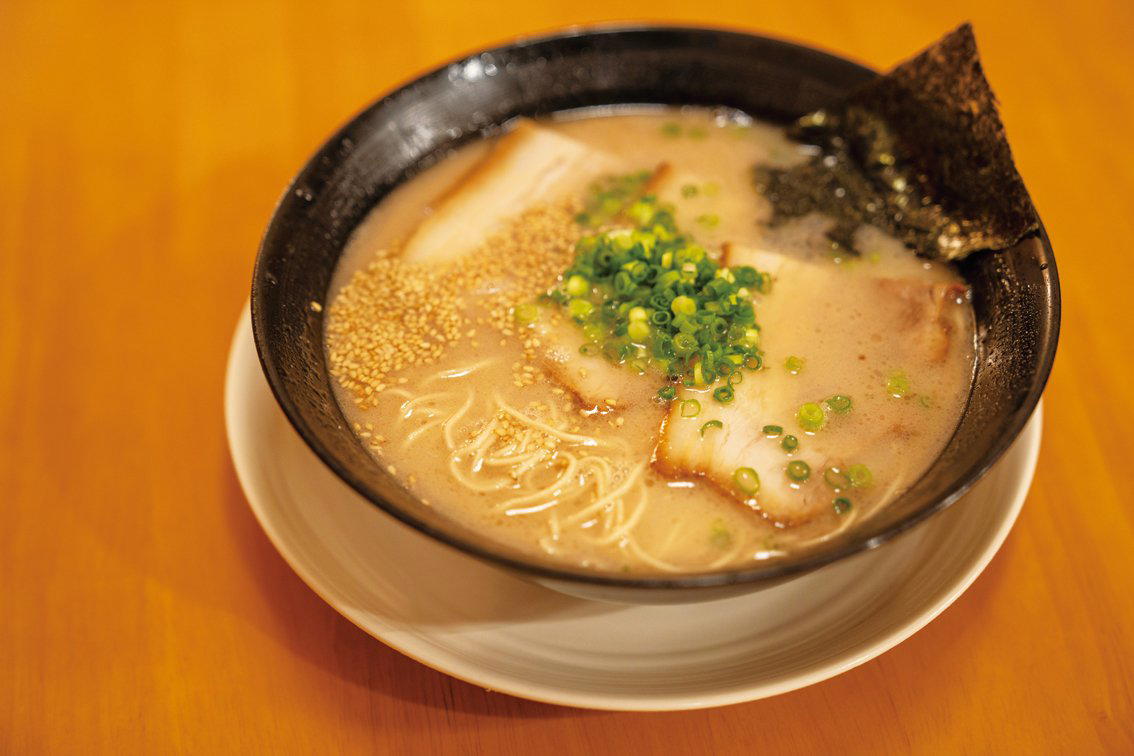
Ramen in Rural Miyazaki: What Takachiho's Food Scene Actually Looks Like
Takachiho sits in the mountains of northern Miyazaki Prefecture, roughly two hours from Kumamoto by road and further still from the Shinkansen network. It draws visitors for the Takachiho Gorge, the yokagura all-night Shinto dance performances, and the general pull of a town wrapped tightly in Japanese mythology. What it does not draw visitors for, in any organised way, is its restaurants. For anyone planning a stay around the gorge or the shrine circuit, understanding that food culture matters more than chasing a specific venue. See our full Takachiho restaurants guide for a broader map of the town's eating options.
The Ingredient Logic Behind Rural Ramen
Ramen is often discussed through the lens of broth style, shoyu, miso, tonkotsu, shio, but in Kyushu, and particularly in Miyazaki, the conversation around ingredients is equally about provenance. Miyazaki Prefecture produces some of Japan's most documented agricultural output: Miyazaki beef carries its own brand recognition, Miyazaki chicken (jidori) appears on menus across the country, and local pork farming supports a tonkotsu tradition that runs parallel to, and in competition with, Fukuoka's more famous version. A ramen shop operating in this agricultural context has access to raw materials that a comparable shop in Tokyo would source at greater cost and distance. That proximity to supply is a structural advantage for rural Kyushu kitchens, even when it goes unremarked on menus or in any formal branding.
This is the ingredient logic that frames a place like ラーメン十八番 in Takachiho. The town's altitude and climate separate it from the coastal lowlands, but the prefecture's farming infrastructure means that pork, chicken, and vegetable supply chains run through even remote mountain towns. Whether a specific kitchen actively foregrounds local sourcing or simply benefits from it by default, the underlying supply geography shapes what ends up in the bowl. In Miyazaki, that tends to mean richer, more animal-forward broths than the lighter styles common in Tokyo's contemporary ramen scene. For comparison, Fukuoka's Goh operates at the high-concept end of Kyushu's food culture; the everyday ramen shop sits at the opposite pole of the same regional tradition.
Provincial Ramen as a Format
Japan's ramen culture has two broad registers. The first is the prestige counter: a twelve-seat shop in Shibuya or Nakameguro with a six-hour broth, a tasting-menu price point, and a reservation queue measured in months. The second is the neighbourhood shop that has been feeding the same postcode for decades, where the measure of quality is reliability rather than innovation. Rural Miyazaki, including Takachiho, operates almost entirely in that second register. There is no ramen tourism infrastructure here in the way that exists in Sapporo or Hakata; what exists instead is a set of local shops that function as community anchors.
ラーメン十八番, addressed at 高千穂町大字三田井812-2, sits within that neighbourhood-shop tradition. The name itself, 十八番, carries a Japanese cultural resonance: it refers to one's signature move or speciality, a term borrowed from kabuki tradition and now embedded in everyday speech. For a ramen shop to carry that name is to make an implicit claim about consistency and mastery at the local scale, not against the prestige counters of Osaka or Tokyo, but within the expectations of its own community. The contrast with the multi-awarded kaiseki tradition of, say, Gion Sasaki in Kyoto or the technically demanding omakase format at Harutaka in Tokyo is not one of failure; it is one of category.
Eating in Takachiho: Practical Framing
Visitors arriving in Takachiho typically do so by car or by the limited local bus service from Nobeoka, itself reachable by Shinkansen from Hakata or Kumamoto. The town is compact enough to walk between its main sites, and accommodation clusters near the shrine and gorge area. Dining options are concentrated in the same central zone, meaning that logistics rarely require much planning beyond knowing what is open when.
For a town of this scale, the absence of a reservations system is standard rather than exceptional. Japan's neighbourhood ramen culture operates almost universally on a walk-in basis, with queuing at peak lunch and dinner periods being the practical equivalent of a reservation signal: if there is a queue, the kitchen is working. Practical details like current hours and any seasonal closures are worth checking locally, particularly for visits timed around Takachiho's peak tourist season, which concentrates in autumn for the foliage and in winter for the yokagura performances.
For context on what a more formal Japan dining experience looks like at the other end of the spectrum, the tasting-menu format at akordu in Nara or the French-influenced innovation at HAJIME in Osaka represent the prestige tier that provincial ramen does not attempt to occupy. Both ends of that spectrum are worth knowing; they answer different questions about what Japan's food culture is and who it serves. Other points of comparison across Japan's regional restaurant scene include dining in Nanao, Sapporo's restaurant options, and the regional cooking at Takashima. Beyond Japan, the sourcing-first approach that defines the leading rural ramen also connects to what places like Le Bernardin in New York and Atomix do at a very different price register: treat the quality of raw material as the non-negotiable foundation. Additional regional reference points include Bistro Ange in Toyohashi, Birdland in Sakai, Denko Sekka in Hiroshima, Blue Ocean Steak in Nakagami District, bodai in 那智勝浦町, Cafe Naoshima Konichiwa, and dining in Nishikawa Machi.
Planning Notes
Takachiho's restaurant scene rewards a pragmatic mindset. No venue here operates with the booking apparatus, published tasting menus, or press presence of Japan's urban dining tier. The value proposition is different: eating close to the source, in a town where agricultural supply chains are short and the kitchen's relationship with its ingredients is more geographic than curatorial. For visitors whose primary purpose is the gorge, the mythology, or the yokagura, a meal at a neighbourhood ramen shop like ラーメン十八番 fits that itinerary more naturally than a long drive to a destination restaurant would.
Frequently asked questions
Is ラーメン十八番 a family-friendly restaurant?
Ramen shops in Takachiho's category, neighbourhood counters serving everyday bowls rather than tasting menus, tend to accommodate all ages without ceremony. The address on Route 三田井812-2 in Takachiho town places it firmly in the local, everyday-dining register rather than a formal or adult-oriented venue. No age restrictions or dress codes are documented.
Is ラーメン十八番 formal or casual?
This is a casual, walk-in-style ramen shop in a town where no venue operates with booking apparatus or dress expectations. Takachiho's dining scene as a whole runs pragmatic and unfussy, and a neighbourhood ramen counter at this address is consistent with that. Come as you are after a visit to Takachiho Gorge.
Is ラーメン十八番 worth stopping at when driving through Takachiho?
Takachiho is a destination most visitors reach by car, and the 三田井 address on the town's main corridor makes this ramen shop a practical stop between the gorge and the Amano Iwato shrine area. In a town with limited dining infrastructure and no Michelin coverage, a local ramen counter fills a genuine gap for hot food mid-itinerary. Confirm hours before arriving, as rural Miyazaki restaurants frequently keep shorter or irregular schedules.
What do people recommend at ラーメン十八番?
In Miyazaki Prefecture, ramen shops in this category typically offer bowls built around local chicken or pork, often influenced by the region's tonkotsu and shoyu traditions, though any specifics for ラーメン十八番 would need to be confirmed on-site.
In Context: Similar Options
| Venue | Cuisine | Price | Awards | Notes |
|---|---|---|---|---|
| ラーメン十八番This venue (the venue you are viewing) | Ramen Izakaya | $10–20 | Not listed | Not listed |
| HAJIME | Avant-Garde Japanese Fine Dining | $300–500 | 3 Michelin Stars · World's 50 Best #83 | French, Innovative |
| Harutaka | Edo-Style Omakase Sushi | $200–300 | 3 Michelin Stars · World's 50 Best #76 | Sushi |
| L'Effervescence | Modern French with Japanese Influences | $200–300 | 3 Michelin Stars · World's 50 Best #69 | French |
| RyuGin | Modern Kaiseki | $500+ | 3 Michelin Stars · World's 50 Best #41 | Kaiseki, Japanese |
| Crony | Modern French with Japanese Influences | $150–200 | 2 Michelin Stars · World's 50 Best #34 | Innovative, French |
Continue exploring
More in Takachiho
Restaurants in Takachiho
All restaurants in Takachiho →
Hotels in Takachiho
Browse all →
Details
- Rustic
- Cozy
- Casual Hangout
- Sake Program
- A La Carte