
Tabelog 100 #46
Our verdict
Kurobee gives Nobeoka a serious dumpling address rather than a ceremonial dining room: compact, casual, and priced for repeat local use. Its selection for Tabelog 100 Dumplings 2024 places it in a national conversation usually dominated by larger food cities, making it a useful stop for travelers tracking regional Japanese comfort food with credible recognition.

Pearl is the En Primeur Club membership app, where members save venues, book tables and use the concierge.
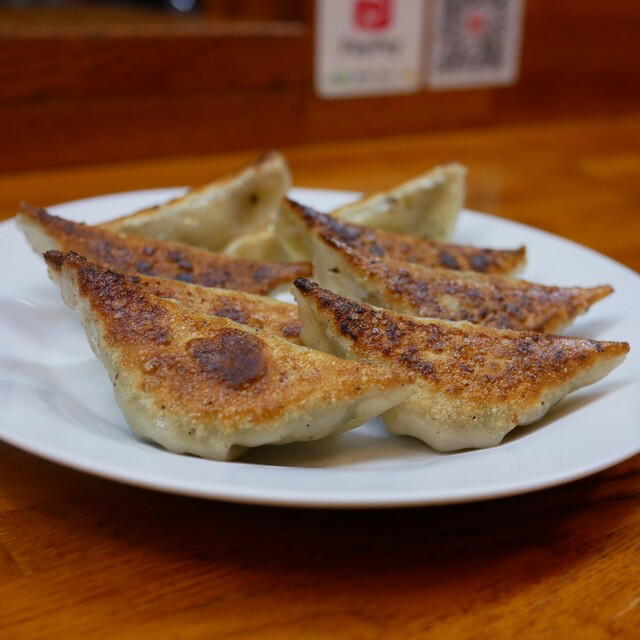
Nobeoka after dark is not staged for culinary theater. The appeal is lower to the ground: casual restaurants, easy evening meals, and a drinking culture that can treat dumplings as proper night food rather than a side order. In that setting, Kurobee reads as part of Nobeoka’s working social rhythm, a dumpling address where the draw is not ceremony but repetition, heat, and the easy logic of dumplings as an evening meal.
That matters in Miyazaki. The prefecture’s table is often discussed through beef, chicken, citrus, and local drinking culture, but dumplings sit in a different register: affordable, fast-moving, and built for groups who want something crisp, hot, and shareable without committing to a long tasting format. Kurobee’s selection for Tabelog 100 Dumplings 2024 gives this Nobeoka version of the form a national marker, and the Tabelog score of 3.51 places it in the kind of local-specialist tier where a narrow category can carry more weight than a broad menu.
Gyoza as Nobeoka drinking food, not a side dish
Japan’s gyoza culture has always been practical: Chinese roots, Japanese adaptation, and a postwar appetite for inexpensive, filling food that works with beer, rice, or spirits. In regional cities, the format often feels less like a restaurant genre than a social tool. Dumplings arrive in portions that invite ordering in rounds, and the meal can stretch or end quickly depending on the table. That flexibility is why a focused dumpling venue can be more revealing than a large dining hall.
Kurobee belongs to that focused category. The listed category is dumpling, and the recommended reading skews toward casual eating rather than formal entertaining. This is useful context for travelers: the point is not to search for a grand progression of courses, but to understand how a local dumpling shop fits into a night out. The agricultural and social logic behind the meal is also regional. Miyazaki’s food identity is tied to accessible local staples and drinking culture, so dumplings in an easy evening setting make more sense here than a wine-led pairing format imported from a larger city.
Within Nobeoka, the useful comparison is not a luxury counter but the everyday range of local restaurants. Naochan sits in a local-value register, while Zenryomaru, CERCA TROVA, and チェルカ トローヴァ point to the city’s spread beyond dumplings. For a broader read on the local dining map, Our full Nobeoka restaurants guide is the more useful starting point than treating any single venue as the whole story.
Recognition changes the frame, but the format stays modest
The Tabelog 100 Dumplings 2024 selection is the main trust signal here. It does not turn the meal into luxury dining, and that is precisely the point. Japan’s strongest inexpensive specialists often sit outside the price logic of destination restaurants: narrow categories, cash-conscious ordering, and a clientele that values consistency over spectacle. Kurobee fits that pattern more convincingly than it fits the language of occasion dining.
The listed details also affect the decision. This is not the kind of venue to approach as a slow-spreading banquet or a guaranteed last-minute group solution. The listed dinner budget of JPY 1,000 - JPY 1,999 keeps the frame practical, while the dumpling focus keeps the experience direct. These details say as much about the experience as any adjective could. This is a regional dumpling specialist with national category recognition, not a polished metropolitan dining room.
For travelers building a Nobeoka stay around food rather than a single dinner, the surrounding infrastructure matters. Our full Nobeoka hotels guide helps make sense of where to base the night; Our full Nobeoka bars guide is the natural companion for anyone treating gyoza as the start of an evening; Our full Nobeoka experiences guide gives the daytime frame; and Our full Nobeoka wineries guide is useful for checking how limited the wine-specific scene is compared with Japan’s larger urban centers.
How it fits a Japan itinerary built around regional specialists
The reason to make room for a dumpling specialist in a premium travel itinerary is not extravagance. It is calibration. Japan rewards travelers who understand the difference between category leaders and luxury dining rooms. A recognized gyoza shop in Nobeoka teaches a different lesson from a Tokyo counter or a Kyoto tasting menu: regional eating can be narrow, affordable, and still serious.
That same logic applies across Japan’s specialist map. A traveler comparing focused formats can use Kurobee as a reminder that not every important meal needs the architecture of fine dining. Other Japanese cities have their own small specialists, counters, and casual formats, but the comparison is cultural rather than a claim of sameness: Kurobee’s value is that it shows a domestic, regional version of the form without translation.
The editorial call is simple: Kurobee is strongest for travelers who value category specificity over ceremony. Come for a focused read on regional gyoza culture, not for a long, formal dinner. In a city where the pleasures are often direct and local, that is the correct scale.
Frequently asked questions
Does Kurobee work for a family meal?
Yes, for a family group looking for a casual dumpling meal. Dinner is listed in the JPY 1,000–1,999 range, which keeps it practical for an easy meal in Nobeoka.
Is Kurobee formal or casual?
Casual. The dumpling focus and JPY 1,000–1,999 dinner price range point to a specialist rather than a formal dining room.
How much does it cost to eat at Kurobee?
Pricing at Kurobee is listed as JPY 1,000 - JPY 1,999 View spending breakdown.
What are Kurobee's hours?
Specific hours are not provided here. Check directly with Kurobee before planning a visit.
At-a-Glance Comparison
Comparable venues by cuisine and price in the same metro.
| Venue | Cuisine | Price | Awards | Notes |
|---|---|---|---|---|
| KurobeeThis venue (the venue you are viewing) | Japanese Dumpling House | $1–10 | Tabelog 100 #46 | Not listed |
| Naochan | Traditional Chicken Nanban & Japanese set meals | $10–20 | Tabelog 100 #29 | Nobeoka |
| CERCA TROVA | Modern Italian with Local Miyazaki Ingredients | $100–150 | Tabelog Silver #12 | Bakuro-cho |
| Zenryomaru | Japanese Traditional Fine Dining | $100–150 | Tabelog Bronze #535 | Hommachi |
| チェルカ トローヴァ | Modern Italian with Local Miyazaki Ingredients | $100–150 | Tabelog Silver #12 | Nobeoka |
| こってり和歌山らーめん 清乃 | Innovative Seafood Shoyu Ramen | $10–20 | Not listed | Wakayama City Center |
Recognition history
Dated appearances from independent guides and award organizations, with the underlying list record or original source where available.
Tabelog 100 #46 · No. 46
Tabelog · Tabelog 100 - Dumplings - 2024
Continue exploring
More in Nobeoka
Details
- Cozy
- Classic
- Intimate
- Casual Hangout
- Late Night
- Solo
- Standalone
- Sake Program
- A La Carte
- Counter Dining
- Shochu
Current opening hours
- Monday
- 5–11 PM
- Tuesday
- 5–11 PM
- Wednesday
- 5–11 PM
- Thursday
- 5–11 PM
- Friday
- 5–11 PM
- Saturday
- 5–11 PM
- Sunday
- Closed
Hours can change for holidays and private events. Hours as of .
Compact, casual, and bustling late-night gyoza shop atmosphere with a simple, no-frills interior.