3 Arts Club Cafe

Set inside the Restoration Hardware flagship on North Dearborn Street, 3 Arts Club Cafe occupies one of Chicago's most dramatically staged dining rooms: a soaring atrium filled with fig trees, ivy, and antique furnishings. The cafe format sits within the Gold Coast retail experience, drawing a crowd that ranges from design-conscious shoppers to destination diners seeking atmosphere alongside their meal.
Pearl is the En Primeur Club membership app — saves, bookings, and concierge access live there. Same editors, same standards.
- Address
- 1300 N Dearborn St, Chicago, IL 60610
- Phone
- +13124759116
- Website
- rh.com
- Directions
- Get directions
 Saves & bookings on Pearl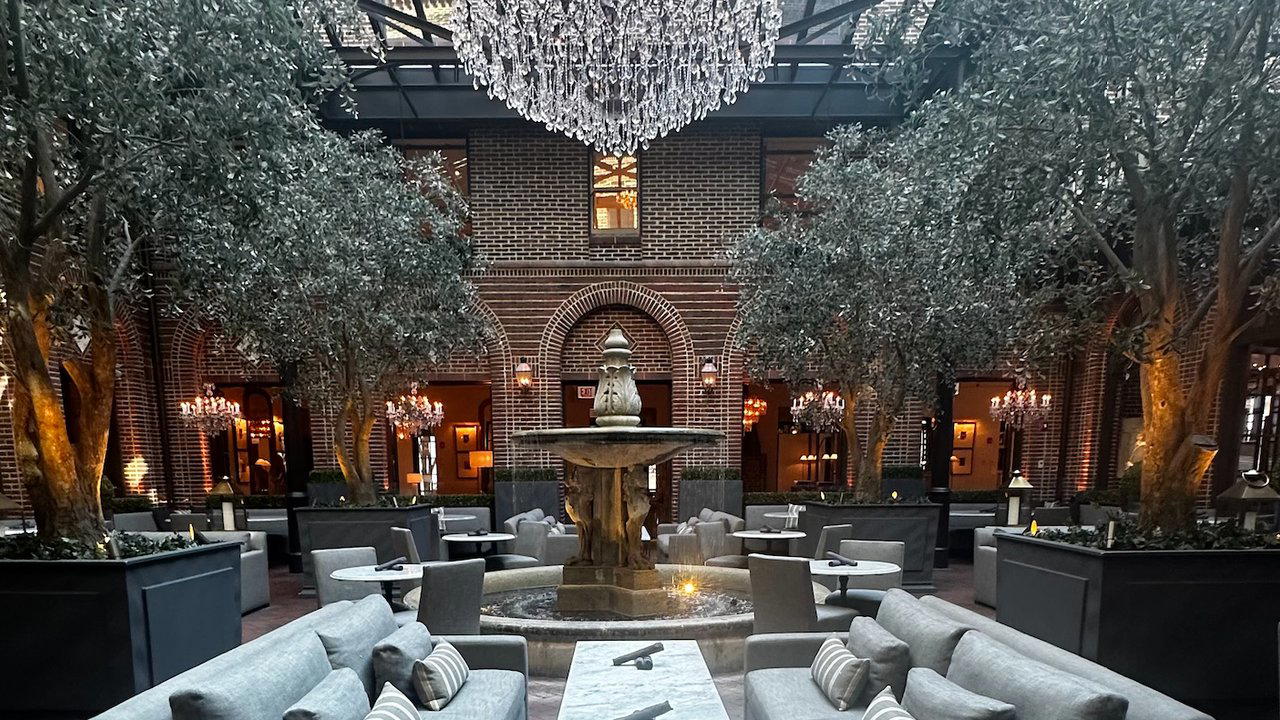
A Room That Does the Work Before the Food Arrives
3 Arts Club Cafe is a restaurant in Chicago’s Gold Coast at 1300 N Dearborn St, known for its design-forward atrium setting and American Cafe Classics menu. The space occupies the atrium of the Restoration Hardware flagship in the Gold Coast, a building that itself carries architectural weight: a former private arts club dating to the early twentieth century, now restored and transformed into a multi-floor retail and hospitality experience. Stepping into the cafe means stepping into a room where the ceiling climbs several stories, antique-style furnishings are arranged like a collector's study, and fig trees push toward the skylights overhead. That combination of greenery, aged materials, and natural light produces an atmosphere that draws visitors whether or not they have strong opinions about the menu.
This kind of dining room belongs to a recognizable category in American cities: the retail-embedded restaurant that succeeds as much through environment as through cooking. Similar experiments have landed in New York and Los Angeles, but few occupy a space with this degree of architectural conviction. The Gold Coast address places the cafe inside one of Chicago's historically affluent residential corridors, a neighborhood where the dining scene has historically tilted toward expense-account steakhouses and white-tablecloth French. A fig-tree atrium inside a design flagship represents something distinct in that context.
The Scene, the Crowd, and What They're Actually Ordering
The cafe format, rather than a full tasting-menu restaurant, determines everything about how the room functions during service. Chicago's upper tier of progressive American cooking, represented by venues like Alinea, Smyth, and Oriole, operates in a different register entirely: pre-paid ticketing, extended multi-course formats, and a dining room logic built around sustained attention. The 3 Arts Club Cafe is not that. It sits in the accessible-luxury tier, where the price of entry is lower but the environmental proposition is high, and where the crowd at any given table might include shoppers breaking from browsing, visitors who planned the stop deliberately, and local regulars who treat the atrium as a neighborhood living room.
That mixing of intentions within a single dining room is a Chicago characteristic visible elsewhere in the city. Kasama in Ukrainian Village manages a similar duality between its daytime pastry counter and its high-commitment tasting menu evenings. The difference at 3 Arts Club Cafe is that the architecture does most of the unifying work: the room is large enough to absorb different crowds without friction, and dramatic enough that atmosphere functions as a shared experience regardless of what anyone is actually eating.
Chicago in the Broader American Dining Conversation
Chicago's dining identity has long sat in productive tension with the coasts. The city has produced James Beard Award-winning chefs and Michelin-starred restaurants at a rate that rivals any American market, while maintaining a vernacular food culture, deep-dish, Italian beef, and the Chicago-style hot dog, that resists upscaling. Restaurants positioned at the accessible end of the premium market, as the restaurant appears to be, occupy an interesting middle ground in that context.
Comparable positioning at the national level exists at properties like Lazy Bear in San Francisco or Blue Hill at Stone Barns in Tarrytown, where environment and concept do substantial work alongside the food. At the more formal end, destination restaurants like The French Laundry in Napa, Le Bernardin in New York City, and Providence in Los Angeles anchor a tier where the food carries the weight unambiguously. The restaurant does not compete in that tier. Its value proposition is spatial and experiential, which places it in conversation with design-led venues across the country rather than with Chicago's award-heavy tasting-menu circuit.
Venues like Addison in San Diego, Bacchanalia in Atlanta, and The Inn at Little Washington represent the American fine dining tradition in which environment and food are co-equal concerns. The restaurant operates on a more informal register than any of those, but it draws on the same instinct: that the room shapes the meal as much as what arrives on the plate.
Sensory Logic of the Space
The atrium's design language rewards attention. The combination of living plants at scale, natural light from overhead, and antique-style objects arranged throughout the room creates an environment that shifts with the time of day. Midday, when light comes through the skylights directly, the fig trees cast patterns across the stone floor and the room reads as airy despite its scale. Later in the afternoon, as the light drops, the assembled objects and warm tones push the atmosphere toward something closer to a private interior. That quality of change across hours, without any change in the room itself, is rarer in dining spaces than it might seem.
For international context at the design-forward end of the restaurant spectrum, Atomix in New York City and 8 1/2 Otto e Mezzo Bombana in Hong Kong demonstrate how environment and prestige interact at the highest tier. At the more conceptually driven American end, Next Restaurant in Chicago and Emeril's in New Orleans show how dining formats can carry cultural weight independently of a single room's design.
Planning Your Visit
The restaurant is located at 1300 N Dearborn Street in Chicago's Gold Coast. Reservations are recommended, especially on peak weekend hours. Weekday lunch visits tend to offer more reliable access to the room at its most atmospheric, with natural light at its height and the crowd at a lower ebb. Visitors combining the cafe with the broader retail experience across the building's floors should plan for more time than the meal itself requires.
Recognition, Side-by-Side
Comparable venues nearby, for context on price, style, and recognition.
| Venue | Cuisine | Price | Notes |
|---|---|---|---|
| 3 Arts Club CafeThis venue — the venue you are viewing | American Cafe Classics | $$$ | Not listed |
| Bellemore | Artistic American | $$$ | West Loop |
| Ada Street | Modern American Small Plates | $$$ | West Town |
| The Ambassador Room | Modern American Gastropub | $$$ | Gold Coast |
| Kitchen + Kocktails By Kevin Kelley - Chicago | Polished Southern Soul Food | $$$ | River North |
| CURRENT | Modern American | $$$ | Near North Side |
Recognition history
Dated appearances from independent guides and award organizations, with the underlying list record or original source where available.
Infatuation Coffee Guide
Infatuation

At a Glance
- Elegant
- Romantic
- Cozy
- Sophisticated
- Well Known
- Brunch
- Date Night
- Special Occasion
- Group Dining
- Historic Building
- Hotel Restaurant
- Terrace
- Extensive Wine List
- Garden
Current opening hours
- Monday
- 10 AM–8 PM
- Tuesday
- 10 AM–8 PM
- Wednesday
- 10 AM–8 PM
- Thursday
- 10 AM–8 PM
- Friday
- 10 AM–9 PM
- Saturday
- 9:30 AM–9 PM
- Sunday
- 9:30 AM–8 PM
Hours can change for holidays and private events. Last verified .
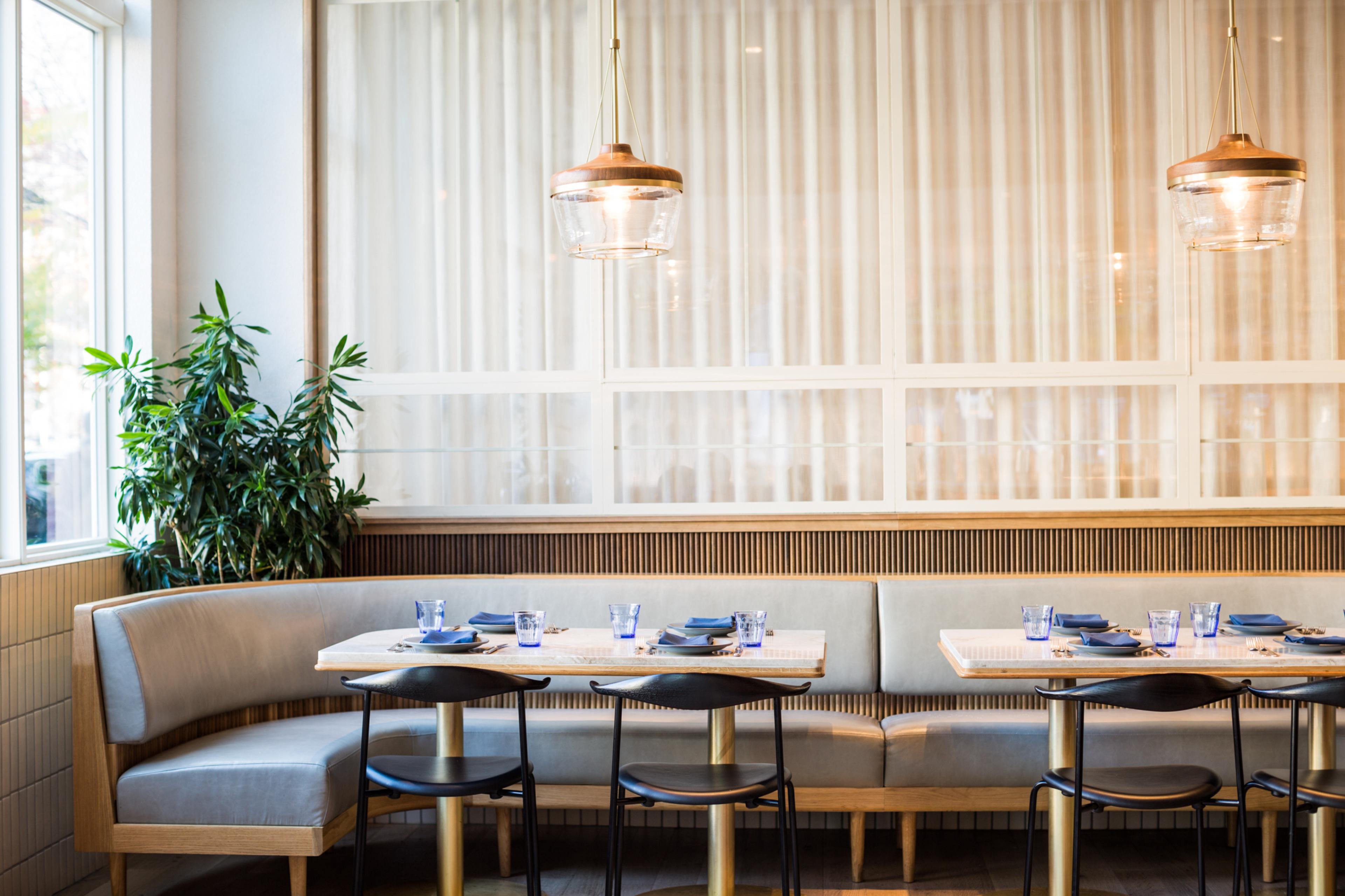
Magical garden-like atrium with natural sunlight, olive trees, crystal chandeliers, and elegant historic architecture creating a romantic and sophisticated atmosphere.